
Abu Dis, Ras Abu Sbitan (Olive Terminal), Sheikh Saed, Silwan, Wed 10.11.10, Morning
6:45 Sheikh Sa'ed
Loads of garbage lie scattered on the sides of the road descending west from Jabal Mukhaber (the southern side, schools), although the garbage tips are not full. A call to the municipality produces a promise to send someone to clean up tomorrow (something that happens three times a week, they claim).
At the checkpoint there is a greater number of border policemen than we remember from the past, but passage is unimpeded and quick. The familiar routine of a few permitted and many forbidden to cross to Jabel Mukhaber, the adjacent neighbourhood, without a special permit.
There's a partial canopy over the path near the magnometer. It does not reach as far as the round coffee table on which all place their beeping belongings. We remember last winter when the table was wet and those crossing were expected to place their laptops and cellphones in pools of water, and we call the DCO to ask them to take care of this before the rains come.
7:30 Silwan
The condition of the road indicates that there were no special problems yesterday — when there are riots the road is spattered with large rocks. Going up to Ein Hilwe we meet a team digging on the western side of the road, a precautionary dig which grew out of digs to lay down water and sewage pipes, and communication. The dig is covered, and the archaeologist in charge tells us that remains of houses and a street from the 11th century A.D. have been found, but she does not believe this will hinder the work on infrastructure. The problems begin when bones are uncovered. Surprisingly, she tells us she knows nothing of the archaeological tunnels dug by the Elad settlers to discover the route by which King Solomon walked to the Temple — an issue foregrounded in the "60 minutes" report aired a fortnight ago on Channel 1. Is it really possible she doesn't know? Such ignorance makes one wonder, although we don't think the work on the Ein HIlwe road is related to the settlers' efforts.
No traffic obstructions on the road where only traffic going up to the Temple Mount is allowed; not even policemen at the exit to the road along the wall.
8:00 Abu Dis, Lazarus checkpoint (closed to kindergarten children), Zeitim Crossing
We drive past all these; no evidence of detainees or unusual traffic.
8:15 The new police station opposite Ma'aleh Adumim
At the request of the police team we drove there to check it out: how many waiting, where they come from, how long it takes to deal with the usual problems. During our stay (until 9:15), many cars drove up to the new and well-appointed compound, all workers at the station, it seems; only one yellow Palestinian transit in the parking lot. The hour is probably too early.
We were not allowed in, but sat solitary in the small and air-conditioned waiting room outside the compound. We asked to speak to someone and they sent Gili A., the district spokesman, a nice young man from Kfar Saba who had served formerly in Tel-Aviv. He told us of the traffic regulations of the district, the egalitarian attitude to Israelis and Palestinians involved in accidents or perpetrating traffic misdemeanors on the Jericho and West Bank roads. He said the ratio of fines for Jews and Palestinians was roughly 50/50. We challenged him to comment on the differences he perceives between traffic police in Tel-Aviv and the West Bank, but he did not provide any insights.
We strongly recommend the noon-time shifts going to Wadi Nar visit the place. The police-station is open until 15:00.
Abu Dis / Lazarus gate (formerly The Wicket)
See all reports for this place-
Abu Dis / Lazarus Checkpoint/Gate (east of the former “wicket”)
Construction of the wall in the Abu Dis area blocked all the gaps that allowed people to cross from al-Ezariya to the neighbourhoods of Abu Dis and Ras al 'Amud that are located within Jerusalem’s municipal boundary. The Lazarus checkpoint is a gate in the wall adjacent to the Lazarus Monastery. Until 2011 it had a door for pilgrims to al-Ezariya and for the monastery’s kindergarten pupils from al-Ezariya. The crossing is currently closed, but the site has infrastructure for conducting inspections.
-
Ras Abu Sbitan (Olive Terminal)
See all reports for this place-
A large checkpoint/crossing to the area of a-Tur, Abu Dis and the Old City; only for pedestrians. Located on Jerusalem’s municipal boundary.
One of the major crossings in Jerusalem’s central sector. It is located on the separation fence between the northern portion of the al-Ezariya neighborhood and the neighborhood of a-Tur and the rest of East Jerusalem. It is manned by Border Police soldiers and private security companies and operates 24 hours a day. Palestinians are forbidden to go through, other than permanent residents of East Jerusalem (holders of blue ID cards) and holders of work and commercial permits who are allowed through only on foot.
-
Sheikh Sa'ed
See all reports for this place-
A checkpoint limited to pedestrians, located on Jerusalem’s municipal boundary.
The checkpoint sits on the separation fence at the entrance to Sheikh Sa’ad, dividing it from its neighbourhood of Jabel Mukkabar. It’s manned by Border Police soldiers and private security companies and operates 24 hours a day. Palestinians are forbidden to go through, other than residents of Jabel Mukkabar or Sheikh Sa'ad who have permits. Both groups are permitted through only on foot. Residents of East Jerusalem who don’t live in Jabel Mukkabar are also allowed to cross to Sheikh Sa’ad, but not in the opposite direction; they must return through the Sawahira ash Sharqiya checkpoint.
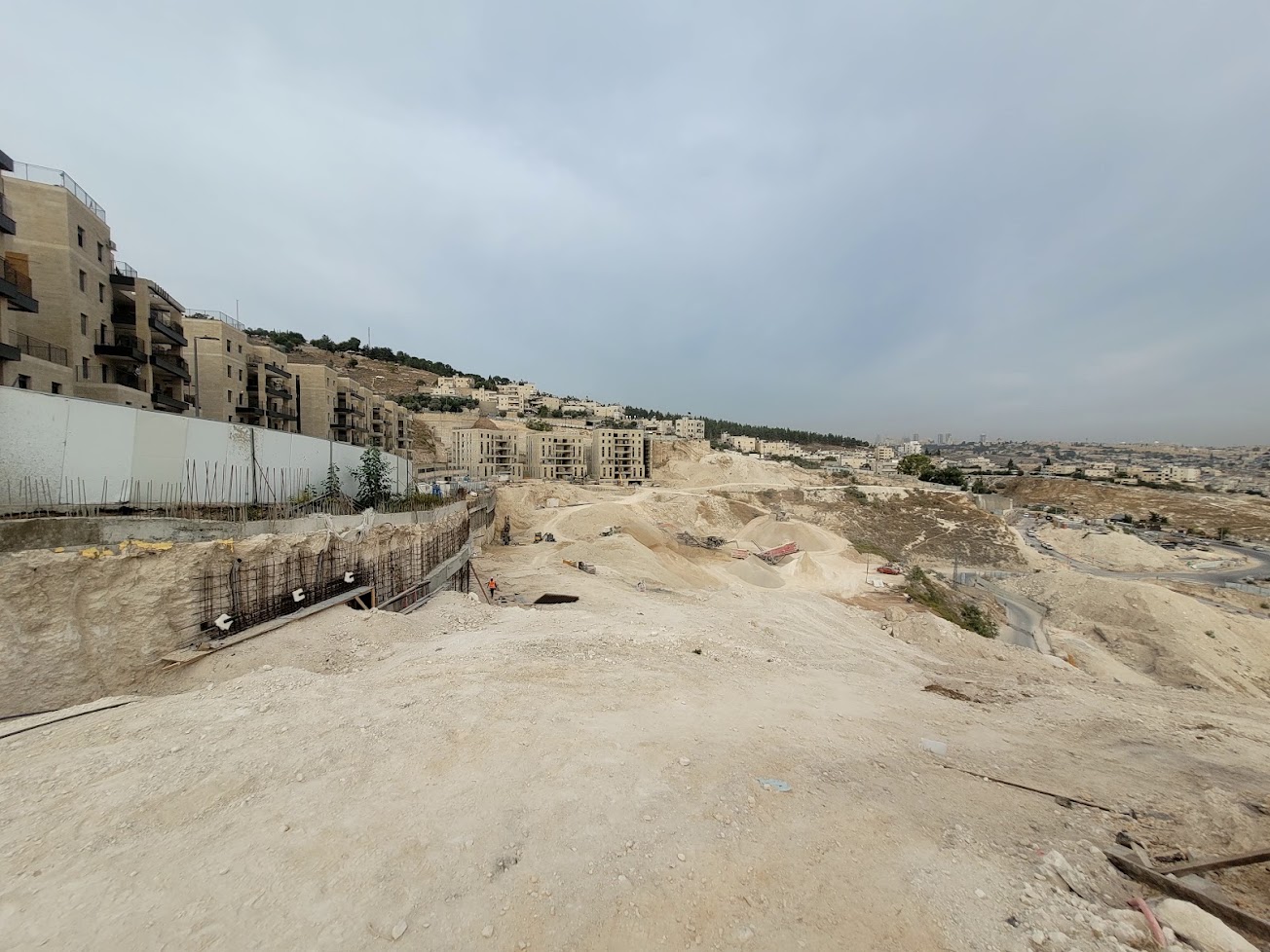 Anat TuegOct-14-2026Jerusalem. Nof Zion Expanding Down the Slope
-
Silwan
See all reports for this place-
Silwan is south of the Old City of Jerusalem and has become one of the main confrontation areas with settlers.
-
