
Back to reports search page

Abu Dis, Ras Abu Sbitan (Olive Terminal), Sheikh Saed, Sun 21.2.10, Morning

Observers: Gal L., Anat T. (reporting)
Feb-21-2010
| Morning

6:30 Zeitim Crossing


This morning a group of youths was caught cutting the fence in several places, including next to the checkpoint parking lot, and trying to cross into Jerusalem, and now they are detained in the waiting shelter of the DCO.  Most are from the Bethlehem area. They are not guarded, but their documents and telephones were confiscated. The checkpoint commander, Y., says they will not be detained beyond the permitted time, and that after the Shabak inquiry, a complaint will be lodged, their telephones returned, and they will be released.  One of them complains of being beaten (the commander denies this), and we suggest he contact us after his release (we give him our phone numbers) and we will help him lodge a complaint, but he didn't get in touch.  One of the detainees is married to a woman from Jabel Mukhaber, and we refer him to the Centre for the Defence of the Individual who will advise him how to request a permit for residence in Jabel Mukhaber.  All say bitterly that all they desire is to find a livelihood.

 
At the turnstile entering the checkpoint from the direction of El-Azariya, the military policewoman is exceptionally shrill, slamming the turnstile into Gal's face and injuring her forehead.  The policewoman is busy with the exits and entrances while shouting in the direction of the hut, and apparently did this without paying  attention.  We ask her to pay more attention lest she hurt more people, and she is very surprised at our request.  "I can do as I like, open and shut as I wish" she screams.  She has no sense of her duty to supply a public service, and seems to be surprised by the thought that Palestinians are a public consisting of persons… No one at the checkpoint utters a word.  We contact the guard who apologizes and promises to speak to the soldier and convey the complaint to her commanders.

During our stay we receive desperate calls from Sheikh Saed.  The soldiers on duty are new, the Palestinians tell us, and the workers have been waiting since 5:30 in a line which has not moved.  Every single detail of each person is recorded, in slow motion.  We call the Humanitarian Centre, Operations Headquarters of the Separation Barrier, the Border Police Adminstration, all to no avail.  All claim that they have asked the checkpoint commander what is going on and he replies that all is routine and the lines are not longer than usual.

7:30  Sheikh Saed

We understand that the situation in Sheikh Saed is not improving and decide to go there.  The line is still very long, some 30 persons.  Y., the checkpoint commander, meets us — in full military regalia, armed like a commando soldier about to undertake a dangerous mission across the enemy lines.   We exchange a couple of words with him, to check with his superiors that we are indeed permitted to cross to the other side of the checkpoint, after which he  ignores us totally, also when we call  him to take care of a humanitarian problem: an infant who swallowed something that must be removed accompanied by his mother who wants to take him to Augusta Victoria.  They have x-rays and a telephone summons but no written summons.  The commander continues to ignore us entirely, as well as the father who tries to persuade him courteously.


Y.'s conduct at the checkpoint is shocking.  He's hostile, ignores everyone, disregards the appalling situation at the checkpoint, orders to slam the window in the face of the woman with the baby.  We decide to ask Hanna B. to lodge a complaint about him.  He is quite unfit to serve at checkpoints and supervise the orderly crossing of people.
With respect to the crowds at the checkpoint — we again call all the above sources as well as the office of Border Police Administration (where we are told that there must be a security reason for the arcane checks, even though the soldiers had said all was routine).  The person who apparently comes to the rescue is A., commander of the DCO representation at the Zeitim crossing.  He promises to get in touch again with the checkpoint commander.  After half an hour the line evaporates.


As for the child on his way to Augusta Victoria, we give up on Dahlia Bassa's office where all the possible phone numbers do not reply.  A. asks the family to go to the Zeitim crossing, where they will receive a permit immediately, but when they call from the DCO after a 40 minute journey, A. is not there, and they are required to bring a written document.  Again, A. cannot be reached by phone.  The solution: the father, who holds a permit for another child's checkup in the afternoon, will bring a document from the hospital, and then the infant will be allowed to cross.  We feel disconsolate at being unable to help.


8:45  Sheikh Jarrah
Nasswer Rhawi is now allowed to sit in the protest tent opposite his occupied home, but he's not there, his older brother stands in for him.  The tent has disappeared, the municipality harrasses them and dismantles it on a daily basis.  He tells us family anecdotes — of the mother who raised 10 children with one arm — and says he will remain until the big demonstration planned for March 6th.  He tells us something worrisome: according to the Palestinians, Nablus Gate will be closed in March, for two years of work on sewage infrastructure.  We are shocked; Nablus Gate is the commercial centre of the Old City and the main road to prayers in Al Aqsa.  We check with Haim Erlich of "Ir Amim" who says the matter is not yet clear, and that the intention is to close alternate sections of the portal and the alleys leading to it.  The peron who looks into the matter and who arranges meetings with the merchants at the gate is the marvellous Meir Margalit.  Haim Erlich promises to update.

  • Abu Dis / Lazarus gate (formerly The Wicket)

    See all reports for this place
    •  

      Abu Dis / Lazarus Checkpoint/Gate (east of the former “wicket”)

      Construction of the wall in the Abu Dis area blocked all the gaps that allowed people to cross from al-Ezariya to the neighbourhoods of Abu Dis and Ras al 'Amud that are located within Jerusalem’s municipal boundary. The Lazarus checkpoint is a gate in the wall adjacent to the Lazarus Monastery. Until 2011 it had a door for pilgrims to al-Ezariya and for the monastery’s kindergarten pupils from al-Ezariya. The crossing is currently closed, but the site has infrastructure for conducting inspections.

  • Ras Abu Sbitan (Olive Terminal)

    See all reports for this place
    • A large checkpoint/crossing to the area of a-Tur, Abu Dis and the Old City; only for pedestrians. Located on Jerusalem’s municipal boundary.

      One of the major crossings in Jerusalem’s central sector. It is located on the separation fence between the northern portion of the al-Ezariya neighborhood and the neighborhood of a-Tur and the rest of East Jerusalem. It is manned by Border Police soldiers and private security companies and operates 24 hours a day. Palestinians are forbidden to go through, other than permanent residents of East Jerusalem (holders of blue ID cards) and holders of work and commercial permits who are allowed through only on foot.

  • Sheikh Sa'ed

    See all reports for this place
    • A checkpoint limited to pedestrians, located on Jerusalem’s municipal boundary.

      The checkpoint sits on the separation fence at the entrance to Sheikh Sa’ad, dividing it from its neighbourhood of Jabel Mukkabar. It’s manned by Border Police soldiers and private security companies and operates 24 hours a day. Palestinians are forbidden to go through, other than residents of Jabel Mukkabar or Sheikh Sa'ad who have permits. Both groups are permitted through only on foot. Residents of East Jerusalem who don’t live in Jabel Mukkabar are also allowed to cross to Sheikh Sa’ad, but not in the opposite direction; they must return through the Sawahira ash Sharqiya checkpoint.
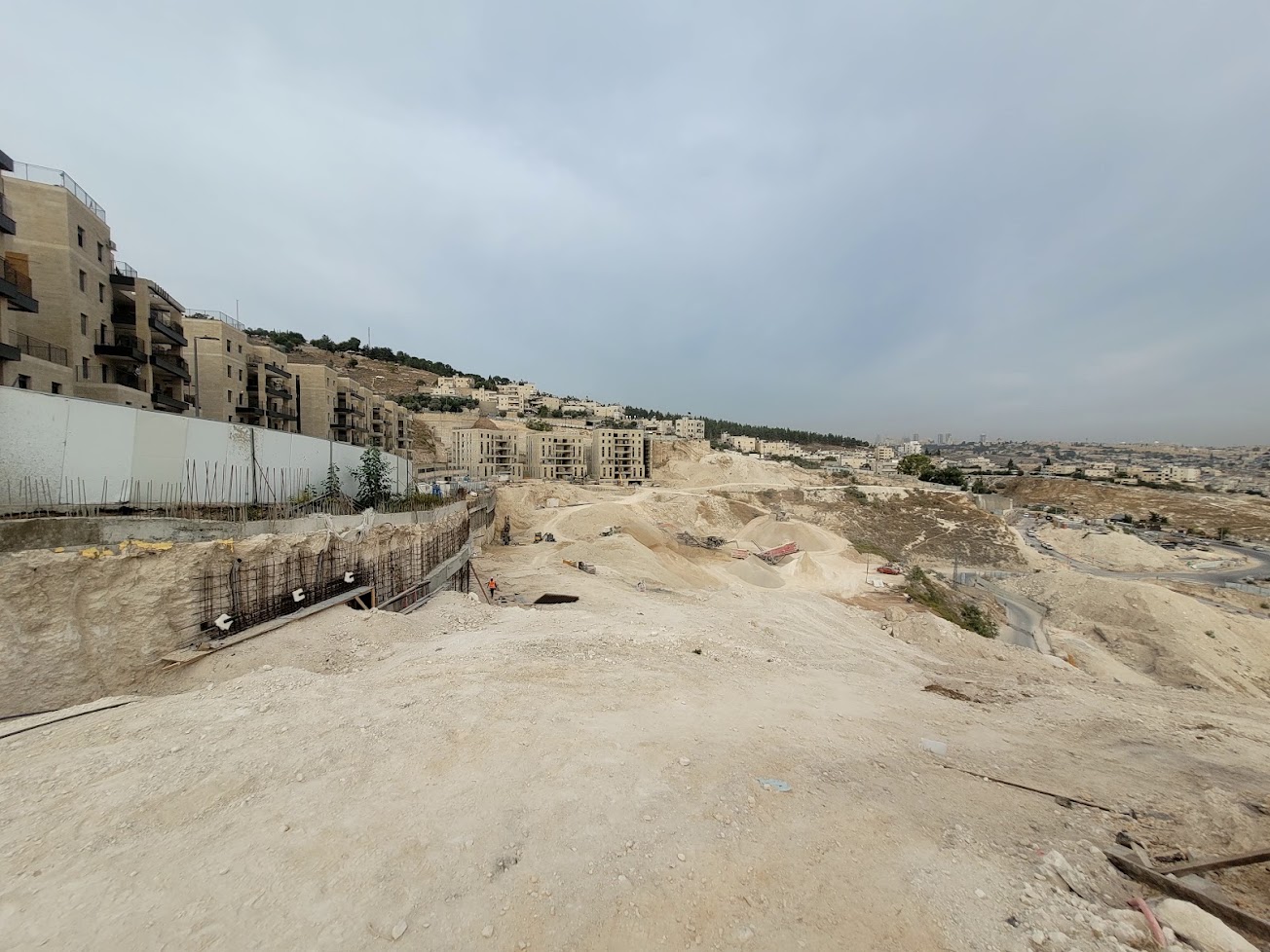
      נבי סמואל. כך נראים המגורים בכפר מובלעת בלי היתרי בנייה או שיפוץ
      Anat Tueg
      May-20-2026
      Nabi Samwil. This is what living conditions look like in an enclave village without building or renovation permits
Donate
