
Abu Dis, Ras Abu Sbitan (Olive Terminal), Sheikh Saed, Sun 6.6.10, Morning
For a long time now the checkpoint has been fairly empty on Sundays. Checking of documents lasts a reasonable 3 min. average. We were told that those who register with the DCO may cross at the Sawahara checkpoint with their cars even though they are from Sheikh Saed. We decided to check this out soon.
Here too an empty checkpoint and bored soldiers. They don't know of the arrangement with Sheikh Sa'ed residents, and have not encountered such requests. A more thorough inquiry with the DCO and the commander of the DCO envelope reveals that the matter is being discussed. The IDF will be constructing a road from Sheikh Sa'ed to Sawahara, and it is not yet clear who will be allowed to cross and where. Clearly this will take a long time. And in the meantime? They promised that next week, when a fortnight's worth of discussions is completed, they will inform us. What a complication for the residents who can simply cross from Sheikh Sa'ed on a paved road with traffic lights.
On the heels of repeated complaints from the residents, we have begun to visit Silwan regularly. The main road (where the Givati parking lot and the main entrance to the City of David site are situated) has become a one-way road, and a no entry sign is posted immediately past the entrance to the parking lot. The reasons: work on infrastructure on the road, which requires digging and then covering up. Today there are no traffic jams, no sudden stopping of cars, and all seems calm despite the exaggerated number of BPs (more than ten + a policeman).
We wondered whether these works are intended to upgrade the infrastructure for the settlers (today as well as last week we saw the team working opposite buildings in their possession), or whether they are intended for the benefit of the entire neighbourhood. We spoke to some of the residents living close to the road and asked them to keep track of the situation and report to us by phone.
From conversations we glean that the situation is bad: every day there are checks and arrests at the top of the road, especially at night, "even midnight". While here, we saw in the distance a border-police soldier arguing with a kid who stood, so it seems, near a house of settlers.
This is a calm hour, after all the workmen have crossed.
We part from Nasser and are about to get into our car when we hear cries of "Gal, Gal." Shlomi, a familir figure from the home of the settlers shouts "We know you, don't worry, we'll deal with you, and reach your home too. We have your picture" and more in the same style. I have never spoken to Shlomi, and the information must have been collected along with other details about activists and supporters of the struggle.
Since there have already been plots against Sheikh Jarrah activists, and the Palestinians have enormous difficulties with complaints to the police (which generally end with their own arrest), we decided to lodge a complaint about threats from the settlers, in the Shalem police-station on Salah-a-Din Street. To our surprise, the procedure was conducted pleasantly and courteously in a relatively short time. We have yet to identify photos in the Russian Compound, and then we'll see whether the complaint will be taken care of.
.
Abu Dis / Lazarus gate (formerly The Wicket)
See all reports for this place-
Abu Dis / Lazarus Checkpoint/Gate (east of the former “wicket”)
Construction of the wall in the Abu Dis area blocked all the gaps that allowed people to cross from al-Ezariya to the neighbourhoods of Abu Dis and Ras al 'Amud that are located within Jerusalem’s municipal boundary. The Lazarus checkpoint is a gate in the wall adjacent to the Lazarus Monastery. Until 2011 it had a door for pilgrims to al-Ezariya and for the monastery’s kindergarten pupils from al-Ezariya. The crossing is currently closed, but the site has infrastructure for conducting inspections.
-
Ras Abu Sbitan (Olive Terminal)
See all reports for this place-
A large checkpoint/crossing to the area of a-Tur, Abu Dis and the Old City; only for pedestrians. Located on Jerusalem’s municipal boundary.
One of the major crossings in Jerusalem’s central sector. It is located on the separation fence between the northern portion of the al-Ezariya neighborhood and the neighborhood of a-Tur and the rest of East Jerusalem. It is manned by Border Police soldiers and private security companies and operates 24 hours a day. Palestinians are forbidden to go through, other than permanent residents of East Jerusalem (holders of blue ID cards) and holders of work and commercial permits who are allowed through only on foot.
-
Sheikh Sa'ed
See all reports for this place-
A checkpoint limited to pedestrians, located on Jerusalem’s municipal boundary.
The checkpoint sits on the separation fence at the entrance to Sheikh Sa’ad, dividing it from its neighbourhood of Jabel Mukkabar. It’s manned by Border Police soldiers and private security companies and operates 24 hours a day. Palestinians are forbidden to go through, other than residents of Jabel Mukkabar or Sheikh Sa'ad who have permits. Both groups are permitted through only on foot. Residents of East Jerusalem who don’t live in Jabel Mukkabar are also allowed to cross to Sheikh Sa’ad, but not in the opposite direction; they must return through the Sawahira ash Sharqiya checkpoint.
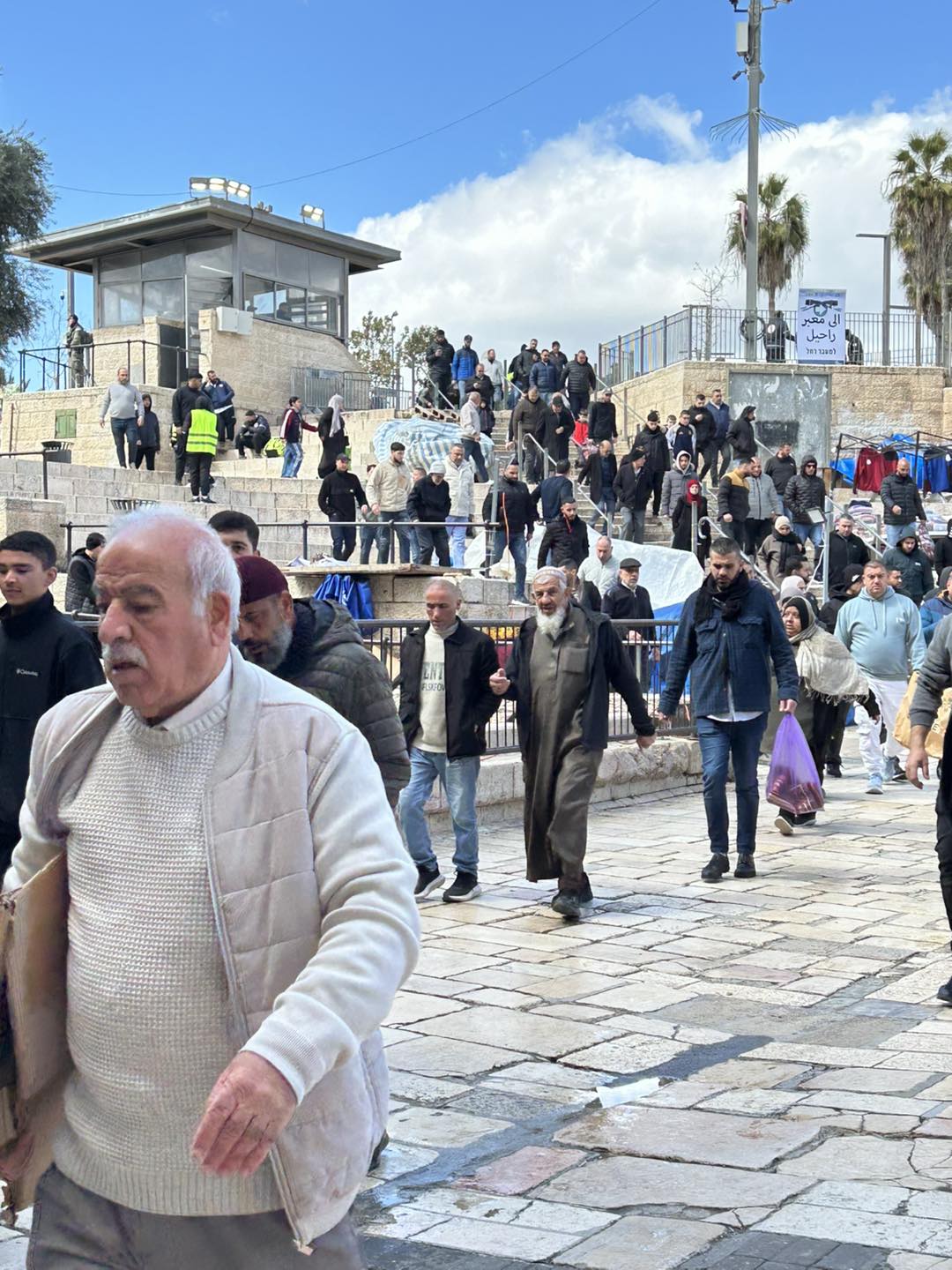 Avital CFeb-27-2026Jerusalem, Damascus Gate: Crowd rushing to prayer
-