
Abu Dis, Sheikh Saed, Sun 3.1.10, Morning

|
6:45 Sheikh Sa'ed
Few people crossing. The soldiers greet us courteously. We meet one of the B.P. area commanders who tells of a checkpoint where the soldiers know everyone and deal well with problems; and requests us to inform the company commander, A., of any problems.
Abu Dis to Shuafat We drove through the area, and stopped at the Lazarus checkpoint (formerly the Pishpash). The checkpoint building is ready. It resembles the building in Sawwahara. We did not see the inside. The photograph we took is of poor quality. The blue gate, on the other hand, is very photogenic. Not clear who will cross at this checkpoint. Blue ID's from Al-Ezariya? Internationals? Pupils? Sho'afat Camp checkpoint What catches the eye are the parking bays being built south of the present checkpoint, for transportation of pupils, it seems. Construction continues also at the new crossing, intended, according to the soldiers there, for owners of blue ID's in the camp. It seems the intention is to separate pedestrians from vehicles, as in Kalandia, and to allow passengers consulting for "international investment and trade" to disembark, and below: there is a sealed window. Very symbolic.
8: 30 Sheikh Jerrakh
Our weekly cup of coffee with Nasser Raawi, the sole brave demonstrator in the protest tent on the street where some of the houses have been occupied by settlers. Nasser tells us of the memories of his 87-year-old father, a refugee from Saraphand arriving here in 1948. The place was then the domain of foxes, there were no Jewish settlers from before 200 years or so. While we spoke, a family with children comes out to the waiting transportaion. He tells us that on Saturday there was an incident with Um-al-Kurdi, in the proximate house — she was pushed by settlers at the entrance to her courtyard and fainted. Nasser was at the demonstration in Tel-Aviv on Saturday night, and spoke there. He sees himself as the Palestinian Nelson Mandela, and is indeed a very impressive man. But he has no Palestinian supporters demonstrating with him — they are all afraid. Only various internationals are present, occupying the protest tent in the Kurdi courtyard, and sometimes sleeping in Nasser's tent.
What chance does this protest stand without massive support? Nasser asks us to come, if possible, on weekdays too. On Fridays there is a big weekly turnout, with drums, but they don't enter the street itself. We also talk of treatment with art work for the evacuated children (courtesy of the Jerusalem "Shualim" (Foxes) lobby) which we helped to organize after Nasser requested, because his children suffer from serious sleep disturbances.
We also visit H'lida who works in the cafeteria of the Art Department of Al-Quds University, opposite the Strand Hotel. She tells us that her son witnessed the incident with Um-al-Kurdi and cried late into the night. He's afraid of being killed. H'lida has not visited her parents in Bitaniya in 8 years, and now she has made contact with the Moked (Centre for the Defence of the Individual) who have advised her to submit a request for family reunion, after which she will receive confirmation from a lawyer about the procedure which will protect her from expulsion from her husband's home in Sheik Jerrakh. |
Abu Dis / Lazarus gate (formerly The Wicket)
See all reports for this place-
Abu Dis / Lazarus Checkpoint/Gate (east of the former “wicket”)
Construction of the wall in the Abu Dis area blocked all the gaps that allowed people to cross from al-Ezariya to the neighbourhoods of Abu Dis and Ras al 'Amud that are located within Jerusalem’s municipal boundary. The Lazarus checkpoint is a gate in the wall adjacent to the Lazarus Monastery. Until 2011 it had a door for pilgrims to al-Ezariya and for the monastery’s kindergarten pupils from al-Ezariya. The crossing is currently closed, but the site has infrastructure for conducting inspections.
-
Sheikh Sa'ed
See all reports for this place-
A checkpoint limited to pedestrians, located on Jerusalem’s municipal boundary.
The checkpoint sits on the separation fence at the entrance to Sheikh Sa’ad, dividing it from its neighbourhood of Jabel Mukkabar. It’s manned by Border Police soldiers and private security companies and operates 24 hours a day. Palestinians are forbidden to go through, other than residents of Jabel Mukkabar or Sheikh Sa'ad who have permits. Both groups are permitted through only on foot. Residents of East Jerusalem who don’t live in Jabel Mukkabar are also allowed to cross to Sheikh Sa’ad, but not in the opposite direction; they must return through the Sawahira ash Sharqiya checkpoint.
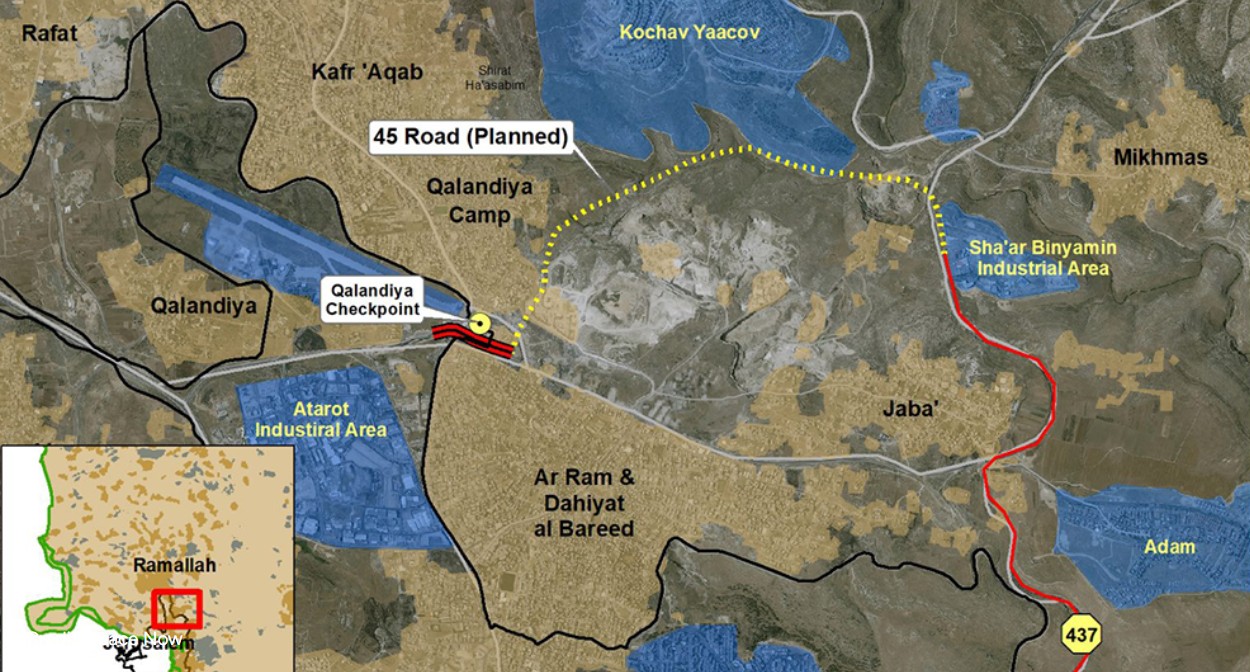 Anat TuegSep-9-2026Road 45. For Israelis only, from Road 60 near Kochav Ya'akov to the Qalandiya underpass
-
