
Al-Maiyteh, Jordan Valley: Settler hitched a Palestinian cart to his tractor and took it to the outpost
Saturday
Seemingly calm. The settlers have gotten used to taking time off during the day, but the tension is constant, since you never know what the next moment will bring, and eventually something harsh happens again. A reminder that the occupation continues, and that the settlers act as masters of the land.
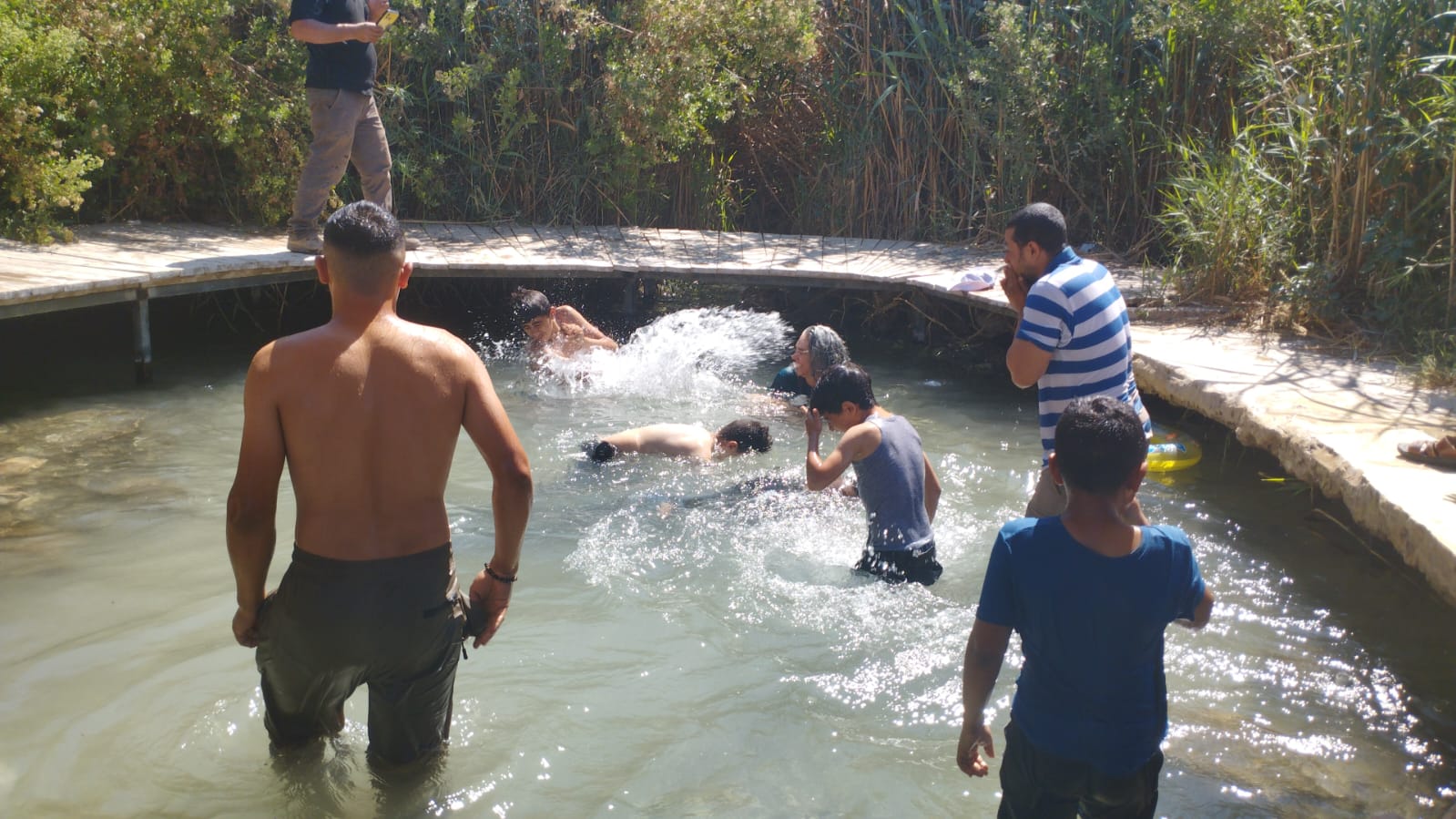
All the morning escorts went quietly. Shepherds from Al-Farisiya crossed under the bridge into an onion field that had already been harvested. Later, the children and some of the adults went in the activists’ cars to a pool in the Valley of Springs to enjoy a swim in the “sea of the valley.” This place has not yet been completely taken over by the settlers.
The four cattle herds belonging to the shepherds of Ein al-Hilweh who had been near Ibzik and Bardala, returned home because of last week’s settler attack. In that attack, eight cows were shot and killed by settlers, and the shepherds no longer wanted to stay there. They brought the herds to drink at the springs of Umm Jamal and Ein al-Hilweh, near their homes, and from there they returned. The Palestinian Authority finally supplied a few tons of barley and feed to the shepherds of Ein al-Hilweh, so they can feed the cows for now and give up on grazing.
In Al-Farisiya too, the day was quiet. We spent the time talking with the women and children, over many cups of tea and coffee.
The afternoon – usually a time of trouble – also passed quietly, except for two experiences of being observed by settlement security officers (Ravshatz – civilian security coordinator). The first was from the settlement of Maskiyot, watching the herds drinking; the second was from the Ravshatz of Rotem, who came up from the valley to watch the women of Al-Farisiya.
Night shifts arrived at dusk, and we divided into “protective presence” (staying with Palestinians around the clock) in Al-Farisiya, Ein al-Hilweh, and Ein al-Sakut.
In Al-Farisiya, the escorts took part in night guard duty with the shepherd men, to prevent settlers from cutting power cables, emptying water tanks, or generally roaming inside the village.
But it seems a day can never end well. At 22:00, M. reported that a settler tractor entered Maiyteh (a village on the way to Tamoun), stole a cart, hitched it to the tractor, and drove off with it toward the road to the outpost near the checkpoint. Two escorts immediately followed, but didn’t manage to stop him. An Israeli car in front of them blocked them from overtaking, and the tractor had already reached the outpost. They couldn’t enter the outpost because violent settlers were there. We notified the army – but the soldiers did nothing. The shepherds of Maiyteh didn’t want to complain to the police, perhaps rightly so. They said there was no chance the police would act, and maybe they’d even find an excuse to arrest them.
Thus a Palestinian cart was taken into the land of the settler “lords of the land,” and again we saw and experienced that under occupation there is neither law nor justice.
Sunday
In the morning, on our way home, we saw about 40 cars waiting at Hamra checkpoint on their way to Tubas. No soldiers were visible at the checkpoint. Maybe they hadn’t started letting cars through yet, or as the drivers say – only one car passes every 15 minutes. So it probably took them between two and four hours to reach their destination. Freedom of movement is yet another right stripped from the Palestinians.
There is no law, no justice, and no one to complain to.
Location Description
Jordan Valley
See all reports for this place-
Jordan Valley The Jordan Valley is the eastern strip of the West Bank. Its area consists of almost a third of the West Bank area. About 10,000 settlers live there, about 65,000 Palestinian residents in the villages and towns. In addition, about 15,000 are scattered in small shepherd communities. These communities are living in severe distress because of two types of harassment: the military declaring some of their living areas, as fire zones, evicting them for long hours from their residence to the scorching heat of the summer and the bitter cold of the winter. The other type is abuse by rioters who cling to the grazing areas of the shepherd communities, and the declared fire areas (without being deported). The many groundwaters in the Jordan Valley belong to Mekorot and are not available to Palestinians living in the Jordan Valley. The Palestinians bring water to their needs in high-cost followers.
 Nurit PopperDec-16-2027Nurit is threatened by settlers from close range.
-