
AM
Zaatara, Sarra, Huwwara, Beit Furiq 21/03/2004 Watchers: Donna B., Hannah L., Dinna A., Snait G. (reporting) We were accompanied in parts of our shift by a film director (woman) and a photographer who are doing a movie on the ”fence/ wall/ checkpoints”.There seemed to have been a security alert regarding an individual trying to get out of Nablus via vehicle, because these and their passengers were thoroughly checked everywhere. 7:25, Zaatara. Two soldiers checking, two “covering”; about 50 men and women waiting in two lines, 47 vehicles – lorries, vans, cabs, buses. The soldiers are polite, know Arabic, try to help people, efficient – but the volume of traffic is far beyond their ability to cope. We called the DCO office [IDF Civilian Administration Authority], and two various branches of the section headquarters and asked them to send more soldiers in the hours between 2-9 PM. 7:50. A “flying” [unannounced mobile] checkpoint a bit after the turning to the wild settlement of Chavat Gilead. They check vehicles, are quite polite. 8:10, Sarra. Concrete paths for people on both sides of the CP. No one around, the soldiers are on the hilltop. Only lorries with building materials for the army castle on top are allowed. The soldiers said there was a closure [restriction of passage] in effect, but after some more questions they told us that the teachers were admitted in.Donna, the film crew and an acquaintance of hers from Madame village, went to the DCO office of the area (see separate report). 8:25, Huwwara south. Extremely crowded. 9 detainees who said they had been waiting between 1/2-1 hour. Their ID numbers had not been transferred to the GSS [Israeli Security Service] for checking until we came and nagged and called the DCO office. Whether due to misunderstanding or not, one detainee (aged around 16-17) had his hands bound behind him because, we were told, “He cursed a soldier,” and “This is an act of aggression.” Only after they heard us phone the DCO office about this and the above did they consent to listen to the young man’s uncle, and finally release the youngster. The situation remained pretty bad for quite a while, with some detainees being released and new ones being held; with long queues of people, without any attempt to separate older from younger; with one of the soldiers stopping all checking “Until people stood in line,” etc. etc.Two of us stayed in the south and one went up north. Huwwara north. Ofer was not around today and the other DCO officer did things politely, quite efficiently, but “by the book.” Queues of pedestrians were average. Queues of cars and ambulances were extremely long and blocked the passage from the south as well. After some nagging by us, the DCO officer went to check the vehicles – with ambulances first. While on that job he completely ignored any appeals on behalf of other issues. A van with a few Frenchmen had managed to get a permit after they called, we called, and gave them more info etc.We managed to accomplish very little there. 10:15, Beit Furiq. Just as in Sarra, there are new concrete paths for people (“To help the Palestinians,” one soldier explained) and some other concrete construction, probably for the detainees. No people passing in either direction. They said Beit Furiq itself was under encirclement [closed for all movement in/out]. 11:00, Huwwara north. Just to check that the DCO consents to talk with a fellow who came with the medical documents of his hospitalized brother (run over by a car), whose van had been impounded a month ago and remained parked next to the CP. We have been asking the DCO to talk to him for a long while before we left for Beit Furiq. We do not know what was the result. On consulting both the DCO center and the IDF “Humanitarian” Center [handling suspected abuse alerts] earlier both said, that the brother had to go to the DCO office in order to get the van back for his hospitalized brother. 11:15, Zaatara. Neither vehicles nor people.
Huwwara
See all reports for this place-
The Huwwara checkpoint is an internal checkpoint south of the city of Nablus, at the intersection of Roads 60 and 5077 (between the settlements of Bracha and Itamar). This checkpoint was one of the four permanent checkpoints that closed on Nablus (Beit Furik and Awarta checkpoints to the east and the Beit Iba checkpoint to the west). It was a pedestrian-only barrier. As MachsomWatch volunteers, we watched therre since 2001 two shifts a day - morning and noon, the thousands of Palestinians leaving Nablus and waiting for hours in queues to reach anywhere else in the West Bank, from the other side of the checkpoint the destination could only be reached by public transport. In early June 2009, as part of the easing of Palestinian traffic in the West Bank, the checkpoint was opened to vehicular traffic. The passage was free, with occasional military presence in the guard tower. Also, there were vehicle inspections from time to time. Since the massacre on 7.10.2023, the checkpoint has been closed to Palestinians.
On February 26, 2023, about 400 settlers attacked the town's residents for 5 hours and set fire to property, such as houses and cars. Disturbances occurred in response to a shooting of two Jewish residents of Har Bracha by a Palestinian Terrorist. The soldiers stationed in the town did not prevent the arson and rescued Palestinian families from their homes only after they were set on fire. No one was punished and Finance Minister Smotrich stated that "the State of Israel should wipe out Hawara." Left and center organizations organized solidarity demonstrations and support actions for the residents of Hawara.Hawara continued to be in the headlines in all the months that followed: more pogroms by the settlers, attacks by Palestinians and a massive presence of the army in the town. It amounted to a de facto curfew of commerce and life in the center of the city. On October 5, 2023, MK Zvi established a Sukkah in the center of Hawara and hundreds of settlers backed the army blocked the main road and held prayers in the heart of the town all night and the next day. On Saturday, October 7, 23 The "Swords of Iron" war began with an attack by Hamas on settlements surrounding Gaza in the face of a poor presence of the IDF. Much criticism has been made of the withdrawal of military forces from the area surrounding Gaza and their placement in the West Bank, and in the Hawara and Samaria region in particular, as a shield for the settlers who were taking over and rioting.
On November 12, 2023, the first section of the Hawara bypass road intended for Israeli traffic only was opened. In this way, the settlers can bypass the road that goes through the center of Hawara, which is the main artery for traffic from the Nablus area to Ramallah and the south of the West Bank. For the construction of the road, the Civil Administration expropriated 406 dunams of private land belonging to Palestinians from the nearby villages. The settlers are not satisfied with this at the moment, and demand to also travel through Hawara itself in order to demonstrate presence and control.(updated November 2023)
.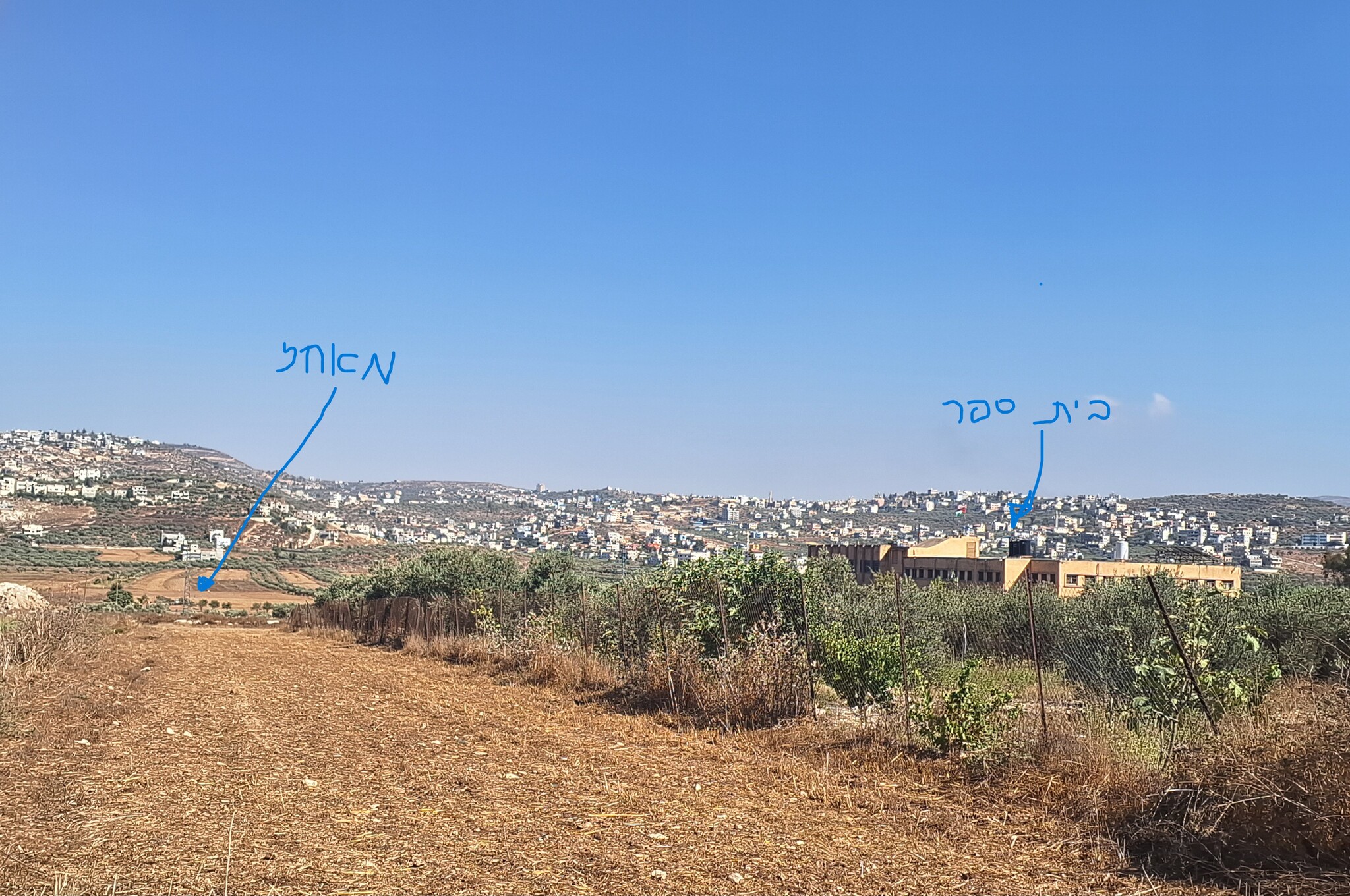 Ronit Dahan-RamatiAug-24-2026Huwara: The school on the outskirts of town and an outpost hidden among the trees
-
Sarra
See all reports for this place-
Sarra
The checkpoint is installed between the Palestinian village of Sera and the district city of Nablus,
Since 2011, internal barriers Located among the West Bank Israeli settlements have somehow allowed, Palestinian residents to travel and move and reach various Palestinian cities.
After the terrible massacre by the Hammas on October 7 upon Israelis in the communities around Gaza, internal checkpoints manned by the army were installed to prevent free passage for Palestinians.
Many restrictions were imposed on the Palestinians in the West Bank. The prevention of movement shuttered the possibility of making a living in Israel. The number of Palestinian attacks by Israeli extremist settlelers increased along with the radicalization of the army against the Palestinians.
The conduct at the Sera checkpoint is one of the manifestations of the restrictions on all aspects of the Palestinians' lives.
-
