
AM
Huwwara, Sarra, Beit Furiq 28/03/2004 Watchers: Dina A., Hannan L., Snait G. (reporting) There were alerts which were accompanied by flying CPs and made soldiers adhere more than usually to a strict following of regulations (age limit: 16-35 into Nablus, 16-45 out of Nablus). 7.15. A flying CP on the main road next to Marda (not far from Zeita), a long line of vehicles, strict checking of cabs, vans and lorries. All passengers have to get out, and both vehicle and their IDs checked. There were no detainees as all these people, as they told us, had by then already gone through at least one and more often two CPS. Average waiting time: 20-30 minutes. The group of soldiers was small, and two of them stood in the adjacent filed with their guns directed towards the area between the road and the village, reasonably polite and efficient too 7.40, Zaatara. Almost empty when we arrived there; filled up with around 20 vehicles by the time we moved on. Again, only two soldiers checking 8.10, Sarra. The lower gate was open. No people on the uphill road, as it has become illegal for them to walk that way up to their own village. On top of the hill, a new “Castellum Sarra” with metal tower and concrete walls has been erected. The concrete paths on both sides have been completed, but there were no people passing. Apparently, the road to Nablus cannot be used by anyone coming from outside the village, but the size of the place at present may be an indication that the army plans some rerouting of Palestinian traffic in the larger area around Sarra. We managed to have a couple of words with female teachers going into the village. They could not provide any info on what was going on inside it. The soldiers were ready to talk with us; said they had no detainees. 8.25, Huwwara. Nablus under encirclement — meaning that no males between 16 and 35/45 without permit or other ”evidential papers” (see below) are allowed in nor out. South. There were 6 detainees — young people (16-19), some of them pupils who were put there by the commander for trying (daily, according to him) to sneak at the head of the queue. They had already been there for around an hour when we came. Their IDs were cleared. He said he intended to teach them a lesson by leaving them there for the full three hours. We talked with him. When we came back around ½ an hour later they were already gone. Otherwise, less than medium size queues. Soldiers polite and efficient; the same goes for vehicles checking. No students of other universities but A Najah allowed in. North. Longer queues. Very strict checking of both person and loads of people passing. No detainees. The van from last week was still there. Newly confiscated cabs — for 4 days — the reason given: they crossed the line into the CP area in order to pick passengers. One of them tried to flee (the cab driver’s report on the incident) and the soldier thought he was attempting to run him over. We called the DCO office and they promised to try and change the length of the confiscation and also to deal with the van’s owners family. Back to South. The detainees gone, no new ones. A DCO person has meanwhile arrived, who turned out to be one of those “By the Book” people (tall with roundish face, wears glasses). He absolutely refused to exercise either his judgment or his prerogative. We tried to help with four out-of-the-ordinary cases and failed: 1. A mixed citizenship couple (Jordanian and Palestinian) who were trying to get with their 3 months old baby into Nablus to register her. The officer did not allow the man in, and they turned back in bitter disappointment.2. A man from Ramallah who wanted to go to Jifltlik via Nablus rather than all the way through Jericho. 3. A man with a company’s van who had license only for himself, and was told 2 weeks ago by Ofer that he should get one for the company’s car by April 15th (I was actually present then), and he would be let in and out until then. 4. A 33 years old man who wanted to pick up his wife from hospital after an operation but did not have any hospital documentation on him (though a lot of money to pay there), and kept talking with her on the phone while waiting. The officer asked for ”written evidence from the hospital” (said it could be faxed to the man!!!) and would not relent. The compromise reached in this Catch 22 case was that the man would bring a letter from the village doctor and this would be accepted as “evidence”. 10.15, Beit Furiq. “Castellum Beit Furiq” greets one from the road. The whole area had been cleared and organized in to concrete paths and barbed wire to narrow the vehicle path in both directions. Very few people and vehicles from Nablus to Beit Furiq and in the other direction too. 6 detainees who claim to have been there from early morning. The commander of the CP does not want to talk with us, but later claims that they will stay there until 6PM because they had been trying to circumvent the CP. No answer at all the DCO tel numbers. Called the army center (so called Humanitarian), gave them our water and took one member of the group mobile num. We kept in touch with both him and the army center, and then, on the way to TA, handed the case over to the Moked (Center for the Defense of the Individual).10.45. On the way back to TA we stopped to check whether there are any detainees in both CPs, but were immediately told by the south commander that there was a very hot alert on both sides and we have to leave the area. While debating what to do in the few minutes we have before leaving we encountered a B’Tselem van with Nagib a Rakia and another person who said they would take it over from us, and also advised to put up a printed flag rather than a sign on the car windows. 11.00, Zaatara — almost empty 11.15, Marda. Flying CP still operating. Around 10 vehicles of all kinds, the same checking procedure. We talked with the people in the buses.
Huwwara
See all reports for this place-
The Huwwara checkpoint is an internal checkpoint south of the city of Nablus, at the intersection of Roads 60 and 5077 (between the settlements of Bracha and Itamar). This checkpoint was one of the four permanent checkpoints that closed on Nablus (Beit Furik and Awarta checkpoints to the east and the Beit Iba checkpoint to the west). It was a pedestrian-only barrier. As MachsomWatch volunteers, we watched therre since 2001 two shifts a day - morning and noon, the thousands of Palestinians leaving Nablus and waiting for hours in queues to reach anywhere else in the West Bank, from the other side of the checkpoint the destination could only be reached by public transport. In early June 2009, as part of the easing of Palestinian traffic in the West Bank, the checkpoint was opened to vehicular traffic. The passage was free, with occasional military presence in the guard tower. Also, there were vehicle inspections from time to time. Since the massacre on 7.10.2023, the checkpoint has been closed to Palestinians.
On February 26, 2023, about 400 settlers attacked the town's residents for 5 hours and set fire to property, such as houses and cars. Disturbances occurred in response to a shooting of two Jewish residents of Har Bracha by a Palestinian Terrorist. The soldiers stationed in the town did not prevent the arson and rescued Palestinian families from their homes only after they were set on fire. No one was punished and Finance Minister Smotrich stated that "the State of Israel should wipe out Hawara." Left and center organizations organized solidarity demonstrations and support actions for the residents of Hawara.Hawara continued to be in the headlines in all the months that followed: more pogroms by the settlers, attacks by Palestinians and a massive presence of the army in the town. It amounted to a de facto curfew of commerce and life in the center of the city. On October 5, 2023, MK Zvi established a Sukkah in the center of Hawara and hundreds of settlers backed the army blocked the main road and held prayers in the heart of the town all night and the next day. On Saturday, October 7, 23 The "Swords of Iron" war began with an attack by Hamas on settlements surrounding Gaza in the face of a poor presence of the IDF. Much criticism has been made of the withdrawal of military forces from the area surrounding Gaza and their placement in the West Bank, and in the Hawara and Samaria region in particular, as a shield for the settlers who were taking over and rioting.
On November 12, 2023, the first section of the Hawara bypass road intended for Israeli traffic only was opened. In this way, the settlers can bypass the road that goes through the center of Hawara, which is the main artery for traffic from the Nablus area to Ramallah and the south of the West Bank. For the construction of the road, the Civil Administration expropriated 406 dunams of private land belonging to Palestinians from the nearby villages. The settlers are not satisfied with this at the moment, and demand to also travel through Hawara itself in order to demonstrate presence and control.(updated November 2023)
.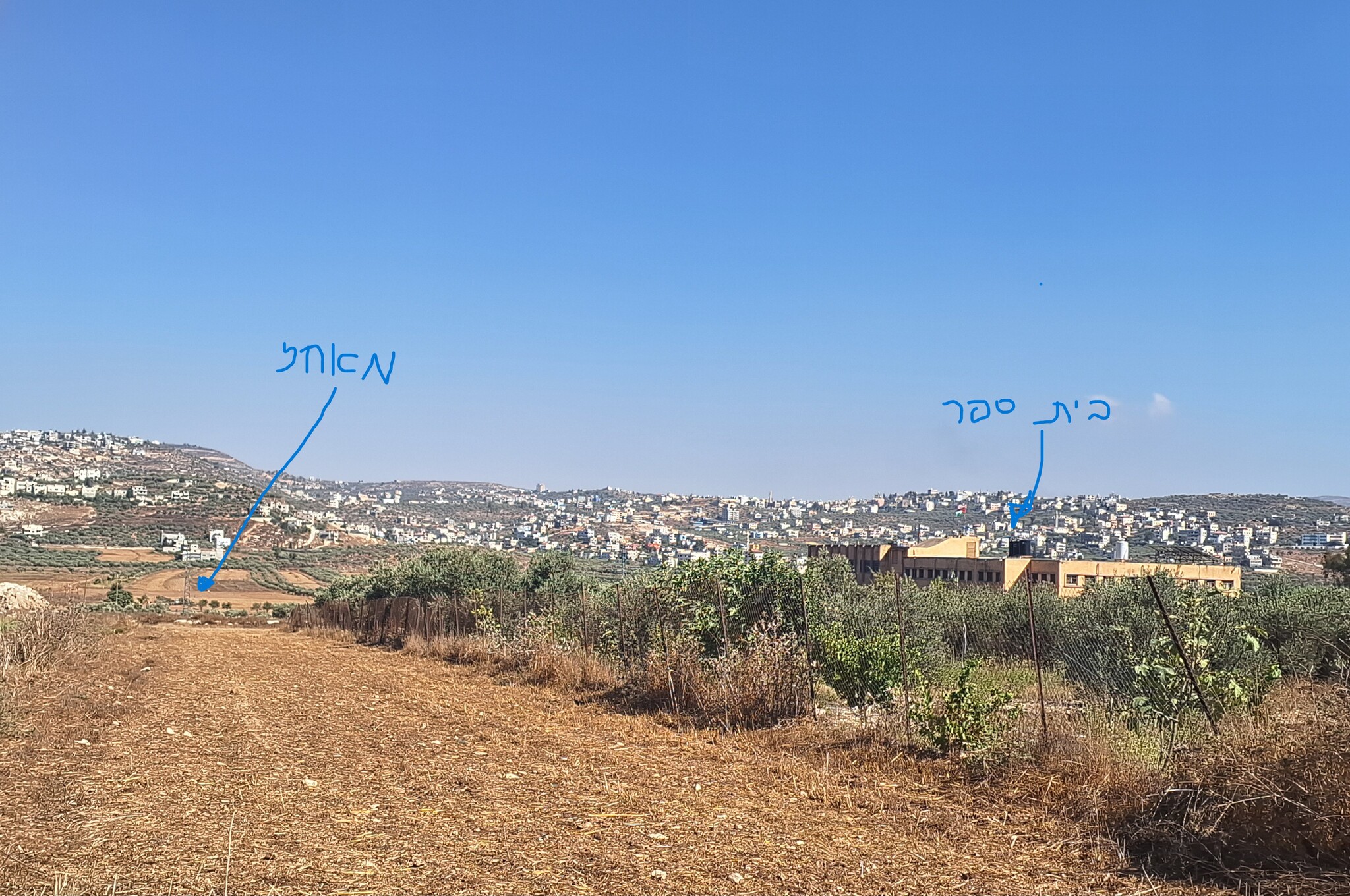 Ronit Dahan-RamatiAug-24-2026Huwara: The school on the outskirts of town and an outpost hidden among the trees
-
Marda
See all reports for this place-
Marda
There are about 2500 inhabitants in the village. A large part of their lands was confiscated for the benefit of the settlement of Ariel, some of whose buildings are adjacent to the village.
They often feel under siege. At both entrances to the village from the main road (505) there are checkpoints and the army does close the yellow arms from time to time. The inhabitants of Marda own olive groves behind a fence. Rarely are they allowed to cultivate their agricultural plots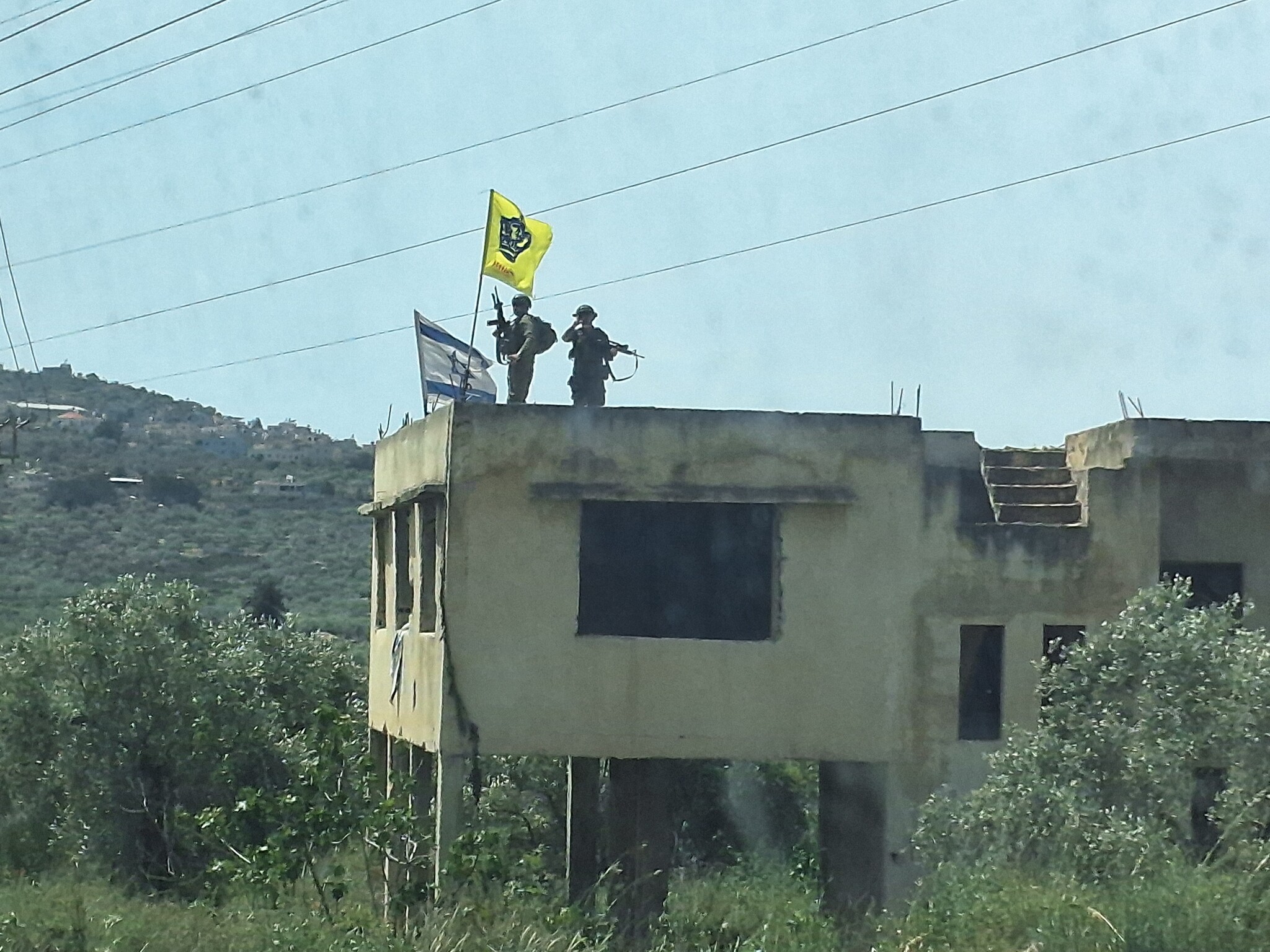 Ronit Dahan-RamatiApr-14-2026Marda. IDF post on the roof of a Palestinian home with the Messiah flag
-
Sarra
See all reports for this place-
Sarra
The checkpoint is installed between the Palestinian village of Sera and the district city of Nablus,
Since 2011, internal barriers Located among the West Bank Israeli settlements have somehow allowed, Palestinian residents to travel and move and reach various Palestinian cities.
After the terrible massacre by the Hammas on October 7 upon Israelis in the communities around Gaza, internal checkpoints manned by the army were installed to prevent free passage for Palestinians.
Many restrictions were imposed on the Palestinians in the West Bank. The prevention of movement shuttered the possibility of making a living in Israel. The number of Palestinian attacks by Israeli extremist settlelers increased along with the radicalization of the army against the Palestinians.
The conduct at the Sera checkpoint is one of the manifestations of the restrictions on all aspects of the Palestinians' lives.
-
