
‘Anata, Abu Dis, Ras Abu Sbitan (Olive Terminal), Sheikh Saed, Wed 8.10.08, Morning
It is the eve of Yom Kippur: the checkpoints on the ways leading into Jerusalem in our area are a mess. This is the result of the vague regulations that declared a severe total closure a few hours before, and were not completely clear. By 9 o’clock there were pupils, teachers, church employees, medical stuff and medical cases who could not go through (exception to the rule was the checkpoint at Zeitim passage, where they decided to think, and let through, like any other year, students and teachers, doctors and nurses). Only after some pressure from the area, and recommendations from the DCO of Jerusalem area, some easing regulations were given, but those did not get down in a quick and efficient way, and were too late for the students and teachers. In my head echoed the lines: [from the Yom Kippur prayer, Unetaneh Tokef – We shall ascribe holiness to this day]
As a shepherd herds his flock,
Letting his sheep pass beneath his staff…
Decreeing the length of their days,
Insecribing their judgement
06:40 Sheikh Saed
While we were driving towards the checkpoint, we got a phone call from a person living in Sheikh Saed, and he told us that they don’t let teachers with work permits to go through.
A series of phone calls made it all clear. Tonight, at 01:00 The Minister of Defence put a general severe closure over the West Bank.
We approached the checkpoint, and met groups of workers waiting inside the neighborhood: there were doctors and medical staff grouped together on one side, church employees and teachers on the other. Children went through – school children whose teachers were not allowed to pass went too. Another round of phone calls, and we found out that the special closure includes teaches, pupils, church employees and medical staff too. The only ones who are allowed to pass are doctors and nurses, along with very urgent medical cases. At some point those regulations – as a result of our pressure too – were given to the soldiers in this checkpoint too: the doctors and nurses went through (3 people). In contrast, they stopped letting the small children through. All our effort to talk with the soldiers about the small children were in vain. But even they started after a while to let small children pass again. Those who seemed to them to be older, like a group of 12-13 years old girls who stood by the checkpoint frustrated, were not allowed to go through.
Our impression was that there is a big mess in interpretation of the general order of sever closure (In the humanitarian center we were told that the Jerusalem DCO makes its own interpretation, and the same do other DCO’s). The period of time needed to let fresh orders get to the area was long.
08:30 Zeitim passage
When we cam out of the car, the voice of a woman soldier echoes on the loudspeakers all through the terminal. When we entered and went over to the Palestinian side of the checkpoint we understood why: here too there were chaos and confusion. A group of about 20-30 people was around the external entrance to the checkpoint. One by one they entered the terminal and were questioned by the same woman soldier (who could not read Arabic, and as far as we could hear could hardly even talk the language). She demanded each person to present a permit, and asked in a loud voice: “Inet doctor?”, “Shoo Mactub?”. Those of them who had come to get some medical treatment and nodded their heads were let into the checkpoint, but were sent back. Church employees, teachers, people with special permits, families etc. were sent back. A church employee told us that he had been waiting since 4:00 – 5:00 in the morning, and could not believe that the closure included him.
Since the representative of the DCO was busy, we asked the people in charge of the checkpoint, the policemen Yossi, Pini and Gregori to arrive and explain to those waiting the regulations of the day. The sorting out is done in the following way: people are crowding around the policemen, they look at the paper and decide who enters and does not enter [the terminal]. Some are told to wait aside for further orders. Some return home after the “verdict”.
Around 09:00 the regulations were eased: at first they let the people with permits to unite the family were allowed to enter, and then teachers and church employees. One woman, who said that she works in a medical laboratory in Beit Hanina did not get any attention from Yossi, Gregori and Pini, she gave up and left angrily the terminal area. Three medical students who came in order to get to one of the hospitals were sent back too.
The policemen told us that the regulations that came from the Defence Ministry were vague, and it took a few hours to evaluate the situation and sent more specific regulations to the people who deal with it. We kept a telephone follow-up on the happenings in Sheikh Saed. They got the easier regulations three quarters of an hour later, and even then they were not absolutely clear.
We had the impression that there were also problems about accepting the ease in regulations, and applying them. Until 09:45 the man we were talking to, the teacher who had called us three hours before, and did not give up, had not yet crossed the checkpoint. We saw that pupils and teachers had left the place earlier in the morning, when they were not allowed to go through.
09:30 Anata
When we were on our way in the car we heard on the news that vehicles were not allowed to drive from the east part to the west part of town. We arrived at the checkpoint, which was quiet, and asked the commander of the checkpoint about their morning. He told us that every thing was normal: vehicles went through and no special problems were noticed.
To sum everything up – Yom Kippur eve, 5769 – we got very hard feeling.
Abu Dis / Lazarus gate (formerly The Wicket)
See all reports for this place-
Abu Dis / Lazarus Checkpoint/Gate (east of the former “wicket”)
Construction of the wall in the Abu Dis area blocked all the gaps that allowed people to cross from al-Ezariya to the neighbourhoods of Abu Dis and Ras al 'Amud that are located within Jerusalem’s municipal boundary. The Lazarus checkpoint is a gate in the wall adjacent to the Lazarus Monastery. Until 2011 it had a door for pilgrims to al-Ezariya and for the monastery’s kindergarten pupils from al-Ezariya. The crossing is currently closed, but the site has infrastructure for conducting inspections.
-
Checkpoint Shu'afat camp / Anata-Shu'afat (Jerusalem)
See all reports for this place-
The Shu’afat checkpoint is located in the northern part of East Jerusalem at the exit from the village of Anata and the Shu’afat refugee camp, which are located in the area annexed to Jerusalem in 1967. The refugee camp borders the Shu’afat neighborhood to the west, Pisgat Ze’ev to the north, the French Hill neighborhood to the south and the planned expansion of Ma’aleh Adumim to E-1 in the east. It was established in 1966 for 1948 refugees from the West Bank and was populated after the Six Day War by persons who had been expelled from the Jewish Quarter. Today its population comprises some 25,000 people holding blue ID cards and some 15,000 people with Palestinian ID cards. The camp lacks adequate infrastructure and services, and suffers from poverty, neglect and overcrowding. All its buildings are connected to the public electricity and water infrastructure, but not all are connected to the sewer system. The camp’s services are provided by UNRWA, except for those such as health clinics and transportation of pupils to schools in Jerusalem. In 2005, the Israeli High Court of Justice rejected a suit by the residents requesting that the route of the separation fence be drawn such that the camp would remain on the Israeli side, but conditioned its approval of the route on the establishment of a convenient and rapid crossing facility for the inhabitants of the neighborhood, most of whom are residents of Jerusalem.
A temporary checkpoint operated there until December, 2011. It was extremely congested during rush hours, and dangerous for pedestrians (especially children) because of inadequate safety provisions. The new checkpoint was inaugurated south of the old one, for public and private transportation and for pedestrians, intended solely for the residents of the camp – holders of blue ID cards, and those with Palestinian ID cards who possess appropriate permits. There are five vehicle inspection stations at the checkpoint, and two for pedestrians (one of which is currently closed) where scanners have been installed but are not yet operating. According to the army, representatives of government agencies will also be present to provide services to residents of the neighbourhood. The pedestrian lanes are very long, located far from the small parking lots, and accessible through only a single revolving gate.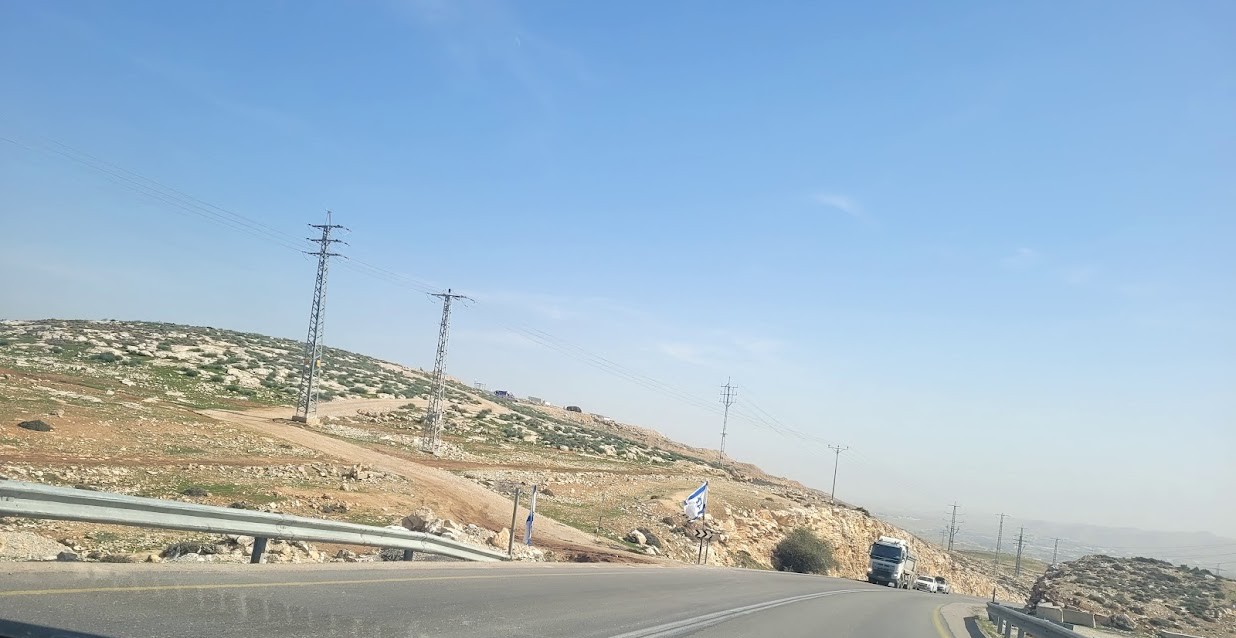 Anat TuegJan-25-2026Anata: A new outpost has been built south of the junction
-
Ras Abu Sbitan (Olive Terminal)
See all reports for this place-
A large checkpoint/crossing to the area of a-Tur, Abu Dis and the Old City; only for pedestrians. Located on Jerusalem’s municipal boundary.
One of the major crossings in Jerusalem’s central sector. It is located on the separation fence between the northern portion of the al-Ezariya neighborhood and the neighborhood of a-Tur and the rest of East Jerusalem. It is manned by Border Police soldiers and private security companies and operates 24 hours a day. Palestinians are forbidden to go through, other than permanent residents of East Jerusalem (holders of blue ID cards) and holders of work and commercial permits who are allowed through only on foot.
-
Sheikh Sa'ed
See all reports for this place-
A checkpoint limited to pedestrians, located on Jerusalem’s municipal boundary.
The checkpoint sits on the separation fence at the entrance to Sheikh Sa’ad, dividing it from its neighbourhood of Jabel Mukkabar. It’s manned by Border Police soldiers and private security companies and operates 24 hours a day. Palestinians are forbidden to go through, other than residents of Jabel Mukkabar or Sheikh Sa'ad who have permits. Both groups are permitted through only on foot. Residents of East Jerusalem who don’t live in Jabel Mukkabar are also allowed to cross to Sheikh Sa’ad, but not in the opposite direction; they must return through the Sawahira ash Sharqiya checkpoint.
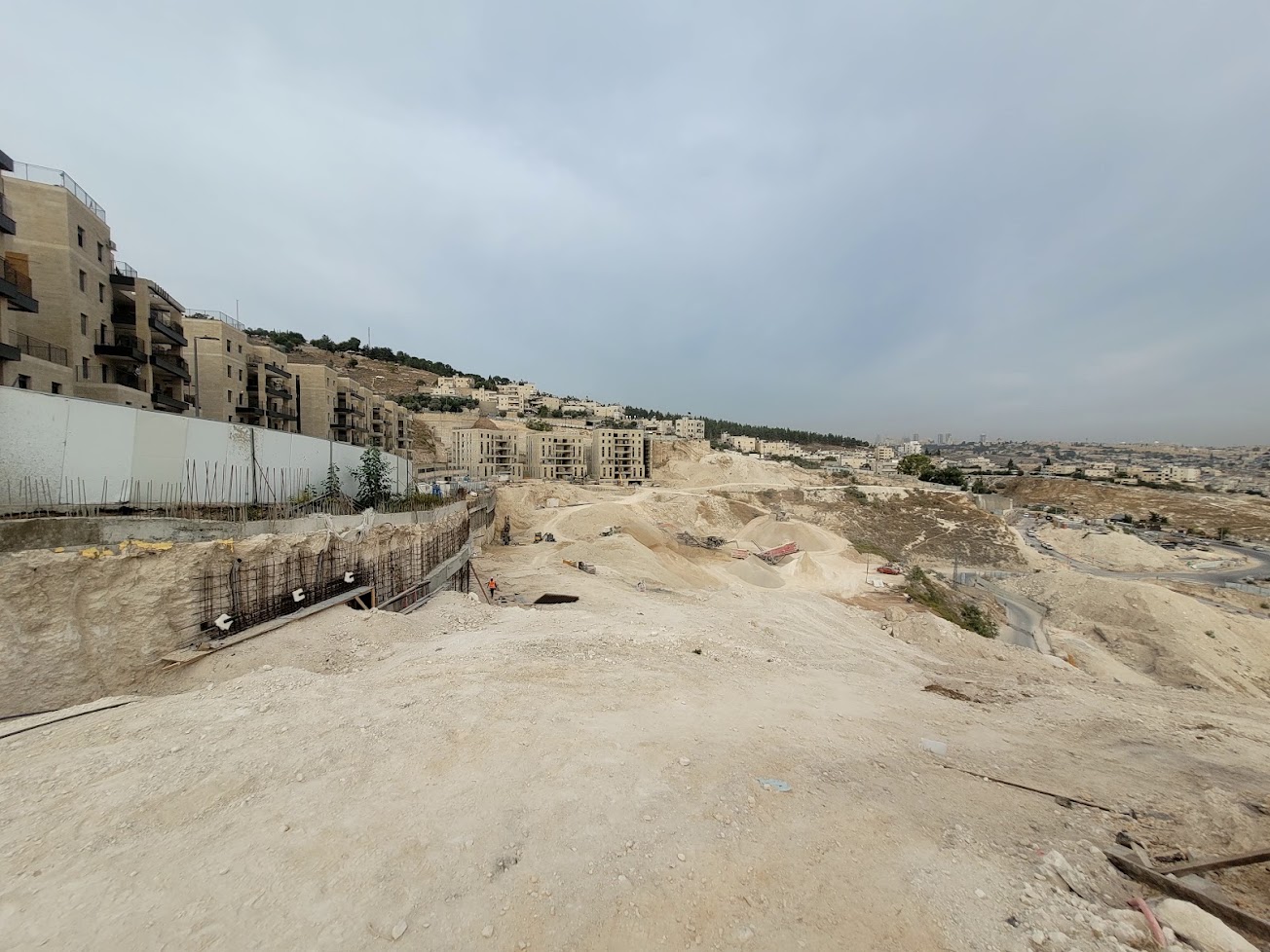 Anat TuegOct-14-2026Jerusalem. Nof Zion Expanding Down the Slope
-
