
‘Anata-Shu’afat, Ras Abu Sbitan (Olive Terminal)
7:00 Shuafat Refugee Camp
In the wake of Nir Hasson's report last week on the shocking conditions in the Shuafat camp, we decided to visit and check out, assuming that the winter break for schoolchildren is now over. The break, it turns out, ends only this Thursday (and we encourage the Thursday shift to inspect and talk to the residents). The parking lot was empty. We talked to the coffee vendor and passersby who said the situation in Ras Al Hamis is reasonable, but inside the camp the piles of garbage mount and nothing is done about it. We were unable to understand how UNRWA's conflict with its workers came about, but even more incomprehensible is the Jerusalem Municipality's indifference to what is going on where 30,000 Jerusalem residents reside under its authority.
(By the way, the checkpoint area is also filthy.)
7:45 Olive Terminal (Ras abu Sabitan)
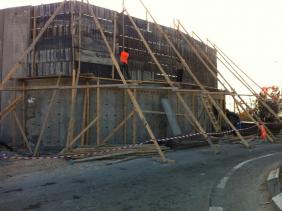
Work on raising the wall to connect with the checkpoint fence is proceeding apace — performed by Palestinians, of course. A jeep is permanently parked to guard the remaining opening.
Today there is a deterioration in conditions at the checkpoint. A team of border policemen does not permit private vehicles to reach the upper parking lot (intended for private and paid parking). The lower parking lot is small and entirely jammed. The transportation folk are there too. The reason? Security,of course, because of work on the wall. But the wall at the upper parking lot is long completed… And then Dafna remembers a TV report yesterday on Palestinians crossing through a breach in the southern part of the wall, and perhaps there was also talk of El Azariya. The additional security may have been triggered by that report. We call the checkpoint commander, but he is not in charge of the border police team. He promises to speak with their commanders and find out why the site is blocked.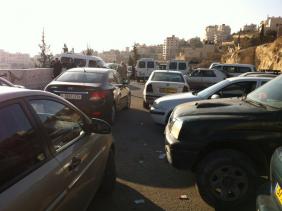
We meet a cute 15-year old with a stunning smile, coming from Hebron to seek work in Jerusalem. He supports an entire family with the work he manages to obtain if he can cross.
We also meet a fellow from Tul-Karem on his way to an interview at the American Consulate. He shows us the receipt for his payment for a visa application. First he complains that the border policemen will not let him cross, but they deny this, and he goes to the DCO for an entry permit. He returns with their order to do this through the Tul-Karem DCO. Why? Do they not have computers here to check all this? But this is only a rhetorical question — we know the answer: such are the regulations. The fellow will not reach his destination today.
Checkpoint Shu'afat camp / Anata-Shu'afat (Jerusalem)
See all reports for this place-
The Shu’afat checkpoint is located in the northern part of East Jerusalem at the exit from the village of Anata and the Shu’afat refugee camp, which are located in the area annexed to Jerusalem in 1967. The refugee camp borders the Shu’afat neighborhood to the west, Pisgat Ze’ev to the north, the French Hill neighborhood to the south and the planned expansion of Ma’aleh Adumim to E-1 in the east. It was established in 1966 for 1948 refugees from the West Bank and was populated after the Six Day War by persons who had been expelled from the Jewish Quarter. Today its population comprises some 25,000 people holding blue ID cards and some 15,000 people with Palestinian ID cards. The camp lacks adequate infrastructure and services, and suffers from poverty, neglect and overcrowding. All its buildings are connected to the public electricity and water infrastructure, but not all are connected to the sewer system. The camp’s services are provided by UNRWA, except for those such as health clinics and transportation of pupils to schools in Jerusalem. In 2005, the Israeli High Court of Justice rejected a suit by the residents requesting that the route of the separation fence be drawn such that the camp would remain on the Israeli side, but conditioned its approval of the route on the establishment of a convenient and rapid crossing facility for the inhabitants of the neighborhood, most of whom are residents of Jerusalem.
A temporary checkpoint operated there until December, 2011. It was extremely congested during rush hours, and dangerous for pedestrians (especially children) because of inadequate safety provisions. The new checkpoint was inaugurated south of the old one, for public and private transportation and for pedestrians, intended solely for the residents of the camp – holders of blue ID cards, and those with Palestinian ID cards who possess appropriate permits. There are five vehicle inspection stations at the checkpoint, and two for pedestrians (one of which is currently closed) where scanners have been installed but are not yet operating. According to the army, representatives of government agencies will also be present to provide services to residents of the neighbourhood. The pedestrian lanes are very long, located far from the small parking lots, and accessible through only a single revolving gate.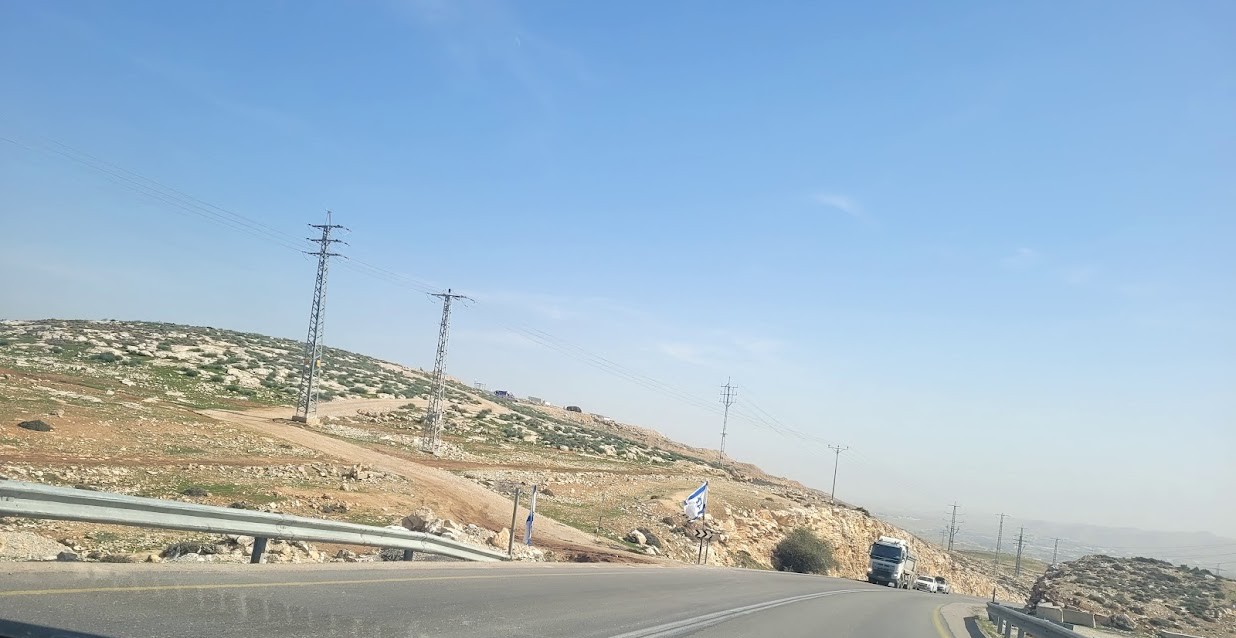 Anat TuegJan-25-2026Anata: A new outpost has been built south of the junction
-
Ras Abu Sbitan (Olive Terminal)
See all reports for this place-
A large checkpoint/crossing to the area of a-Tur, Abu Dis and the Old City; only for pedestrians. Located on Jerusalem’s municipal boundary.
One of the major crossings in Jerusalem’s central sector. It is located on the separation fence between the northern portion of the al-Ezariya neighborhood and the neighborhood of a-Tur and the rest of East Jerusalem. It is manned by Border Police soldiers and private security companies and operates 24 hours a day. Palestinians are forbidden to go through, other than permanent residents of East Jerusalem (holders of blue ID cards) and holders of work and commercial permits who are allowed through only on foot.
-
