Aqraba, Eliyahu Crossing, Huwwara, Za’tara (Tapuah)
Simchat Torah.
13:10 Za’tara/Tapuach junction
Two soldiers at the pickup location opposite the checkpoint in the direction of Huwwara carefully inspect Palestinian vehicles.
13:20 Kafr Aqraba
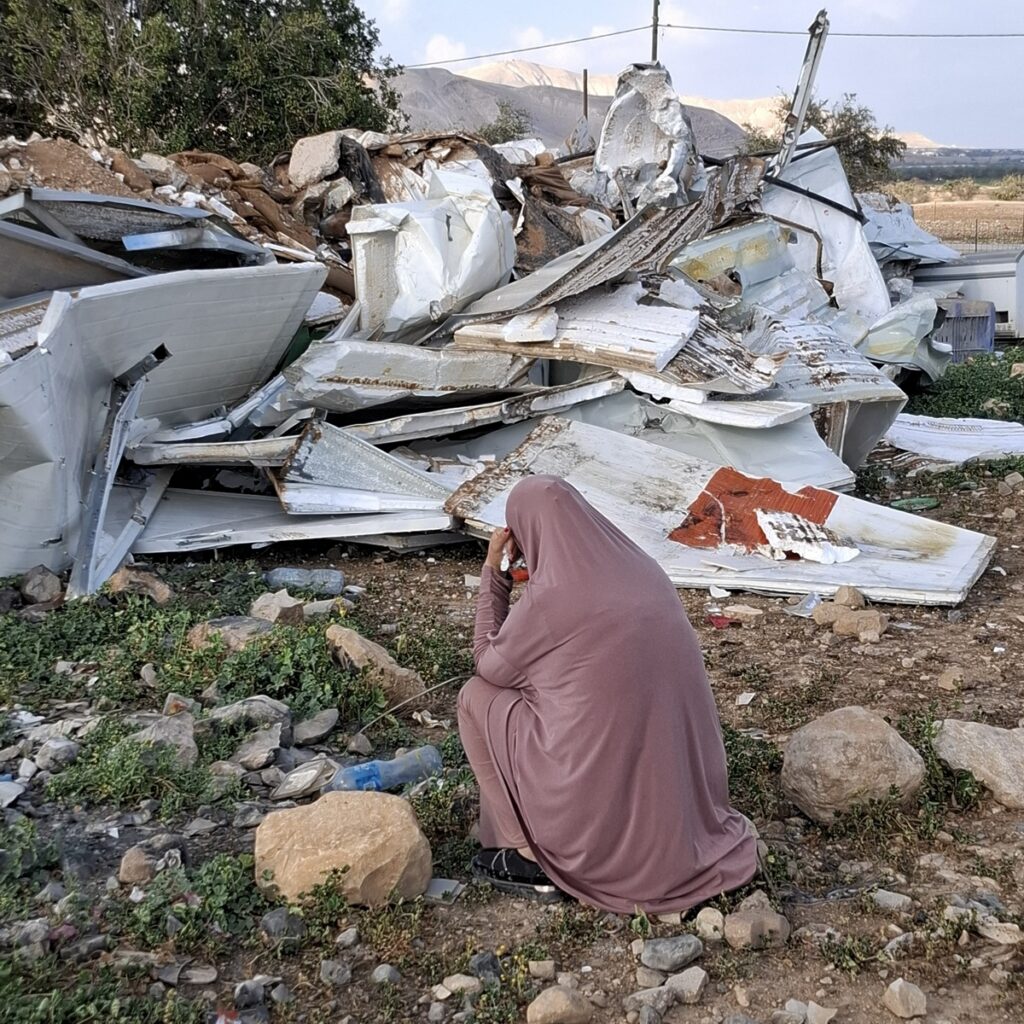
We went to see the mosque that had been set on fire, and to hear what was happening. Here’s what the locals told us: Settlers, apparently from Tapuach, arrived at 2 AM Tuesday, broke a window and entered the mosque. The man delivering bread early in the morning witnessed the incident. He alerted residents of the village. It turns out that two weeks ago there was an attempted arson of a home opposite the mosque. It’s the lower mosque – the women’s mosque. The men’s mosque on the upper floor was locked, and they tried but failed to open the door. “Price tag – Tapuach is Kahanah” (misspelled, ending with a “heh” instead of an “aleph”) was written on the mosque’s exterior wall. The villagers notified the police as soon as they discovered the damage at 7 AM. The police arrived at noon!!!
When the arson was discovered village children (aged 12-14) came to the mosque and wrote on the charred walls, in Arabic, “We’re not leaving,” “We’re staying,” “We’re surviving.”
13:55 Za’tara/Tapuach junction. Soldiers on both sides of the junction, at the checkpoint and at the bus stop in the direction of Huwwara. This time we’re also questioned: where are we from…
14:30 Huwwara. The first tower isn’t manned. There seem to be soldiers in the second. We saw no soldiers standing at the checkpoint. Vehicles go through in both directions without inspection.
On our way back we spoke by phone with Munir. He said last Monday (6.10.14) settlers came down from Yizhar, picked olives from the village’s groves on the slopes of Yitzhar. The following day, Tuesday, they returned and cut down 15 olive trees. The grove’s owner was there and confronted them; they injured him in the head.
On the road from Tapuach to Huwwara and also on the way back we were struck by how few settlers’ cars we saw. At least during Simchat Torah they’re holed up at home; this week has been quiet thus far.
At the Eliyahu crossing on our way back they again made sure to ask where we were coming from and where we were going.
Eliyahu CP (109) / Crossing
See all reports for this place-
Eliyahu CP (109) / Crossing This checkpoint, also known as the Fruit Crossing, is one of the main checkpoints between Israel and the West Bank. It is located on Route 55 between Alfei Menashe and the turn to Qalqilya and Zufin, more than 4 km east of the Green Line, in the separation fence, which separates Qalqilya from its lands to the south, thus leaving Alfei Menashe West of the fence - the Seam Zone. This checkpoint, a few kilometers across the Green Line, is intended for "Israeli settlement in the West Bank and the population of the Seam Zone." It is managed by a civil company. Palestinians with a special permit for their lands in the seam area are also allowed to pass through it, on foot, and sometimes by car.
-
Huwwara
See all reports for this place-
The Huwwara checkpoint is an internal checkpoint south of the city of Nablus, at the intersection of Roads 60 and 5077 (between the settlements of Bracha and Itamar). This checkpoint was one of the four permanent checkpoints that closed on Nablus (Beit Furik and Awarta checkpoints to the east and the Beit Iba checkpoint to the west). It was a pedestrian-only barrier. As MachsomWatch volunteers, we watched therre since 2001 two shifts a day - morning and noon, the thousands of Palestinians leaving Nablus and waiting for hours in queues to reach anywhere else in the West Bank, from the other side of the checkpoint the destination could only be reached by public transport. In early June 2009, as part of the easing of Palestinian traffic in the West Bank, the checkpoint was opened to vehicular traffic. The passage was free, with occasional military presence in the guard tower. Also, there were vehicle inspections from time to time. Since the massacre on 7.10.2023, the checkpoint has been closed to Palestinians.
On February 26, 2023, about 400 settlers attacked the town's residents for 5 hours and set fire to property, such as houses and cars. Disturbances occurred in response to a shooting of two Jewish residents of Har Bracha by a Palestinian Terrorist. The soldiers stationed in the town did not prevent the arson and rescued Palestinian families from their homes only after they were set on fire. No one was punished and Finance Minister Smotrich stated that "the State of Israel should wipe out Hawara." Left and center organizations organized solidarity demonstrations and support actions for the residents of Hawara.Hawara continued to be in the headlines in all the months that followed: more pogroms by the settlers, attacks by Palestinians and a massive presence of the army in the town. It amounted to a de facto curfew of commerce and life in the center of the city. On October 5, 2023, MK Zvi established a Sukkah in the center of Hawara and hundreds of settlers backed the army blocked the main road and held prayers in the heart of the town all night and the next day. On Saturday, October 7, 23 The "Swords of Iron" war began with an attack by Hamas on settlements surrounding Gaza in the face of a poor presence of the IDF. Much criticism has been made of the withdrawal of military forces from the area surrounding Gaza and their placement in the West Bank, and in the Hawara and Samaria region in particular, as a shield for the settlers who were taking over and rioting.
On November 12, 2023, the first section of the Hawara bypass road intended for Israeli traffic only was opened. In this way, the settlers can bypass the road that goes through the center of Hawara, which is the main artery for traffic from the Nablus area to Ramallah and the south of the West Bank. For the construction of the road, the Civil Administration expropriated 406 dunams of private land belonging to Palestinians from the nearby villages. The settlers are not satisfied with this at the moment, and demand to also travel through Hawara itself in order to demonstrate presence and control.(updated November 2023)
. Shoshi AnbarMay-18-2025Huwara: The old houses in Area C
-
Za'tara (Tapuah)
See all reports for this place-
Za'tara (Tapuah) Za'tara is an internal checkpoint in the heart of the West Bank, at the intersection of Road 60 and Road 505 (Trans-Samaria), east of the Tapuah settlement. This checkpoint is the "border" marked by the IDF between the north and south of the West Bank, in accordance with the policy of separation between the two parts of the West Bank that has been in place since December 2005. At the Za'tara checkpoint, there are separate routes for Israelis and Palestinians. In the route for Israelis, there are no inspections and the route for Palestinians inspects. The queue lengthens and shortens suits. The checkpoint is open 24 hours a day. The checkpoint is partially staffed and the people who pass through it are checked at random.
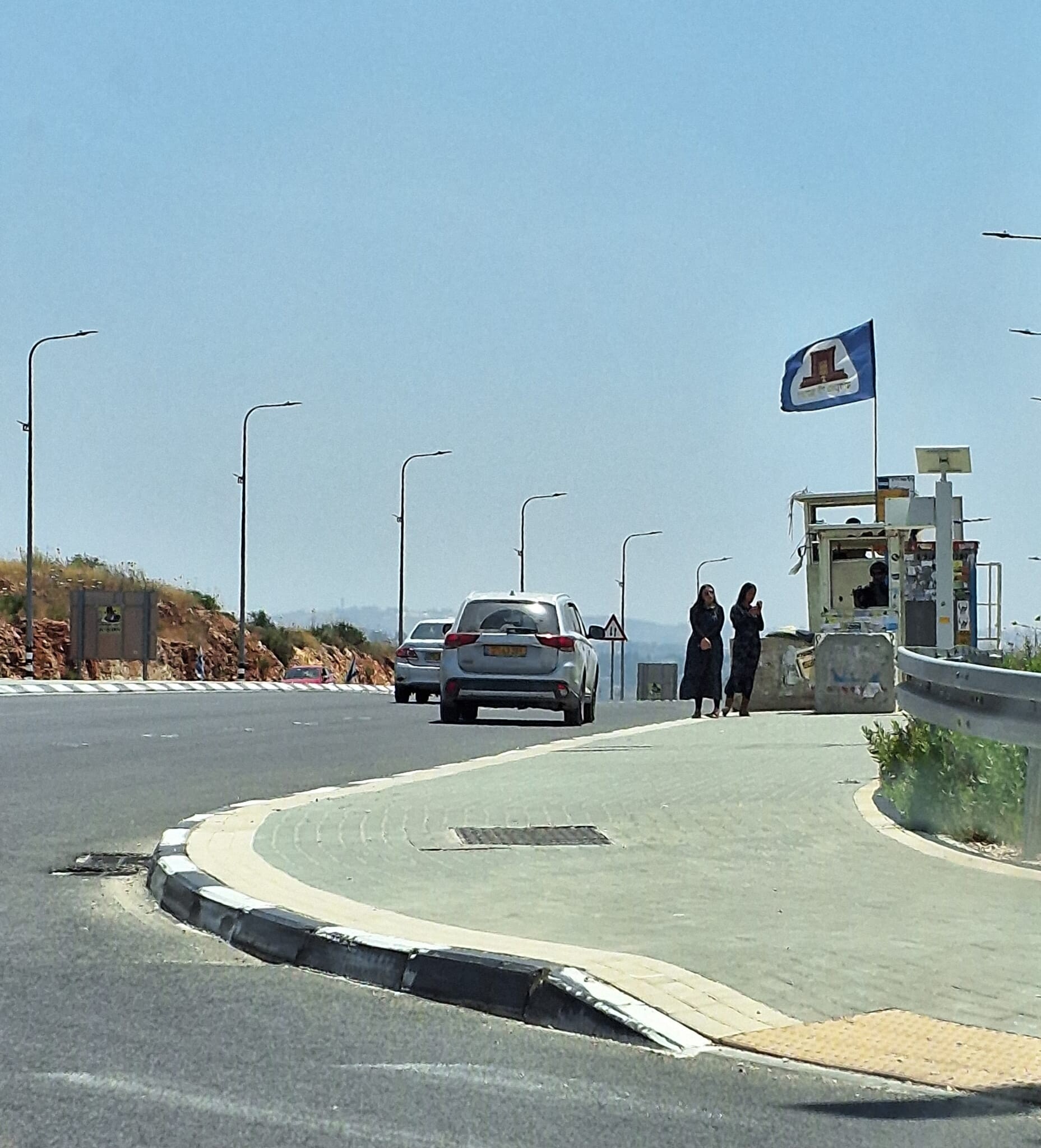 Ronit Dahan-RamatiJun-9-2026Za'atara (Tapuach Junction). The Temple Flag Above a Station
-