
Ar-Ram, Qalandiya
Qalandiya and A-Ram
“The Occupation Kills Us”
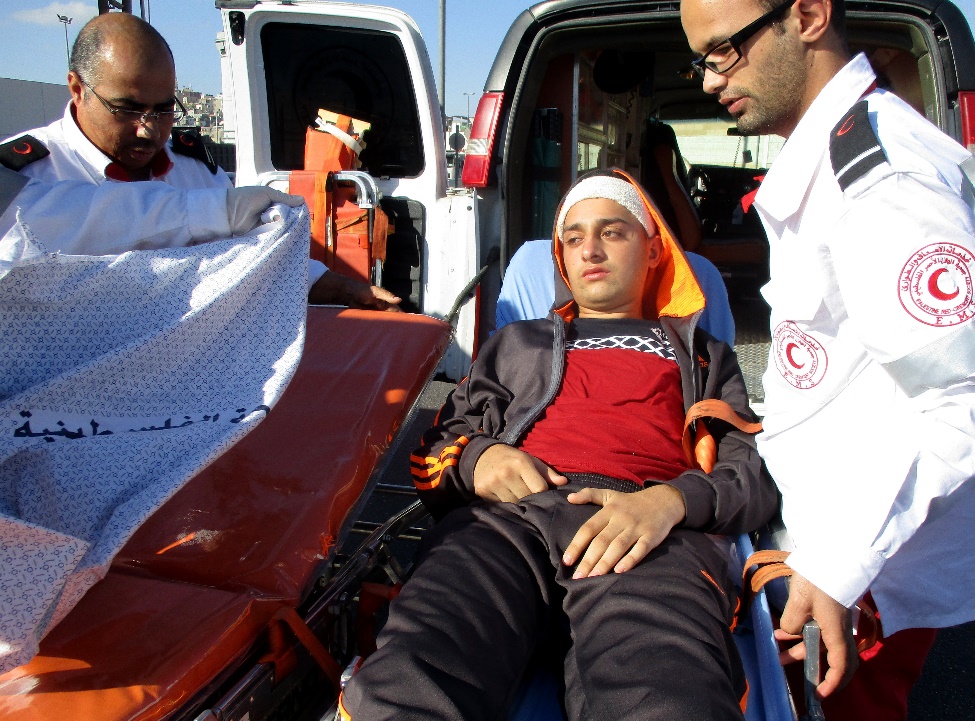
The look in the eyes of this 16-year old boy belongs to one who knows there is no more hope.
His father’s gaze was an abyss of pain, in his mouth prayers for heaven’s mercy.
“This is my child”, he said.
For a child, even when a boy or even as a man, remains his father’s child, certainly at a time like this.
The father said his child suffers from cancer in the brain, and has already been operated in Muqassad Hospital, East Jerusalem. He is being returned there for his condition is…
A mere twenty minutes was this boy delayed in the ambulance until the road was opened for them to the other side of the checkpoint. A mere twenty minutes of delay. “Mere”, for in this place everything is relative. Even the duration of a delay.
And present, as always, were the rifles and the bureaucracy of “coordination” yes or no, namely whether they are or are not permitted to cross, and as always there were those invisibles who decide who gets through the checkpoint and who does not, and there was also the armed arm that tried to block the camera.
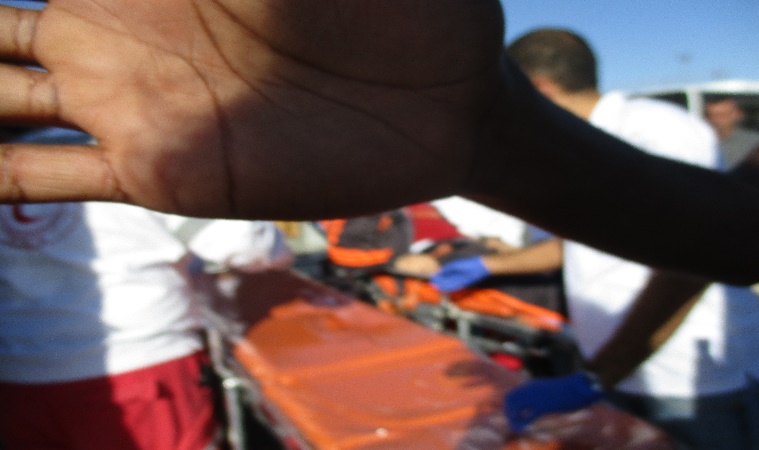
“What is she doing here?” asked Ahmad about Rimona (who, in spite of her misleading name, is not from here and has no Hebrew). “She is researching the Occupation”, I said.
“Tell her the occupation is killing us”.
I did.
A-Ram

There are two heavy metal gates in the wall that surround A-Ram, separating it from Jerusalem. They are army gates, and only the army has the right to enter and exit them, and only the army has the keys.
The western fate between Qalandiya Checkpoint and the town has been opened on and off for years now, in order to regulate the traffic pressures at the checkpoint, and policemen direct vehicles into A-Ram, never out of it.
Until recently, the eastern gate, separating A-Ram from Dahiyat Al-Barid was used exclusively by the army and the Border Police. Lately it has been opened for Palestinian use, it too for entrance only.
It is easy to enter Palestine, hard to leave it.
The gate is opened every day between 15:00 and 19:00 PM ( I don’t know about weekends and holidays, forgot to ask).
“Sometimes the Border Police get us stuck”, told us officer Yossi, and added: “Often they either don’t show up on time to open the gate, or to close it, and we get stuck”.
A-Ram
See all reports for this place-
two kilometers south of Qalandiya and 300 metres north of Neve Yaacov Junction, in Dahiyat el-Barid Quarter. Checkpoint has operated since 1991, in a Palestinian area annexed to Jerusalem in 1967. The checkpoint has been inactive since the middle of 2009.
The wall was built on the road that led to Jerusalem. Since then the situation in the town has deteriorated. Houses are abandoned and half finished, most of the businesses have closed. Severe neglect around the fence and on the streets. Those who could left. Updated January 2024
-
Qalandiya Checkpoint / Atarot Pass (Jerusalem)
See all reports for this place-
Click here to watch a video from Qalandiya checkpoint up to mid 2019 Three kilometers south of Ramallah, in the heart of Palestinian population. Integrates into "Jerusalem Envelope" as part of Wall that separates between northern suburbs that were annexed to Jerusalem in 1967: Kafr Aqab, Semiramis and Qalandiya, and the villages of Ar-Ram and Bir Nabala, also north of Jerusalem, and the city itself. Some residents of Kafr Aqab, Semiramis and Qalandiya have Jerusalem ID cards. A terminal operated by Israel Police has functioned since early 2006. As of August 2006, northbound pedestrians are not checked. Southbound Palestinians must carry Jerusalem IDs; holders of Palestinian Authority IDs cannot pass without special permits. Vehicular traffic from Ramallah to other West Bank areas runs to the north of Qalandiya. In February 2019, the new facility of the checkpoint was inaugurated aiming to make it like a "border crossing". The bars and barbed wire fences were replaced with walls of perforated metal panels. The check is now performed at multiple stations for face recognition and the transfer of an e-card. The rate of passage has improved and its density has generally decreased, but lack of manpower and malfunctions cause periods of stress. The development and paving of the roads has not yet been completed, the traffic of cars and pedestrians is dangerous, and t the entire vicinity of the checkpoint is filthy. In 2020 a huge pedestrian bridge was built over the vehicle crossing with severe mobility restrictions (steep stairs, long and winding route). The pedestrian access from public transport to the checkpoint from the north (Ramallah direction) is unclear, and there have been cases of people, especially people with disabilities, who accidentally reached the vehicle crossing and were shot by the soldiers at the checkpoint. In the summer of 2021, work began on a new, sunken entrance road from Qalandiya that will lead directly to Road 443 towards Jerusalem and Tel Aviv. At the same time, the runways of the old Atarot airport were demolished and infrastructure was prepared for a large bus terminal. (updated October 2021)
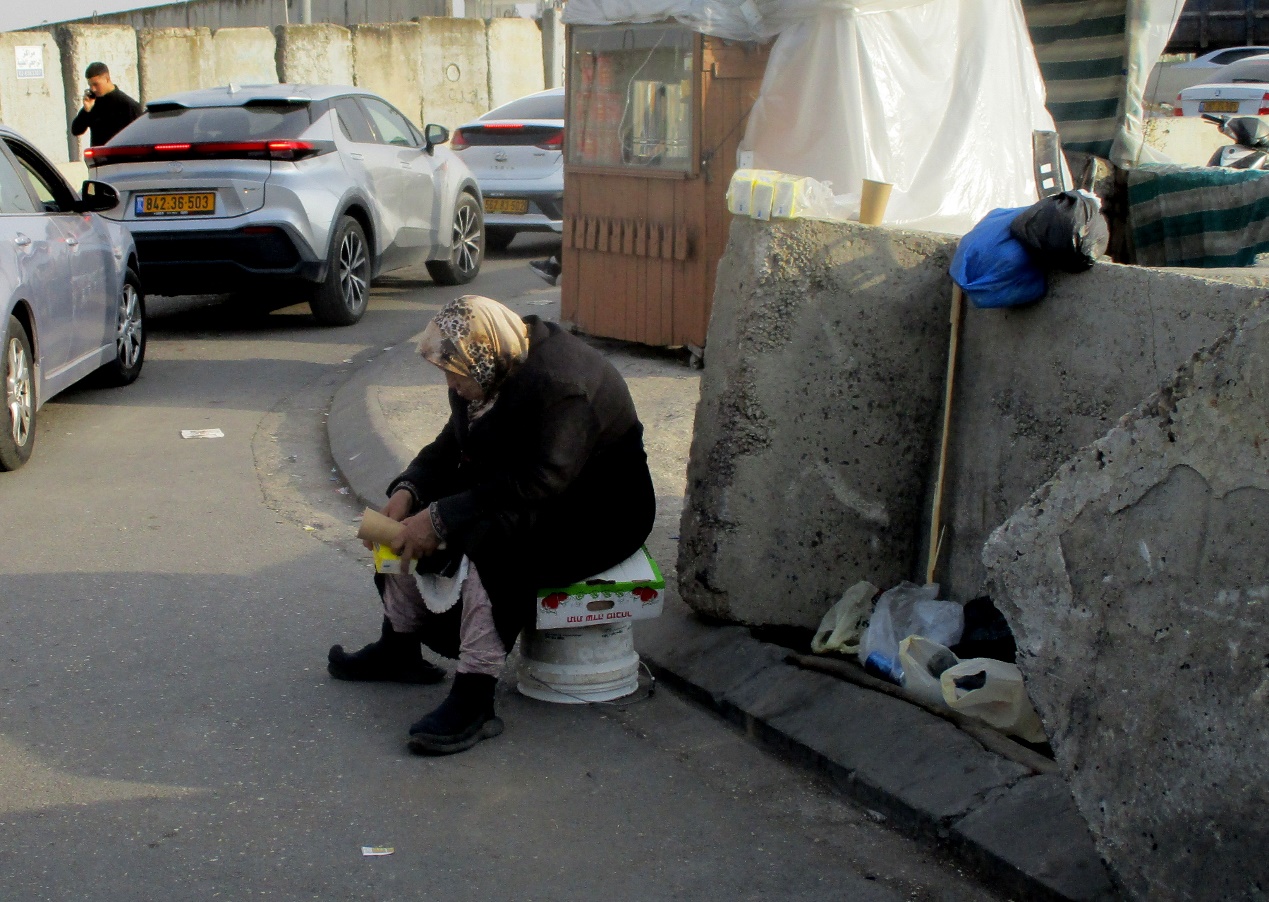 Tamar FleishmanOct-11-2026Qalandiya. Female Beggar
-
