
Army incursions and Jewish religious invasions of the Palestinian village Awarta
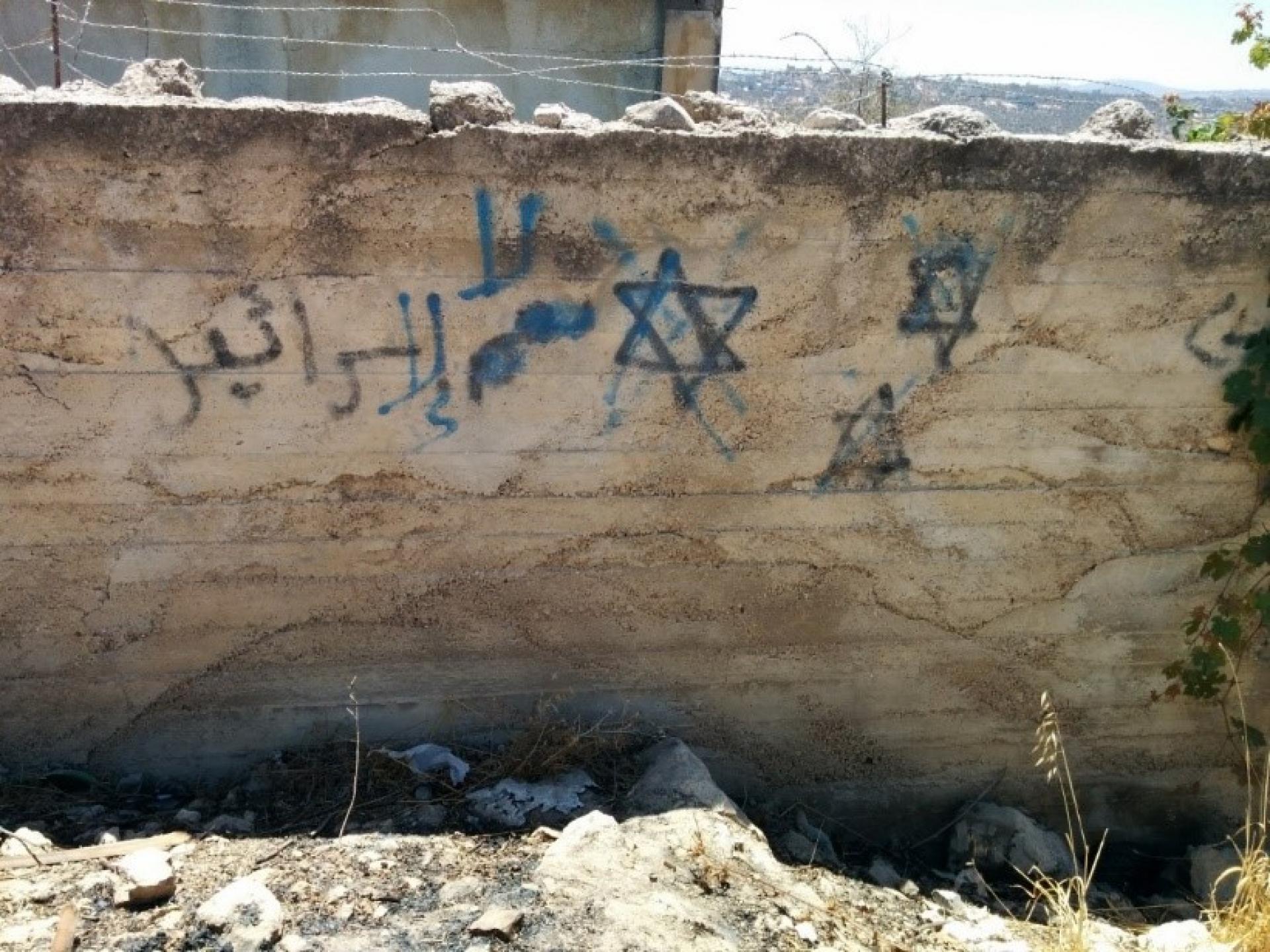
R., an Arabic teacher, volunteered to accompany us and share with us his rich knowledge of the night raids that the Israeli army holds in Awarta for the sake of conducting mass prayers at the “70-old-men’s graves” Itamar and Elazar. So far we have used the term “festivities” coined by the websites that invite observant Jews for the prayers and promise them transport, security and hospitality. From now on we’ll call this by its right name: an army incursion!
As preparation for the “festivity” that begins at midnight and lasts until morning, the army enters the village at 10 p.m. already, closing off its entrances and exits. The army surrounds the area of the three ancient sites holy to Muslims and distant from each other. Palestinian inhabitants are ordered out of their homes, and soldiers climb up to lookout positions on roofs. Then about 10-15 buses enter/invade the village, carrying about 750-800 Jews, without any advance warning or coordination with the local Palestinian council.
In the past, R. told us, these pilgrimages were held less aggressively. The buses used to park at the entrance to the village and Jews walked quietly to the graves. Not now – buses enter the village and park inside it, while the villagers are literally under curfew.
Why and when exactly did this change take place? R. can hardly say, but the answer is found on the internet: this was Israel’s response to the murder of the Fogel family in Itamar settler-colony, committed by two youngsters from Awarta on March 11, 2011. The commander in charge of chasing and hunting them down, Colonel Nimrod Aloni, of the Samaria Brigade, is also the person who changed the format of entering and spending the night in the village. A close collaboration between the firms organizing this mass pilgrimage with the Israeli army created a long-lasting change.
From Channel 7’s report on Tuesday, January 31, 2012:
In view of the “70 Old Men” Festivity that will take place tonight (Tuesday), the security forces approved the pilgrimage to their grave, situated in Awarta village in Samaria (central West Bank), home of the murderers of the late Fogel family. This planned pilgrimage is held in full coordination with the regional brigade… headed by brigade commander Colonel Nimrod Aloni. As written in the Ta’anit scripture, “… the old men passed away in the days of Joshua Bin Nun” (…) The associations “Shchem Echad” and “Yisud Olam” who organize this pilgrimage are prepared to receive the masses of believers who are expected to arrive both with mass transports from the entire country and with the hospitality measures that will be offered all through the prayers. Yisud Olam chairman said: “The public has a rare chance to visit these holy sites safely, once a year… for the rest of the year, entrance to the site is forbidden and dangerous.”
A terrorist attack as ground for deepening occupation measures is an excuse that repeats itself: one day after the attack, the Israeli government approved the building of 500 apartments in Itamar settler-colony; settler-colonists from Itamar put up an outpost named after the murder victims; the ‘special security zone’ around the settler-colony was expanded; a barbed wire fence and surveillance and alarm equipment have been put up. Inside the fence are farmlands belonging to Awarta farmers, whose access there is limited and conditioned by special permits.
(Before I managed to write up the present report, the same trick was pulled at settler-colony Halamish: a terrorist attack by a resident of Kubar (Palestinian village) was followed a few days later by the building of a settler-colonist outpost on the lands of Palestinian village Nabi Salah (including underground infrastructure for electricity and water supply, long planned) and the sealing off of the road connecting Nabi Salah to Beit Ilu, and Beit Ilu to its own lands, including several houses that remain on the side of apartheid road 450 now connecting settler-colonies Halamish, Machlieli, Talmon and Dolev).
In the five years since that army decision to secure the festivities at Awarta their number has risen from once a year to four or five times, according to R. and the guards of the site – adjacent to the village cemetery, on which a schoolhouse for Awarta children is to be constructed. In addition: From the apartheid road connecting Itamar settler-colony and the Palestinian village of Awarta, every night a settler-colonist descends in his car, with a dog, prays and lights candles at the graves. His prayers end in the morning, when he attends shops in the village and takes whatever he desires without paying! His bullying ways is a severe test of the restraint which Palestinian society in Awarta has adhered to. I believe the religious leaders in the mosques speak often about the need to show restraint, as its every breach might worsen conditions under the occupation even further.
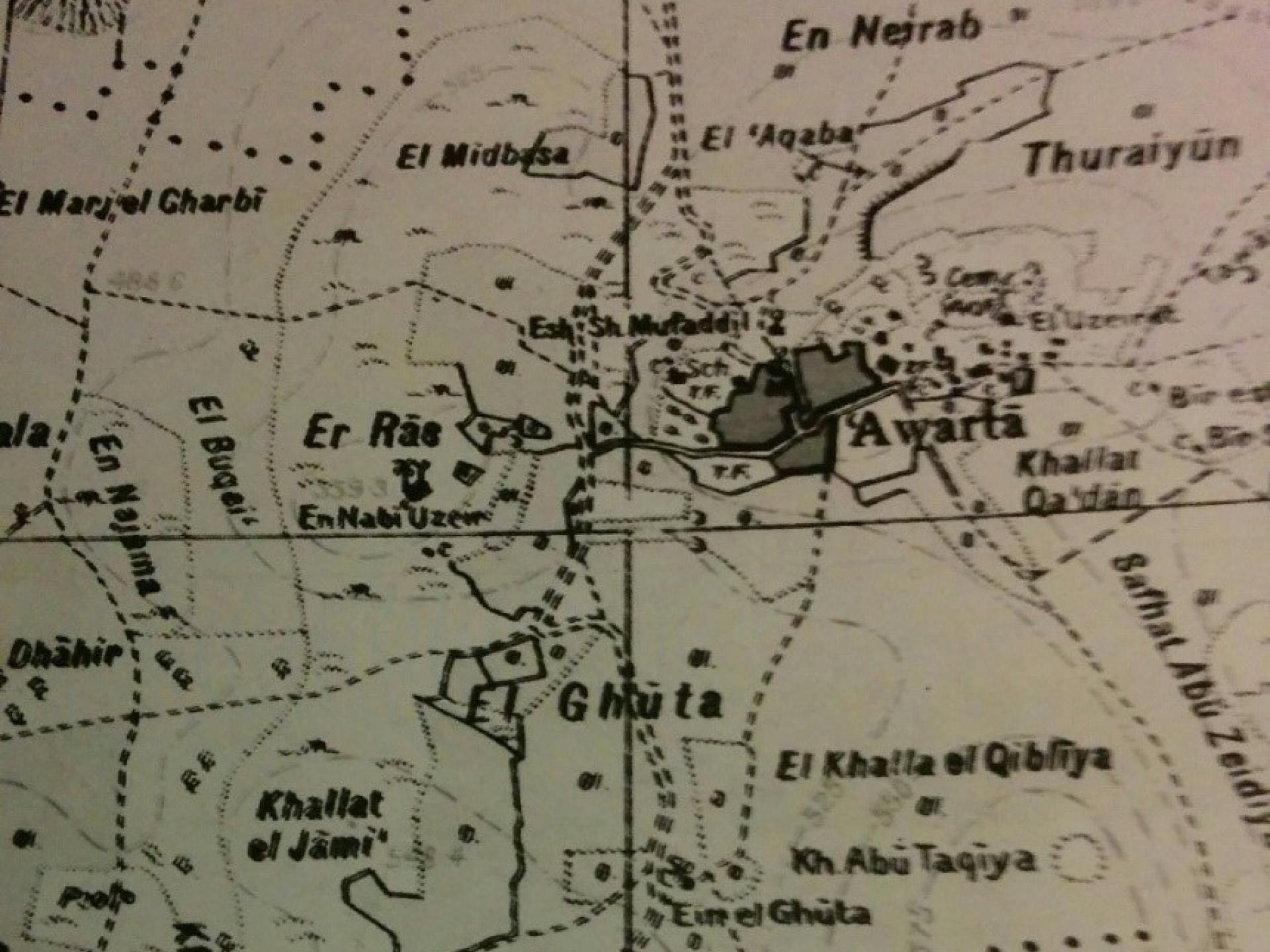
Maps
The map published by the Nablus Joseph’s Tomb (Jewish) Association website – where dates of the mass pilgrimages to Awarta and Kifl Hares and their security arrangements are publicized – does not mention the names of these two Palestinian village names. What does appear on this map? Only the Jewish settler-colonies and the Hebrew names of the sites sanctified by Jews. The disappearance of the Palestinian villages from the map makes them transparent. They ‘do not exist’ or threaten the Jewish believers who are invited to come there from all over the country. Thus, Israeli tourism is encouraged across the ‘green line’ (such tourism is usually rather sparse or even invisible): let us combine the blessed act of prayer and bathing in the natural springs (stolen from Palestinians). See Sefer Ma’ayanosh (literally: The book of natural springs in the West Bank) published by the settler-colonists to mark fifty years of Israeli occupation. These are maps cleared of any sign of Muslim heritage and its practitioners. They are maps of ‘the day after’ as far as the occupation policy is concerned, and the intentions of the settler-colonies.
“Takeover obliterates sanctity” repeats Professor Moshe Halbertal, a Jewish philosophy scholar. But not here: here things are reversed! The morning that ends the festivities finds the village with shattered windows and crushed gravestones, especially those with names and dates. The village’s active cemetery is adjacent to the holy site of “the 70 sheikhs or old men”. Therefore, during the festivities this cemetery serves as a feast site for the hundreds of Jewish pilgrims some of whom use this time to vandalize it under the protection of the Israeli army. “They break our gravestones, and we repair them”, says R.
The temporary army takeover in order to secure the Jewish pilgrims is both a reminder and a threat: that which is temporary might become permanent!
The settler-colony Yitzhar
On our way to Awarta, we tried to enter this settler-colony in order to look into the state of Muslim holy site Salman al Farsi, situated in the center of this colony. The guard at the entrance refused to let us enter after checking our driver’s ID and realizing he is a Palestinian citizen of Israel from Kafr Qassem. “Speak with the security official” he said. I called red-bearded Yitzhak Levi, the security official of Yitzhar who participated in the attack on Palestinian farmers from the six villages surrounding Jabal Salman Al Farsi: Madama, Bourin, Assira Al Qabaliya, Einabus and Huwwara. He answered me sweetly that denying entry to “Israeli Arabs” was ruled out of concern for the welfare of such Arabs, fearing the settler-colonists’ conduct. Welfare!
On March 1, 2016, nine volunteers of Machsomwatch accompanied Palestinian farmers from Madama village to their own lands adjacent to Yitzhar settler-colony. For me that was the first time I saw Jabal Salman, and only two months later, the holy site at its peak. Maqam Salman Al Farsi is sanctified by Palestinians whose access to it has been barred since 1980 by Yitzhar settler-colony.