
‘Awarta, Beit Furik, Huwwara, Sun 30.11.08, Morning
Translation: Hanna K.
07:40 Za'tara: 4 cars from the west, 4 from the north.
07:45 Beita:
A few kilometer before the village we find ourselves in a traffic jam. When we arrive at the village junction it turned out that some short time before there was a serious fatal traffic accident. Before us there was a gathering of many people a truck upside down on the road, with its cargo, consumer goods, strewn all around. Later we learned that the truck hit the car which left the village, a young man of 28 was killed and two other passengers were mortally wounded.
08:25 Beit Furik:
There are no cars in the direction of Nablus. The owner of the coffee stall points out that the condition improved, the passage of the vehicles is quick and some are not checked. He tells us that they intend building a bridge on the spot, work will begin in the coming days. He doesn't know where exactly the bridge will be built and whether it is intended to facilitate the passage of the Palestinians. He heard that when it will be built – the Palestinians will be able to pass to Nablus without being checked, but is not at all convinced that this will indeed happen (neither are we).
While we were at the CP 3-6 cars arrived and a few pedestrians. The CP commander took care to remind us where our place was (the impassable white line).
08:50 Awarta:
Groundwork near the CP. A driver connected with the works tells us that a water line for the village is being built.
There are 3 trucks in the queue at the exit of the village.
09:05 Huwwara:
2 checking stations, a humanitarian queue, a X-Ray truck on the spot, about 20 people at the turnstiles. A lively pedestrian traffic to Nablus, a short delay near the turnstile.
09:20
A young man who waits for a relative at the CP talks about the difficulties of their life. He is a father to six children. Works on a transit car that doesn't belong to him, earns 50 IS per day, finds it difficult to proves for his family. He wants to emigrate to China. The cousin of the man killed in the accident comes up to us. He complains that there are no traffic lights at the exit from Beita, which causes many accidents. He wants to enter Nablus with his car but has no permit and it not allowed to do so. He talked to one of the soldiers and was turned down . He doesn't wait for us to try and find out whether there is a possibility to help him, tell us that he'll find a way to somehow enter the town and goes on his way.
09:40
A Palestinian from the village of Madma, is on his way to an eye surgery in Nablus. He forgot his ID card at home, and a soldier at the CP told him that he is allowed to enter Nablus, but that he wouldn't be able to return from there. We turn to B., the military police commander, he shows understanding and readiness to help the man. The DCO representative joins him, and they promise the Palestinian that they would enable him to leave Nablus, and also give him, at our request, their telephone number in case he'll meet with difficulties upon leaving Nablus.
10:00
We leave the CP.
On our way back we take with us the father of the child who was seriously wounded at the traffic accident at Huwwara. We bring him to an institution in Israel where he is admitted. He too, like the uncle of the young man who was killed at the traffic accidents, protest that there are no traffic lights at the exit from Beita, which causes a serious traffic accident once a month. According to him the army objects to the putting up traffic lights at the Palestinian villages. We shall try to clarify the matter.
'Awarta
See all reports for this place-
Awarta, an internal checkpoint in the heart of the West Bank, is located east of the Hawara checkpoint, at the junction of Roads 555 (which was forbidden for Palestinian traffic in this area) and the entrance road to Nablus. It was one of the four checkpoints that surrounded Nablus until 2009. We used to watch it at Huwwara shifts because it was the only one where goods could be transferred to and from Nablus, using the back-to-back method. It was operated by the army, from 06:00 to 20:00. Until 2009.
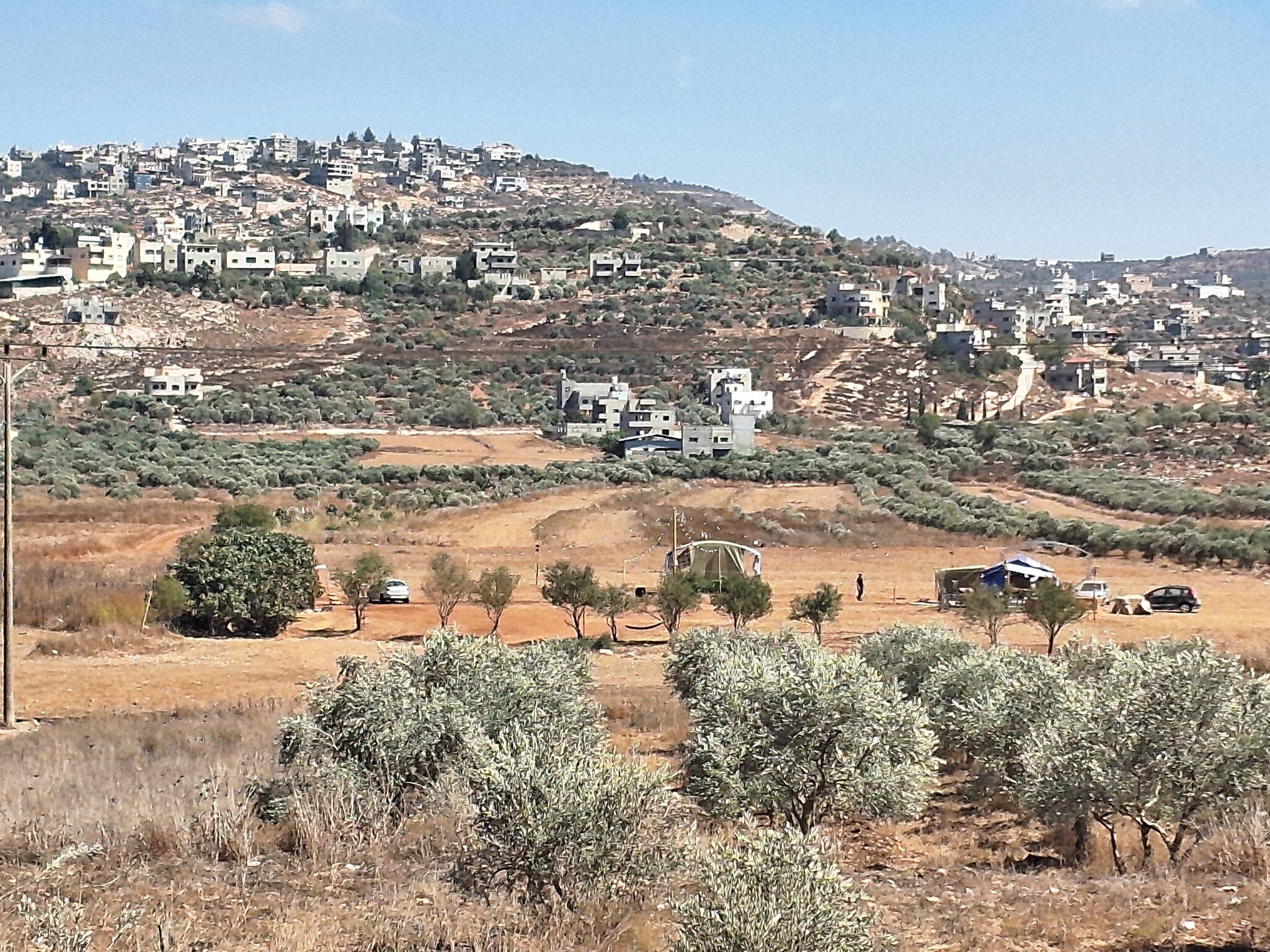 Ronit Dahan-RamatiSep-10-2026Awarta. Outpost below the town
-
Beit Furik checkpoint
See all reports for this place-
One of the three internal checkpoints that closed on the city of Nablus - Beit Furik to the east, Hawara to the south, Beit Iba to the west. The checkpoint is located at the junction of Roads 557 (an apartheid road that was forbidden for Palestinians), leading to the Itamar and Alon Morea settlements and Road 5487. The checkpoint was established in 2001 for pedestrians and vehicles; The opening hours were short and the transition was slow and very problematic.Allegedly, the checkpoint is intended to monitor the movement to and from Nablus of the residents of Beit Furik and Beit Dajan, being the only opening outside their villages. Since May 2009 the checkpoint is open 24 hours a day, the military presence is limited, vehicles can pass through it without inspections, except for random inspections. (Updated April 2010)
-
Huwwara
See all reports for this place-
The Huwwara checkpoint is an internal checkpoint south of the city of Nablus, at the intersection of Roads 60 and 5077 (between the settlements of Bracha and Itamar). This checkpoint was one of the four permanent checkpoints that closed on Nablus (Beit Furik and Awarta checkpoints to the east and the Beit Iba checkpoint to the west). It was a pedestrian-only barrier. As MachsomWatch volunteers, we watched therre since 2001 two shifts a day - morning and noon, the thousands of Palestinians leaving Nablus and waiting for hours in queues to reach anywhere else in the West Bank, from the other side of the checkpoint the destination could only be reached by public transport. In early June 2009, as part of the easing of Palestinian traffic in the West Bank, the checkpoint was opened to vehicular traffic. The passage was free, with occasional military presence in the guard tower. Also, there were vehicle inspections from time to time. Since the massacre on 7.10.2023, the checkpoint has been closed to Palestinians.
On February 26, 2023, about 400 settlers attacked the town's residents for 5 hours and set fire to property, such as houses and cars. Disturbances occurred in response to a shooting of two Jewish residents of Har Bracha by a Palestinian Terrorist. The soldiers stationed in the town did not prevent the arson and rescued Palestinian families from their homes only after they were set on fire. No one was punished and Finance Minister Smotrich stated that "the State of Israel should wipe out Hawara." Left and center organizations organized solidarity demonstrations and support actions for the residents of Hawara.Hawara continued to be in the headlines in all the months that followed: more pogroms by the settlers, attacks by Palestinians and a massive presence of the army in the town. It amounted to a de facto curfew of commerce and life in the center of the city. On October 5, 2023, MK Zvi established a Sukkah in the center of Hawara and hundreds of settlers backed the army blocked the main road and held prayers in the heart of the town all night and the next day. On Saturday, October 7, 23 The "Swords of Iron" war began with an attack by Hamas on settlements surrounding Gaza in the face of a poor presence of the IDF. Much criticism has been made of the withdrawal of military forces from the area surrounding Gaza and their placement in the West Bank, and in the Hawara and Samaria region in particular, as a shield for the settlers who were taking over and rioting.
On November 12, 2023, the first section of the Hawara bypass road intended for Israeli traffic only was opened. In this way, the settlers can bypass the road that goes through the center of Hawara, which is the main artery for traffic from the Nablus area to Ramallah and the south of the West Bank. For the construction of the road, the Civil Administration expropriated 406 dunams of private land belonging to Palestinians from the nearby villages. The settlers are not satisfied with this at the moment, and demand to also travel through Hawara itself in order to demonstrate presence and control.(updated November 2023)
.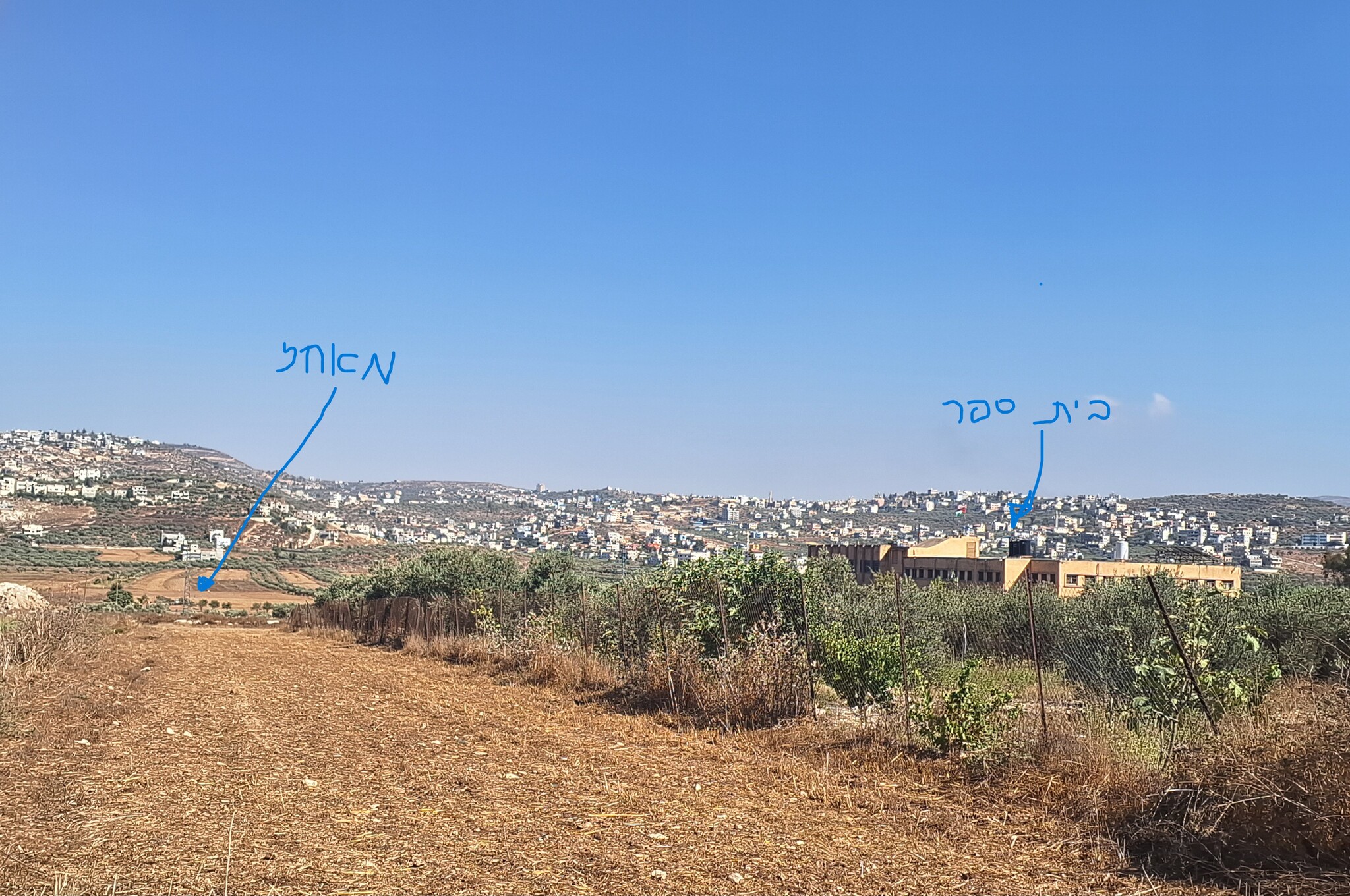 Ronit Dahan-RamatiAug-24-2026Huwara: The school on the outskirts of town and an outpost hidden among the trees
-
