
Awarta, Beit Furik, Huwwara, Za’tara (Tapuah), Mon 31.12.07, Morning
Translation: Ruth F.
"In dark of" (instead of in light of) the last reports from Beit Furik, we had decided to arrive there as early as 6 o'clock.
5:50 Za'tara-
The checkpoint to Tulcarem wasn't open yet. At the CP there was one lane with three cars in line. The soldiers wouldn't talk to us. There weren't any checkpoints at Beita and Burin.
6:10 Beit Furik
Few people were in line and they passed quickly. 3-4 cars were in line at the parking lot. the sodliers inspected the cars and the ID very thoroughly (the driver had to step out of the vehicle and come towards the soldiers, there he was to hand over his ID, take his top of- when the ID was given back he had to bring his vehicle and then It was checked). But in spite of everything it was done quickly- the inspection itself didn't take more then 2-3 minutes for each car. It was even preformed very courteously, but during the time we were there the soldiers took long brakes which cause the people to wait longer. Among the reasons for this: the inspections of the vehicles was preformed only from one side, an armed military vehicle had arrived and the soldier in it started a conversation with the checkpoint soldiers, ext…
The checkpoint commander asked that we stand behind the white line and from both sides of the road, so that he could "control the post with his eyes". He said he didn't have enough soldiers to open the checkpoint to both directions on the same time (the reason for the long brakes).
He helped a bus driver whose ID had been mistakenly forgotten at the checkpoint on the night before.
There was a driver there who said that his new license, that was to insure him three months of free passage at the area, had been confiscated from him on the day before at Huwwara, the soldiers said it was fake.
Miki made inquiries on this subject.
This is what she learned: " R., from the DCO, told me that he had seen the permit and that it was fake. I told him that the young man gave the impression that he was reliable and that I think he wasn't lying to us, he told me something i didn't know- he said that the man had probably paid money for the issuing of the permit or so that the issuing be done faster, and that person had fakes it- that's what the commander said".
Later, the commander at Huwwara told us that the license was a fake and explained to us how they make it.
6:50 Huwwara
There were few cars at the parking lot. An x-ray machine. No dogs. The cars entered and exited rather quickly. There were many people in the line to exit Nablus-about 40. The line for the elderly and women was moving rather fast, and the other line was also moving in a reasonable pace. There were no detainees. The soldiers seemed to be fair with those passing.
7:25 Beit Fuirk
When we arrived there were 5-6 cars, for a moment it seemed that everything was going fine, and then suddenly there was a very long delay due to a vehicle that had to be moved from one side to the other, afterwards the traffic was moving again- and then another long delay. The reason: a young handcuffed man, that had his eyes coved by a piece of cloth, was brought to the checkpoint and left in the cell by the concrete bricks. The commander said that a different company had found him trying to pass a road that is, as we call it, "for whites only". All the soldiers gathered around him, and by the time they got back to their posts, the line had become longer. We timed the cars there, the drivers had to wait for about 25-30 minutes and by then there were 13-15 cars. We asked that R. help organizing the passage.
Miki tried helping a man who's son was arrested by the army on the day before, he had nothing with him. She didn't have much success. They said that he could send him clothes through international organizations.
And here is her new briefing:
"R. told me that at the detention cell at Huwwara they gave the inmates clothes, food, equipment to warm themselves and even cigarettes. If the DCO agrees to transfer the clothes, there will be no problems. I hope the father talked to the Red Cross. Tomorrow I'll try calling the father to find out what's new.
8:50- Awarta
No cars were trying to enter Nablus, three were standing in line to exit.
9:00- Huwwara
The parking lot was packed and crowded. There were stands with food and drinks. When we have just arrived there was many people in the line at the exit of Nablus- over 50 people, but the pace in which the lines move was reasonable. When we left, an hour later, there were about 20 people in line.
The cars that entered Nablus could enter with out any delays, for those exiting it took a little longer because of a 3-4 minute inspection. There were no dogs. Three young men were detained, they were rather frightened, each one of them was taken on his own for an inspection by the toilets that was near what is called "The Humanitarian Post", they had their IDs checked and their coats were pull up. It was done behind a jeep that had no shield. First they were in it and later they went into a room, who's door faces the both, there they were all interrogated, 10-15 minutes for each one of them. The interrogation was preformed by a man who wasn't wearing a uniform. We think they were trying to make them their informants.
10:10 Za'tara
There was a line of about 2-3 cars. There were no cars at the checkpoint on the other side.
Marda- the passage was open, Zeita was still blocked by cement blocks.
'Awarta
See all reports for this place-
Awarta, an internal checkpoint in the heart of the West Bank, is located east of the Hawara checkpoint, at the junction of Roads 555 (which was forbidden for Palestinian traffic in this area) and the entrance road to Nablus. It was one of the four checkpoints that surrounded Nablus until 2009. We used to watch it at Huwwara shifts because it was the only one where goods could be transferred to and from Nablus, using the back-to-back method. It was operated by the army, from 06:00 to 20:00. Until 2009.
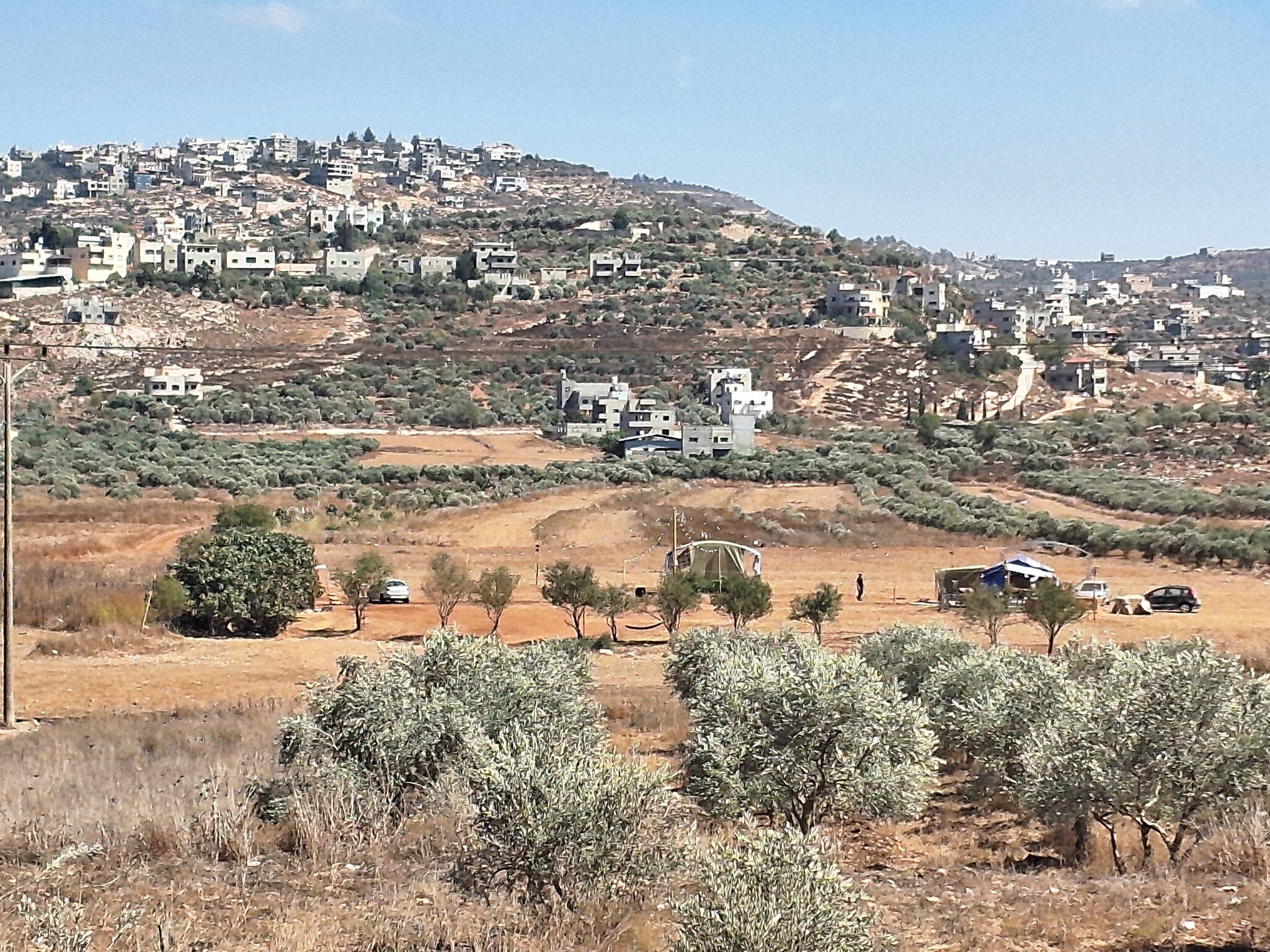 Ronit Dahan-RamatiSep-10-2026Awarta. Outpost below the town
-
Beit Furik checkpoint
See all reports for this place-
One of the three internal checkpoints that closed on the city of Nablus - Beit Furik to the east, Hawara to the south, Beit Iba to the west. The checkpoint is located at the junction of Roads 557 (an apartheid road that was forbidden for Palestinians), leading to the Itamar and Alon Morea settlements and Road 5487. The checkpoint was established in 2001 for pedestrians and vehicles; The opening hours were short and the transition was slow and very problematic.Allegedly, the checkpoint is intended to monitor the movement to and from Nablus of the residents of Beit Furik and Beit Dajan, being the only opening outside their villages. Since May 2009 the checkpoint is open 24 hours a day, the military presence is limited, vehicles can pass through it without inspections, except for random inspections. (Updated April 2010)
-
Huwwara
See all reports for this place-
The Huwwara checkpoint is an internal checkpoint south of the city of Nablus, at the intersection of Roads 60 and 5077 (between the settlements of Bracha and Itamar). This checkpoint was one of the four permanent checkpoints that closed on Nablus (Beit Furik and Awarta checkpoints to the east and the Beit Iba checkpoint to the west). It was a pedestrian-only barrier. As MachsomWatch volunteers, we watched therre since 2001 two shifts a day - morning and noon, the thousands of Palestinians leaving Nablus and waiting for hours in queues to reach anywhere else in the West Bank, from the other side of the checkpoint the destination could only be reached by public transport. In early June 2009, as part of the easing of Palestinian traffic in the West Bank, the checkpoint was opened to vehicular traffic. The passage was free, with occasional military presence in the guard tower. Also, there were vehicle inspections from time to time. Since the massacre on 7.10.2023, the checkpoint has been closed to Palestinians.
On February 26, 2023, about 400 settlers attacked the town's residents for 5 hours and set fire to property, such as houses and cars. Disturbances occurred in response to a shooting of two Jewish residents of Har Bracha by a Palestinian Terrorist. The soldiers stationed in the town did not prevent the arson and rescued Palestinian families from their homes only after they were set on fire. No one was punished and Finance Minister Smotrich stated that "the State of Israel should wipe out Hawara." Left and center organizations organized solidarity demonstrations and support actions for the residents of Hawara.Hawara continued to be in the headlines in all the months that followed: more pogroms by the settlers, attacks by Palestinians and a massive presence of the army in the town. It amounted to a de facto curfew of commerce and life in the center of the city. On October 5, 2023, MK Zvi established a Sukkah in the center of Hawara and hundreds of settlers backed the army blocked the main road and held prayers in the heart of the town all night and the next day. On Saturday, October 7, 23 The "Swords of Iron" war began with an attack by Hamas on settlements surrounding Gaza in the face of a poor presence of the IDF. Much criticism has been made of the withdrawal of military forces from the area surrounding Gaza and their placement in the West Bank, and in the Hawara and Samaria region in particular, as a shield for the settlers who were taking over and rioting.
On November 12, 2023, the first section of the Hawara bypass road intended for Israeli traffic only was opened. In this way, the settlers can bypass the road that goes through the center of Hawara, which is the main artery for traffic from the Nablus area to Ramallah and the south of the West Bank. For the construction of the road, the Civil Administration expropriated 406 dunams of private land belonging to Palestinians from the nearby villages. The settlers are not satisfied with this at the moment, and demand to also travel through Hawara itself in order to demonstrate presence and control.(updated November 2023)
.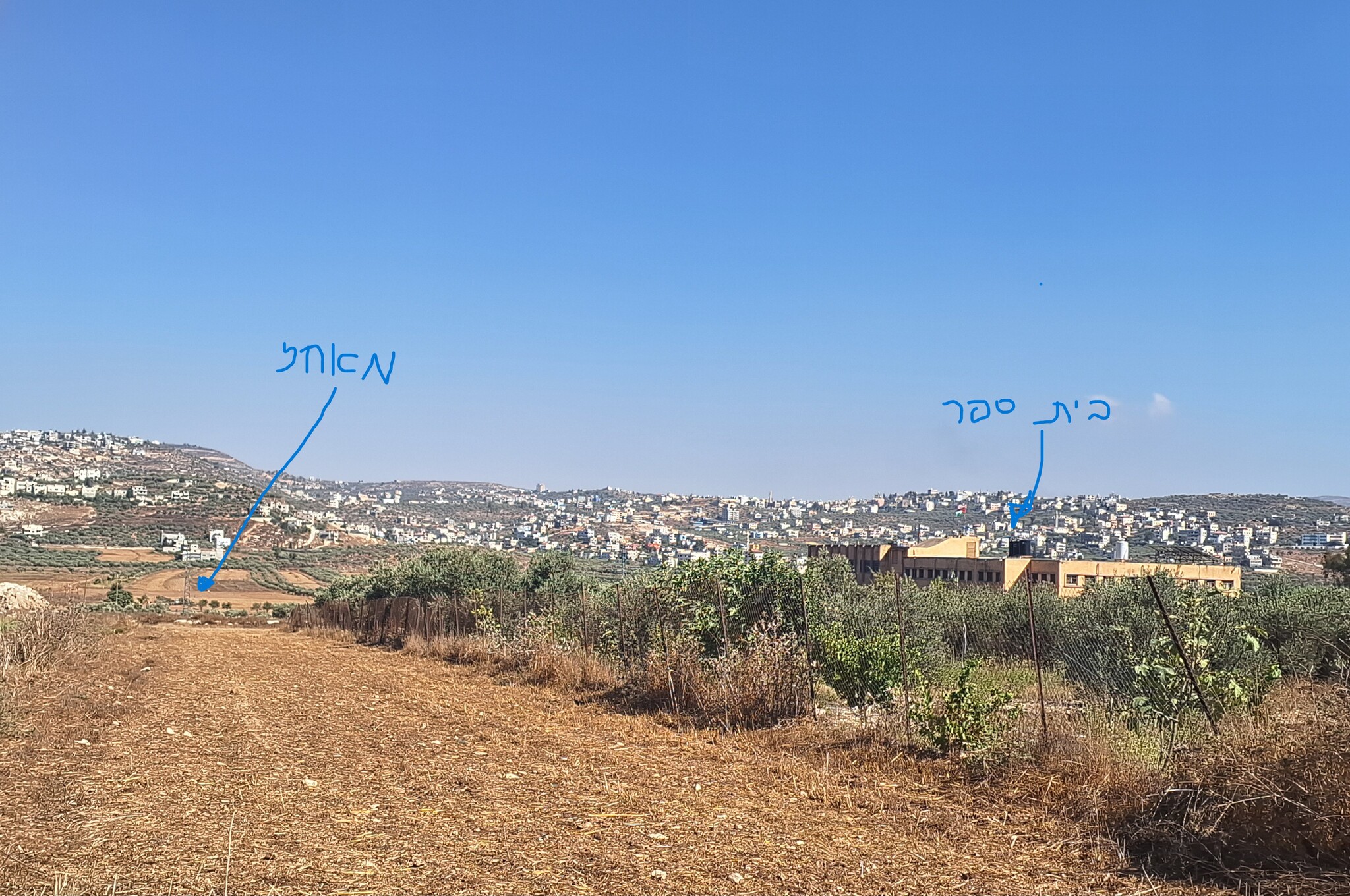 Ronit Dahan-RamatiAug-24-2026Huwara: The school on the outskirts of town and an outpost hidden among the trees
-
Za'tara (Tapuah)
See all reports for this place-
Za'tara (Tapuah) Za'tara is an internal checkpoint in the heart of the West Bank, at the intersection of Road 60 and Road 505 (Trans-Samaria), east of the Tapuah settlement. This checkpoint is the "border" marked by the IDF between the north and south of the West Bank, in accordance with the policy of separation between the two parts of the West Bank that has been in place since December 2005. At the Za'tara checkpoint, there are separate routes for Israelis and Palestinians. In the route for Israelis, there are no inspections and the route for Palestinians inspects. The queue lengthens and shortens suits. The checkpoint is open 24 hours a day. The checkpoint is partially staffed and the people who pass through it are checked at random.
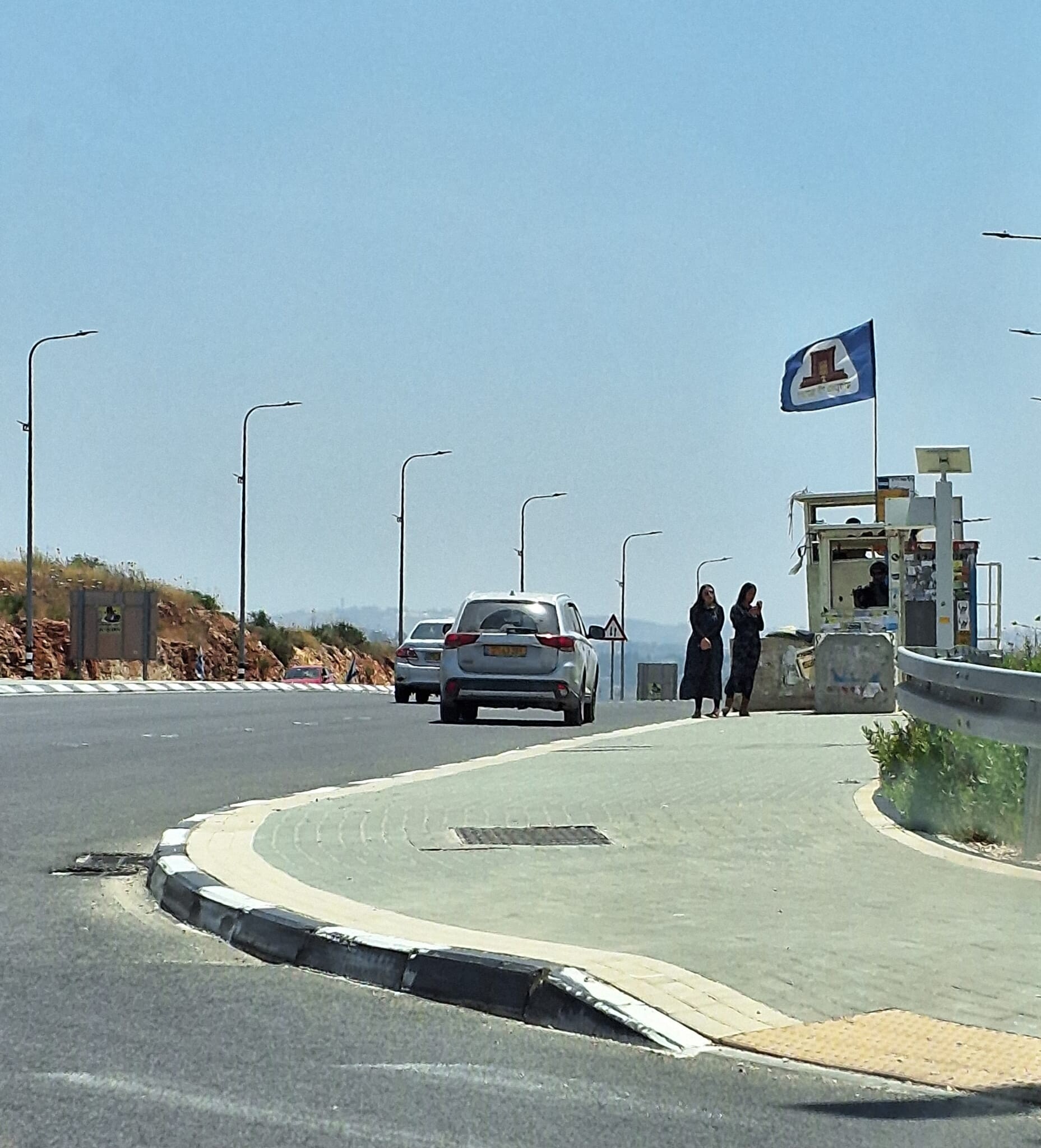 Ronit Dahan-RamatiJun-9-2026Za'atara (Tapuach Junction). The Temple Flag Above a Station
-
