
Awarta, Beit Furik, Huwwara, Za’tara (Tapuah), Thu 31.1.08, Morning
Translation: Maureen A.
On the day after the Winograd Report, the army is working by the book: since it's snowing, the morning shift is not sent to Awarta from Yitamar and the ambulance needs to wait.
6:20 The border police are not doing security checks at the Shomron Gate.
Beyond Ariel both sides of the road are covered with snow; the higher we climb the snowier the road gets and we are careful to drive in the tracks made by cars before us.
The entrance to Marda is open; the blockade at Zeita continues.
6:45 The Za'tara / Tapuach Junction:
The checkpoint is empty of cars, both from the west and from the Huwwara direction.
There has been a change of the guard manning the checkpoint. Now it's reservists. The commanding officer, an engineering student, is missing his examinations at the university, but feels he's on a mission!
7:00 At the Yitzhar / Burin checkpoints no security check is done.
At Huwwara:
There are only a few taxis in the parking lot. Only a few pedestrians, going through the checkpoint quickly. There are no cars waiting from the west, no x-ray vehicle. The female soldiers from the canine unit are playing catch with the dogs, using snowballs (a picture will be sent separately). We convince the commander that since there are no cars waiting to go through the checkpoint, our presence is not interfering with the working of the checkpoint, so we are not sent to stand behind the white line.
7:30 Awarta
The checkpoint is closed. At the same time we arrive, so does the DCO officer, who starts making phone calls to find out what's happening. There are lines of cars that want to enter and to leave. The "coffee house" is deserted. The pick-up truck belonging to the canine unit is standing off to the side of the checkpoint, waiting. Three bundled-up soldiers are peeping out of the pill-box. It turns out that they are the night shift, which hasn't been changed yet. They are not allowed to open the checkpoint. The DCO officer is still talking with his headquarters; we are talking to Brigade Headquarters; everyone says that they're working on it. We discover that the morning shift is at Yitamar, but because of the snow, the army isn't allowing them to travel (which didn't stop the DCO officer or the canine unit from coming).
With great trepidation, we slowly move up the mountain toward Yitamar, and despite the snowy road, my little Ford Focus does not slip and slide and we reach Beit Furik safely. An army vehicle is waiting there, which seems to have come there beforehand from Yitamar. We try to speak to the driver, but the checkpoint commander jumps all over us, shouting, "You are forbidden to stand here; you are forbidden to speak to the soldiers in the vehicle and destroy my authority."
The commander ("My name is Eliran Mor-Yosef; don't forget the dash.) has a scarf over his face and is extremely aggressive: "The very fact that you are here at the checkpoint ruins my day. Don't you dare take pictures. Show me what you photographed; erase the picture immediately or I will smash the camera over your nose; I will call in the police; I will say that you are inciting (?!); do you want me to handcuff you? etc."
Since there were very few people and very few vehicles (which were checked extra-carefully), we returned to Awarta.
8:30 Awarta.
The checkpoint is still closed. The DOC commander is hiding from the snow in the canine unit's pick-up truck. There's an ambulance waiting across from the checkpoint, which is soon joined by another ambulance, with its lights flashing. We call the brigade – they are working on it. We called the DOC commander, R., and he promised to speak to his representative at the checkpoint. I try to get the soldiers out of the pill-box; as usual, they are stricken with horror at the fact that I am climbing up the hill.
Finally a soldier comes out, with a key in his hand. Wonder of wonders: the checkpoint is opened, even though the soldiers for the morning shift have not yet arrived. After both ambulances have gone through, the brave soldiers continue, checking the trucks.
8:40 Huwwara
A long line of pedestrians is waiting in the cold in the hut. The soldiers have gone out for an unclear walk around the turnstile which serves those who are entering the city. After a while another line opens. There are practically no cars and the canine team members are warming themselves near the small heater in the cabin.
After a short break, it starts to snow lightly and rivers of ice form in the parking lot.
On our way back we see the pharmacist from Huwwara walking quickly through the snow and we give her a lift so she can open the pharmacy early. There is little activity in the town; schools are closed, as is the baklava shop, much to our dismay.
9:15 The Tapuach / Za'tara Junction – no line.
A little before the Shomron Gate, we look from the top of the hill: behind us it is snowing – the coastline is flooded with sunshine. In truth – two States for two peoples.
'Awarta
See all reports for this place-
Awarta, an internal checkpoint in the heart of the West Bank, is located east of the Hawara checkpoint, at the junction of Roads 555 (which was forbidden for Palestinian traffic in this area) and the entrance road to Nablus. It was one of the four checkpoints that surrounded Nablus until 2009. We used to watch it at Huwwara shifts because it was the only one where goods could be transferred to and from Nablus, using the back-to-back method. It was operated by the army, from 06:00 to 20:00. Until 2009.
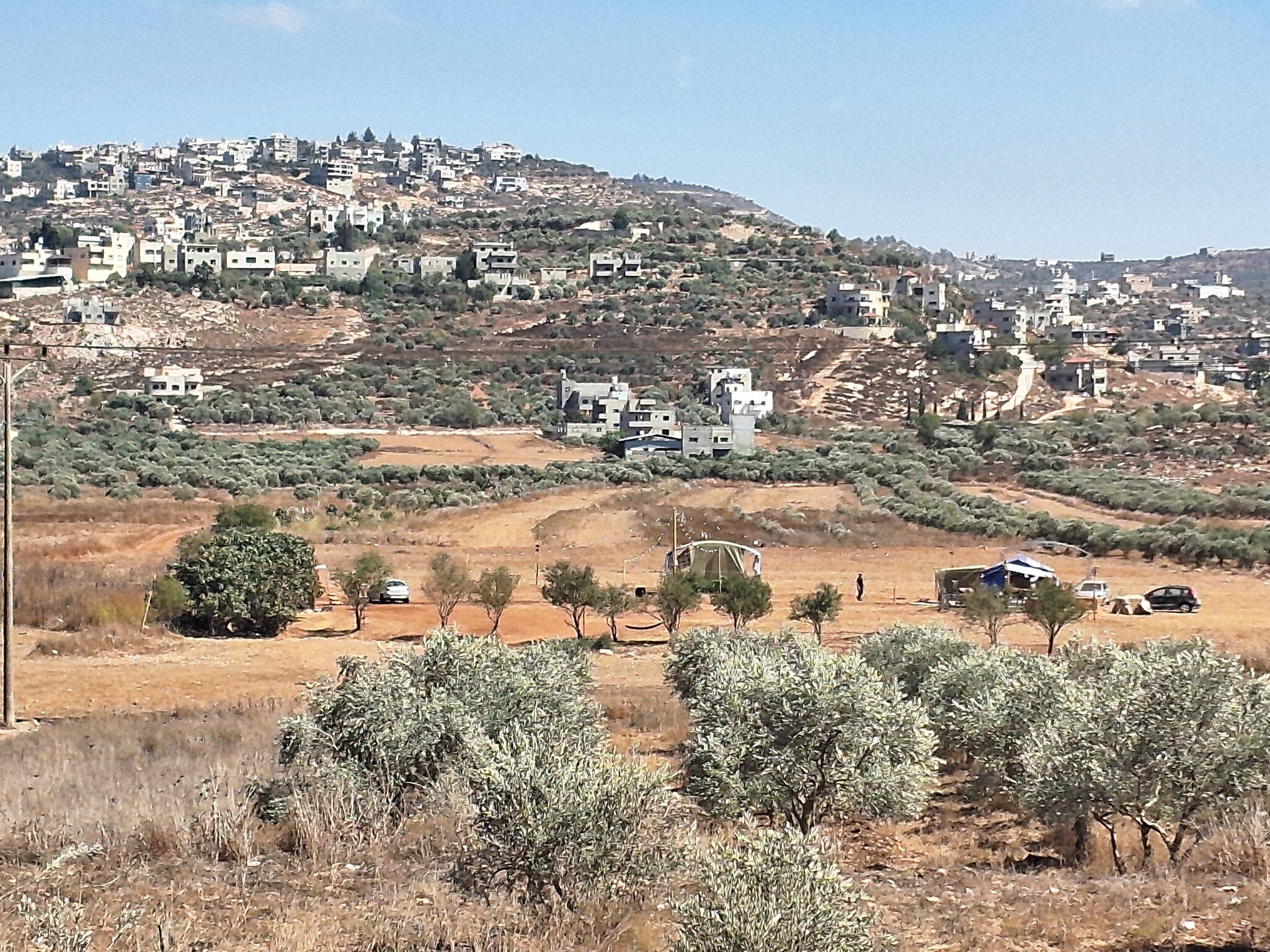 Ronit Dahan-RamatiSep-10-2026Awarta. Outpost below the town
-
Beit Furik checkpoint
See all reports for this place-
One of the three internal checkpoints that closed on the city of Nablus - Beit Furik to the east, Hawara to the south, Beit Iba to the west. The checkpoint is located at the junction of Roads 557 (an apartheid road that was forbidden for Palestinians), leading to the Itamar and Alon Morea settlements and Road 5487. The checkpoint was established in 2001 for pedestrians and vehicles; The opening hours were short and the transition was slow and very problematic.Allegedly, the checkpoint is intended to monitor the movement to and from Nablus of the residents of Beit Furik and Beit Dajan, being the only opening outside their villages. Since May 2009 the checkpoint is open 24 hours a day, the military presence is limited, vehicles can pass through it without inspections, except for random inspections. (Updated April 2010)
-
Huwwara
See all reports for this place-
The Huwwara checkpoint is an internal checkpoint south of the city of Nablus, at the intersection of Roads 60 and 5077 (between the settlements of Bracha and Itamar). This checkpoint was one of the four permanent checkpoints that closed on Nablus (Beit Furik and Awarta checkpoints to the east and the Beit Iba checkpoint to the west). It was a pedestrian-only barrier. As MachsomWatch volunteers, we watched therre since 2001 two shifts a day - morning and noon, the thousands of Palestinians leaving Nablus and waiting for hours in queues to reach anywhere else in the West Bank, from the other side of the checkpoint the destination could only be reached by public transport. In early June 2009, as part of the easing of Palestinian traffic in the West Bank, the checkpoint was opened to vehicular traffic. The passage was free, with occasional military presence in the guard tower. Also, there were vehicle inspections from time to time. Since the massacre on 7.10.2023, the checkpoint has been closed to Palestinians.
On February 26, 2023, about 400 settlers attacked the town's residents for 5 hours and set fire to property, such as houses and cars. Disturbances occurred in response to a shooting of two Jewish residents of Har Bracha by a Palestinian Terrorist. The soldiers stationed in the town did not prevent the arson and rescued Palestinian families from their homes only after they were set on fire. No one was punished and Finance Minister Smotrich stated that "the State of Israel should wipe out Hawara." Left and center organizations organized solidarity demonstrations and support actions for the residents of Hawara.Hawara continued to be in the headlines in all the months that followed: more pogroms by the settlers, attacks by Palestinians and a massive presence of the army in the town. It amounted to a de facto curfew of commerce and life in the center of the city. On October 5, 2023, MK Zvi established a Sukkah in the center of Hawara and hundreds of settlers backed the army blocked the main road and held prayers in the heart of the town all night and the next day. On Saturday, October 7, 23 The "Swords of Iron" war began with an attack by Hamas on settlements surrounding Gaza in the face of a poor presence of the IDF. Much criticism has been made of the withdrawal of military forces from the area surrounding Gaza and their placement in the West Bank, and in the Hawara and Samaria region in particular, as a shield for the settlers who were taking over and rioting.
On November 12, 2023, the first section of the Hawara bypass road intended for Israeli traffic only was opened. In this way, the settlers can bypass the road that goes through the center of Hawara, which is the main artery for traffic from the Nablus area to Ramallah and the south of the West Bank. For the construction of the road, the Civil Administration expropriated 406 dunams of private land belonging to Palestinians from the nearby villages. The settlers are not satisfied with this at the moment, and demand to also travel through Hawara itself in order to demonstrate presence and control.(updated November 2023)
.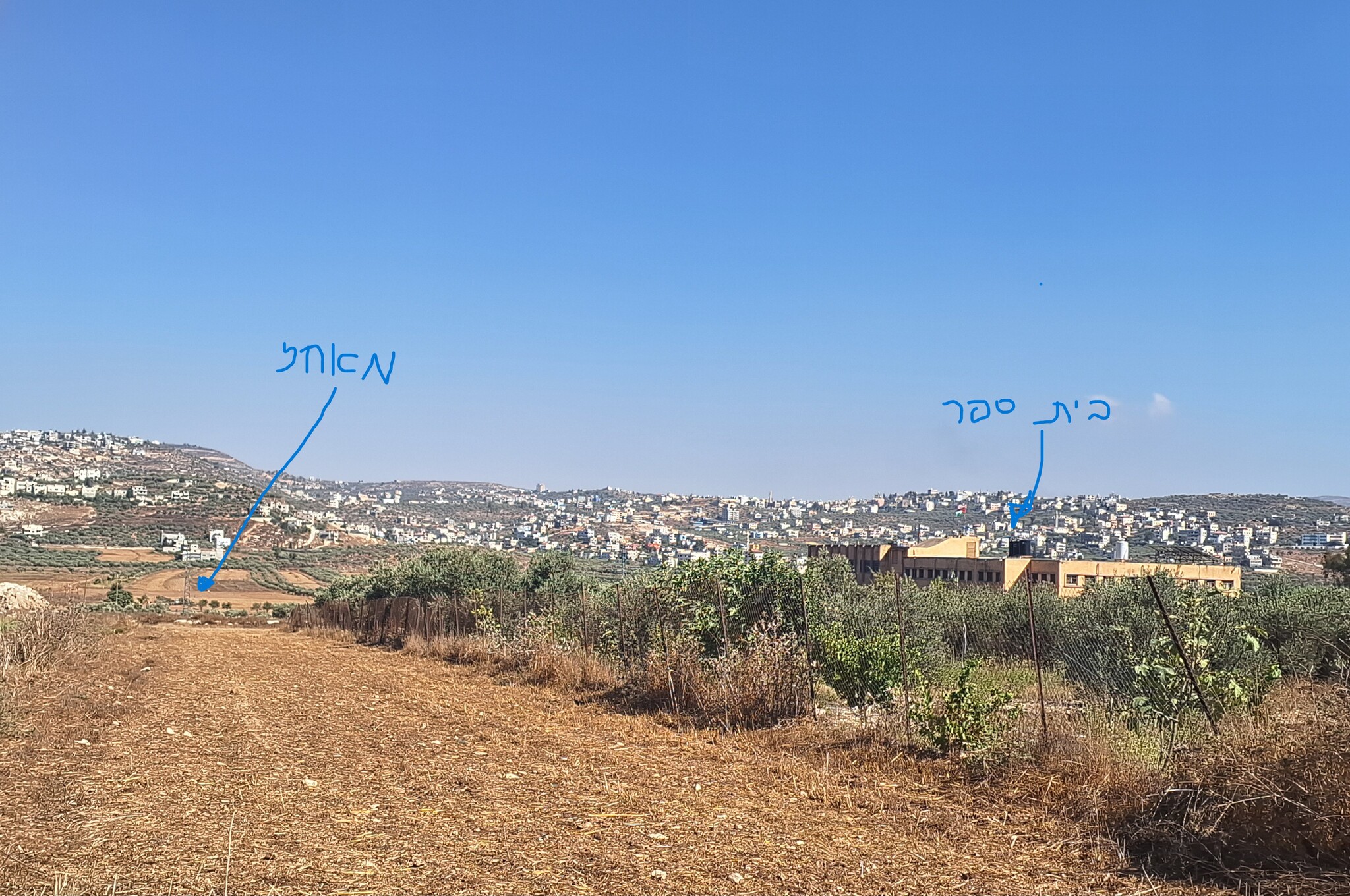 Ronit Dahan-RamatiAug-24-2026Huwara: The school on the outskirts of town and an outpost hidden among the trees
-
Za'tara (Tapuah)
See all reports for this place-
Za'tara (Tapuah) Za'tara is an internal checkpoint in the heart of the West Bank, at the intersection of Road 60 and Road 505 (Trans-Samaria), east of the Tapuah settlement. This checkpoint is the "border" marked by the IDF between the north and south of the West Bank, in accordance with the policy of separation between the two parts of the West Bank that has been in place since December 2005. At the Za'tara checkpoint, there are separate routes for Israelis and Palestinians. In the route for Israelis, there are no inspections and the route for Palestinians inspects. The queue lengthens and shortens suits. The checkpoint is open 24 hours a day. The checkpoint is partially staffed and the people who pass through it are checked at random.
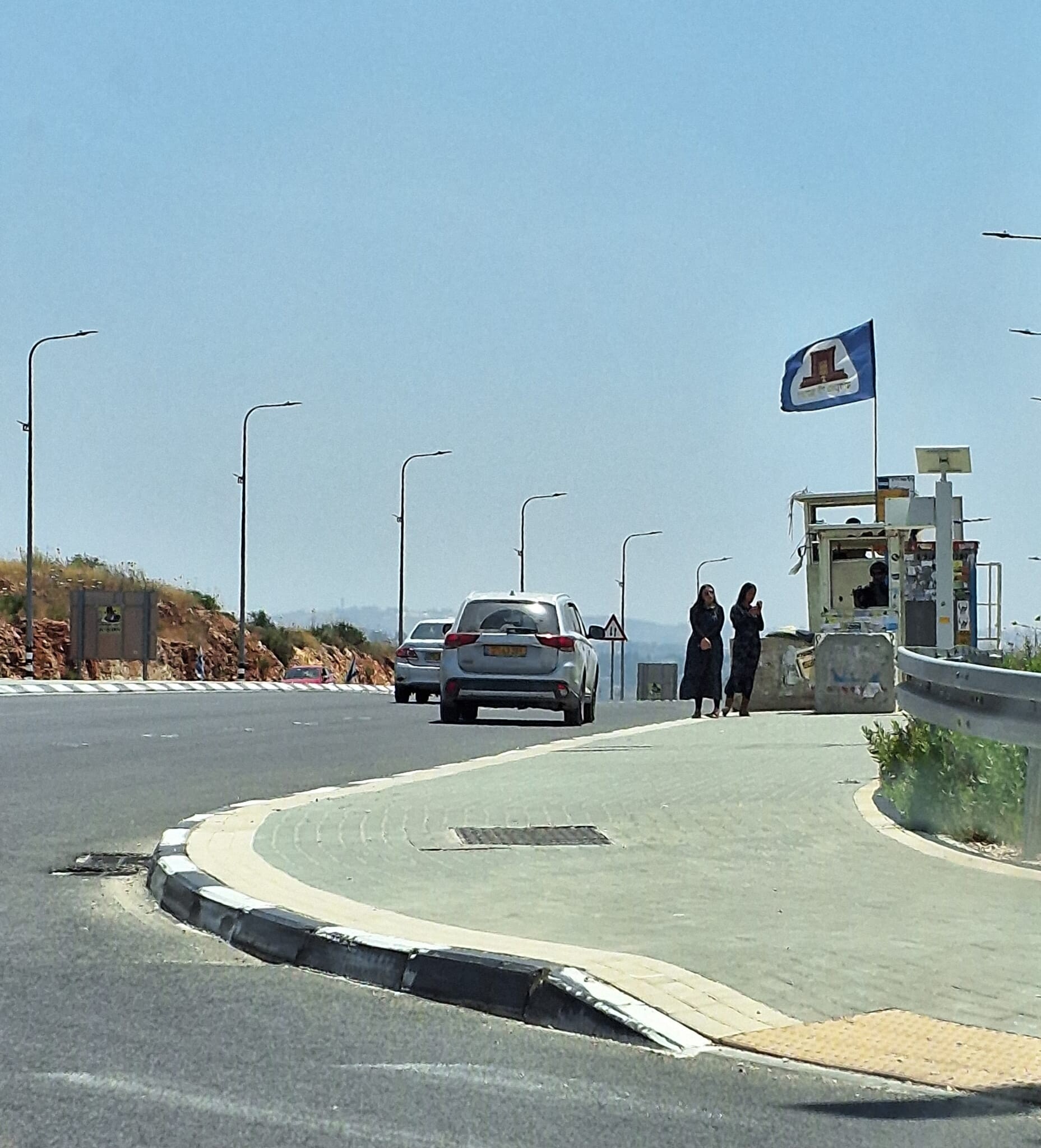 Ronit Dahan-RamatiJun-9-2026Za'atara (Tapuach Junction). The Temple Flag Above a Station
-
