
‘Awarta, Habla, Huwwara, Za’tara (Tapuah), Mon 14.6.10, Afternoon
15.10 Shomron gate.
15.30 Zita. ‘No checkpoint’. We got out to greet motorists. A pleasure to see the barrier of stones has been totally removed. Of course the metal gate still stands. Drivers say it is open 24 hours.
15.40 Zatra junction. Heavy traffic flowing. Soldiers are busy talking to each other and some drivers wait for the familiar hand movement, not being used to pass through without checking.
16.10 Nablus D.C.O.. The shed is empty. A taxi driver from Awarta is waiting for a family from Nablus. According to him they entered three hours earlier and hadn’t yet come out. He reckoned there must be another ten people waiting. People complained about the slow processing
16.15 Awarta (village). At the grocery we met Amg’ad whom we had asked to find out the council head’s decision about participation of Awarta children in the seaside kaitana in July. He said the process of getting permission and ID’s would happen soon. We got the impression that they were indeed interested in taking part. Maki made contact between Mag’ad and Physicians for Human Rights about heart treatment for an eight year old girl.
16.30 Awarta checkpoint. Lots of private cars pass the checkpoint and we wonder how. Salah of the DCO is present and arranges for a father and sick child to get on a bus to take them to the clinic in Awarta. He explains that because an explosive device was found at Hawarra, the checkpoint there was closed and the Awarta checkpoint was open for ALL vehicles.
16.50 Huwarra checkpoint. While driving we saw a Palestinian youth with a fairly large group of soldiers in the empty parking lot. (We allowed ourselves to guess what was happening). The checkpoint was empty. Cars were sent back to the village to reach Awarta checkpoint. The segregated road is of course closed (one ambulance is allowed to use it). The officer in charge of closing the road in the big square is a decent fellow but when we ask him why ‘Madison route’ is not open he says that the decision on that level is not up to him. On our part, we phoned the humanitarian Moked and described the traffic jam that was caused. They said they would clarify. A few minutes later an instruction came through to open the road and allow all cars to pass through Awarta. We don’t think this was because of our phone call. After we had been in the square for over 15 minutes, a soldier warned us that we would soon hear an explosion but not to panic. And 10 minutes later there was indeed a small explosion. We understood from the soldiers that there were media present at the checkpoint and also photographers and intelligence information about the explosive device. Who invited the media, and why?
17.15 Burin junction (Izhar). A jeep with border police. At the entrance to the southern neighbourhood of Kedumim (the other side of the road) was a military vehicle and soldiers who seemed to be checking those entering. Unclear if this is a routine check at this hour.
17.10 Habla farmers’ gate. Apparently open now from 17.00 to 18.30. Few people were passing through. When we asked, there were no particular complaints. A soldier asked if ours was paid employment and we explained we were an organization defending human rights. Clearly he did not accept this, but when we explained further he asked ‘so is this through patriotism?’ and we said yes, and that the morality and values of our state were important to us. He said he was ‘in shock’ and thus we ended our conversation and our watch.
'Awarta
See all reports for this place-
Awarta, an internal checkpoint in the heart of the West Bank, is located east of the Hawara checkpoint, at the junction of Roads 555 (which was forbidden for Palestinian traffic in this area) and the entrance road to Nablus. It was one of the four checkpoints that surrounded Nablus until 2009. We used to watch it at Huwwara shifts because it was the only one where goods could be transferred to and from Nablus, using the back-to-back method. It was operated by the army, from 06:00 to 20:00. Until 2009.
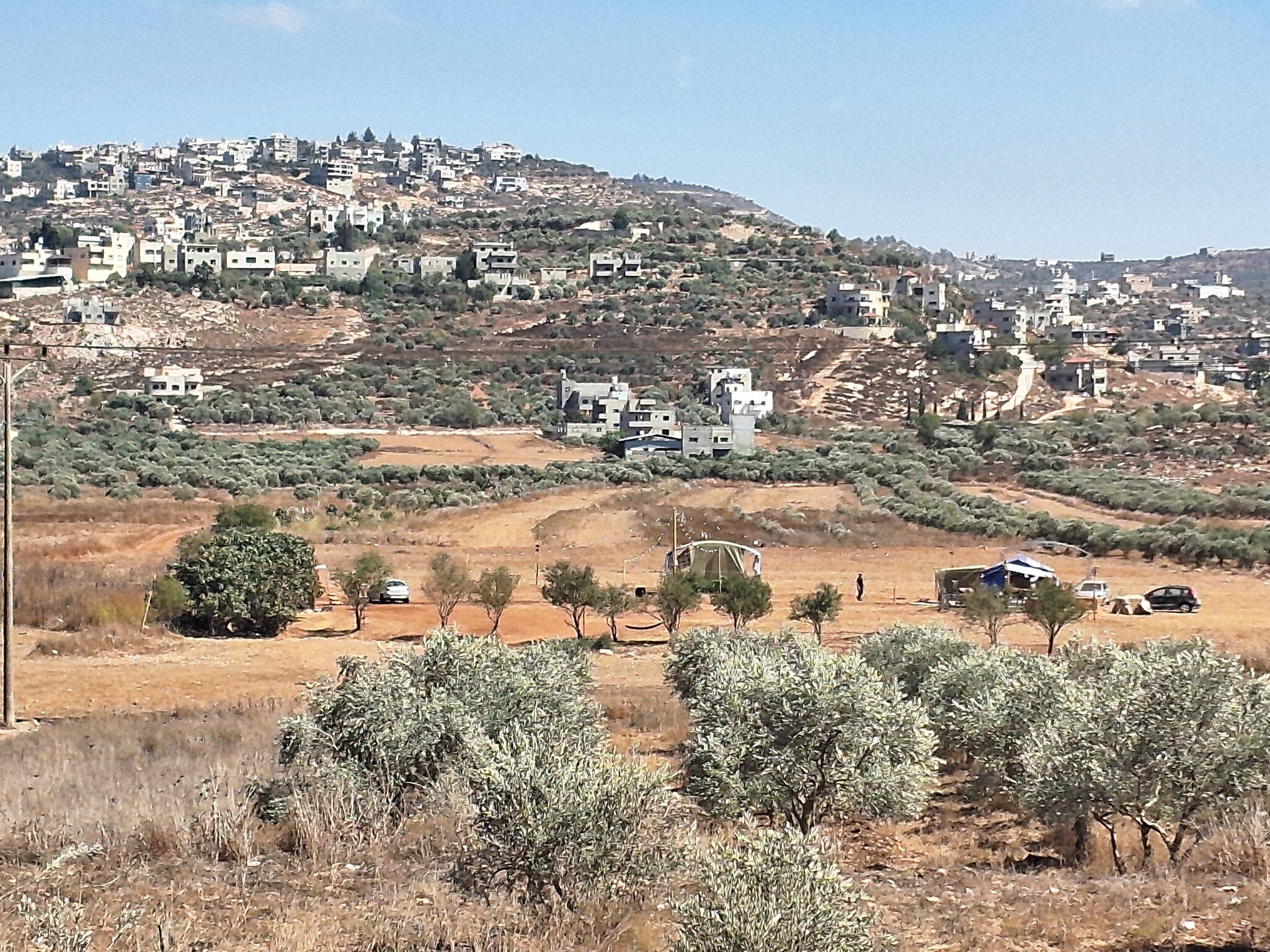 Ronit Dahan-RamatiSep-10-2026Awarta. Outpost below the town
-
Habla
See all reports for this place-
Habla CP (1393)
The Habla checkpoint (1393) was established on the lands of the residents of Qalqilya, on the short road that
connected it for centuries to the nearby town of Habla. The separation barrier intersects this road twice and cut off the residents of Qalqilya from their lands in the seam zone.(between the fence and the green line).
There is a passage under Road 55 that connects Qalqilya to the sabotage This agricultural barrier is used by the farmers and nursery owners established along Road 55 from the Green Line and on both sides of the kurkar road leading to the checkpoint.
This agricultural checkpoint serves the residents of Arab a-Ramadin al-Janoubi (detached from the West Bank), who pass through it to the West Bank and back to their homes. The opening hours (3 times a day) of this agricultural checkpoint are longer than usual, about an hour (recently shortened to 45 minutes), and are coordinated with the transportation hours of a-Ramadin children studying in the occupied in the West Bank.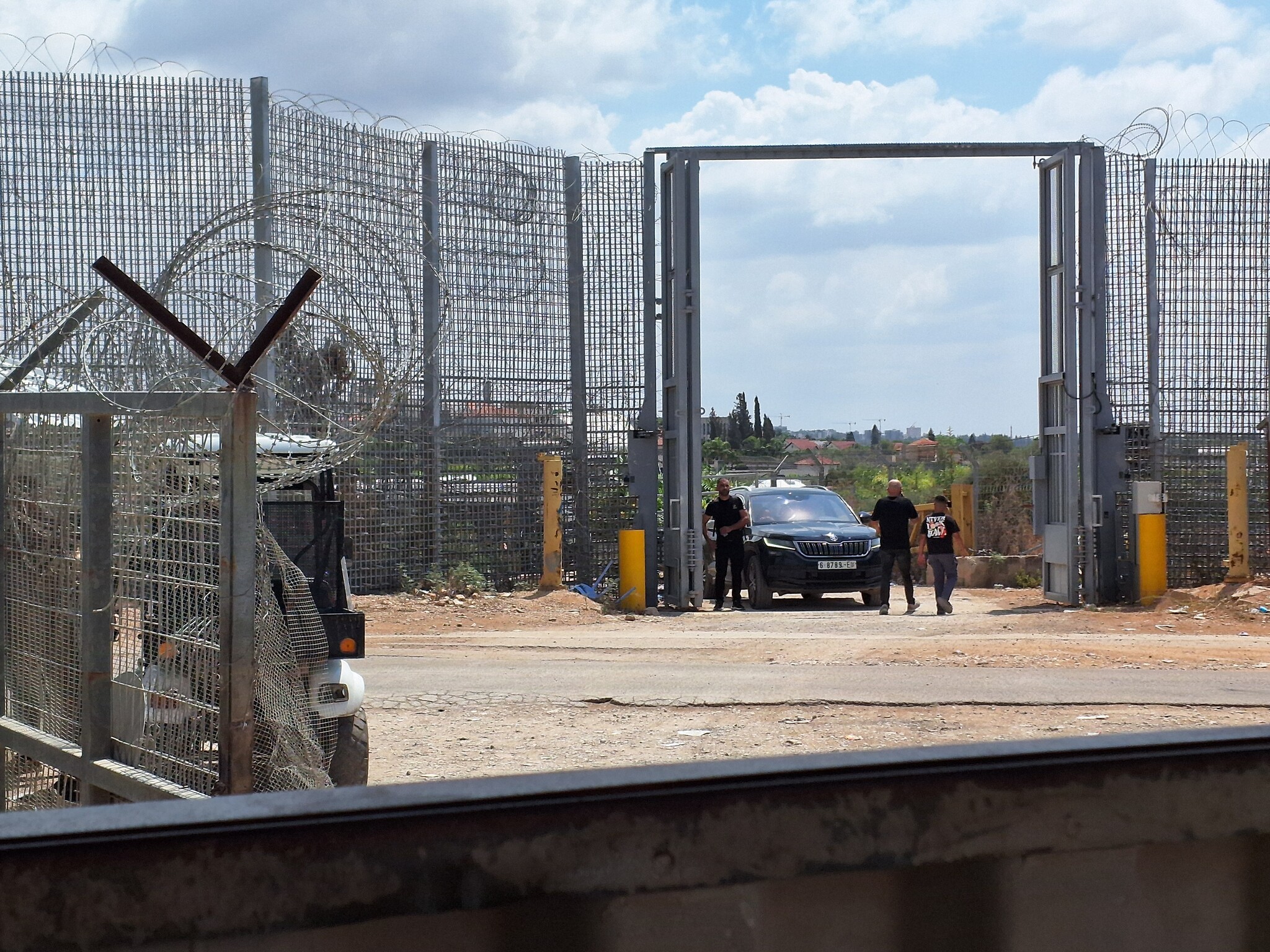 Ronit Dahan-RamatiAug-31-2026Habla. The gate is open
-
Huwwara
See all reports for this place-
The Huwwara checkpoint is an internal checkpoint south of the city of Nablus, at the intersection of Roads 60 and 5077 (between the settlements of Bracha and Itamar). This checkpoint was one of the four permanent checkpoints that closed on Nablus (Beit Furik and Awarta checkpoints to the east and the Beit Iba checkpoint to the west). It was a pedestrian-only barrier. As MachsomWatch volunteers, we watched therre since 2001 two shifts a day - morning and noon, the thousands of Palestinians leaving Nablus and waiting for hours in queues to reach anywhere else in the West Bank, from the other side of the checkpoint the destination could only be reached by public transport. In early June 2009, as part of the easing of Palestinian traffic in the West Bank, the checkpoint was opened to vehicular traffic. The passage was free, with occasional military presence in the guard tower. Also, there were vehicle inspections from time to time. Since the massacre on 7.10.2023, the checkpoint has been closed to Palestinians.
On February 26, 2023, about 400 settlers attacked the town's residents for 5 hours and set fire to property, such as houses and cars. Disturbances occurred in response to a shooting of two Jewish residents of Har Bracha by a Palestinian Terrorist. The soldiers stationed in the town did not prevent the arson and rescued Palestinian families from their homes only after they were set on fire. No one was punished and Finance Minister Smotrich stated that "the State of Israel should wipe out Hawara." Left and center organizations organized solidarity demonstrations and support actions for the residents of Hawara.Hawara continued to be in the headlines in all the months that followed: more pogroms by the settlers, attacks by Palestinians and a massive presence of the army in the town. It amounted to a de facto curfew of commerce and life in the center of the city. On October 5, 2023, MK Zvi established a Sukkah in the center of Hawara and hundreds of settlers backed the army blocked the main road and held prayers in the heart of the town all night and the next day. On Saturday, October 7, 23 The "Swords of Iron" war began with an attack by Hamas on settlements surrounding Gaza in the face of a poor presence of the IDF. Much criticism has been made of the withdrawal of military forces from the area surrounding Gaza and their placement in the West Bank, and in the Hawara and Samaria region in particular, as a shield for the settlers who were taking over and rioting.
On November 12, 2023, the first section of the Hawara bypass road intended for Israeli traffic only was opened. In this way, the settlers can bypass the road that goes through the center of Hawara, which is the main artery for traffic from the Nablus area to Ramallah and the south of the West Bank. For the construction of the road, the Civil Administration expropriated 406 dunams of private land belonging to Palestinians from the nearby villages. The settlers are not satisfied with this at the moment, and demand to also travel through Hawara itself in order to demonstrate presence and control.(updated November 2023)
.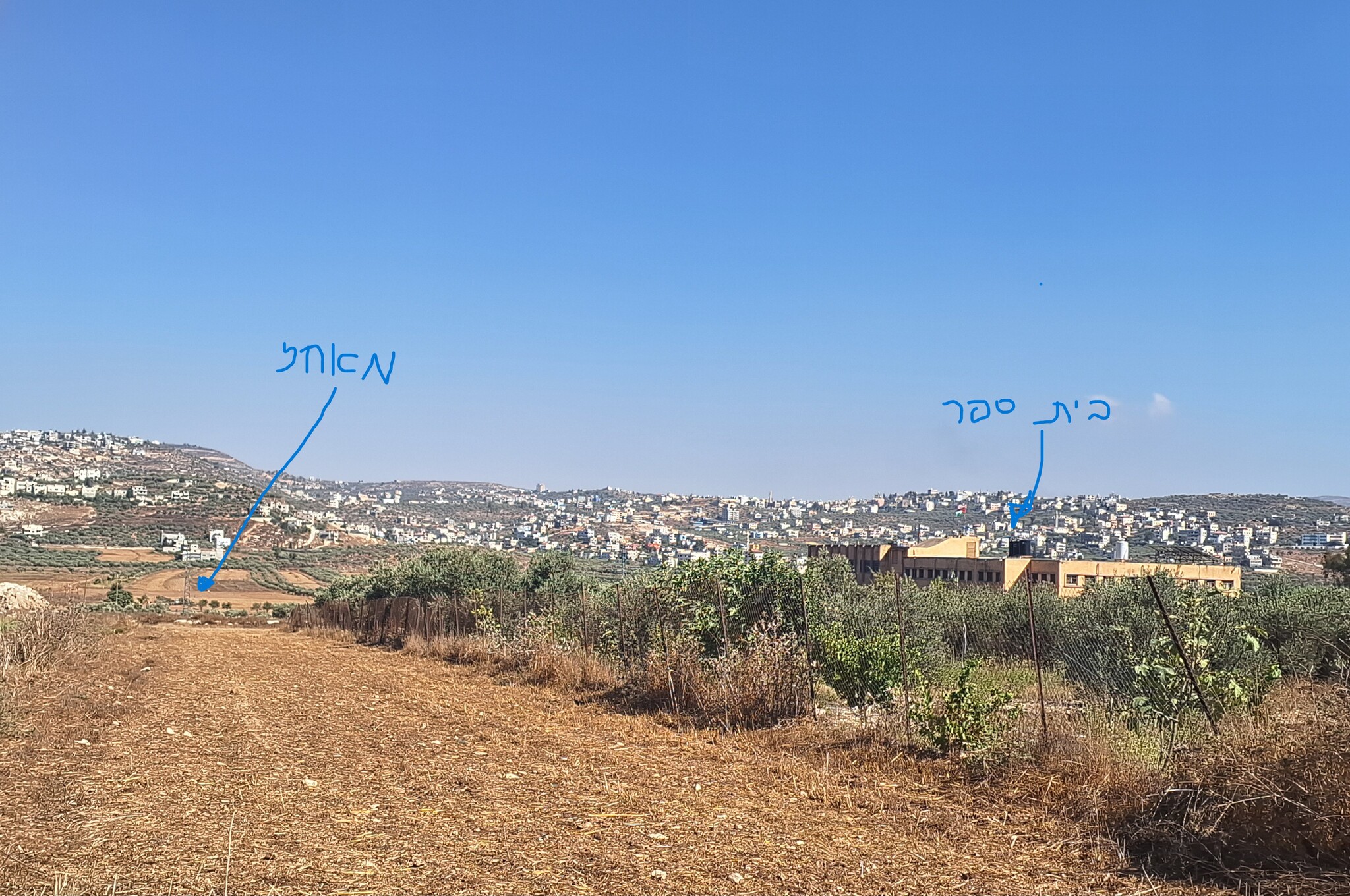 Ronit Dahan-RamatiAug-24-2026Huwara: The school on the outskirts of town and an outpost hidden among the trees
-
Za'tara (Tapuah)
See all reports for this place-
Za'tara (Tapuah) Za'tara is an internal checkpoint in the heart of the West Bank, at the intersection of Road 60 and Road 505 (Trans-Samaria), east of the Tapuah settlement. This checkpoint is the "border" marked by the IDF between the north and south of the West Bank, in accordance with the policy of separation between the two parts of the West Bank that has been in place since December 2005. At the Za'tara checkpoint, there are separate routes for Israelis and Palestinians. In the route for Israelis, there are no inspections and the route for Palestinians inspects. The queue lengthens and shortens suits. The checkpoint is open 24 hours a day. The checkpoint is partially staffed and the people who pass through it are checked at random.
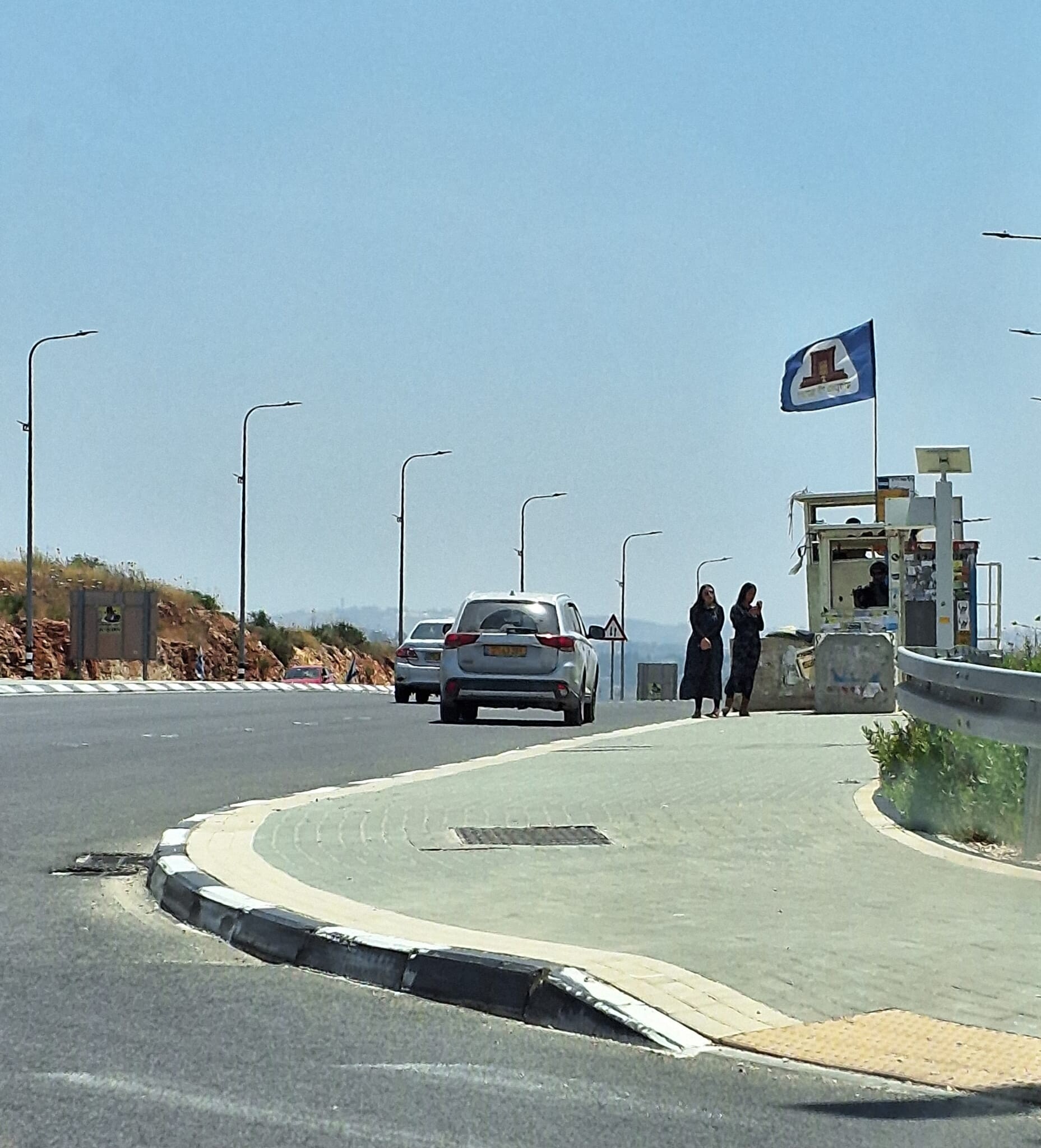 Ronit Dahan-RamatiJun-9-2026Za'atara (Tapuach Junction). The Temple Flag Above a Station
-
