
‘Awarta, Huwwara, Jit, Za’tara (Tapuah), Thu 17.3.11, Morning

9:10 Za'tara
There were no soldiers at this junction, in any direction. The traffic was moving smoothly.
9:20 The Road to Jit junction was open to all traffic.
9:25 Huwarra – The checkposts on the road going into and out of Nablus were open and there were no soldiers in sight. There was just one soldier, as far as we could see, in each of the 2 watchtowers.
Nadim suggested that we drive to Awarta because the entrances to the village had been blocked since Sunday. On the road to Awarta we enjoyed the fields of anemonies along the way.
9:30 Awarta
There were no road blocks and we entered the village. Immediately we noticed that the shops were almost all closed, and we wondered about the reason for this. At one small workshop with an open door Nadim stopped to talk with a young man standing outside. When the man saw who we were he invited us inside to talk with him, with the owner of the shop, and one or two more men who came in. This is the account of what happened that the men told us.
Awarta is the village that is situated directly under the hilltop on which Yitamar, the Jewish settlement, is built. Originally the village families owned 21,000 dunam of land (5,200 acres). The settlement of Yitamar took over 11,000 dunams. At that time they uprooted many olive trees to make room for the settlement. Of the land that is left to the Palestinian villagers, 10,000 dunams, they are afraid to work on 6,000 of them because of the proximity to the settlement. The American billionaire who gave the money to set up the settlement said, on a visit to Yitamar, that it must be expanded and made into a city because it overlooks Nablus. At this time some new caravan homes can be seen on an expanded area of the settlement.
On Friday night the horrendous murder of 2 parents and 3 children took place in Yitamar. On Sunday, 13.3.2011, the army closed all entrances into Awarta and for three days terror reigned in the village. Although the army has no evidence that the murderers came from Awarta, the village took the collective punishment meted out to them. The army unit of about 22 soldiers (blue berets) plus several army dogs went into every house in the village. They arrested 52 men and took them away. The families do not know where they are. A Palestinian lawyer for the families believes that they are being held in the Huwarra military base, very near the village.
In every home they entered the soldiers did the maximum amount of damage they possibly could. They broke furniture, overturned appliances, vandalized possessions, threw whole contents of cabinets and closets all over the house, and even broke through walls. In one house they found a young man who is mentally disabled living alone. They took over the house, slept there at night, humiliated the man and made him the butt of their jokes for hours. In several houses that they took over they forced the family to stay in one room while they were there. They used the houses for sleeping, and also used the family's food and water supplies. In one large house there are two bathrooms/toilets; the soldiers deliberately relieved themselves all over the house, on the floors and on the furniture. Many families claim that that there was stealing by the soldiers, especially gold jewelry and money.
The dogs were also brought into the homes. The soldiers led the dogs all over the food supplies in the houses, making them unfit for consumption. In one house the owner had produced large plastic containers of Labena for selling; the soldiers stomped on every one of them, breaking the plastic containers and spilling their contents on the floor. When the owner of one house spoke to the officer who was leading the soldiers, and asked him why the villagers were being punished when there was information that it was Thai workers who had murdered the family, the officer became enraged and the damage that was done to the house was even greater. The soldiers broke into the local pharmacy; they trashed the shop and the storage room for medical supplies. One of the young men sitting with us had been beaten by the soldiers; he wasn't the only one.
On Monday, 14.3, about 1,000 settlers came to Yitamar, ostensibly as a condolence visit. They threw stones down at Awarta and further vandalized the 3 nearest houses of the village as they shouted, "death to the Arabs!" In the yards next to the houses, the locks on the metal covers on water wells were broken and water was wasted and possibly contaminated. The soldiers left the village on Tuesday evening; the roadblocks that had closed the village were removed only on Wednesday evening.
Ten years ago, during the second intifada, the village had been put under closure for a long time. Those were bad times, but our informants said, not as bad as now. A year, to a year and a half ago, 3 men of the village were killed, one by soldiers and two by settlers. But the situation this week was the worst they had known. When we asked the reason for the closed businesses that we had noticed in the village we were told that the people were simply still afraid. The men were all certain that the murders were not committed by Palestinians. The stories that were being told of the murders on television just weren't believed by the people who live closest to Yitamar. As they said, even if the murderers got into Yitamar by using a branch to get over a 3 meter high fence, how did they get out again? The story just isn't possible.
.
.
.
.
'Awarta
See all reports for this place-
Awarta, an internal checkpoint in the heart of the West Bank, is located east of the Hawara checkpoint, at the junction of Roads 555 (which was forbidden for Palestinian traffic in this area) and the entrance road to Nablus. It was one of the four checkpoints that surrounded Nablus until 2009. We used to watch it at Huwwara shifts because it was the only one where goods could be transferred to and from Nablus, using the back-to-back method. It was operated by the army, from 06:00 to 20:00. Until 2009.
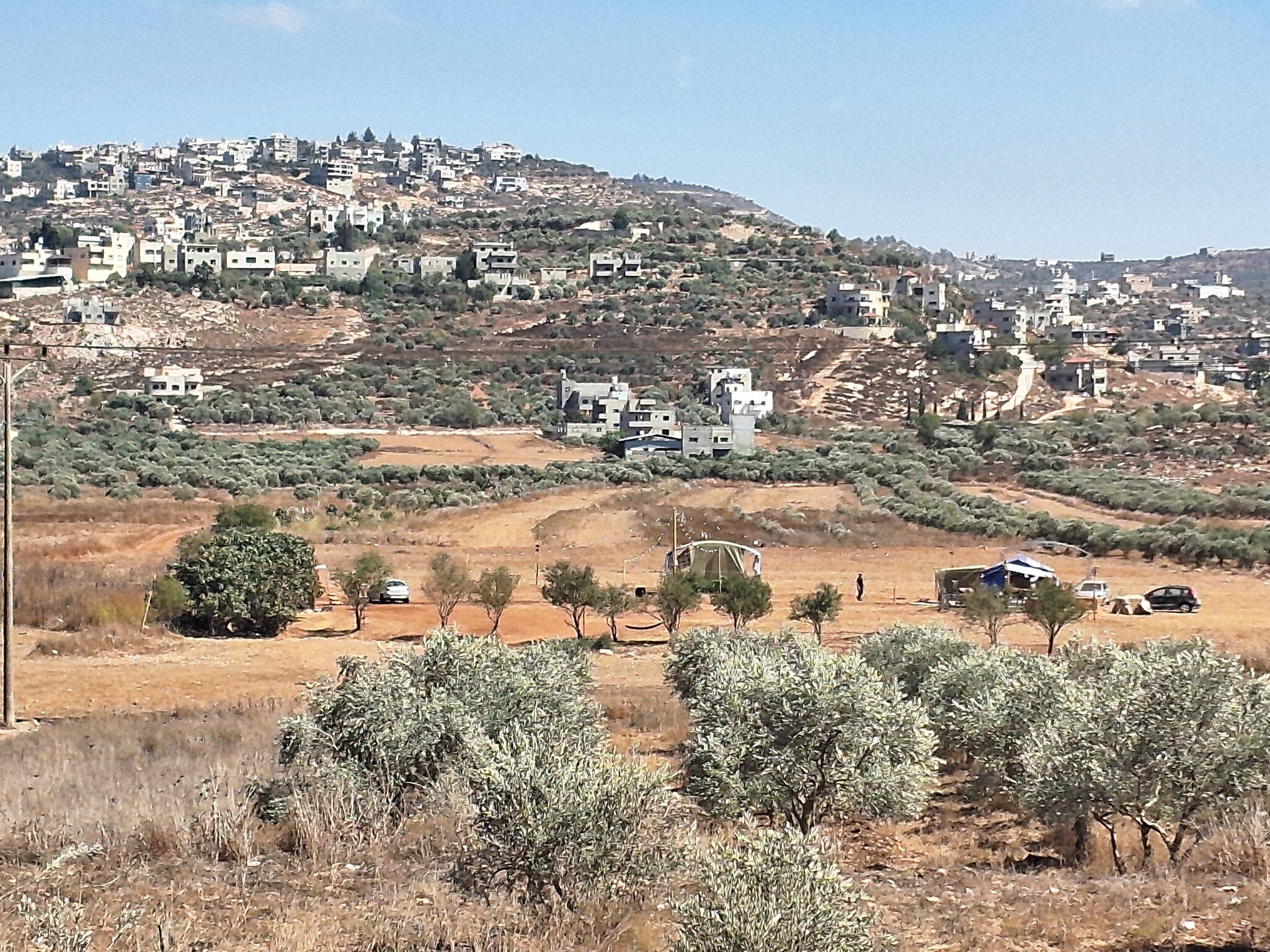 Ronit Dahan-RamatiSep-10-2026Awarta. Outpost below the town
-
Huwwara
See all reports for this place-
The Huwwara checkpoint is an internal checkpoint south of the city of Nablus, at the intersection of Roads 60 and 5077 (between the settlements of Bracha and Itamar). This checkpoint was one of the four permanent checkpoints that closed on Nablus (Beit Furik and Awarta checkpoints to the east and the Beit Iba checkpoint to the west). It was a pedestrian-only barrier. As MachsomWatch volunteers, we watched therre since 2001 two shifts a day - morning and noon, the thousands of Palestinians leaving Nablus and waiting for hours in queues to reach anywhere else in the West Bank, from the other side of the checkpoint the destination could only be reached by public transport. In early June 2009, as part of the easing of Palestinian traffic in the West Bank, the checkpoint was opened to vehicular traffic. The passage was free, with occasional military presence in the guard tower. Also, there were vehicle inspections from time to time. Since the massacre on 7.10.2023, the checkpoint has been closed to Palestinians.
On February 26, 2023, about 400 settlers attacked the town's residents for 5 hours and set fire to property, such as houses and cars. Disturbances occurred in response to a shooting of two Jewish residents of Har Bracha by a Palestinian Terrorist. The soldiers stationed in the town did not prevent the arson and rescued Palestinian families from their homes only after they were set on fire. No one was punished and Finance Minister Smotrich stated that "the State of Israel should wipe out Hawara." Left and center organizations organized solidarity demonstrations and support actions for the residents of Hawara.Hawara continued to be in the headlines in all the months that followed: more pogroms by the settlers, attacks by Palestinians and a massive presence of the army in the town. It amounted to a de facto curfew of commerce and life in the center of the city. On October 5, 2023, MK Zvi established a Sukkah in the center of Hawara and hundreds of settlers backed the army blocked the main road and held prayers in the heart of the town all night and the next day. On Saturday, October 7, 23 The "Swords of Iron" war began with an attack by Hamas on settlements surrounding Gaza in the face of a poor presence of the IDF. Much criticism has been made of the withdrawal of military forces from the area surrounding Gaza and their placement in the West Bank, and in the Hawara and Samaria region in particular, as a shield for the settlers who were taking over and rioting.
On November 12, 2023, the first section of the Hawara bypass road intended for Israeli traffic only was opened. In this way, the settlers can bypass the road that goes through the center of Hawara, which is the main artery for traffic from the Nablus area to Ramallah and the south of the West Bank. For the construction of the road, the Civil Administration expropriated 406 dunams of private land belonging to Palestinians from the nearby villages. The settlers are not satisfied with this at the moment, and demand to also travel through Hawara itself in order to demonstrate presence and control.(updated November 2023)
.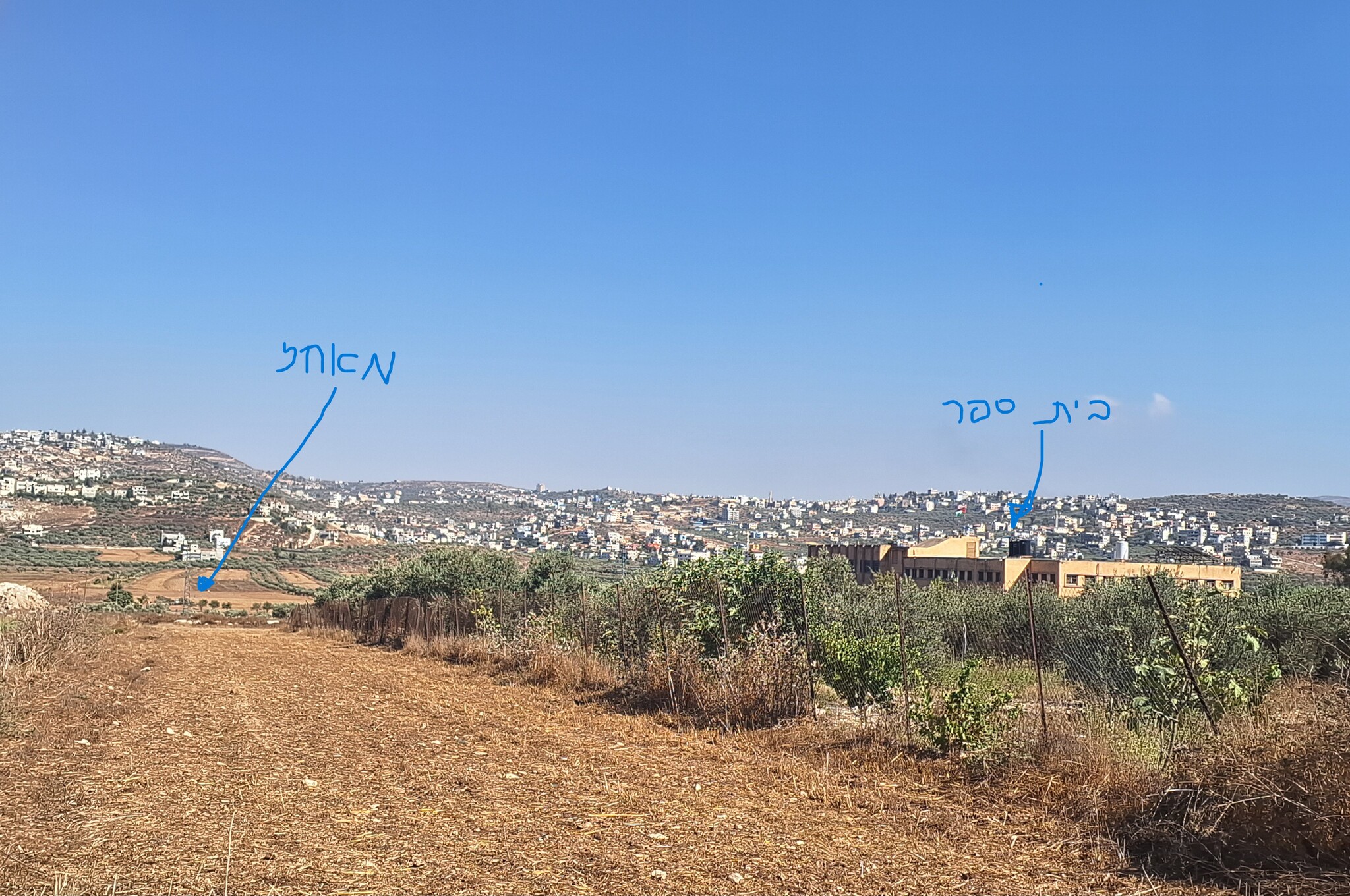 Ronit Dahan-RamatiAug-24-2026Huwara: The school on the outskirts of town and an outpost hidden among the trees
-
Jit Junction
See all reports for this place-
The checkpoint is located on Route 60 near at the junction with Route 55, near the village of Jit. There was a checkpoint for vehicles passing between the north and south of the West Bank, which was abolished towards 2010. Since then, surprise checkpoints have been set up there from time to time with a police or Border Police vehicle, and vehicles and their passengers are inspected.
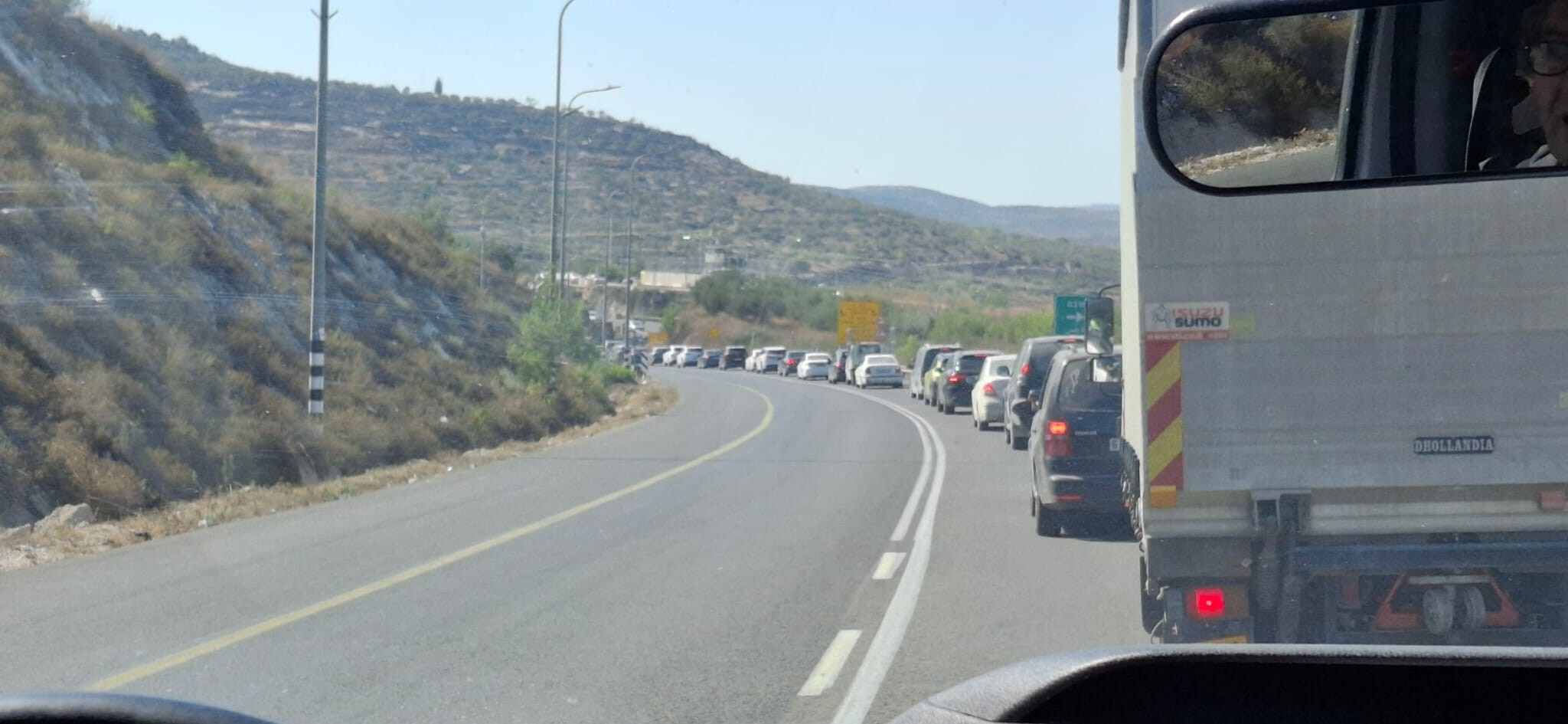 Anat PolakJul-17-2025Yitzhar Road, Jit Junction: traffic jam
-
Za'tara (Tapuah)
See all reports for this place-
Za'tara (Tapuah) Za'tara is an internal checkpoint in the heart of the West Bank, at the intersection of Road 60 and Road 505 (Trans-Samaria), east of the Tapuah settlement. This checkpoint is the "border" marked by the IDF between the north and south of the West Bank, in accordance with the policy of separation between the two parts of the West Bank that has been in place since December 2005. At the Za'tara checkpoint, there are separate routes for Israelis and Palestinians. In the route for Israelis, there are no inspections and the route for Palestinians inspects. The queue lengthens and shortens suits. The checkpoint is open 24 hours a day. The checkpoint is partially staffed and the people who pass through it are checked at random.
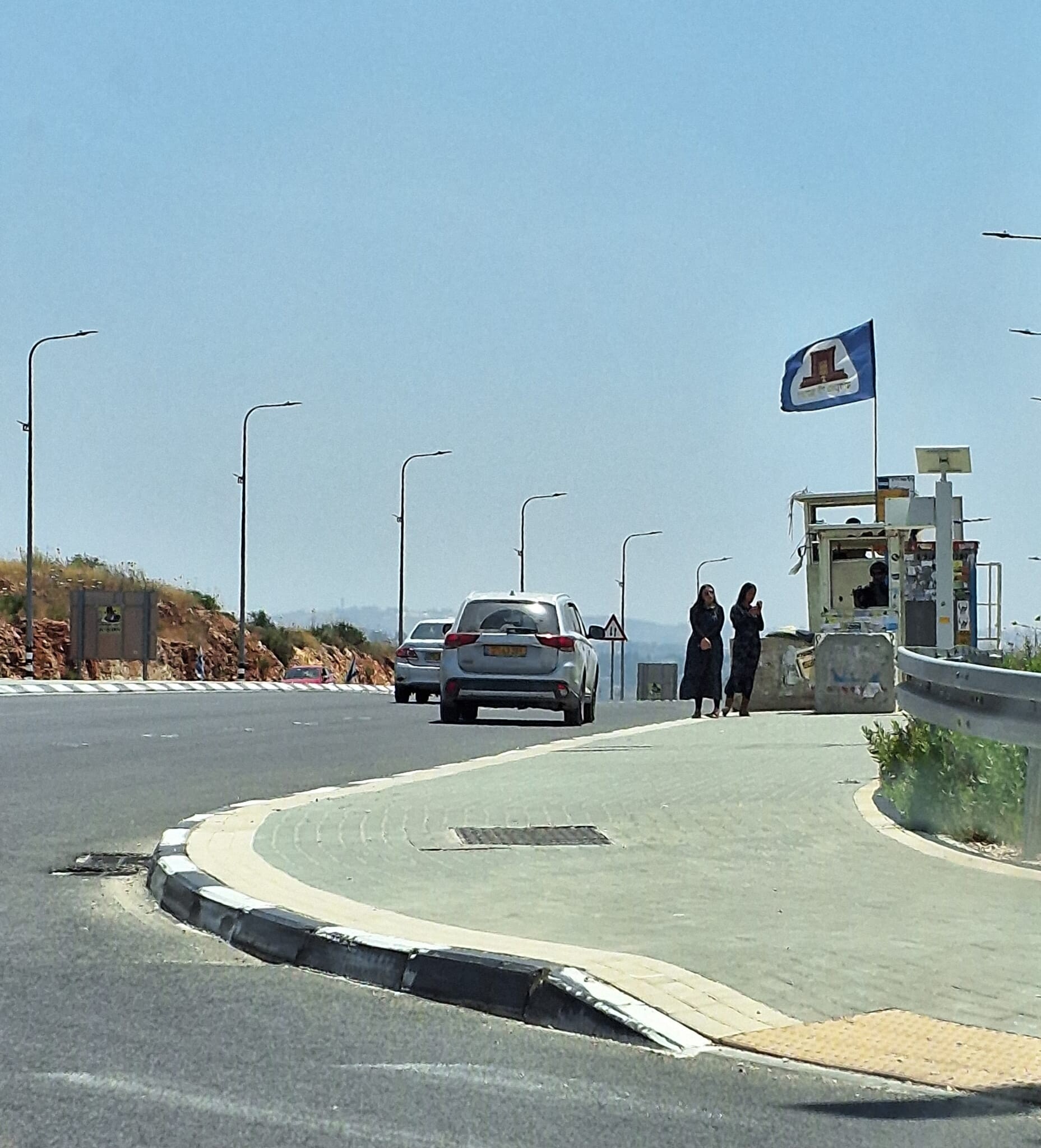 Ronit Dahan-RamatiJun-9-2026Za'atara (Tapuach Junction). The Temple Flag Above a Station
-
