
‘Awarta, Huwwara, Mon 5.1.09, Morning
Translator: Charles K.
7:08 Zeita is closed off.
7:15 Za'tara:
30 cars at the entry; traffic exiting flows through two lanes.
Cadets manning the checkpoint. We approach the entry checkpoint, 2nd Lt. Y., the checkpoint commander, appears, and asks us to move to the marked area. After a pointless argument about the validity of the order he declares that he'll do everything possible to free up the line, we move back and he does, in fact, free it quickly. A bus stops at the entrance and the passengers have to get off. The explanation is that the number of ID cards is different than the number of passengers.
25 vehicles at the exit from Nablus.
7:30 Huwwara:
The checkpoint is almost empty. As we approach the checkpoint commander arrives with the DCO representative and explain the "sterile area" instructions, the order of the brigade commander, Itzik Bar, dated 30.12.08. The order is accompanied by photographs of the checkpoint and descriptions of the areas that are off limits. We moved over to the entry lane, from which we could see pretty well what was going on.
Taxi drivers sneak in on the other side of the revolving gate to try and "hunt" passengers, afraid of being caught.
8:00 About 15 people at the checkpoint; it's quiet. The vehicle lanes are also open, residents of Nablus need a permit, others go through by simply showing their ID card.
The dismantling of the old checkpoint is well underway, and you can see all the way to Nablus and its buildings.
A., one of the checkpoint kids, and M., an unemployed carter, describe for us the history of the carters' guild, and how some of the carters became very rich over the years. Two of them, who were said to have built magnificent private homes from the money they made transporting goods, seemed to be scratching the earth in search of "lost treasure."
The bored checkpoint commander and DCO representative also come over to pass the time with us, a pastoral scene in the warm sun. In addition to the coffee seller, there's also M., who sells beigeleh's, who tells us about a loud argument he had with the checkpoint commander, who threatened to turn him over to the Border Police so they could "take care of him."
9:45 Beit Furik
The checkpoint is empty, random, lazy inspections of cars exiting. A dog with prominent teats carries a tray with food away from the checkpoint, over to her pups. The surrealistic German inscription on the concrete block exemplifies the existential absurdity of this reality.
10:00 Awarta
A long line of cars, partially hidden by the curve in the road, which makes it hard to count them. ID's checked quickly. We're chased away from our observation point nearby, we're not allowed to turn right toward Huwwara; as the sign says, only VIP's are allowed to drive on this short stretch of road. Settlers are cutting down trees for themselves in the adjoining grove of pines – to whom does the grove belong?
11:00 We returned to Huwwara; the beigeleh seller is still there.
11:10 A group of soldiers in the open area before of a barrier of stones.
.
'Awarta
See all reports for this place-
Awarta, an internal checkpoint in the heart of the West Bank, is located east of the Hawara checkpoint, at the junction of Roads 555 (which was forbidden for Palestinian traffic in this area) and the entrance road to Nablus. It was one of the four checkpoints that surrounded Nablus until 2009. We used to watch it at Huwwara shifts because it was the only one where goods could be transferred to and from Nablus, using the back-to-back method. It was operated by the army, from 06:00 to 20:00. Until 2009.
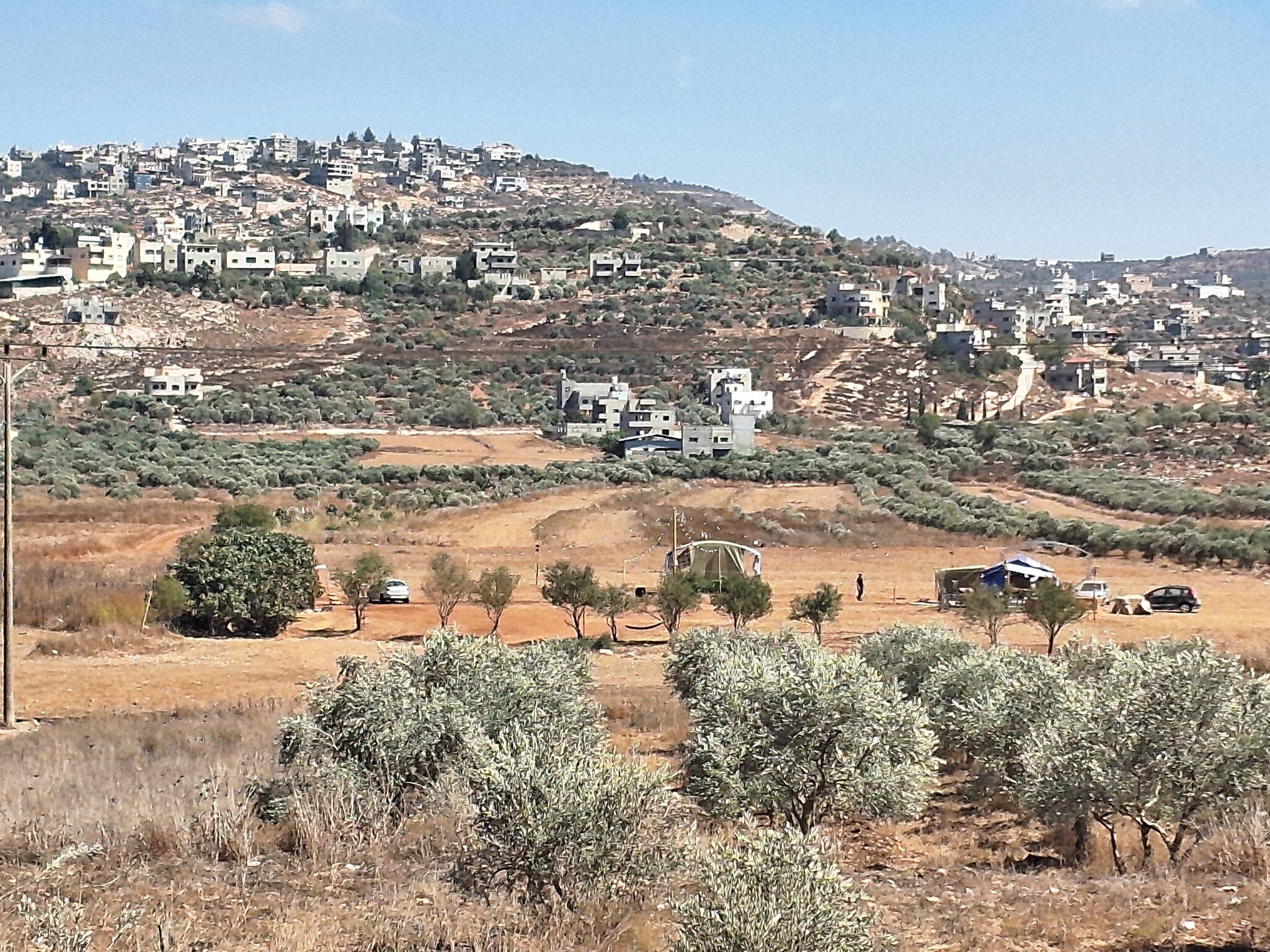 Ronit Dahan-RamatiSep-10-2026Awarta. Outpost below the town
-
Huwwara
See all reports for this place-
The Huwwara checkpoint is an internal checkpoint south of the city of Nablus, at the intersection of Roads 60 and 5077 (between the settlements of Bracha and Itamar). This checkpoint was one of the four permanent checkpoints that closed on Nablus (Beit Furik and Awarta checkpoints to the east and the Beit Iba checkpoint to the west). It was a pedestrian-only barrier. As MachsomWatch volunteers, we watched therre since 2001 two shifts a day - morning and noon, the thousands of Palestinians leaving Nablus and waiting for hours in queues to reach anywhere else in the West Bank, from the other side of the checkpoint the destination could only be reached by public transport. In early June 2009, as part of the easing of Palestinian traffic in the West Bank, the checkpoint was opened to vehicular traffic. The passage was free, with occasional military presence in the guard tower. Also, there were vehicle inspections from time to time. Since the massacre on 7.10.2023, the checkpoint has been closed to Palestinians.
On February 26, 2023, about 400 settlers attacked the town's residents for 5 hours and set fire to property, such as houses and cars. Disturbances occurred in response to a shooting of two Jewish residents of Har Bracha by a Palestinian Terrorist. The soldiers stationed in the town did not prevent the arson and rescued Palestinian families from their homes only after they were set on fire. No one was punished and Finance Minister Smotrich stated that "the State of Israel should wipe out Hawara." Left and center organizations organized solidarity demonstrations and support actions for the residents of Hawara.Hawara continued to be in the headlines in all the months that followed: more pogroms by the settlers, attacks by Palestinians and a massive presence of the army in the town. It amounted to a de facto curfew of commerce and life in the center of the city. On October 5, 2023, MK Zvi established a Sukkah in the center of Hawara and hundreds of settlers backed the army blocked the main road and held prayers in the heart of the town all night and the next day. On Saturday, October 7, 23 The "Swords of Iron" war began with an attack by Hamas on settlements surrounding Gaza in the face of a poor presence of the IDF. Much criticism has been made of the withdrawal of military forces from the area surrounding Gaza and their placement in the West Bank, and in the Hawara and Samaria region in particular, as a shield for the settlers who were taking over and rioting.
On November 12, 2023, the first section of the Hawara bypass road intended for Israeli traffic only was opened. In this way, the settlers can bypass the road that goes through the center of Hawara, which is the main artery for traffic from the Nablus area to Ramallah and the south of the West Bank. For the construction of the road, the Civil Administration expropriated 406 dunams of private land belonging to Palestinians from the nearby villages. The settlers are not satisfied with this at the moment, and demand to also travel through Hawara itself in order to demonstrate presence and control.(updated November 2023)
.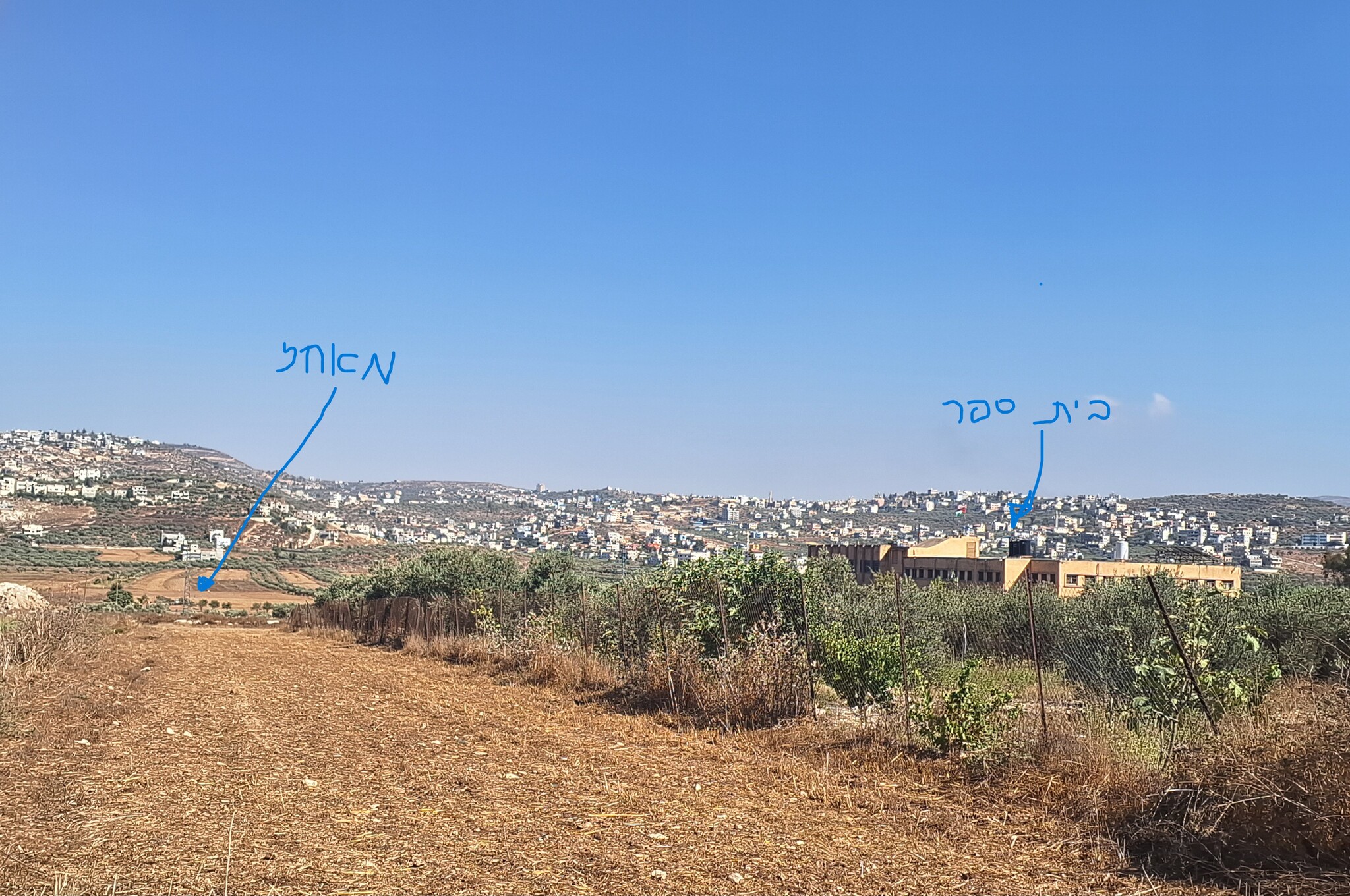 Ronit Dahan-RamatiAug-24-2026Huwara: The school on the outskirts of town and an outpost hidden among the trees
-
