
'Awarta, Huwwara
Main Points: The supply of water is a problem in Huwwara. It isn’t a problem in Awarta which shares a well with a neighboring village. Both places suffer from the theft of olives and the serious damage to their groves by the settlers of Yitzhar and Itamar. Lack of adequate employment is felt in both places. This is especially true for the young people who have university degrees. The IDF comes into these places at any time and makes arrests. A large part of their population is poor.
Huwwara: We met with the mayor of the city. We gave him a copy of the English report of our 28.05.17 visit. Huwwara is considered a city in the Palestinian territories, even though it is no larger than some villages, because of its strategic position on the main road (60) between Ramallah and Nablus. It has a population of about 8,000.
The water supply is one of their serious problems. The city receives about an insufficient 700-800 cm per day. Huwwara pays the PA for the water, and the PA pays Mekorot. Because of very low pressure there are 4 neighborhoods, higher up the hills, which don’t get any water at all, and have to buy from the tankers at expensive prices. A complaint to the Palestinian Authority didn’t help at all. About 3 months ago a pump was installed, but due to the high cost of running it, the pump does not work all the time.
At least 40% of the university graduates among the young people of the city do not find employment in their field of study. For example, one young man with an MA degree in English is working on a garbage collecting truck for the city. About 10% of the men have permits to work in Israel. Others find what work they can in the area.
Garbage disposal is another problem. As we reported in May, their garbage collection truck was impounded by the Civil Administration because the city had dumped the garbage by Awarta. They had to pay a fine of 5,000 shekels to get it back. Now they have to take their garbage near Jenin to dump it. They have to pay the Palestinian company that runs the dumping ground 130 shekels per ton. Before it cost them 20,000 shekels/month. But they now pay 80,000 shekels/month to dump it by Jenin. The mayor explains that though it was the settlers who don’t allow them to dump the garbage nearby, they themselves dump their own garbage onto Huwwara’s lands.
Municipal taxes are paid by less than 40% of the population, mainly by shop owners, and also for permits to build within the city limits. Most of the population is too poor to pay taxes. Now, they have clocks for each family, and for the past year, a magnetic card. They must first pay before they get running water.
The IDF comes in at night whenever they want and takes people from their homes.
The olive harvest is not yet completed, and the farmers have lots of problems with the settlers. The settlement Yitzhar, is built on land belonging to Huwwara. The farmers need permits to work those plots of their own land which are near the settlement and to harvest their olives. About 20% of the farming land is within the fence built around Yitzhar. On those plots of land the farmers receive permits to work in the groves for one week each year, and to harvest the olives for a few days. The amount of time allotted to them is insufficient for proper care of the groves or for harvesting. The mayor went to those groves with the farmers to see for himself the condition of the trees. 80% of the trees in those groves have withered and died. Many of the trees have been cut down. In the plots near the settlement the settlers go in at night; they steal the ripe olives and damage the trees. All of the villages in the area of Yitzhar, – Urif, Burin, Einabus, Asira al Qibilya, Madama – suffer from the same problems. The Civil Administration has not given any help to the villagers.
Finally, Israel has recently expropriated 5,000 dunam of land in the area for a bypass road for the settlers. It will run from Tapuach (bypassing Huwwara) till Yzhar square. (On the news it was reported that the Israeli government has designated 800,000,000 shekels to build the road!!)
Awarta: We met with the head of the village Council. Although Awarta has about the same population as Huwwara, 8,000, it is a village. Its position is not as strategic as Huwwara. Water in Awarta is not a problem. There is a well in the neighboring village, Rujieb, and the two villages share the water.
One very cruel problem that the village has had for the last year and a half is the closing off of their access road. They are permitted to leave the village by that road, but to enter the village they must go around through back roads. So, instead of driving 6 kms from Nablus to Awarta, they have to go 25 kms to get home from the nearest big city.
The IDF comes into the village almost every day, at any hour of the day or night, and often makes arrests. The Council head says that it is impossible to talk with the soldiers; they refuse to have any conversation with the villagers.
The employment situation is difficult. About 15% of the men have permits to work in Israel. Others work for the PA, and many in agriculture. Women work as teachers. There are 4 schools in the village; 2 are for boys and 2 for girls. The schools go from elementary through high school. Out of about 4000 young people who have finished university studies about 100 find work in their field.
There are several ancient tombs within the village of Awarta. During the time of Saladin there were 3 villages in the area. The tombs are probably those of sheiks, and the villagers have not paid much attention to them. The Jewish settlers have appropriated them as holy sites and twice every month religious Jews come into the village at about midnight and pray, sing and dance until about 5:00 in the morning. They bring in busloads of men from places like Bnei Brak and other settlements. Needless to say that the noise is very disturbing.
Owners of olive groves that are now within the fence that surrounds the settlement, Itamar, receive permits to harvest their olives for 3 days. This isn’t enough time to complete the work. The farmers need at least a month to tend the groves and to harvest them. The terrible story of the groves of Huwarra repeats itself in the groves of Awarta. Again, the groves that are within the fence around Itamar cannot be tended and the trees are dying. The farmers who go to pick the olives find their trees have been broken and olives have been stolen. Our host said that while in former years he had harvested 10 bags of olives from his grove, this year he harvested only 2 bags of olives.
'Awarta
See all reports for this place-
Awarta, an internal checkpoint in the heart of the West Bank, is located east of the Hawara checkpoint, at the junction of Roads 555 (which was forbidden for Palestinian traffic in this area) and the entrance road to Nablus. It was one of the four checkpoints that surrounded Nablus until 2009. We used to watch it at Huwwara shifts because it was the only one where goods could be transferred to and from Nablus, using the back-to-back method. It was operated by the army, from 06:00 to 20:00. Until 2009.
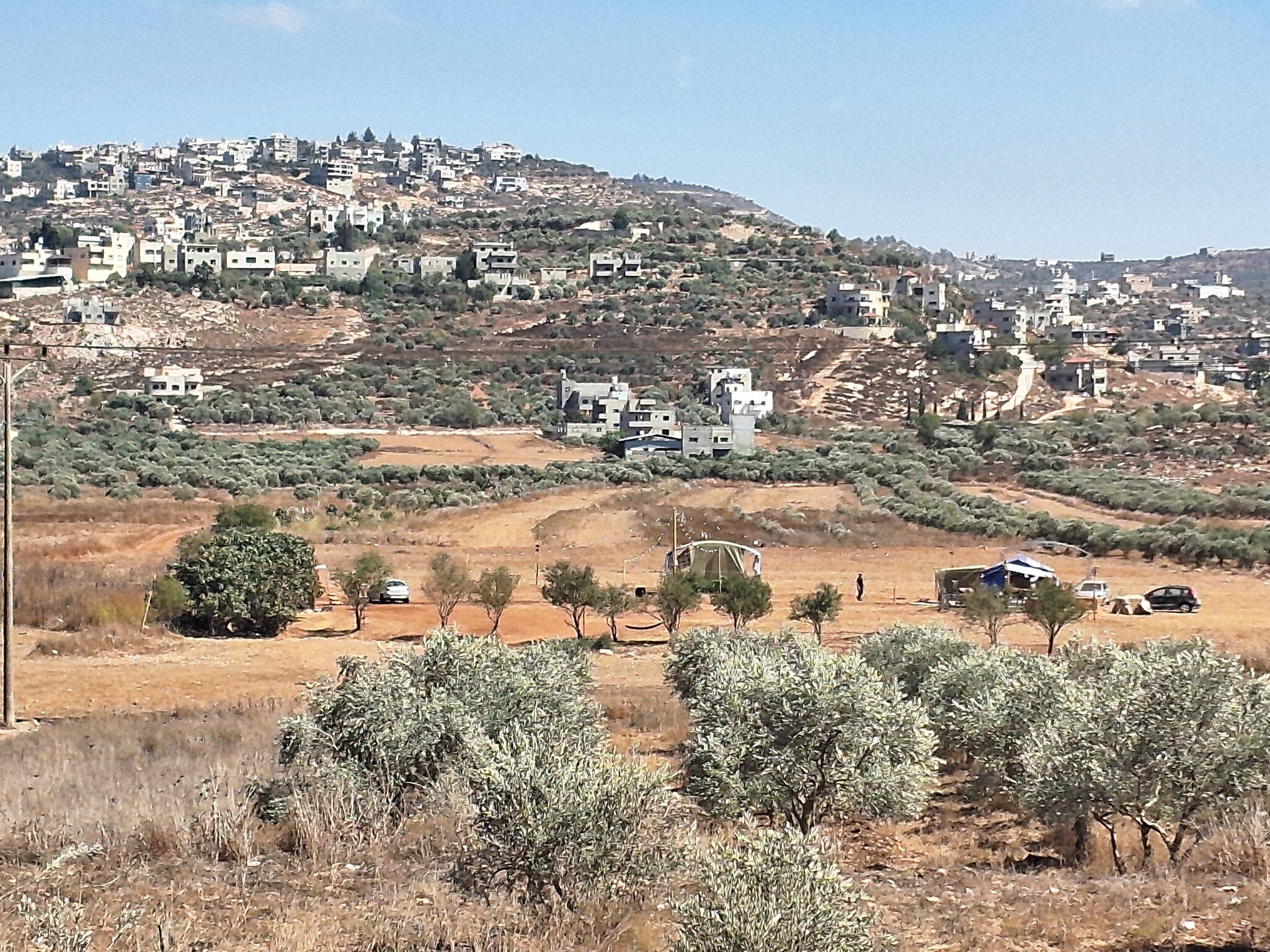 Ronit Dahan-RamatiSep-10-2026Awarta. Outpost below the town
-
Huwwara
See all reports for this place-
The Huwwara checkpoint is an internal checkpoint south of the city of Nablus, at the intersection of Roads 60 and 5077 (between the settlements of Bracha and Itamar). This checkpoint was one of the four permanent checkpoints that closed on Nablus (Beit Furik and Awarta checkpoints to the east and the Beit Iba checkpoint to the west). It was a pedestrian-only barrier. As MachsomWatch volunteers, we watched therre since 2001 two shifts a day - morning and noon, the thousands of Palestinians leaving Nablus and waiting for hours in queues to reach anywhere else in the West Bank, from the other side of the checkpoint the destination could only be reached by public transport. In early June 2009, as part of the easing of Palestinian traffic in the West Bank, the checkpoint was opened to vehicular traffic. The passage was free, with occasional military presence in the guard tower. Also, there were vehicle inspections from time to time. Since the massacre on 7.10.2023, the checkpoint has been closed to Palestinians.
On February 26, 2023, about 400 settlers attacked the town's residents for 5 hours and set fire to property, such as houses and cars. Disturbances occurred in response to a shooting of two Jewish residents of Har Bracha by a Palestinian Terrorist. The soldiers stationed in the town did not prevent the arson and rescued Palestinian families from their homes only after they were set on fire. No one was punished and Finance Minister Smotrich stated that "the State of Israel should wipe out Hawara." Left and center organizations organized solidarity demonstrations and support actions for the residents of Hawara.Hawara continued to be in the headlines in all the months that followed: more pogroms by the settlers, attacks by Palestinians and a massive presence of the army in the town. It amounted to a de facto curfew of commerce and life in the center of the city. On October 5, 2023, MK Zvi established a Sukkah in the center of Hawara and hundreds of settlers backed the army blocked the main road and held prayers in the heart of the town all night and the next day. On Saturday, October 7, 23 The "Swords of Iron" war began with an attack by Hamas on settlements surrounding Gaza in the face of a poor presence of the IDF. Much criticism has been made of the withdrawal of military forces from the area surrounding Gaza and their placement in the West Bank, and in the Hawara and Samaria region in particular, as a shield for the settlers who were taking over and rioting.
On November 12, 2023, the first section of the Hawara bypass road intended for Israeli traffic only was opened. In this way, the settlers can bypass the road that goes through the center of Hawara, which is the main artery for traffic from the Nablus area to Ramallah and the south of the West Bank. For the construction of the road, the Civil Administration expropriated 406 dunams of private land belonging to Palestinians from the nearby villages. The settlers are not satisfied with this at the moment, and demand to also travel through Hawara itself in order to demonstrate presence and control.(updated November 2023)
.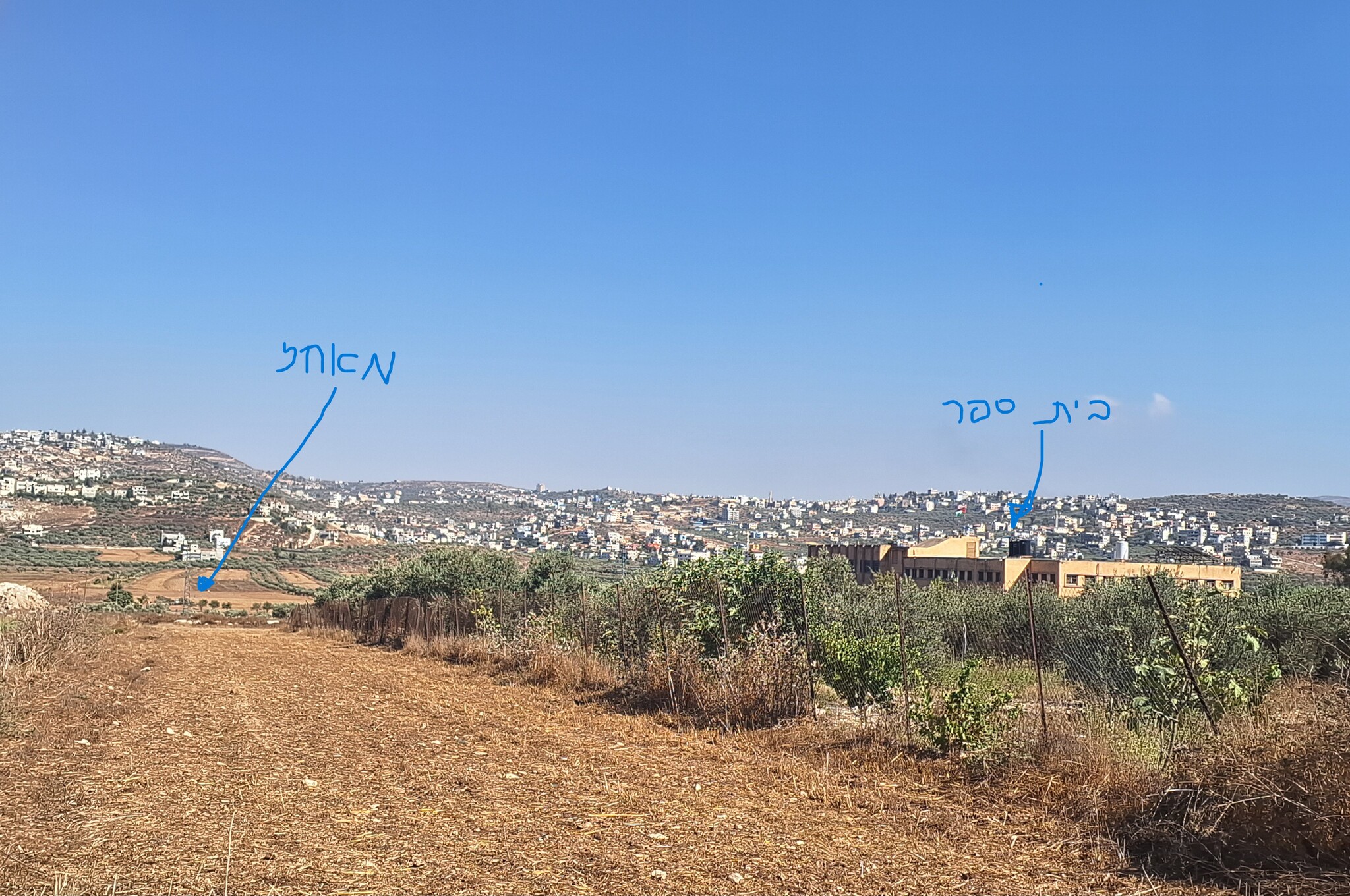 Ronit Dahan-RamatiAug-24-2026Huwara: The school on the outskirts of town and an outpost hidden among the trees
-
