
Azun Atma, Huwwara, Awarta, Beit Furiq
Translation: Suzanne O.
The settlers have stuck posters on every wall in opposition to the renewal of the building freeze. They call for a day's general strike on 2 November.
Azun Atma
6:15 a.m.
It is an Arab festival and only a few people cross the roadblock. Quite a big group is waiting along the road for a contractor from Elkana who it appears has given everyone red hoods for the festival. On the red hoods there is white writing (a fan of Bnei Sakhnin or HaPoel Tel Aviv?). Now everyone in the settlement will know who employs the labourer in their yard.
Shomron Crossing
Very light traffic in both directions.
The road to Marda is open and so are the entrances to Zeita and to Jemayn.
Za'atra
6:45 a.m.
There are very few cars in either direction. At the 'no menorah' roundabout there are no soldiers.
The town of Huwwara is still asleep. The school children are on holiday and the shop owners are in no hurry to open.
Borin/Yitzhar roadblock
There is military activity in both of them but no hold ups.
The town Beit Furiq has been decorated all along the road by new flags in honour of the festival. Palestinian flags fly together with yellow flags – they appear to bear the emblem of the local authority.
Beit Furiq roadblock
7:10 a.m.
A soldier peeps out from the top of the tower and wonders whether to accept our visit. There is no traffic to or from Nablus.
Awarta
7:15 a.m.
There is no traffic at all. Two bored soldiers report that it has been like this all three days of the festival.
Huwwara roadblock
7:20 a.m.
A dog handler is present. An orange taxi and a minibus have been held up for an inspection which took about half an hour (they were already standing outside their vehicles when we arrived and were released 25 minutes later). From time to time Border Police hold up the traffic crossing the main lane and ask for documents to be presented. For a change all the soldiers are wearing helmets and not their Kfir berets. "There are warnings", they explain.
Two soldiers come to order us not to ender the non-permitted area and stay to chat. According to them it doesn't matter if there is a queue from the roadblock to Kfar Qalil but they try not to let a queue build up in the opposite direction up to the roundabout because that causes a problem for the settlers. Not that the settlers can't wait but if a Palestinian car is beside a settler's car there is no knowing what will happen. In spite of this their colleagues stop a taxi at the entrance to the town and on the main lane and meticulously inspect the contents of its boot. A queue immediately starts to build up.
They are aware of the difference in the weight of the traffic during the festival and say that they have noticed that during the festival lorries are almost not seen at the roadblock except for those taking sheep to the slaughter.
The roadblock commander also comes over to see who we are. He has heard of MachsomWatch but has never seen the women. At least he now knows that we do not have horns and don't eat soldiers for breakfast.
Borin/Yitzhar roadblock
8:05 a.m.
Most of the soldiers have disappeared. At the entrance to the village of Huwwara a military vehicle is parked and its soldiers seem to have fallen asleep.
Za'atra roadblock
8:20 a.m.
Just a few cars pass by in both directions. The car park is empty.
'Awarta
See all reports for this place-
Awarta, an internal checkpoint in the heart of the West Bank, is located east of the Hawara checkpoint, at the junction of Roads 555 (which was forbidden for Palestinian traffic in this area) and the entrance road to Nablus. It was one of the four checkpoints that surrounded Nablus until 2009. We used to watch it at Huwwara shifts because it was the only one where goods could be transferred to and from Nablus, using the back-to-back method. It was operated by the army, from 06:00 to 20:00. Until 2009.
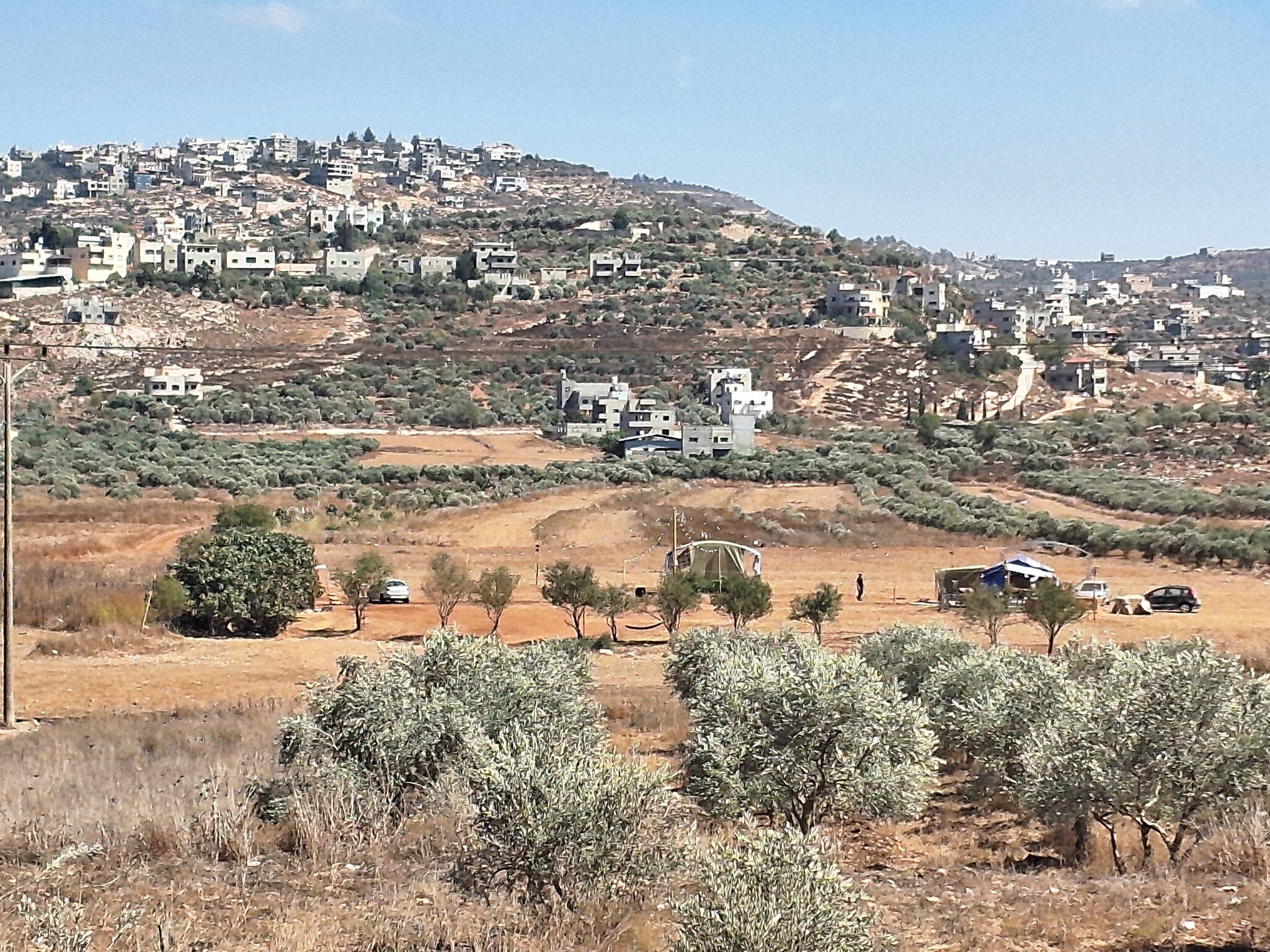 Ronit Dahan-RamatiSep-10-2026Awarta. Outpost below the town
-
'Azzun 'Atma
See all reports for this place-
'Azzun 'Atma
A Palestinian village of about 1,800 residents. The settlement of Sha'arei Tikva was established on its land adjacent to it, and the settlement of Oranit was established on its agricultural lands. By 2013, the separation fence had passed through the village and a checkpoint staffed by the army allowed the residents to cross from side to side. After building a massive wall surrounding the village and some of its agricultural lands, the residents went daily for five years to their lands that remained in the Seam Zone through the Oranit agricultural checkpoint (4). Since 2018 it has only opened during the olive harvest and the farmers have to pass daily at the Beit Amin / Abu Salman checkpoint (1447), about 3 kilometers north.From a report from March 24, 2021: "The farmers from Beit Amin and Azon Atma are happy that since February 21 the Oranit checkpoint .is going to be open 3 times a day, The farmers are really developing the place."
Report from July 14, 2024: "Ornit checkpoint is closed . The Beit Amin/Abu Salman agricultural checkpoint is closed (there is no contact with the military to check if it opens rarely), the Ezbat Jaloud checkpoint was opened once a day before the war.
Updated for July 2024
 Apr-11-2019Azoun: The main entrance to village blocked now for several weeks
-
Beit Furik checkpoint
See all reports for this place-
One of the three internal checkpoints that closed on the city of Nablus - Beit Furik to the east, Hawara to the south, Beit Iba to the west. The checkpoint is located at the junction of Roads 557 (an apartheid road that was forbidden for Palestinians), leading to the Itamar and Alon Morea settlements and Road 5487. The checkpoint was established in 2001 for pedestrians and vehicles; The opening hours were short and the transition was slow and very problematic.Allegedly, the checkpoint is intended to monitor the movement to and from Nablus of the residents of Beit Furik and Beit Dajan, being the only opening outside their villages. Since May 2009 the checkpoint is open 24 hours a day, the military presence is limited, vehicles can pass through it without inspections, except for random inspections. (Updated April 2010)
-
Huwwara
See all reports for this place-
The Huwwara checkpoint is an internal checkpoint south of the city of Nablus, at the intersection of Roads 60 and 5077 (between the settlements of Bracha and Itamar). This checkpoint was one of the four permanent checkpoints that closed on Nablus (Beit Furik and Awarta checkpoints to the east and the Beit Iba checkpoint to the west). It was a pedestrian-only barrier. As MachsomWatch volunteers, we watched therre since 2001 two shifts a day - morning and noon, the thousands of Palestinians leaving Nablus and waiting for hours in queues to reach anywhere else in the West Bank, from the other side of the checkpoint the destination could only be reached by public transport. In early June 2009, as part of the easing of Palestinian traffic in the West Bank, the checkpoint was opened to vehicular traffic. The passage was free, with occasional military presence in the guard tower. Also, there were vehicle inspections from time to time. Since the massacre on 7.10.2023, the checkpoint has been closed to Palestinians.
On February 26, 2023, about 400 settlers attacked the town's residents for 5 hours and set fire to property, such as houses and cars. Disturbances occurred in response to a shooting of two Jewish residents of Har Bracha by a Palestinian Terrorist. The soldiers stationed in the town did not prevent the arson and rescued Palestinian families from their homes only after they were set on fire. No one was punished and Finance Minister Smotrich stated that "the State of Israel should wipe out Hawara." Left and center organizations organized solidarity demonstrations and support actions for the residents of Hawara.Hawara continued to be in the headlines in all the months that followed: more pogroms by the settlers, attacks by Palestinians and a massive presence of the army in the town. It amounted to a de facto curfew of commerce and life in the center of the city. On October 5, 2023, MK Zvi established a Sukkah in the center of Hawara and hundreds of settlers backed the army blocked the main road and held prayers in the heart of the town all night and the next day. On Saturday, October 7, 23 The "Swords of Iron" war began with an attack by Hamas on settlements surrounding Gaza in the face of a poor presence of the IDF. Much criticism has been made of the withdrawal of military forces from the area surrounding Gaza and their placement in the West Bank, and in the Hawara and Samaria region in particular, as a shield for the settlers who were taking over and rioting.
On November 12, 2023, the first section of the Hawara bypass road intended for Israeli traffic only was opened. In this way, the settlers can bypass the road that goes through the center of Hawara, which is the main artery for traffic from the Nablus area to Ramallah and the south of the West Bank. For the construction of the road, the Civil Administration expropriated 406 dunams of private land belonging to Palestinians from the nearby villages. The settlers are not satisfied with this at the moment, and demand to also travel through Hawara itself in order to demonstrate presence and control.(updated November 2023)
.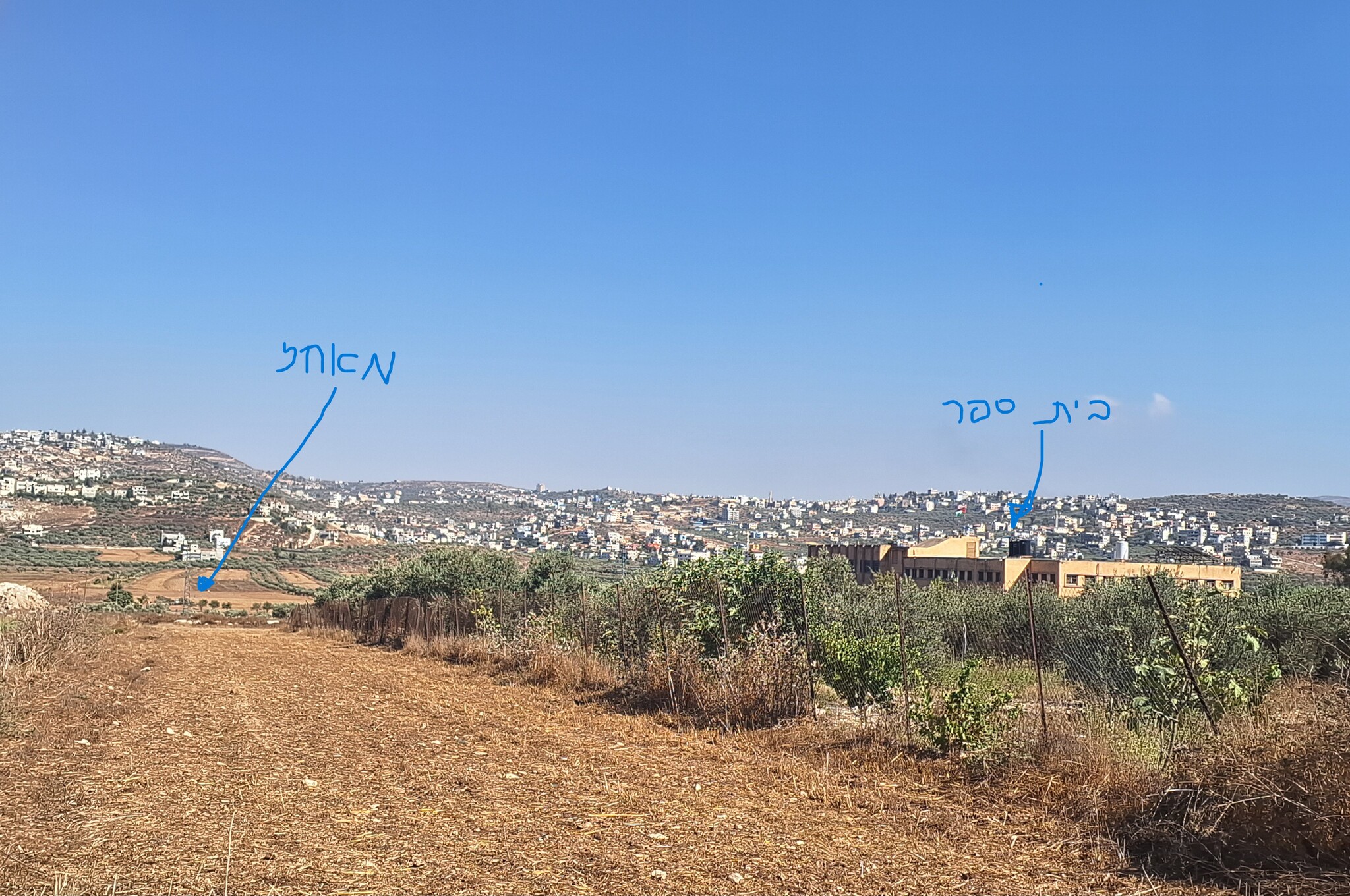 Ronit Dahan-RamatiAug-24-2026Huwara: The school on the outskirts of town and an outpost hidden among the trees
-
