
‘Azzun ‘Atma, Beit Furik, Eliyahu Crossing, Habla, Za’tara (Tapuah), Tue 24.9.13, Morning
Central West Bank,
14:00 The Habla gate is open. No one around. Apparently everyone who wanted to leave has already done so. Nor is anyone entering Habla. It’s quiet.
Many Israelis shopping in Nabi Elias. What will happen to those shops when the road is moved?
14:30 A military Hummer parked opposite Azzun, observing the entrance to the village.
15:00 Huwwara checkpoint. A pretty long line of Palestinian cars headed toward Nablus. The checkpoint is manned but there are no inspections. It turns out that the congestion is due to the number of vehicles. Just a traffic jam…
The Beit Furiq checkpoint is deserted. Everything appears quiet and pastoral. Many sea squills blossoming. The evil isn’t visible through this glorious landscape.
Many Israeli vehicles in Huwwara, civilian as well as military, though the latter drive quickly along the main road which has become one large mall.
H. approaches us in the kanafe shop – he’s a young Palestine who speaks Hebrew fluently and has worked there for a long time. He tells us that whenever he travels from his village to his workplace in Huwwara he’s stopped by police, made to get out of the taxi and detained for a few hours. He’s then released. That’s been going on for a long time. When he asked them the reason for the harassment they told him that they’ll stop if he agrees to collaborate. He refused and the harassment continues.
When he was little, during the intifada, he was arrested for participating in demonstrations. He was then blacklisted by the Shabak, until 2028 (!!!). He showed us the document confirming what he said. We have a copy.
Can anyone do anything? Pitzi has all the information.
Tapuach junction is manned but there are no inspections or dogs.
Light traffic at Azzun Atma. A few returning laborers tell us it’s because there’s not a lot of work in the settlements during the intermediate days of Sukkot, and the exit through Beit Amin has been blocked because that’s where the soldier’s killer lived. Laborers from the village can’t leave to go to work. The soldiers at the checkpoint look at us, even take photographs, but don’t prevent us from talking to the Palestinians.
Soldiers are stationed at the many holes in the fence along the road from the Oranit terminal to Azzun Atma. They’ve improvised emplacement; we didn’t see any attempts to repair the holes, even though they’re very big.
Much congestion in the lane for Palestinians through the Eliyahu crossing. Rigorous inspections. We weren’t asked where we were coming from, went through easily and then home. To another world.
'Azzun 'Atma
See all reports for this place-
'Azzun 'Atma
A Palestinian village of about 1,800 residents. The settlement of Sha'arei Tikva was established on its land adjacent to it, and the settlement of Oranit was established on its agricultural lands. By 2013, the separation fence had passed through the village and a checkpoint staffed by the army allowed the residents to cross from side to side. After building a massive wall surrounding the village and some of its agricultural lands, the residents went daily for five years to their lands that remained in the Seam Zone through the Oranit agricultural checkpoint (4). Since 2018 it has only opened during the olive harvest and the farmers have to pass daily at the Beit Amin / Abu Salman checkpoint (1447), about 3 kilometers north.From a report from March 24, 2021: "The farmers from Beit Amin and Azon Atma are happy that since February 21 the Oranit checkpoint .is going to be open 3 times a day, The farmers are really developing the place."
Report from July 14, 2024: "Ornit checkpoint is closed . The Beit Amin/Abu Salman agricultural checkpoint is closed (there is no contact with the military to check if it opens rarely), the Ezbat Jaloud checkpoint was opened once a day before the war.
Updated for July 2024
 Apr-11-2019Azoun: The main entrance to village blocked now for several weeks
-
Beit Furik checkpoint
See all reports for this place-
One of the three internal checkpoints that closed on the city of Nablus - Beit Furik to the east, Hawara to the south, Beit Iba to the west. The checkpoint is located at the junction of Roads 557 (an apartheid road that was forbidden for Palestinians), leading to the Itamar and Alon Morea settlements and Road 5487. The checkpoint was established in 2001 for pedestrians and vehicles; The opening hours were short and the transition was slow and very problematic.Allegedly, the checkpoint is intended to monitor the movement to and from Nablus of the residents of Beit Furik and Beit Dajan, being the only opening outside their villages. Since May 2009 the checkpoint is open 24 hours a day, the military presence is limited, vehicles can pass through it without inspections, except for random inspections. (Updated April 2010)
-
Eliyahu CP (109) / Crossing
See all reports for this place-
Eliyahu CP (109) / Crossing This checkpoint, also known as the Fruit Crossing, is one of the main checkpoints between Israel and the West Bank. It is located on Route 55 between Alfei Menashe and the turn to Qalqilya and Zufin, more than 4 km east of the Green Line, in the separation fence, which separates Qalqilya from its lands to the south, thus leaving Alfei Menashe West of the fence - the Seam Zone. This checkpoint, a few kilometers across the Green Line, is intended for "Israeli settlement in the West Bank and the population of the Seam Zone." It is managed by a civil company. Palestinians with a special permit for their lands in the seam area are also allowed to pass through it, on foot, and sometimes by car.
-
Habla
See all reports for this place-
Habla CP (1393)
The Habla checkpoint (1393) was established on the lands of the residents of Qalqilya, on the short road that
connected it for centuries to the nearby town of Habla. The separation barrier intersects this road twice and cut off the residents of Qalqilya from their lands in the seam zone.(between the fence and the green line).
There is a passage under Road 55 that connects Qalqilya to the sabotage This agricultural barrier is used by the farmers and nursery owners established along Road 55 from the Green Line and on both sides of the kurkar road leading to the checkpoint.
This agricultural checkpoint serves the residents of Arab a-Ramadin al-Janoubi (detached from the West Bank), who pass through it to the West Bank and back to their homes. The opening hours (3 times a day) of this agricultural checkpoint are longer than usual, about an hour (recently shortened to 45 minutes), and are coordinated with the transportation hours of a-Ramadin children studying in the occupied in the West Bank.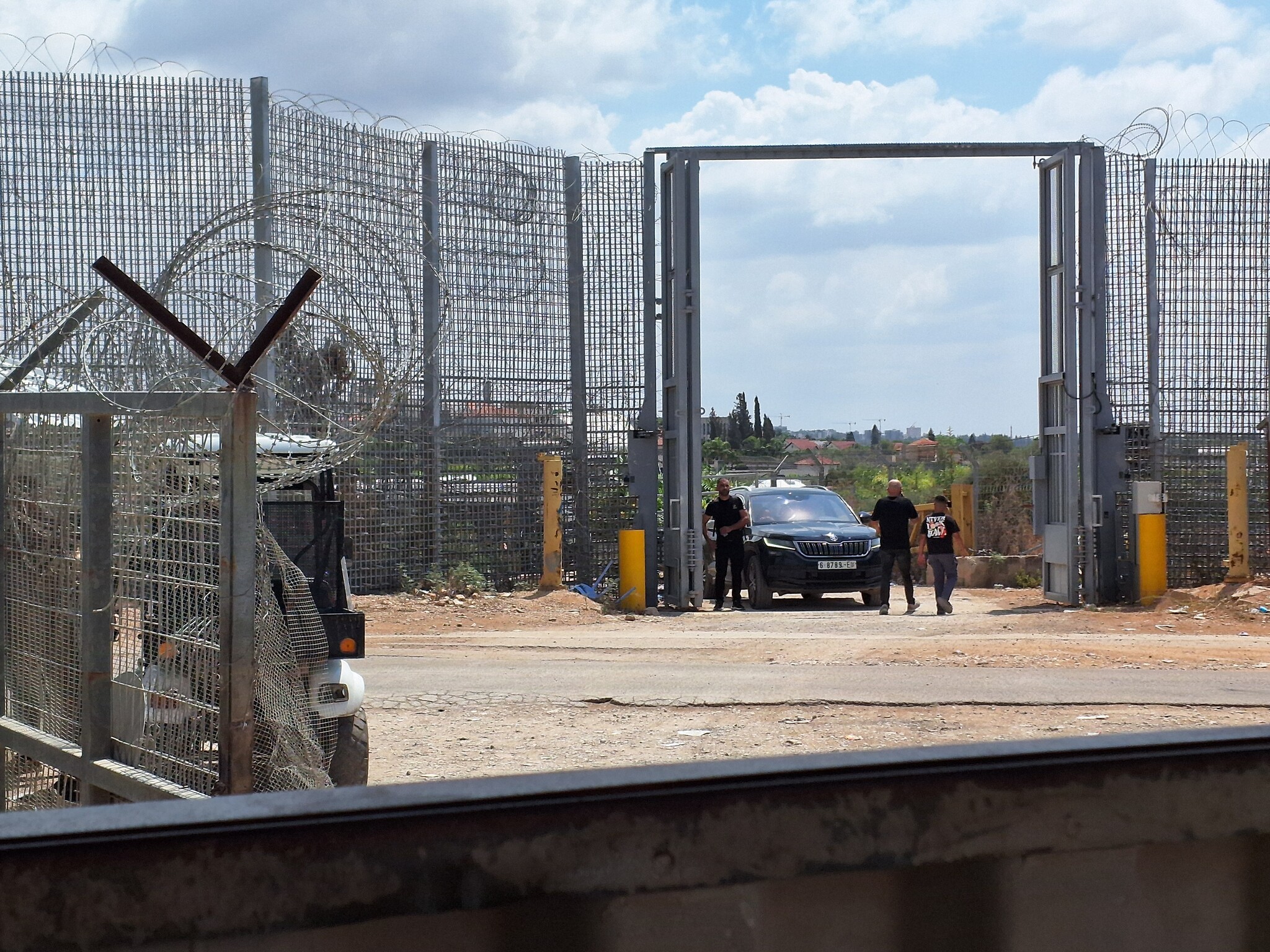 Ronit Dahan-RamatiAug-31-2026Habla. The gate is open
-
Za'tara (Tapuah)
See all reports for this place-
Za'tara (Tapuah) Za'tara is an internal checkpoint in the heart of the West Bank, at the intersection of Road 60 and Road 505 (Trans-Samaria), east of the Tapuah settlement. This checkpoint is the "border" marked by the IDF between the north and south of the West Bank, in accordance with the policy of separation between the two parts of the West Bank that has been in place since December 2005. At the Za'tara checkpoint, there are separate routes for Israelis and Palestinians. In the route for Israelis, there are no inspections and the route for Palestinians inspects. The queue lengthens and shortens suits. The checkpoint is open 24 hours a day. The checkpoint is partially staffed and the people who pass through it are checked at random.
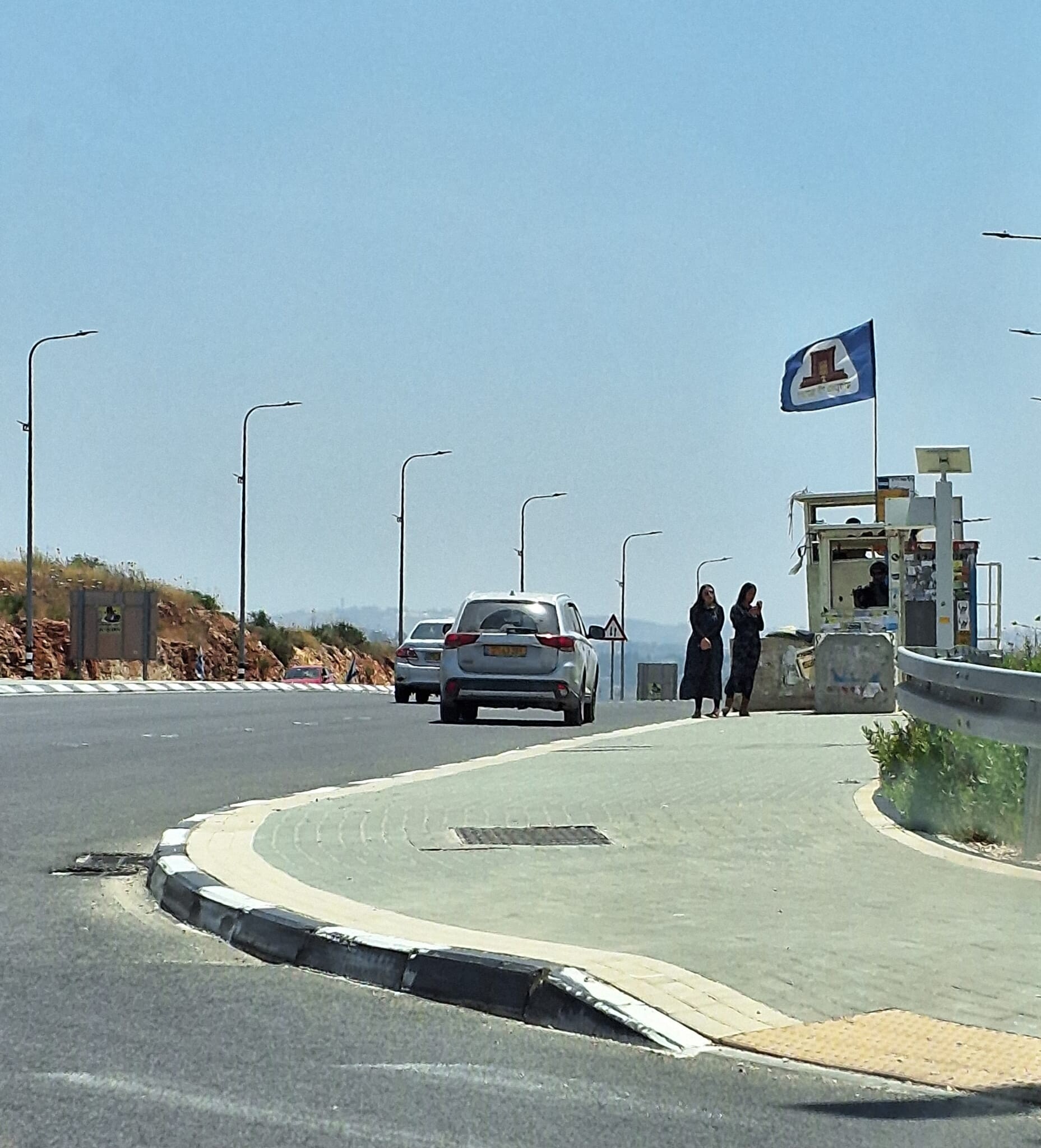 Ronit Dahan-RamatiJun-9-2026Za'atara (Tapuach Junction). The Temple Flag Above a Station
-
