
‘Azzun ‘Atma, Burin (Yitzhar), Eliyahu Crossing, Jit, Za’tara (Tapuah), Mon 24.10.11, Morning
06:20 'Azzun Atma south – Dozens of people (about 100) waiting beyond the checkpoint for their rides to work. About 100 people on line at the checkpoint. People go through quickly, 20 in about five minutes. Occasionally the MP emerges, looks through someone’s belongings, and returns to his position. Women go through the vehicle lane and then immediately move on to have their documents checked. A man with a donkey cart arrives; the gate opens for him. The children trickling in from the area south of the fence, on their way to school in 'Azzun 'Atma, also go through the vehicle gate. A man coming from 'Azzun 'Atma goes through the vehicle gate to his home, explaining he lives here – south of the gate – and it’s up to the shift commander. Sometimes they let him get home quickly, and sometimes send him to wait in line half an hour like everyone else.
07:30 Ariel, eastern gate
We decided to try to reach olive harvesters at the Ariel gates. We followed the DCO here. An extended family arrives in a car, men, women and children, park in the lot outside the gate, where some cars are already parked. The DCO came to authorize their entry through the gate and into Ariel. He lets them in; they walk with a ladder on the security road to harvest their grove, which is in Ariel. They’ll bring out all the olives at one time, when they finish picking. More Palestinians arrive, are inspected at the gate after waiting briefly and go through to work in Ariel.
We wanted to see how to reach the Ariel gates, but the DCO says we can’t get there because we’d have to walk along the security fence. Maybe we have to look for a way to the groves from within the village, between the houses. He said we wouldn’t be able to get to them by car from Marda either, but maybe we could reach them from within Marda, with the locals’ help.
On the way to Salfit from Ariel the road is very wide, with wide shoulders and guard rails on the side – that’s what we need in Israel. Farther along Highway 60 there are garbage bags every few meters and laborers cleaning the roadside, a scene that continued all along Highway 60, at least until Sara. When we returned to Israel we didn’t see roads that had been cleaned up by hand – plastic bags and refuse were everywhere. On the way down from Ariel was a small settlement, in trailers – Nofei Nehama – signs at the entrance inviting people to come live in that wonderful location, etc.
07:50 Tapuach junction
Many signs on the fence around the parking lot, “Beinish – have you murdered and also inherited – Giv’at Assaf,” and “Change is up to us – Giv’at Assaf.” No soldiers at the crossing, but people driving through slow down because of the road humps, and perhaps because they expect soldiers to suddenly appear.
08:10 Yitzhar junction
Two policemen check documents of people coming from the direction of Jit junction. We don’t see any soldiers at the Huwwara checkpoint, except for a pillbox, but soldiers stand on the road up to Mt. Gerizim, and it’s partly blocked.
We continue to Highway 60 toward Jit junction.
08:40 The entrance to Sara
A Hummer, the exit road partly blocked by a spike strip, soldiers checking documents of cars leaving, a short line occasionally forms but is gone quickly. They leave five minutes later.
09:15 Eliyahu gate – The landscaping around the parking lot continues to improve – we’re here to stay, is what that tells me. Kennels for dogs next to the parking lot; I hadn’t seen them before. It’s not clear whether they’re for guarding or for looking for explosives. They were very loud when we tried to approach them, and we were told, of course, not to go near. A Palestinian woman went through the pedestrian crossing very quickly. In the inspection parking lot Israeli Arabs underwent inspection – now, when there’s no congestion, inspection is relatively rapid, two inspectors checking each car.
We also drove onto the road to Wadi Rasha to see what the gate looks like. Everything is blocked, but these aren’t the hours when it’s open. We weren’t able to see where people leaving to pick olives (if anyone does so) are bound for.
'Azzun 'Atma
See all reports for this place-
'Azzun 'Atma
A Palestinian village of about 1,800 residents. The settlement of Sha'arei Tikva was established on its land adjacent to it, and the settlement of Oranit was established on its agricultural lands. By 2013, the separation fence had passed through the village and a checkpoint staffed by the army allowed the residents to cross from side to side. After building a massive wall surrounding the village and some of its agricultural lands, the residents went daily for five years to their lands that remained in the Seam Zone through the Oranit agricultural checkpoint (4). Since 2018 it has only opened during the olive harvest and the farmers have to pass daily at the Beit Amin / Abu Salman checkpoint (1447), about 3 kilometers north.From a report from March 24, 2021: "The farmers from Beit Amin and Azon Atma are happy that since February 21 the Oranit checkpoint .is going to be open 3 times a day, The farmers are really developing the place."
Report from July 14, 2024: "Ornit checkpoint is closed . The Beit Amin/Abu Salman agricultural checkpoint is closed (there is no contact with the military to check if it opens rarely), the Ezbat Jaloud checkpoint was opened once a day before the war.
Updated for July 2024
 Apr-11-2019Azoun: The main entrance to village blocked now for several weeks
-
Burin (Yitzhar)
See all reports for this place-
Burin (Yitzhar)
This is a Palestinian village in the Nablus governorate, a little south of Nablus, on the main road passing through the West Bank. The settlements: Yitzhar and Har Bracha, settled in locations that surrounded the village, placed fences so it is cut off the main road.
There are around 4000 inhabitants. Most of them are engaged in agriculture and pasture, although many graduates of the two secondary schools continue to study at the university. Academic positions are hardly available, they find work as builderd, or leave for the Gulf countries.
The village lands were appropriated several times for the establishment of Israeli settlements and military bases, and as a result, Burin's land and water resources dwindled. lSince 1982, more than 2,000 dunams of village land have been declared "state land" and then transferred to Har Bracha settlement.
Over the past few years and more so since 2017, the villagers have been terrorized by the residents of Yitzhar and Har Bracha, the Givat Ronen outpost and others. Despite the close proximity of soldiers to an IDF base close to one of the village's schools, residents are suffering from numerous stone-throwing events, vehicle and fire arson, also reported in the press.
In 2023, the prevention of the olive harvest in the village plot was more violent than ever. Soldiers and settlers walked with drawn weapons between the houses of the village and demanded that people stop harvesting in the village itself and in the private plots outside the village. The settlers from Yitzhar and Giv'at Roned raided the olive groves and stole crops. 300 olive trees belonging to the residents of Burin, near Yitzhar, were uprooted. The loss of livelihood from the olives causes long-term economic damage to the farmers' families, bringing them to the point of starvation.
(updated for November 2023)
-
Eliyahu CP (109) / Crossing
See all reports for this place-
Eliyahu CP (109) / Crossing This checkpoint, also known as the Fruit Crossing, is one of the main checkpoints between Israel and the West Bank. It is located on Route 55 between Alfei Menashe and the turn to Qalqilya and Zufin, more than 4 km east of the Green Line, in the separation fence, which separates Qalqilya from its lands to the south, thus leaving Alfei Menashe West of the fence - the Seam Zone. This checkpoint, a few kilometers across the Green Line, is intended for "Israeli settlement in the West Bank and the population of the Seam Zone." It is managed by a civil company. Palestinians with a special permit for their lands in the seam area are also allowed to pass through it, on foot, and sometimes by car.
-
Jit Junction
See all reports for this place-
The checkpoint is located on Route 60 near at the junction with Route 55, near the village of Jit. There was a checkpoint for vehicles passing between the north and south of the West Bank, which was abolished towards 2010. Since then, surprise checkpoints have been set up there from time to time with a police or Border Police vehicle, and vehicles and their passengers are inspected.
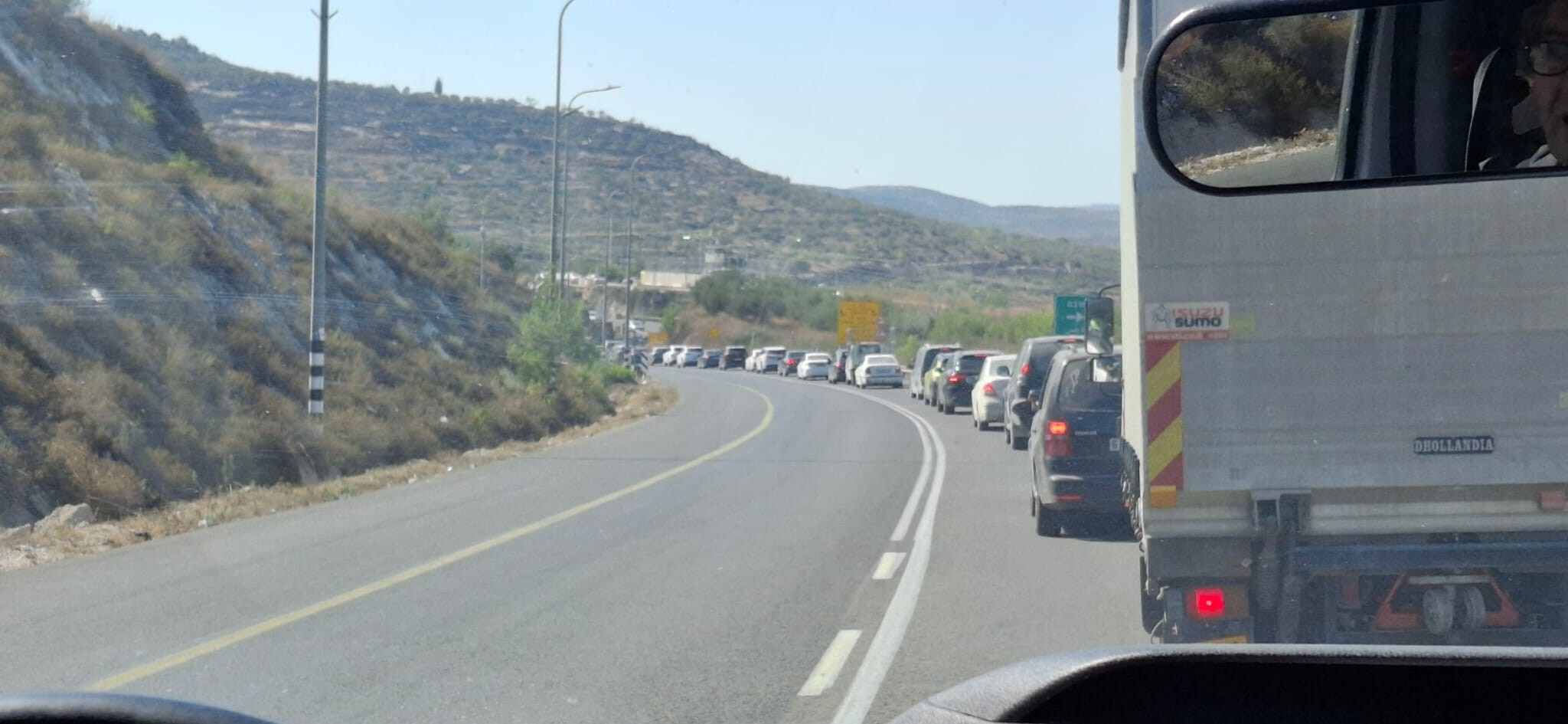 Anat PolakJul-17-2025Yitzhar Road, Jit Junction: traffic jam
-
Za'tara (Tapuah)
See all reports for this place-
Za'tara (Tapuah) Za'tara is an internal checkpoint in the heart of the West Bank, at the intersection of Road 60 and Road 505 (Trans-Samaria), east of the Tapuah settlement. This checkpoint is the "border" marked by the IDF between the north and south of the West Bank, in accordance with the policy of separation between the two parts of the West Bank that has been in place since December 2005. At the Za'tara checkpoint, there are separate routes for Israelis and Palestinians. In the route for Israelis, there are no inspections and the route for Palestinians inspects. The queue lengthens and shortens suits. The checkpoint is open 24 hours a day. The checkpoint is partially staffed and the people who pass through it are checked at random.
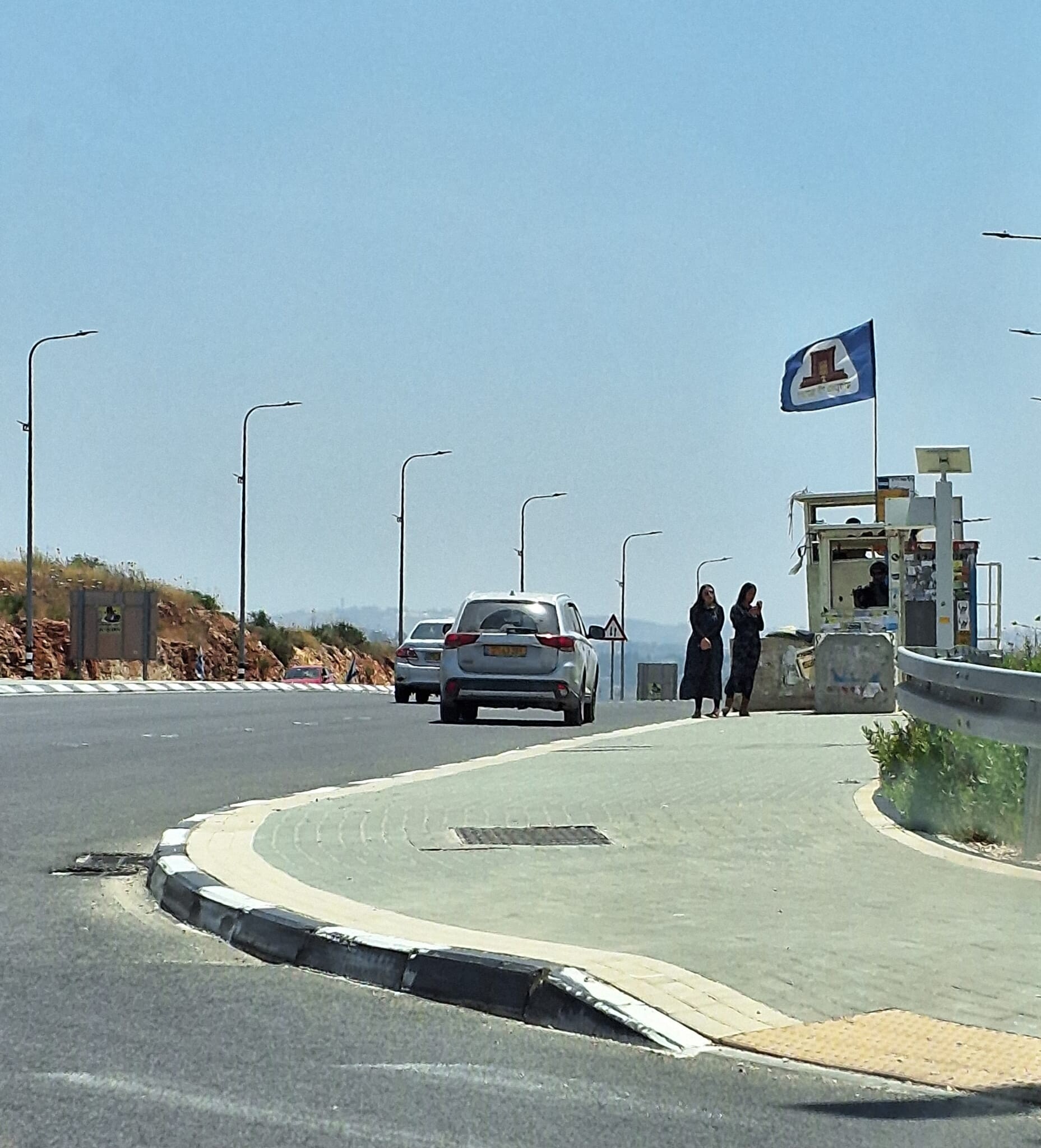 Ronit Dahan-RamatiJun-9-2026Za'atara (Tapuach Junction). The Temple Flag Above a Station
-
