
‘Azzun, Beit Iba, Children’s Gate (Agricultural Gate 753), Habla, Jit, Jubara (Kafriat), Mon 14.6.10, Morning
06:30 Habla. The gates are closed. A soldier wearing a yarmulke sits quietly off to the side. He answers that they’ll open the gates only at 6:45. At 6:45 exactly the three gates open and people, some riding a donkey or a horse, some driving a cart pulled by a donkey, pass through the checkpoint. One of the carters is stopped and not allowed through with the number of crates he has, mostly containing tomatoes and cauliflower. They argue with him about the quantity; he says it’s food for the workers in the plant nurseries. He finally gives in, returns with fewer crates of vegetables and goes through.
08:00 We left. According to the soldiers, the gate will remain open until 08:30.
We passed Azzun, via Funduq and Jit. There are no signs anywhere along the road identifying the Palestinian villages we pass or through which we drive. We got out of the car to ask their names.
08:55 We drove via Beit Iba toward the location where the life-saving checkpoint once stood. It’s no longer there, and we can’t feel any difference. A few businesses have since opened along the road, including the two quarries. The road through Beit Iba to Sebastya, Jenin and Megiddo is under construction, so it’s blocked starting from the army camp (who’s the road being built for?).
09:35 (After Nava Moses called us to tell us about a checkpoint at the children’s gate). We arrived at the Jubara checkpoint. The village is surrounded all along the road by a high fence. A female major willingly opened the gate for us. The children’s gate was open and manned. The soldiers say the checkpoint is open 24 hours a day. They hadn’t heard about a police checkpoint, nor did we see one. Cars went through after showing permits. A woman went through, and a skinny, short youth, who looked to be 15-16 years old, was detained off to the side because he’d been in Israel without a permit. He was released after about a quarter of an hour.
10:10 We left.
'Azzun
See all reports for this place-
Azoun (updated February 2019)
A Palestinian town situated in Area B (under civil Palestinian control and Israeli security control),
on road 5 between Nablus and Qalqiliya, east of Nabi Elias village. The inhabitants are allowed to construct and improve infrastructures. The Separation Fence has confiscated lands belonging to the town's people. In 2018 olive tree groves owned by one of its inhabitants were confiscated for the sake of paving a road to bypass Nabi Elias. Azoun population numbers 13,000, its economic state dire. Its infrastructures are poor, neglect and poverty rampant. In the meantime, the town council has completed paving an internal road for the inhabitants' welfare.
Because of its proximity to the Jewish settler-colony of Karnei Shomron and its outposts, the town suffers the intense presence of the Israeli army, especially at nighttime: soldiers enter homes, arrest suspects, trash the house and sometimes ruin it, as they do in numerous places in the West Bank. At times a checkpoint closes the entrance to the town, so no one can come in or get out.
-
Beit Iba
See all reports for this place-
A perimeter checkpoint west of the city of Nablus. Operated from 2001 to 2009 as one of the four permanent checkpoints closing on Nablus: Beit Furik and Awarta to the east and Hawara to the south. A pedestrian-only checkpoint, where MachsomWatch volunteers were present daily for several hours in the morning and afternoon to document the thousands of Palestinians waiting for hours in long queues with no shelter in the heat or rain, to leave the district city for anywhere else in the West Bank. From March 2009, as part of the easing of the Palestinian movement in the West Bank, it was abolished, without a trace, and without any adverse change in the security situation.
 Jun-4-2014Beit-Iba checkpoint 22.04.04
-
Habla
See all reports for this place-
Habla CP (1393)
The Habla checkpoint (1393) was established on the lands of the residents of Qalqilya, on the short road that
connected it for centuries to the nearby town of Habla. The separation barrier intersects this road twice and cut off the residents of Qalqilya from their lands in the seam zone.(between the fence and the green line).
There is a passage under Road 55 that connects Qalqilya to the sabotage This agricultural barrier is used by the farmers and nursery owners established along Road 55 from the Green Line and on both sides of the kurkar road leading to the checkpoint.
This agricultural checkpoint serves the residents of Arab a-Ramadin al-Janoubi (detached from the West Bank), who pass through it to the West Bank and back to their homes. The opening hours (3 times a day) of this agricultural checkpoint are longer than usual, about an hour (recently shortened to 45 minutes), and are coordinated with the transportation hours of a-Ramadin children studying in the occupied in the West Bank.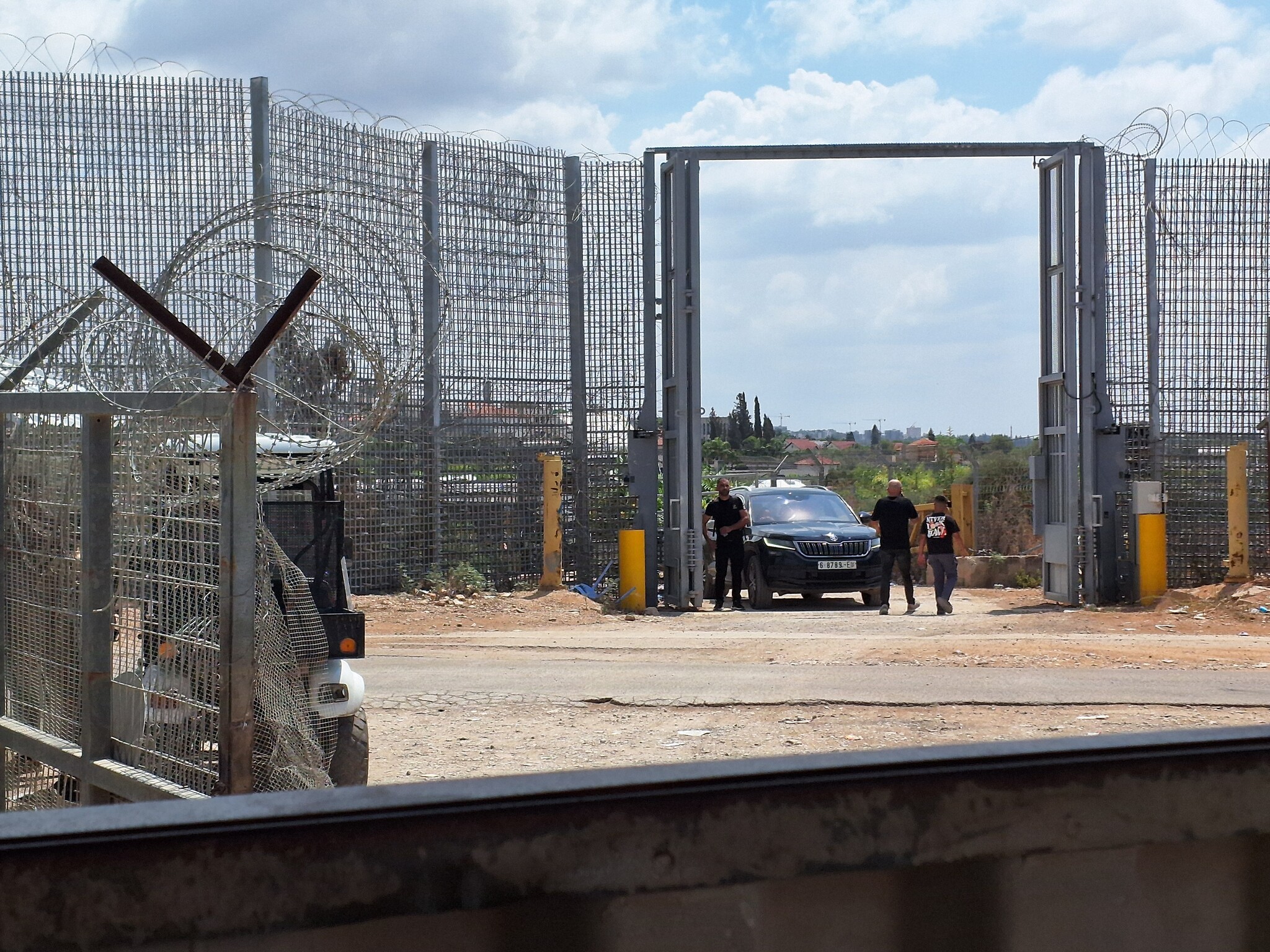 Ronit Dahan-RamatiAug-31-2026Habla. The gate is open
-
Jit Junction
See all reports for this place-
The checkpoint is located on Route 60 near at the junction with Route 55, near the village of Jit. There was a checkpoint for vehicles passing between the north and south of the West Bank, which was abolished towards 2010. Since then, surprise checkpoints have been set up there from time to time with a police or Border Police vehicle, and vehicles and their passengers are inspected.
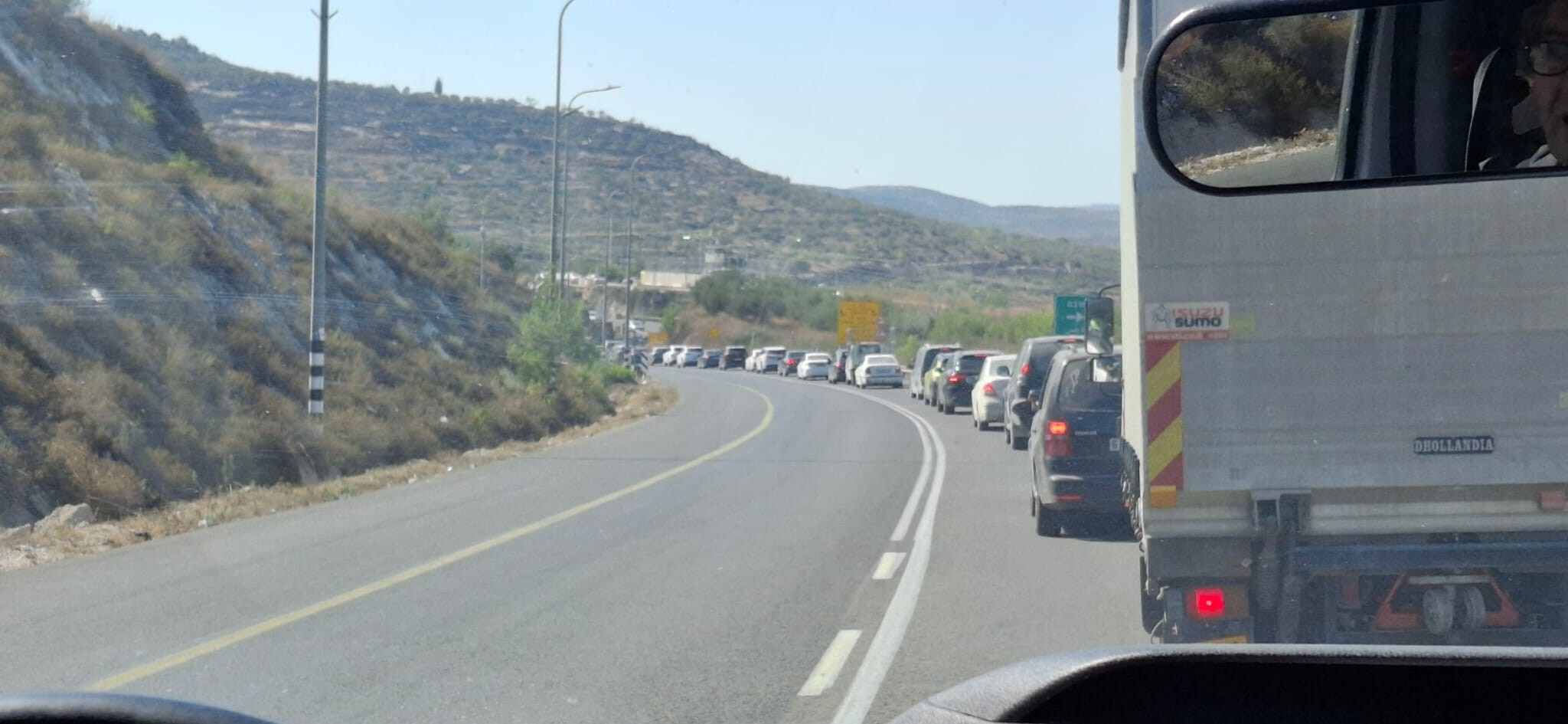 Anat PolakJul-17-2025Yitzhar Road, Jit Junction: traffic jam
-
Jubara (Kafriat)
See all reports for this place-
The Jabra checkpoint was on Road 557, south of Tulkarm, on the side of the Figs Pass, which is located within the Palestinian Authority (a few kilometers east of the Green Line), and serves as an entry barrier from the territories to Israel. The checkpoint to the village of Jubara, which until 2013 was in the seam area, blocked and surrounded by a fence, was intended for the passage of the family members of the house next to the checkpoint, and also for the MachsomWatch volunteers (with special permission only), on their way to checkpoint 753. on the other side of the village. The soldiers supervising the "fig crossing" also supervised the crossing at this checkpoint, in our shifts we often waited a long time until the key was found and the gate opened. The checkpoint was abolished and became part of the separation fence that was moved west following the High Court.
-
