
‘Azzun, Deir Sharaf, Eliyahu Crossing, Habla, Jit, Ras ‘Atiya, Shave Shomron, Mon 5.4.10, Afternoon
Summary
In Hebrew, "seder" and "seger" are words similar in sound, but not
in meaning. "Seder," actually means "order" and it's true, there is an
"order" to the Jewish Passover meal which is called "Seder." But modern
Jewish Israelis, at least the Israeli authorities, also create or
impose order by proclaiming a "seger," meaning a general closure on the
West Bank for eight days; that has nothing to do with the fact that,
this year, Orthodox Easter happens also to fall at the same time. What
"seger" means is that even Palestinians with valid permits cannot enter
East Jerusalem or Israel. Workers cannot get to their jobs. Their
livelihoods? Not a concern to the "chosen people." In any case, to the
authorities, "order" means "orders," and there are plenty of those
"orders," including a brand new one for us: a donkey may only carry
one, not two, sacks of feed for sheep across the Separation Barrier!
Moreover, since there are plenty of holidays in the Jewish calendar,
religious or national, there is plenty of the other type of order
concerning closures. That's "order" from one point of view, but it's
tragic that on the "festival of freedom" there's not an iota of concern
for the freedom to earn a living, for the freedom to move about for any
others than the "chosen people."
10:15 Azzun
On Route 55, there's been heavy traffic, going westwards, most of the
time, nearly all of it Palestinian (green license plates) since the
settlers are well settled in their settlements, celebrating ….
Perhaps there's been a "rolling checkpoint" in the area, since, when we
pass Azzun, there's an army jeep on the side of the road, possibly
resting after its endeavors to maintain "security" by stopping and
checking traffic on the apartheid road.
10:30 Jit Junction
A military jeep approaches from the Zaatara direction, and seems to
stop to create a rolling checkpoint (see our return journey).
A police car is on the main road, Route 60, on the way down to the turn
to Nablus. More police and military vehicles seen later in the day,
11:00 Deir Sharaf
The checkout here, of recent vintage, in the overall history of
checkpoint creation and destruction, is no more, and no vestiges of it
remain.
Just beyond the turn off for Jenin, there's a new sign outside the
minimarket indicating that the local council is building a new road
here (the present one is deeply potholed), courtesy of the Palestinian
Authority).
12:10 Shavei Shomron
We hear about other road works beyond the closed checkpoint (both gates
almost, but not quite, closed, making one wonder who is permitted to
pass, road works or not)?! The soldiers immediately come over to ask
who we are, have no idea who or what MachsomWatch is, listen as the one
up in the military lookout tower makes a phone call. The soldier is
willing to talk to us but not on camera.
12:30 Jit Junction
The military jeep is now stopping and searching the trunk of a car with (yellow) Israeli plates.
12:35 Shvut Ami
Just beyond the settlement of Qedumim, a group of five young men, all
dressed up, walk on the roadway, carrying foil wrapped food. They are
clearly on their way to the outpost on the hills, lately not lived in,
but today there another two festively dressed young settlers on the
hilltop, awaiting their colleagues. Here, no military jeeps in sight!
12:40 Fonduk
Just beyond, in the village of Fonduk, a white police jeep stands at
the side of the road, but rather than enjoying the food stand there,
the two policemen sit inside.
12: 45 Near Azzun, a white police van.
12:55-13:00 Gate 109, Shaar Eliahu
We are shouted at, aggressively, by the military policewoman (we're
getting used to that) after the soldier has asked us politely to move
behind the white line and wait for out turn to be checked. Our film
crew, in front of us, is relieved of its IDs and the men are told to go
through the "security" bunker (no windows). They emerge unscathed, then
have to return there once more with their IDs in hand!
13:30 Ras Atiya
No work on the new in-your-face gate and separation barrier roadway
today. But plenty of action as life goes on, as normally as is possible
in these abnormal circumstances, at the Ras Atiya checkpoint.
The commander, a sergeant is quite willing to talk to us, agrees to
being filmed, as long as faces don't appear, understands Arabic and
speaks English. But his two colleagues, of lesser, or no rank, make
obvious signs that they want him to talk no more.
Although it's too late to see schoolchildren or teachers returning
home, there are numerous trucks, cars and families with small children,
a group of young men – all willing to explain what the Separation
Barrier and life on the Seam Zone does to them. Cars, trucks and people
wait as the checking is slow, but some are nevertheless willing to stop
some more and talk. They explain that journeys may take two to three
hours, especially when the gates are closed from 18:30 to 6:30 and
somebody needs desperately to get to hospital; others seem to some
have a clear understanding of "they want to get rid of us" (land grab
is not an Arabic expression)!
13:45 — the reality is brought home to us as two young men and a
donkey cross from the side where we observe to Ras Atiya. Soon, a
biblical scene, in that the donkey returns, young man on its back,
laden now with two large sacks. The soldiers approach, an altercation
starts, and it becomes clear, from this side of the Separation Barrier
that the young man on the donkey, with his two sacks, laden with feed
for his family's sheep, will not be allowed to pass. "With one bag,
fine." The problem is that one bag is not enough to feed all the sheep,
and the young man has been forbidden to return for the second bag.
Tomorrow is another day! And tomorrow, the Israeli authorities, or the
individual soldiers at Ras Atiya will come up with yet another ploy to
make life difficult for the Palestinian. .
As this is going on, a car is checked, its back, as well as trunk, filled to the brim with similar looking sacks.
14:05 — a Hummer arrives with three more soldiers, one of them a
lieutenant. The six soldiers talk and talk, but as we leave the
sergeant and the lieutenant approach us, crossing the checkpoint to
reach us in our car and politely ask if all is well. We say,
nonchalantly, that all is ok.
14:30 Habla
The gate is closed, but a man and two tractors are already in line to await its opening at 16:30.
The nurseries are strangely quiet, as those willing to venture to this
Seam Zone area have probably had their fill of flowers, fruit and
vegetables – until the next "seger" or holiday.
'Azzun
See all reports for this place-
Azoun (updated February 2019)
A Palestinian town situated in Area B (under civil Palestinian control and Israeli security control),
on road 5 between Nablus and Qalqiliya, east of Nabi Elias village. The inhabitants are allowed to construct and improve infrastructures. The Separation Fence has confiscated lands belonging to the town's people. In 2018 olive tree groves owned by one of its inhabitants were confiscated for the sake of paving a road to bypass Nabi Elias. Azoun population numbers 13,000, its economic state dire. Its infrastructures are poor, neglect and poverty rampant. In the meantime, the town council has completed paving an internal road for the inhabitants' welfare.
Because of its proximity to the Jewish settler-colony of Karnei Shomron and its outposts, the town suffers the intense presence of the Israeli army, especially at nighttime: soldiers enter homes, arrest suspects, trash the house and sometimes ruin it, as they do in numerous places in the West Bank. At times a checkpoint closes the entrance to the town, so no one can come in or get out.
-
Deir Sharaf checkpoint
See all reports for this place-
Deir Sharaf checkpoint is located west of Nablus and south of the settlement of Shavei Shomron, at the entrance to the village of Deir Sharaf on the road leading to Nablus. The checkpoint was activated in early March 2009 after the Beit Iba checkpoint was closed. Palestinians are allowed through the checkpoint , but not for Israelis. Unlike the checkpoints leading to Qalqilya and Tulkarm, crossing of Israeli Palestinians is only allowed on Saturdays.
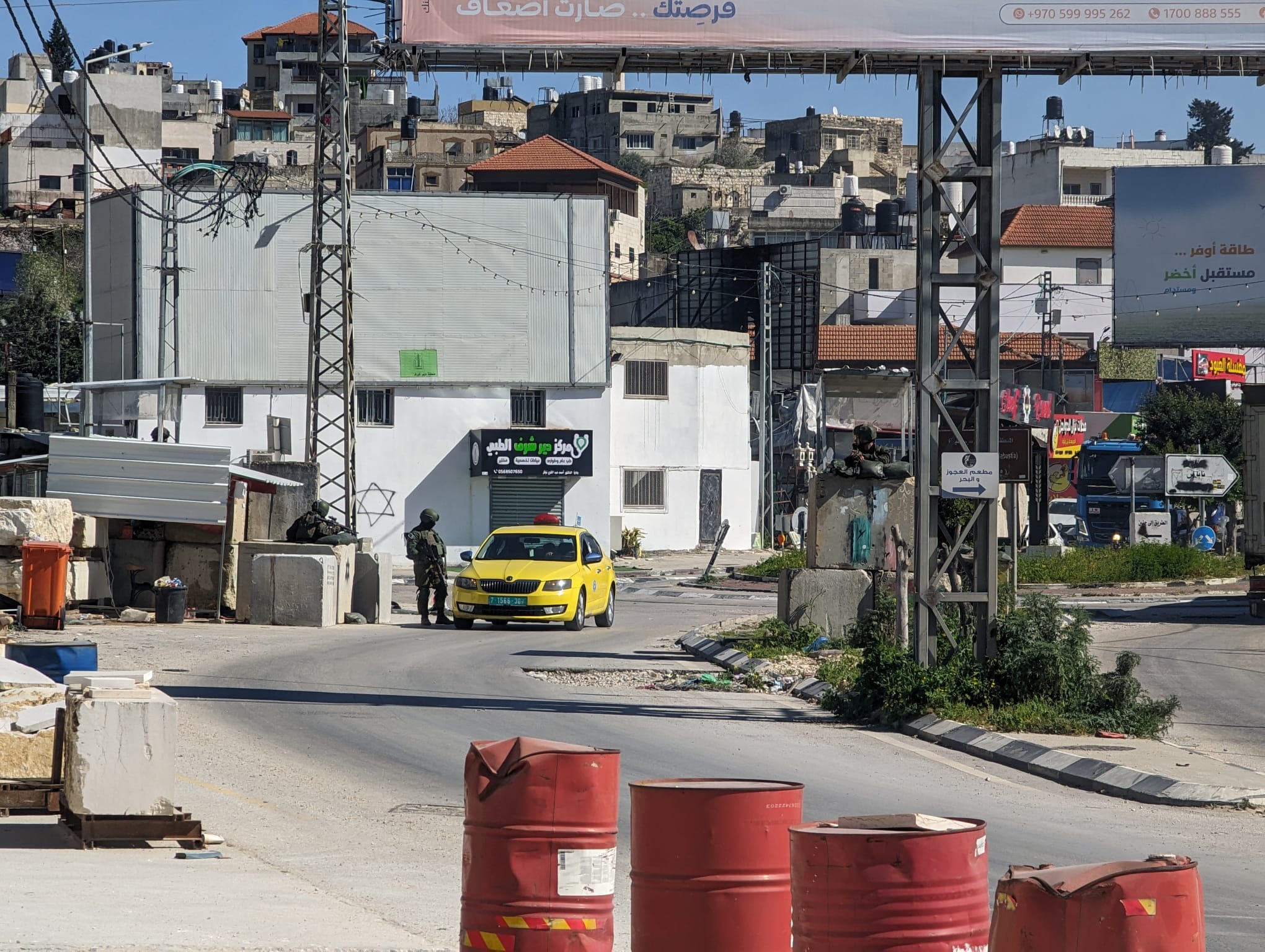 Nina SebaFeb-28-2024Deir Sharaf - the entrance to the village
-
Eliyahu CP (109) / Crossing
See all reports for this place-
Eliyahu CP (109) / Crossing This checkpoint, also known as the Fruit Crossing, is one of the main checkpoints between Israel and the West Bank. It is located on Route 55 between Alfei Menashe and the turn to Qalqilya and Zufin, more than 4 km east of the Green Line, in the separation fence, which separates Qalqilya from its lands to the south, thus leaving Alfei Menashe West of the fence - the Seam Zone. This checkpoint, a few kilometers across the Green Line, is intended for "Israeli settlement in the West Bank and the population of the Seam Zone." It is managed by a civil company. Palestinians with a special permit for their lands in the seam area are also allowed to pass through it, on foot, and sometimes by car.
-
Habla
See all reports for this place-
Habla CP (1393)
The Habla checkpoint (1393) was established on the lands of the residents of Qalqilya, on the short road that
connected it for centuries to the nearby town of Habla. The separation barrier intersects this road twice and cut off the residents of Qalqilya from their lands in the seam zone.(between the fence and the green line).
There is a passage under Road 55 that connects Qalqilya to the sabotage This agricultural barrier is used by the farmers and nursery owners established along Road 55 from the Green Line and on both sides of the kurkar road leading to the checkpoint.
This agricultural checkpoint serves the residents of Arab a-Ramadin al-Janoubi (detached from the West Bank), who pass through it to the West Bank and back to their homes. The opening hours (3 times a day) of this agricultural checkpoint are longer than usual, about an hour (recently shortened to 45 minutes), and are coordinated with the transportation hours of a-Ramadin children studying in the occupied in the West Bank.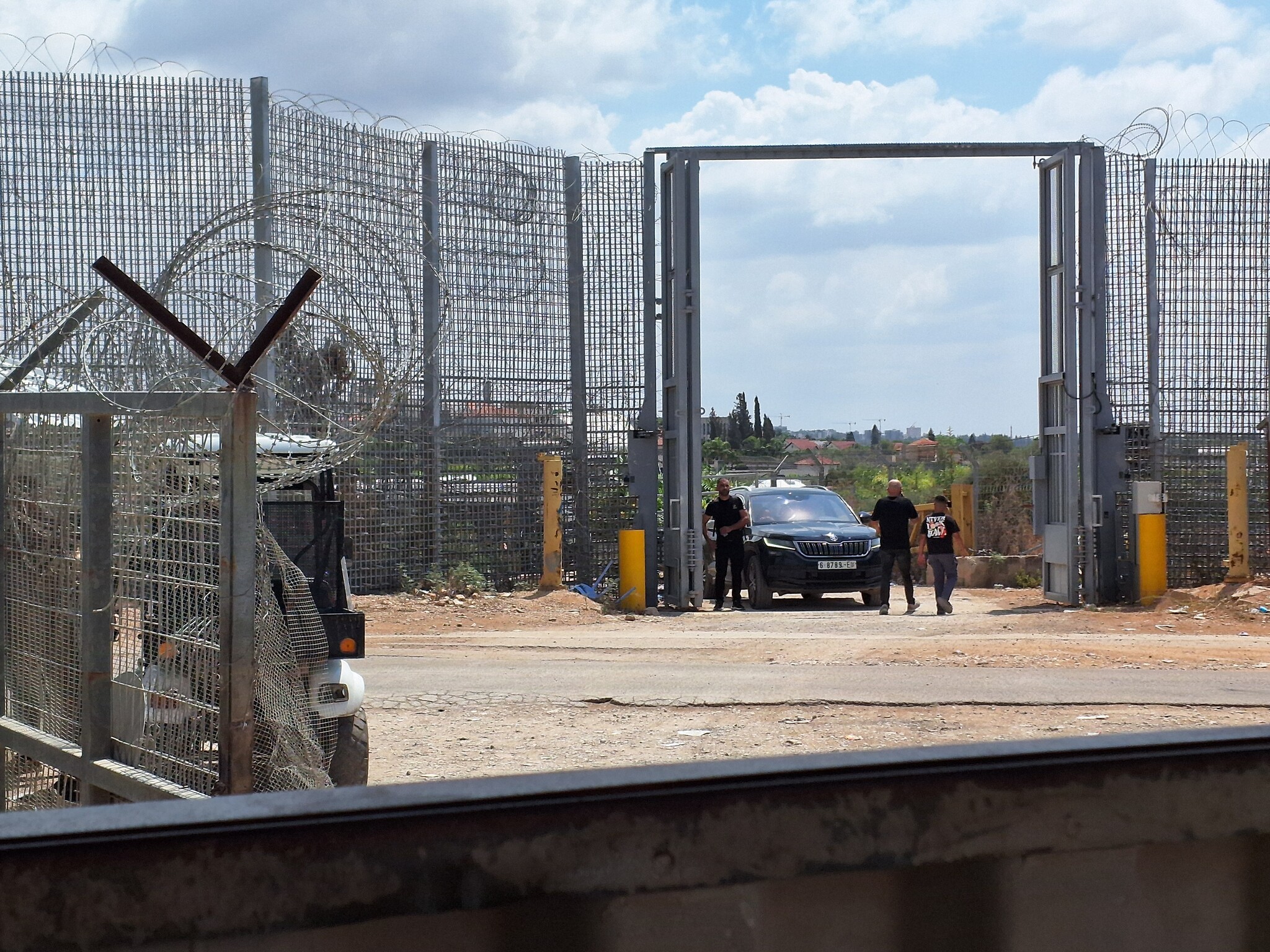 Ronit Dahan-RamatiAug-31-2026Habla. The gate is open
-
Jit Junction
See all reports for this place-
The checkpoint is located on Route 60 near at the junction with Route 55, near the village of Jit. There was a checkpoint for vehicles passing between the north and south of the West Bank, which was abolished towards 2010. Since then, surprise checkpoints have been set up there from time to time with a police or Border Police vehicle, and vehicles and their passengers are inspected.
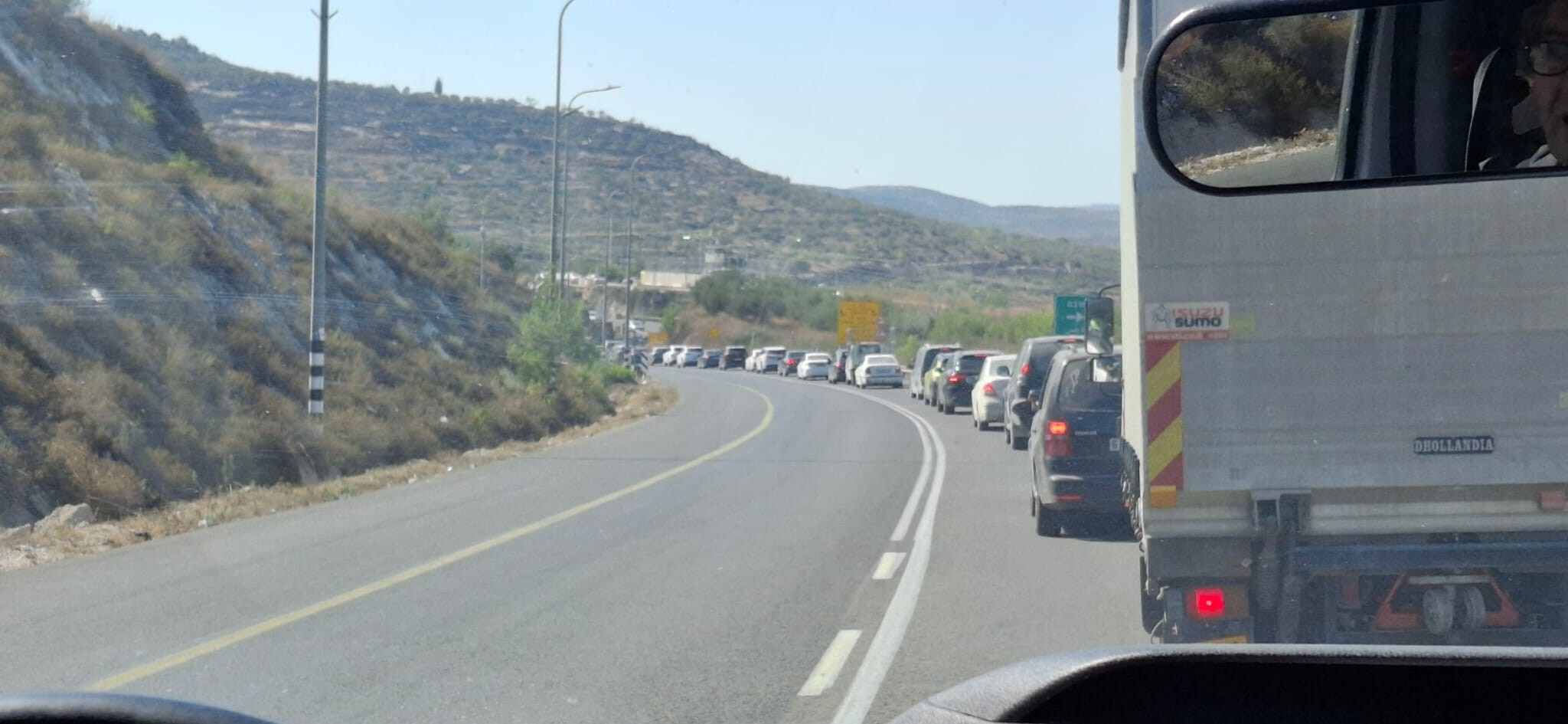 Anat PolakJul-17-2025Yitzhar Road, Jit Junction: traffic jam
-
Ras 'Atiya
See all reports for this place-
The checkpoint is presently on the Separation Barrier roadway, manned and open 12 hours a day, from 6:30 to 18:30. West of it is the large Seam Line village whose school is attended by children from the nearby villages east of the Barrier and many of whose inhabitants have permits to work in Israel. How long this checkpoint will remain in place is unknown, since construction of the Separation Wall, just by the settlement of Alfe Menashe, east of the present Separation Barrier, is endless, as is the creation of a new road and, obviously, a new checkpoint.
-
Shave Shomron Checkpoint
See all reports for this place-
The checkpoint is on Route 60 (the main road to the northern West Bank), opposite settlement. Has been blocked to Palestinians since disengagement from Gaza and northern Samaria.
-
