
‘Azzun, Eliyahu Crossing, Habla, Qalqiliya, Wed 21.9.11, Afternoon
Translator: Charles K.
The day after the opening of the General Assembly session in the UN.
13:00 – Habla agricultural gate #1393
Many more soldiers here than we’re used to (nearly ten). One wishes us a nice day and asks us not to photograph soldiers. He does more than ask; he inspects the photos one by one. Five vehicles on line. The same number from the other direction. The gates open and close alternately, allowing a single car to go through. That’s also not according to the usual practice. A tractor driver has to unload what he’s transporting – blue barrels. It’s clear they’re empty. He takes them off one-by-one and then reloads them. The soldiers can’t be expected to help him. A female student in the English Department at the university in Nablus, who lives in the nearby Bedouin village, tells us she wastes hours at the crossings every day. Time that’s stolen from her studies. A man from Beita also complains about the waste of time. “The checkpoint is tough. Life is tough.” A driver passes: “This checkpoint is ok. Go to 109/Eliyahu crossing.” And with growing anger: “They hold every car for two hours. The soldiers here are ok, there they’re garbage.” (It’s the same whether they’re in uniform or civilians. At Eliyahu crossing the inspections are conducted by a civilian security company). S: “Since 109 was transferred to a civilian company things are absolutely terrible. They use dogs for inspections, machines. They pat you down, again and again. Disgusting. The inspection is humiliating. They check water, salt, wheat, flour. They tear sacks open. They check fire extinguishers, propane tanks. My aunt wanted to cross with her son. The inspector let her through, but without her son. But he’s four years old. A four-year-old terrorist? You’d think this was the AllenbyBridge. You’d think we’re crossing from one country to another. Checkpoint 109 is in the wrong place. It should be on the Green Line.” When we tell him we’re impressed by his Hebrew, he says: “Yes. I paint with language.”
13:40 – Eliyahu crossing/109
The surprisingly spacious parking lot testifies to the large number of employees of the Crossings Authority, Defense Ministry staff and staff of the civilian security company. The large number of buildings erected recently on both sides of the checkpoint are evidence of the many people who make a living here. A guard with his dog stand out among them. We asked why it takes so long to cross. “We just started working yesterday. Ask your questions of the spokesperson. You enjoy arguments. Get out of my area. You’re not allowed to be here.” “What are your orders,” we wanted to know. “I’m not authorized to answer.” Who ordered the dogs to be here, we asked. “I’m not authorized to answer.” When we crossed to the other side of the checkpoint, another security person approached: “I’m asking you not to photograph. P-l-e-a-s-e! I’m asking you not to stand in one place. Keep moving.” Meanwhile women who look like foreigners have to get out of their cars to be inspected. A security man, in the best action-film tradition, whispers into his shirt: The woman is trying to photograph. The woman is trying to photograph.
14:05 Qalqiliya checkpoint. Traffic flows freely, no one inspects or interferes.
14:15 Azzun
Here’s something new: two Palestinians soldiers at the checkpoint. This is the first time we’ve seen them in action. They don’t allow us in, concerned for our safety. They even prevent us from making a U-turn. It turned out that settlers tried to provoke residents this morning. We asked whether we could drive toKafr Thulthwe understood from their tone that it would be a very bad idea.
14:45 – Sara
Palestinian and Fatah flags, mainly on public buildings. One resident: “There’s no reason to be happy. Only the big-shots can be happy. When the army comes in – people throw rocks. Otherwise, it’s quiet. Only the big-shots.” (before Obama’s address).
15:15 – Huwwara checkpoint. Traffic flows.
16:20 Shomron crossing. No delays.
'Azzun
See all reports for this place-
Azoun (updated February 2019)
A Palestinian town situated in Area B (under civil Palestinian control and Israeli security control),
on road 5 between Nablus and Qalqiliya, east of Nabi Elias village. The inhabitants are allowed to construct and improve infrastructures. The Separation Fence has confiscated lands belonging to the town's people. In 2018 olive tree groves owned by one of its inhabitants were confiscated for the sake of paving a road to bypass Nabi Elias. Azoun population numbers 13,000, its economic state dire. Its infrastructures are poor, neglect and poverty rampant. In the meantime, the town council has completed paving an internal road for the inhabitants' welfare.
Because of its proximity to the Jewish settler-colony of Karnei Shomron and its outposts, the town suffers the intense presence of the Israeli army, especially at nighttime: soldiers enter homes, arrest suspects, trash the house and sometimes ruin it, as they do in numerous places in the West Bank. At times a checkpoint closes the entrance to the town, so no one can come in or get out.
-
Eliyahu CP (109) / Crossing
See all reports for this place-
Eliyahu CP (109) / Crossing This checkpoint, also known as the Fruit Crossing, is one of the main checkpoints between Israel and the West Bank. It is located on Route 55 between Alfei Menashe and the turn to Qalqilya and Zufin, more than 4 km east of the Green Line, in the separation fence, which separates Qalqilya from its lands to the south, thus leaving Alfei Menashe West of the fence - the Seam Zone. This checkpoint, a few kilometers across the Green Line, is intended for "Israeli settlement in the West Bank and the population of the Seam Zone." It is managed by a civil company. Palestinians with a special permit for their lands in the seam area are also allowed to pass through it, on foot, and sometimes by car.
-
Habla
See all reports for this place-
Habla CP (1393)
The Habla checkpoint (1393) was established on the lands of the residents of Qalqilya, on the short road that
connected it for centuries to the nearby town of Habla. The separation barrier intersects this road twice and cut off the residents of Qalqilya from their lands in the seam zone.(between the fence and the green line).
There is a passage under Road 55 that connects Qalqilya to the sabotage This agricultural barrier is used by the farmers and nursery owners established along Road 55 from the Green Line and on both sides of the kurkar road leading to the checkpoint.
This agricultural checkpoint serves the residents of Arab a-Ramadin al-Janoubi (detached from the West Bank), who pass through it to the West Bank and back to their homes. The opening hours (3 times a day) of this agricultural checkpoint are longer than usual, about an hour (recently shortened to 45 minutes), and are coordinated with the transportation hours of a-Ramadin children studying in the occupied in the West Bank.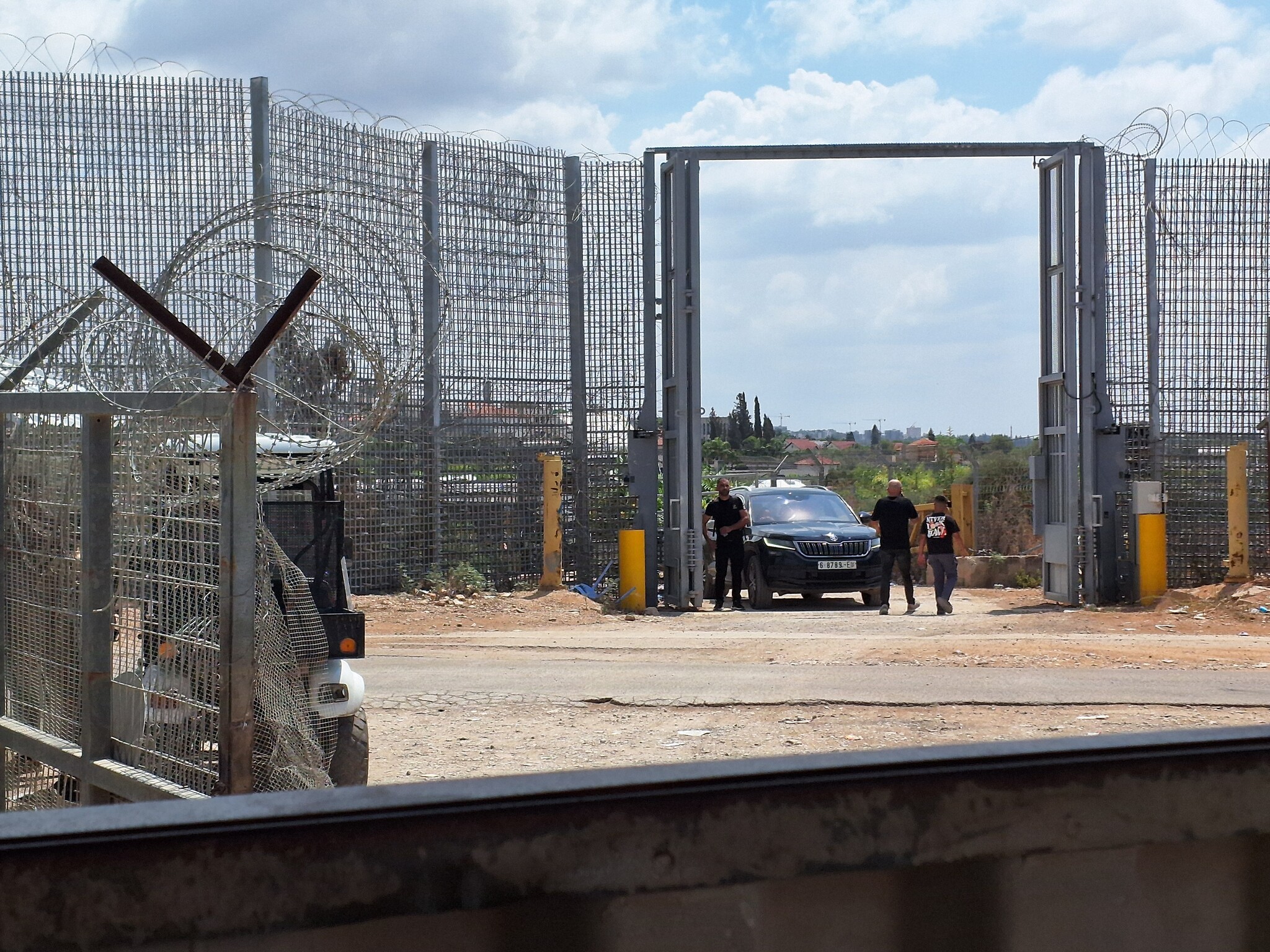 Ronit Dahan-RamatiAug-31-2026Habla. The gate is open
-
Qalqiliya checkpoint
See all reports for this place-
Qalqilya is surrounded on all sides by the separation barrier. The only exit from the city is in the east of the city on the road that leaves the city in an easterly direction. This is where the checkpoint was located. When the checkpoint was active until 2009 our shifts watched long queues of cars being inspected at the only exit from the city to the West Bank. The checkpoint was canceled, but there is a military presence at the entrance to the city.
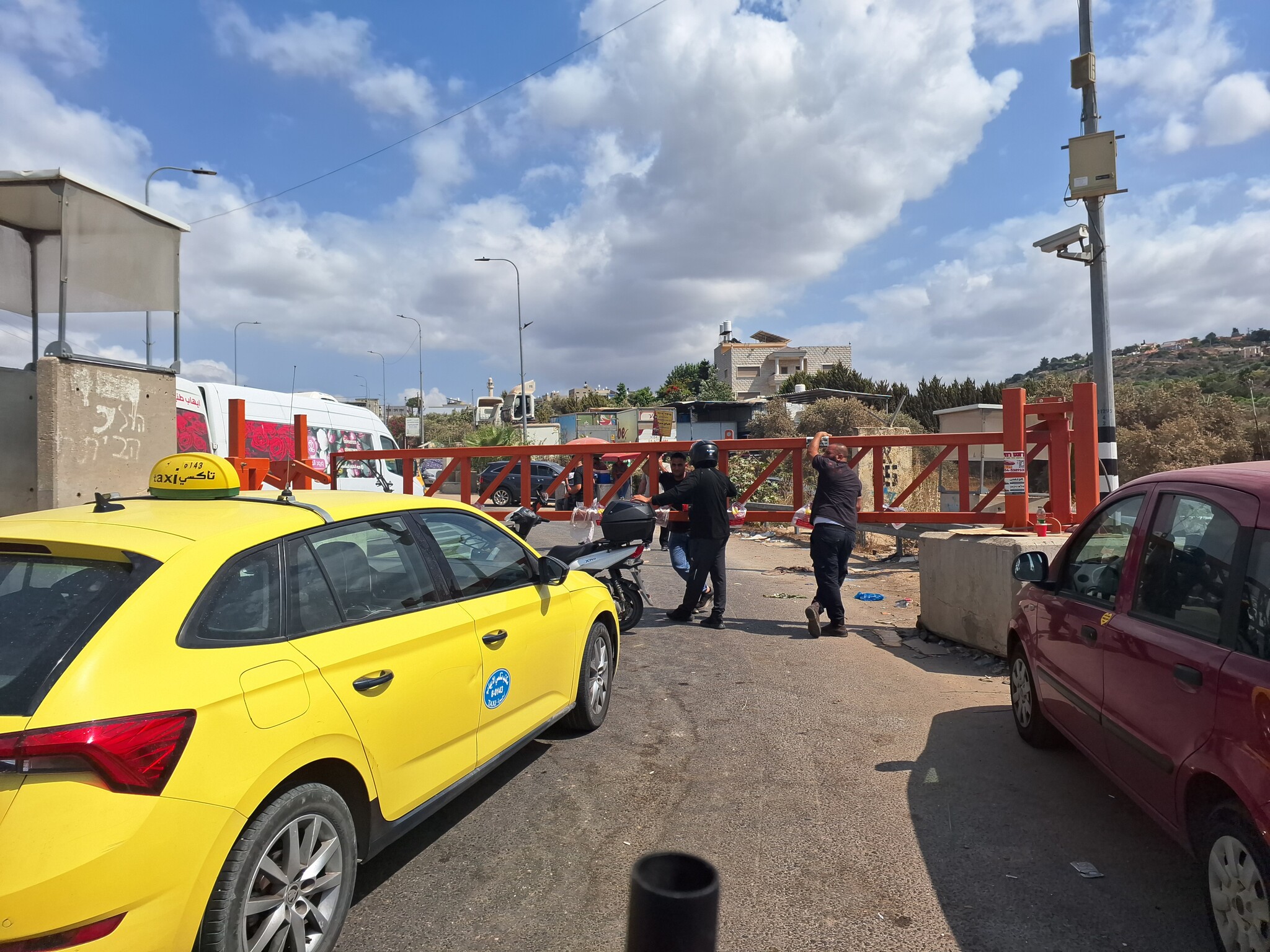 Ronit Dahan-RamatiAug-31-2026Nabi Elias. The gate is closed
-
