
‘Azzun, Falamiya, Habla, Kufr Jammal, Kufr Zibad
Protest strike at the Falamya North checkpoint
Thursday morning the farmers decided to strike and not go through the Falamya North (914) checkpoint to protest the difficulties they face crossing, the too-brief opening times and to demand respectful treatment by the soldiers.
10:45 Eliyahu checkpoint. Traffic flows; there are no lines. Just past the checkpoint two ambulances stop; a Palestinian laborer who was killed (in a work accident) in Israel is transferred from an Israeli to a Palestinian ambulance.
11:00 ‘Azzun. Two soldiers on foot at the entrance. We stop at the shop of our friend Z. to unload parcels. His condition has worsened and now both hands tremble. Our colleague, Zvia, the angel, continues to take care of him but it turns out he’s blacklisted and in order to see a doctor must apply for a permit ten days before his appointment. This time he applied only five days in advance and the bureaucracy won. He didn’t get a permit. We’ve never seen him so despairing.
And still in ‘Azzun – at night, between April 30 and May 1, soldiers entered four homes and took four young men aged 19-20. The families still don’t know where they are.
Every evening starting at 19:00 rigorous inspections are conducted at the entrance to ‘Azzun and the Palestinians are detained for a long time. Ongoing cruelty.
11:45 Kafr Jamal. We stop at Z’s grocery. He tells us that this morning the farmers decided not to go to their lands, in order to protest the worsening conditions after the Falamya checkpoint was closed. It had been open continuously from early morning until evening, and now they have only half an hour to go through, three times a day. The gate doesn’t always open on time and the soldiers treat them disrespectfully. They were also angry because tractors must wait until everyone on foot has gone through, even though they’ve been waiting on line for a long time before the gate opens.
As Nina reported: A few days ago, at 01:30, there was loud knocking on the door of Z’s home and the doors of his neighbors. The entire village heard the noise. Three gates were brutally forced open, the locks and bolts broken.
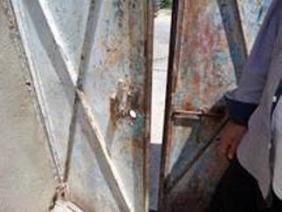
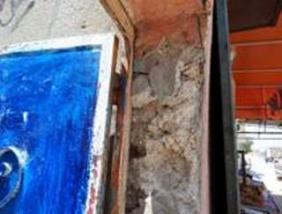
All that in order to present his son with a summons to the DCL. Why? All day long the family’s in the grocery adjoining their home, why must they break in, in the middle of the night, shatter, destroy, frighten, wake all the neighbors. Why? The IDF and its commanders have the answer.
In the middle of the night they informed the young man that his permit, valid until 2016, to cross to the family’s za’atar fields, was rescinded. He was called to a meeting with Captain Nissim. What did he learn in the meeting? An attempt to turn him into a collaborator. We’re a family that’s not involved with politics, we only want to live in peace, we were never involved in nationalistic activity says the father. How dare they?
12:15 We continue to the municipal building in Zibad village to talk with the person who’s the joint head of seven area villages. Following this morning’s strike at Gate 914, and just before we arrived, the head of the Qalqilya (Palestinian) DCL had been in his office. The head of the municipality listed the demands and complaints of the Palestinian farmers:
1. Gate 914 serves about 300 farmers whose land is beyond the fence. They raise crops which they could until recently access all day and now they have only half an hour to enter or leave, three times a day.
2. The soldiers sometimes don’t open the gate on time but stop letting people through five minutes before closing time. The soldiers first let people on foot go through and delay the tractors, but if someone arrives on foot after the tractors have begun to enter they won’t let him in.
3. The soldiers humiliate the farmers and treat them contemptuously.
4. There’s an additional gate opposite the main one (in the wire fence on the other side of the security road) and it also closed. It makes it hard for them.
5. Half an hour is insufficient; the gate must be open for two hours each time.
6. Recently the soldiers have begun checking on the computer and if a farmer has been blacklisted they don’t allow him through, even though he has a valid crossing permit.
7. There are many internal gates (in the same wire fence beyond the security road) which never open. That makes it very difficult for the farmers to reach their fields, greatly lengthens their trip and forces them to go through fields belonging to others.
8. The arbitrariness becomes harassment.
And he sums up: the army treats the farmers in a humiliating and contemptuous manner. It’s unbearable.
We continue to the gates.
13:00 The Falamya North gate (914) – it’s open.
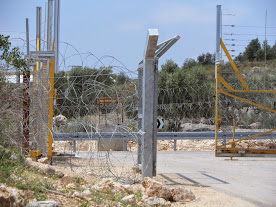
A small tanker crosses through the gate, going west. No other traffic. Many soldiers and MPs. When we ask what happened in the morning someone replies; at the end of the conversation it turns out he’s Walid, from the DCL; he says the Palestinians decided to strike and not cross. He came to the gate and spoke to them. Only a few crossed in the afternoon. He didn’t know (but the soldiers confirmed) that the gate in the wire fence is closed, nor had he heard about the other internal gates. He said he’d look into it.

|
Walid and his staff.

Metal, and more metal, fences and more fences, and lots of razor wire.
Despite the strike in the morning, a few people crossed in the afternoon.
13:40 Falamya South gate (935) – it’s open
On the way we came across of group of Palestinians investigating whether it was possible to develop the area vacated when the fence was relocated. Irrigation infrastructure is planned.
An elderly couple near the gate complains the man didn’t receive a permit to access his land with their car. They don’t have a tractor. They must walk.
A tractor leaves, another tractor enters. Inspection is fast.
14:00 At the exit from ‘Azzun two soldiers talk to a settler while a Palestinian is fixing his car.
14:15 Habla. The staff closes the gate. The military vehicle prepares to leave.
We end with a visit to the plant nursery. We hear there was also a visit by the DCL this morning at the Habla checkpoint, after many complaints about delays opening the gate.
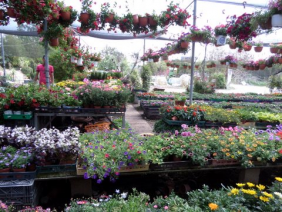
And we finish with a bit of beauty, after all the ugliness:
'Azzun
See all reports for this place-
Azoun (updated February 2019)
A Palestinian town situated in Area B (under civil Palestinian control and Israeli security control),
on road 5 between Nablus and Qalqiliya, east of Nabi Elias village. The inhabitants are allowed to construct and improve infrastructures. The Separation Fence has confiscated lands belonging to the town's people. In 2018 olive tree groves owned by one of its inhabitants were confiscated for the sake of paving a road to bypass Nabi Elias. Azoun population numbers 13,000, its economic state dire. Its infrastructures are poor, neglect and poverty rampant. In the meantime, the town council has completed paving an internal road for the inhabitants' welfare.
Because of its proximity to the Jewish settler-colony of Karnei Shomron and its outposts, the town suffers the intense presence of the Israeli army, especially at nighttime: soldiers enter homes, arrest suspects, trash the house and sometimes ruin it, as they do in numerous places in the West Bank. At times a checkpoint closes the entrance to the town, so no one can come in or get out.
-
Falamiya
See all reports for this placeHabla
See all reports for this place-
Habla CP (1393)
The Habla checkpoint (1393) was established on the lands of the residents of Qalqilya, on the short road that
connected it for centuries to the nearby town of Habla. The separation barrier intersects this road twice and cut off the residents of Qalqilya from their lands in the seam zone.(between the fence and the green line).
There is a passage under Road 55 that connects Qalqilya to the sabotage This agricultural barrier is used by the farmers and nursery owners established along Road 55 from the Green Line and on both sides of the kurkar road leading to the checkpoint.
This agricultural checkpoint serves the residents of Arab a-Ramadin al-Janoubi (detached from the West Bank), who pass through it to the West Bank and back to their homes. The opening hours (3 times a day) of this agricultural checkpoint are longer than usual, about an hour (recently shortened to 45 minutes), and are coordinated with the transportation hours of a-Ramadin children studying in the occupied in the West Bank.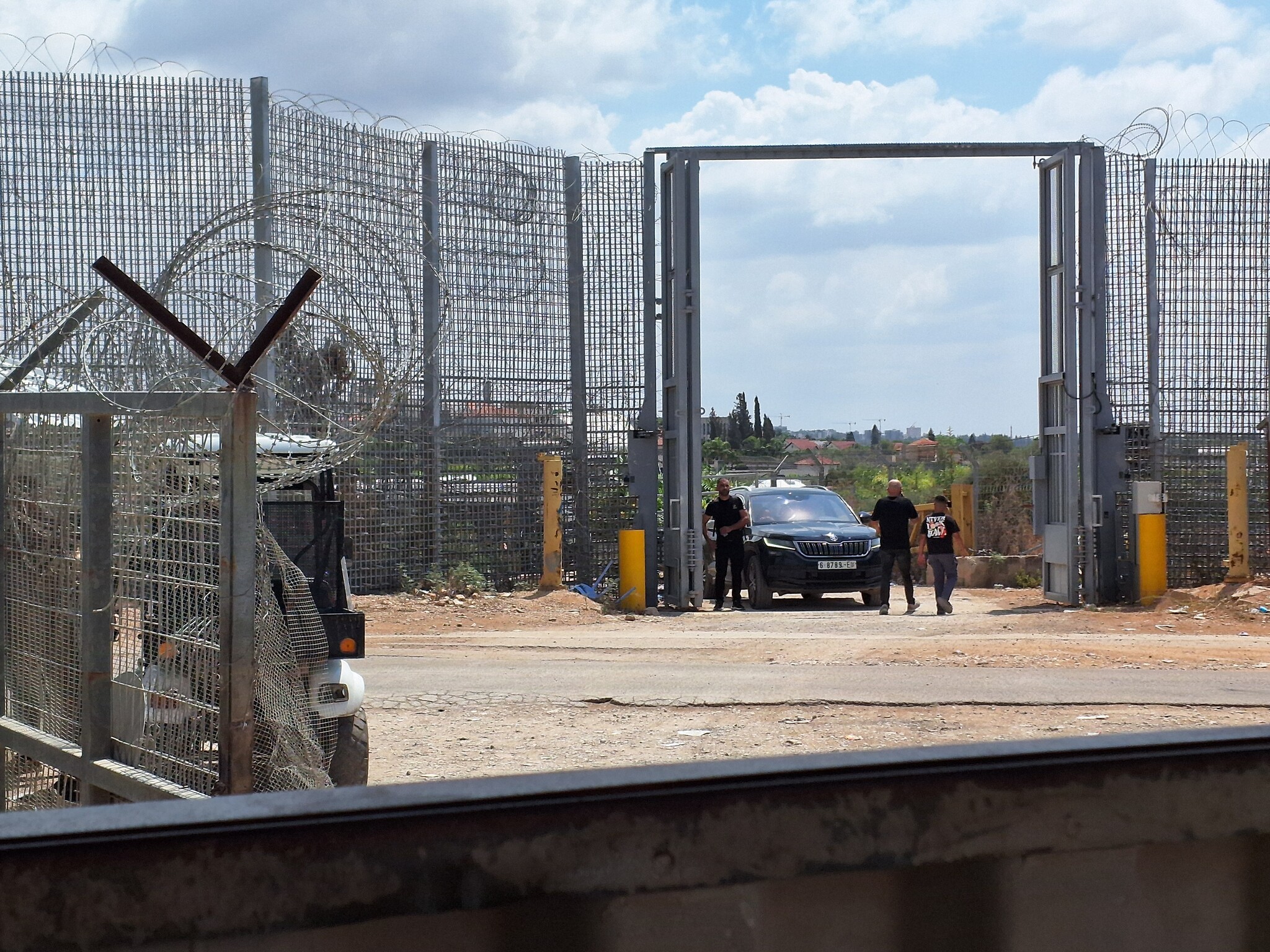 Ronit Dahan-RamatiAug-31-2026Habla. The gate is open
-
Kufr Jammal
See all reports for this place-
Kufr Jammal This village, rising about 200 meters over sea level, is located about 14 kilometers south of Tul Karm town and about 17 kilometers from the Mediterranean Sea. The families living there since the mid-18th century number about 3,000 persons at present. The village has lost thousands of dunams of its northern and western lands due to the construction of the Separation Barrier, leaving the lands themselves behind the barrier. After the Israeli Supreme Court ruling in 2011, the barrier was moved to the west and many farmlands were returned to their owners. It is a quiet village, its relations with the nearby settler-colony of Sal’it are favorable, and many of the villagers work in the colony’s industrial plants. Farmers cross the agricultural checkpoint close to this settler-colony in order to tend their fields unhampered. However, there are numerous acts of harassment and disorder taking place when the village farmers cross the other agricultural checkpoints: gates do not open at hours suitable to the farmers’ needs, and for a short period of time only; the Civil Administration usually prevents all kinds of crops except olives; tractors and other farm equipment are forbidden entry; only a single permit is issued per family, and occasionally such permits are confiscated and their re-issue is delayed – the common excuse is usually “security reasons”. How do the villagers make their living? Holders of work permits inside Israel travel at 3 a.m. to Eyal Checkpoint near Qalqiliya town in order to make it on time to their workplace at Sal’it (close to their village) and elsewhere. Owners of vegetable patches who hold permits are allowed to reach their fields beyond the Separation Barrier through the distant Falamiya Checkpoint. Importantly, fields returned to the village show amazing improvement intending, irrigation and farming variety – and instead of the neglected olive tree groves that were accessible only to holders of transit permits through agricultural checkpoints usually closed, farming has now flourished. (updated Jan 2021)
-
