
Beit Furik, Huwwara, Sun 2.12.07, Afternoon
Translation: Tal H.
Checkpoint commander quoting the regional brigade commander Amir Bar'am –
"Palestinians should be detained for six hours".
15:30 – Huwwara Checkpoint in clockwork condition, all roles competently filled.
The Palestinians stand in perfect single file behind the turnstiles, the soldiers in their checking posts. We thought about the rain that was pouring there a while before we arrived, how people – unsheltered – must have been drenched on their way to reach the taxis, where the women and children could have stood, being forever banned from the only sheds in sight, how they could have protected their babies, what did the venders do with all their chocolate, biscuits and hot beverages, is this rainfall a blessing for them too?
The water streamed generously into the detention cubicle as well and the four detainees, three of them held there as punishment since 12:30 crowd upon a plank placed above the puddle that formed on the floor like a life raft.
The first detainee, a thin boy, has been waiting for the GSS interrogators since 9:30 a.m.
The checkpoint commander calls his HQ every 15 minutes and asks that they come to pick him up, but the GSS has its own schedules. And it can also change its mind, even after six hours. At 16:35 we complained to the army hotline about the boy waiting since morning in the cold and rain, and said six hours. 20 minutes later the DCO representative on the spot (T.) reports to us that here, the boy is about to be handed over to the Palestinian police. Another 20 minutes go by and a Palestinian police car arrives, coordinates things with the DCO and takes the boy into Nablus.
The three other detainees are the drivers of two trucks caught at 12:30 while driving from the intersection towards Awarta on the road forbidden to Palestinians. They said that while turning at the intersection, there was an army vehicle standing but the soldiers did not warn them not to turn there, and having turned, were hunted down. Their IDs and car keys were confiscated and they were led into the concrete cubicle.
By order of the brigade commander they are being detained for 6 hours, but the CP commander says that it's been 4 hours already and he'll let them go soon, for they're freezing and wet.
At 16:03, as they are being released, one of the soldiers says: "Well, will you still drive on this road next time?… You see? Now you've learned!" And they admit that they didn't know, they'll never ever drive a Jews-only road again, but really, why isn't there a sign saying it's forbidden?
And why didn't the soldiers in the jeep say anything?
A woman pulling her two little children along defiantly says to us in English, "There's no need for you to stand here!" The women are let through quickly, and then face a long and exasperating wait, even though they stand silently and when chased away from the "sterile" area, they obey fast and un-protesting. The men after being checked at the turnstiles try to fix their appearance. They have to hold their coat and trouser belt, their trouser button open, shopping bags in hand, books and notebooks, cigarette pack, keys, coins, change – all in their hands and thus trying to re-belt their trousers, tuck their shirts in, button up, get their belongings back into their pockets, all the while being chased hurriedly by the soldier away from the shed – "Come on, git…" – calmly, without shouting.
The CP functions flawlessly. N., the Military Police company commander asks if we have any complaints or comments. We commented on the fact that the girl soldier at the vehicle checking post is forced to yell the ID numbers to the girl-soldier inside the computerized checking post and the latter yells her answers back. He said, yes, that is really not in order.
Beit Furik Checkpoint:
A soldier at the observation tower yells at us: "Save your ink. One day the Arabs will all be gone, this is our land only and we'll kick them out of here…" Probably us well.
We stood by the entrance turnstile. The checkpoint was empty, dark, cold and wet. Few people passed quickly and were swallowed into the few taxis that were still left at the taxi park bound for Beit Furik. Cars were passed after a short checking. These soldiers too seem to have learned their "job" and everything works like clockwork.
The zealous observer reported a Palestinian truck exiting Beit Furik and driving on the apartheid road towards Huwwara. At the entrance to Itamar colony, an army Humvee stood, lighting the road with a blinding projector, like a hunter waiting its prey.
Beit Furik checkpoint
See all reports for this place-
One of the three internal checkpoints that closed on the city of Nablus - Beit Furik to the east, Hawara to the south, Beit Iba to the west. The checkpoint is located at the junction of Roads 557 (an apartheid road that was forbidden for Palestinians), leading to the Itamar and Alon Morea settlements and Road 5487. The checkpoint was established in 2001 for pedestrians and vehicles; The opening hours were short and the transition was slow and very problematic.Allegedly, the checkpoint is intended to monitor the movement to and from Nablus of the residents of Beit Furik and Beit Dajan, being the only opening outside their villages. Since May 2009 the checkpoint is open 24 hours a day, the military presence is limited, vehicles can pass through it without inspections, except for random inspections. (Updated April 2010)
-
Huwwara
See all reports for this place-
The Huwwara checkpoint is an internal checkpoint south of the city of Nablus, at the intersection of Roads 60 and 5077 (between the settlements of Bracha and Itamar). This checkpoint was one of the four permanent checkpoints that closed on Nablus (Beit Furik and Awarta checkpoints to the east and the Beit Iba checkpoint to the west). It was a pedestrian-only barrier. As MachsomWatch volunteers, we watched therre since 2001 two shifts a day - morning and noon, the thousands of Palestinians leaving Nablus and waiting for hours in queues to reach anywhere else in the West Bank, from the other side of the checkpoint the destination could only be reached by public transport. In early June 2009, as part of the easing of Palestinian traffic in the West Bank, the checkpoint was opened to vehicular traffic. The passage was free, with occasional military presence in the guard tower. Also, there were vehicle inspections from time to time. Since the massacre on 7.10.2023, the checkpoint has been closed to Palestinians.
On February 26, 2023, about 400 settlers attacked the town's residents for 5 hours and set fire to property, such as houses and cars. Disturbances occurred in response to a shooting of two Jewish residents of Har Bracha by a Palestinian Terrorist. The soldiers stationed in the town did not prevent the arson and rescued Palestinian families from their homes only after they were set on fire. No one was punished and Finance Minister Smotrich stated that "the State of Israel should wipe out Hawara." Left and center organizations organized solidarity demonstrations and support actions for the residents of Hawara.Hawara continued to be in the headlines in all the months that followed: more pogroms by the settlers, attacks by Palestinians and a massive presence of the army in the town. It amounted to a de facto curfew of commerce and life in the center of the city. On October 5, 2023, MK Zvi established a Sukkah in the center of Hawara and hundreds of settlers backed the army blocked the main road and held prayers in the heart of the town all night and the next day. On Saturday, October 7, 23 The "Swords of Iron" war began with an attack by Hamas on settlements surrounding Gaza in the face of a poor presence of the IDF. Much criticism has been made of the withdrawal of military forces from the area surrounding Gaza and their placement in the West Bank, and in the Hawara and Samaria region in particular, as a shield for the settlers who were taking over and rioting.
On November 12, 2023, the first section of the Hawara bypass road intended for Israeli traffic only was opened. In this way, the settlers can bypass the road that goes through the center of Hawara, which is the main artery for traffic from the Nablus area to Ramallah and the south of the West Bank. For the construction of the road, the Civil Administration expropriated 406 dunams of private land belonging to Palestinians from the nearby villages. The settlers are not satisfied with this at the moment, and demand to also travel through Hawara itself in order to demonstrate presence and control.(updated November 2023)
.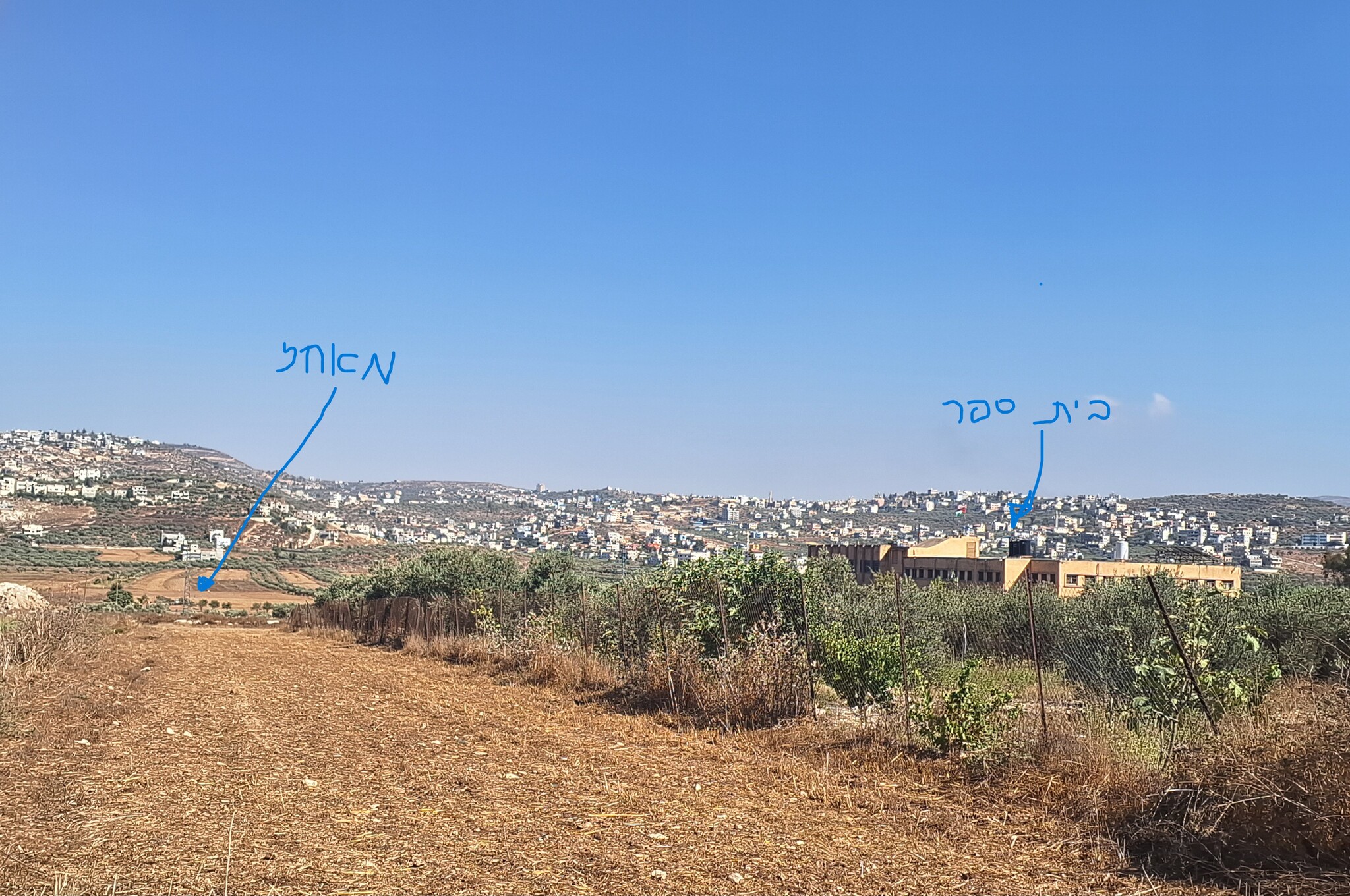 Ronit Dahan-RamatiAug-24-2026Huwara: The school on the outskirts of town and an outpost hidden among the trees
-
