
Beit Furik, Huwwara, Za’tara (Tapuah), Sat 29.12.07, Morning
Translation: Rachel B.
( Bethlehem via phone report)
We drove on Road #60 and found a "flying checkpoint" next to Shevut Rachel with three cars. All the roads that connect to Road #60 from either left or right have been blocked with a yellow {cross}bar or piles of dirt and rocks.
Za'tara:
A line of nearly 50 cars. Two terminals are open. We did not stop, but immediately called the Humanitarian Center who promised to look into it.
Huwwara:
The parking lot is not terribly busy and the pedestrian line for Nablus is empty. The lines for people coming from Nablus are thin too and it takes an average of 20 minutes to pass through. The commander of the checkpoint, Officer D. is polite and willing to listen to us. The District Coordination Office commander, R., whom we asked to intervene to resolve the situation at Za'tara, went there immediately and after a half hour we learned that the line had dissipated and passage through the checkpoint is going smoothly. On the other hands, for cars heading from Nablus to the south it took an hour and a half to get through. A dog handler and her colleague and a beautiful German Shepard are an important part of the slow proceedings at his checkpoint. The dog not only sniffs around the car, but is also put inside the car and climbs around the seats. And for those who have forgotten – we are not at the entrance to New York or Tel Aviv- we are at the entry point from a Palestinian town to a Palestinian village.
Another one of the harsh humiliations {of Palestinians} that we witness. Let us not forget that it's only 10 kilometers between this checkpoint and the next one, where another dog will "visit" the cars.
A driver who passed through on "Madison Road" was detained but we succeeded (so to speak…) in getting him released after two hours – a veritable "miracle."
The peddlers are allowed to sell their wares as the soldiers turn a blind eye to it. Evidently reality is stronger than all {policies}. However, the schwarma merchant is warned not to set up his stall next to the entrance to the checkpoint the next day.
Beit Furik:
About 50 cars (!!!!!) are waiting in the line to get through the checkpoint and there is also a long line of pedestrians. There is a lot of justified anger. We contacted the District Coordination Office and someone arrived very soon and after a short while the soldiers started checking people and procession them through the checkpoint at a fast pace. An argument started between some drivers and one of the soldiers decided that "it's necessary to punish" one of the drivers. We intervened and warned the soldier that he is doing something illegal because he is not authorized to punish that person, certainly not for an argument among the Palestinians. The soldier, of course, dismissed our comment but the intervention of the District Coordinator Office commander led to the man being released. It's important to note that the soldier threatened the "unruly" driver that next time he will detain him for six hours.
As we have said – miracles happen even at the Beit Fureik checkpoint.
Bethlehem (report by phone)
At 5:00 AM on Saturday morning I got a phone call from the Ecumenical Escorts that the checkpoint has not been opened. A complaint led to the checkpoint opening. When we were at Beit Furik we got a very urgent call, again from the Ecumenical Escorts, whom we could barely hear because of the noise and yelling in the background. At the place there was a serious disruption, apparently as a result of a fight or argument among the people waiting to cross the checkpoint. Three blind women on their way to Jerusalem were detained. The tension was very high. After a consultation with Noa P. we decided not to contact any Knesset members, but rather to contact the Army directly. Without any addresses for the police or civilian authorities (all closed for Shabbat) and no response from the Border Police, we contacted the Commanding Office of the Ezyon District Coordinating Office and the Regional Division spokesperson.
At the end, we found out from a later call, that the situation was resolved soon after our intervention.
Beit Furik checkpoint
See all reports for this place-
One of the three internal checkpoints that closed on the city of Nablus - Beit Furik to the east, Hawara to the south, Beit Iba to the west. The checkpoint is located at the junction of Roads 557 (an apartheid road that was forbidden for Palestinians), leading to the Itamar and Alon Morea settlements and Road 5487. The checkpoint was established in 2001 for pedestrians and vehicles; The opening hours were short and the transition was slow and very problematic.Allegedly, the checkpoint is intended to monitor the movement to and from Nablus of the residents of Beit Furik and Beit Dajan, being the only opening outside their villages. Since May 2009 the checkpoint is open 24 hours a day, the military presence is limited, vehicles can pass through it without inspections, except for random inspections. (Updated April 2010)
-
Huwwara
See all reports for this place-
The Huwwara checkpoint is an internal checkpoint south of the city of Nablus, at the intersection of Roads 60 and 5077 (between the settlements of Bracha and Itamar). This checkpoint was one of the four permanent checkpoints that closed on Nablus (Beit Furik and Awarta checkpoints to the east and the Beit Iba checkpoint to the west). It was a pedestrian-only barrier. As MachsomWatch volunteers, we watched therre since 2001 two shifts a day - morning and noon, the thousands of Palestinians leaving Nablus and waiting for hours in queues to reach anywhere else in the West Bank, from the other side of the checkpoint the destination could only be reached by public transport. In early June 2009, as part of the easing of Palestinian traffic in the West Bank, the checkpoint was opened to vehicular traffic. The passage was free, with occasional military presence in the guard tower. Also, there were vehicle inspections from time to time. Since the massacre on 7.10.2023, the checkpoint has been closed to Palestinians.
On February 26, 2023, about 400 settlers attacked the town's residents for 5 hours and set fire to property, such as houses and cars. Disturbances occurred in response to a shooting of two Jewish residents of Har Bracha by a Palestinian Terrorist. The soldiers stationed in the town did not prevent the arson and rescued Palestinian families from their homes only after they were set on fire. No one was punished and Finance Minister Smotrich stated that "the State of Israel should wipe out Hawara." Left and center organizations organized solidarity demonstrations and support actions for the residents of Hawara.Hawara continued to be in the headlines in all the months that followed: more pogroms by the settlers, attacks by Palestinians and a massive presence of the army in the town. It amounted to a de facto curfew of commerce and life in the center of the city. On October 5, 2023, MK Zvi established a Sukkah in the center of Hawara and hundreds of settlers backed the army blocked the main road and held prayers in the heart of the town all night and the next day. On Saturday, October 7, 23 The "Swords of Iron" war began with an attack by Hamas on settlements surrounding Gaza in the face of a poor presence of the IDF. Much criticism has been made of the withdrawal of military forces from the area surrounding Gaza and their placement in the West Bank, and in the Hawara and Samaria region in particular, as a shield for the settlers who were taking over and rioting.
On November 12, 2023, the first section of the Hawara bypass road intended for Israeli traffic only was opened. In this way, the settlers can bypass the road that goes through the center of Hawara, which is the main artery for traffic from the Nablus area to Ramallah and the south of the West Bank. For the construction of the road, the Civil Administration expropriated 406 dunams of private land belonging to Palestinians from the nearby villages. The settlers are not satisfied with this at the moment, and demand to also travel through Hawara itself in order to demonstrate presence and control.(updated November 2023)
.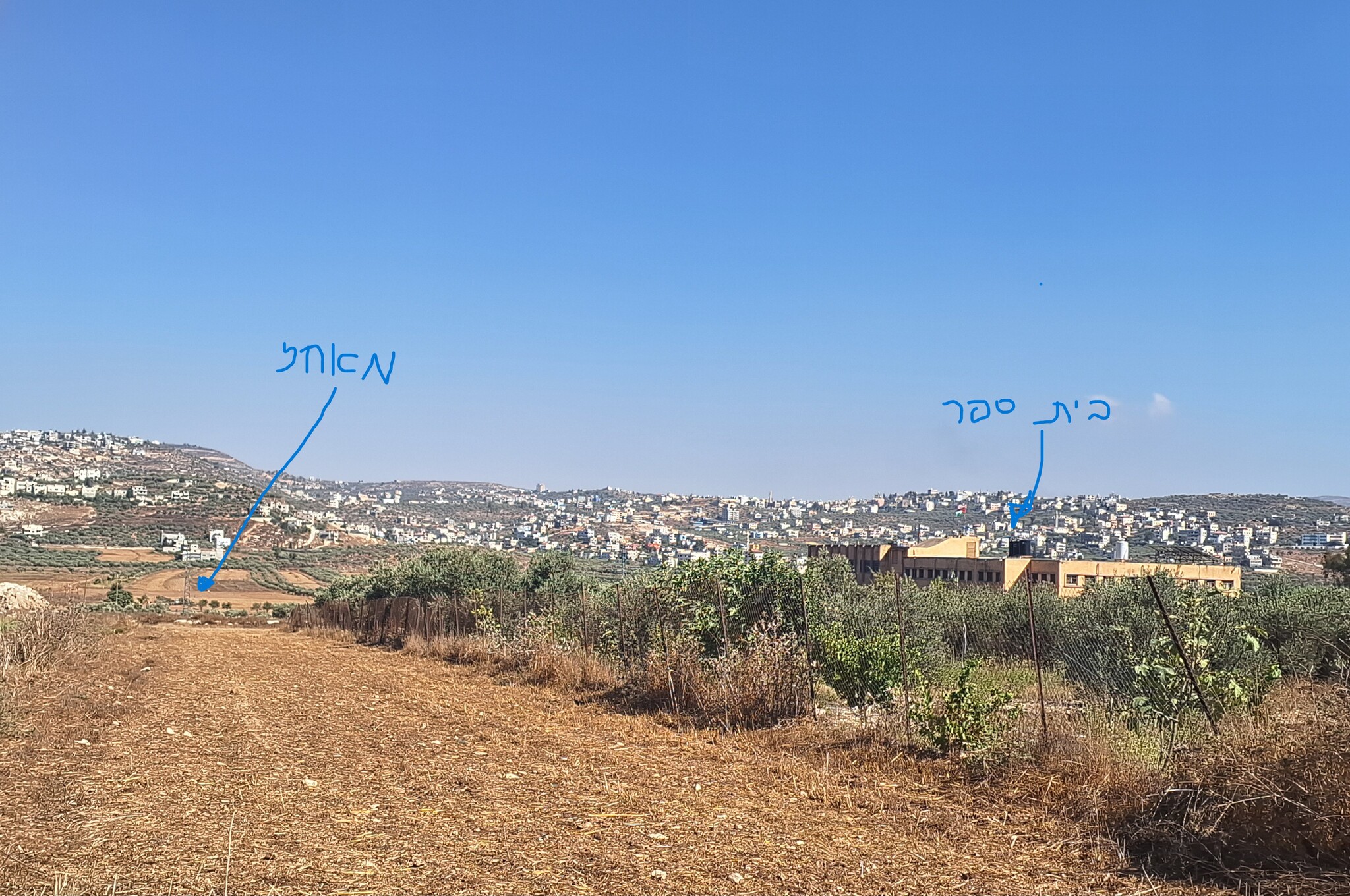 Ronit Dahan-RamatiAug-24-2026Huwara: The school on the outskirts of town and an outpost hidden among the trees
-
Za'tara (Tapuah)
See all reports for this place-
Za'tara (Tapuah) Za'tara is an internal checkpoint in the heart of the West Bank, at the intersection of Road 60 and Road 505 (Trans-Samaria), east of the Tapuah settlement. This checkpoint is the "border" marked by the IDF between the north and south of the West Bank, in accordance with the policy of separation between the two parts of the West Bank that has been in place since December 2005. At the Za'tara checkpoint, there are separate routes for Israelis and Palestinians. In the route for Israelis, there are no inspections and the route for Palestinians inspects. The queue lengthens and shortens suits. The checkpoint is open 24 hours a day. The checkpoint is partially staffed and the people who pass through it are checked at random.
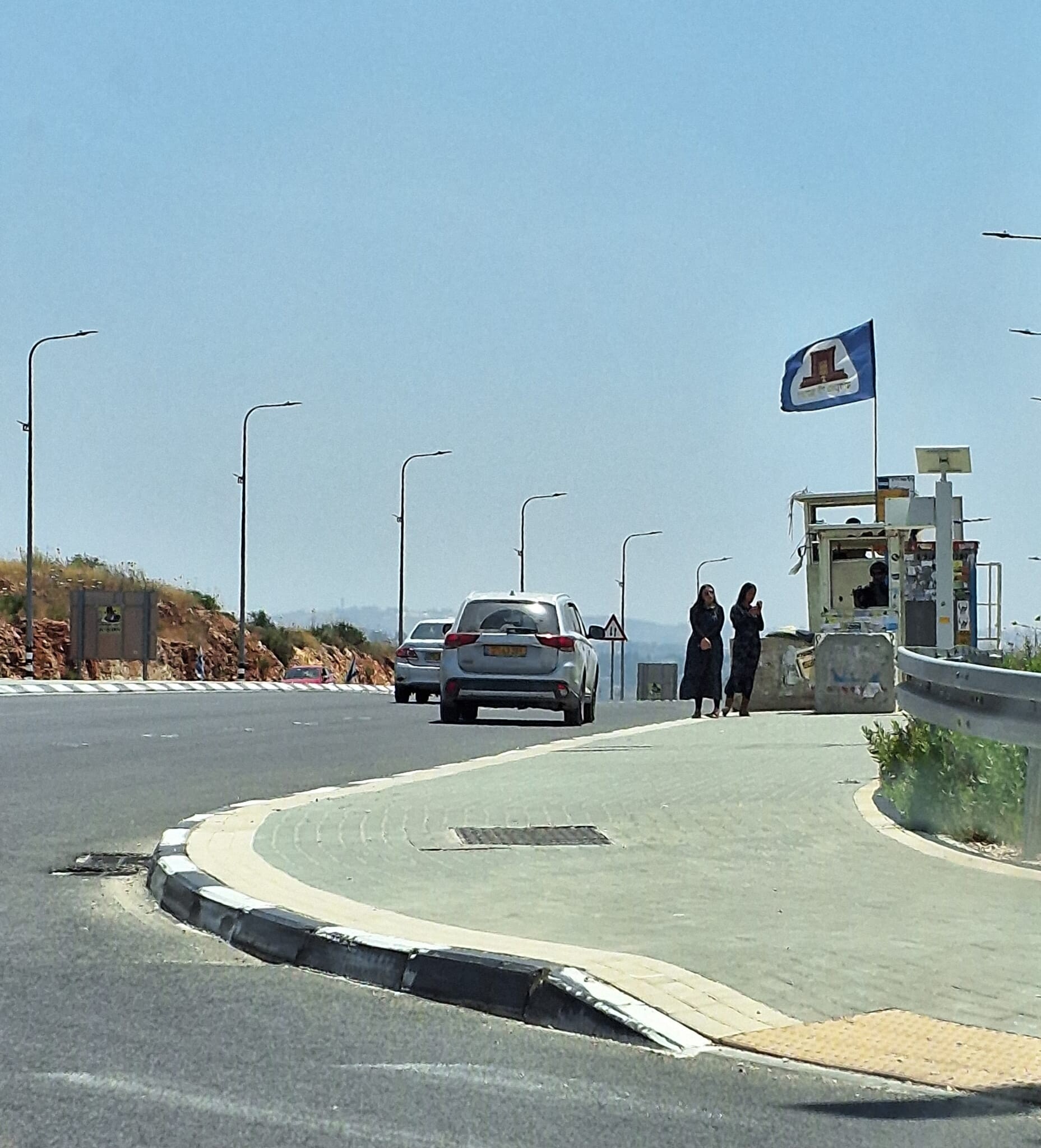 Ronit Dahan-RamatiJun-9-2026Za'atara (Tapuach Junction). The Temple Flag Above a Station
-
