
Beit Furik, Huwwara, Za’tara (Tapuah), Sun 14.9.08, Afternoon
Translation: Tal H.
14:35 Road no. 5, about 2 km east of Shaar Shomron Checkpoint
A long straggling line of Palestinians (we estimated around 60 persons) is led by a Hummer in the back and several soldiers along and in front. We could not possibly pull over to the side at that point, and called to report to our MW friends and to the army hotline.
15:00 Tapuach-Za'tara Junction Checkpoint
About 13 cars waiting to be checked coming from Nablus. Autumn wild flowers are in bloom.
So is a large poster calling out "We are Signing the Samaria Convention".
15:15 Huwwara Checkpoint
CP commander- Lieutenant Itai (?), DCO representative – Tomer.
Another shift typified by overbearing, snide, hostile, pressured soldiers – and the commander setting a prominent personal example for all of the above.
Another scorching-hot day of Ramadan fasting for an endless flow of Palestinians who reach the checkpoint to be checked, blocked, delayed, pushed around, humiliated and suffocated.
From our usual second observation point across the vehicle checking lane, by the concrete cube near the "humanitarian point", one of us was chased away by the checkpoint commander with the usual claim that she "was getting in the way of his work" – as soon as she set foot at the spot. In view of his aggressive, Palestinian-hostile attitude throughout, we chose to move our observation a bit further south and not cause extra havoc.
3 checking posts for pedestrians – active. X-ray truck – active.
Exceedingly long waiting lines, very slow inspections, very stressed (soldiers ostensibly pressured and constantly fluctuating between rage and scornful laughter),
the special side line for women, children and the elderly also very long and slow, the DCO representative is more or less stranded there the whole time, checking them and inaccessible to anyone with problems that require his intervention.
As we arrive there are two detainees in the concrete hold, one already there for two hours (he says), from Beita village, we cannot figure out from what he says why he was detained and restrained. The other one is from Kablan, held 20 minutes already. We asked the commander why the detainee was handcuffed, to which he responded: "He touched a soldier's gun! Besides I'm the one who handcuffed him and it's not tight! Besides, the hold is not really a hold because the door is not locked…"
On the vehicle checking lane, a child leads a woman obviously blind. The soldiers tense up towards them. After a delay of 10 minutes, the DCO rep. checks them and they are allowed through.
A blind man with a cane and an escort wishes to pass along the same lane is sent back to the special side line to stand with everyone else and leave a half hour later.
Later, a man holding in his arms a toddler girl whose legs are splayed wide in a plaster cast, she – crying and exhausted, are made to wait around the concrete slabs until the mother returns from the X-ray truck. We are too far away to know more details.
One of the soldiers securing the inspection posts noticed us, took a wider stance and gruffly sent the inspectees back into the metal-detector again and again – not with a verbal order but with an actual push of the hand on their chest. This is the language.
Lots of 'action' on our shift: occasionally the soldiers see someone "leaking" around the checkpoint and burst out in a running chase. The first was an obviously retarded youth, and one of the soldiers (perhaps MPman) fired in the air. Immediately, a "life freeze" was announced on the PA system. Later on 2 officers and another MP arrive, perhaps to look into the incident. The other cases did not involve any shooting.
A MPwoman wonders: "Why life freeze? Because of a "leaker"?? Give me a break…"
Once in a while a cry-yelp-shout is heard in unison from the waiting lines crushed together in the searing heat like cooking sardines in a can.
16:30 – 4 detainees in the hold.
We meet internationals who had been at Asira Kabaliya and witnessed the colonist-settlers having a field-day there. They sounded shocked.
A mother (speaks only Arabic) is waiting for her son in the old shed. The MPwoman offers to call her son from the lines. But the commander prevents this – "stand aside until he shows up!" he tells her in pure Hebrew.
16:50 – The detainee community increases… Another man is detained, his cell phone taken from him. The soldier plays with the phone, removing and inserting the 'sim' card, finally handing it back to the detainee.
The crime of one of the detainees: he asked to get through with long metal pipes that cannot possibly fit into the turnstiles, bypassing the lines.
16:56 – another "leaker." The proud soldier leads him, gripping the back of his neck (like some rabbit or hamster), and shows him to the commander who joins in pushing him into the hold, eyes ablaze.
16:57 – another detainee released. 4 still inside.
Average waiting time in line: two hours.
17:15 – DCO rep. leaves.
17:45 – another detainee released. A new one brought in his stead. Several minutes later, sent to the end of the waiting line.
Waiting time down to one hour.
18:30 The waiting line does not cease. More and more people arrive, wait, are blocked, evening sets, the fast is supposed to break, but no – they are still stuck there for the sake of Israel's security, with soldiers laughing in scorn at our agitation in view of a young man limping painfully and hopping on one foot, leaning on his friend, and sent with a prompt gesture around and around to the turnstiles and dirt track.
Last week we thought things were bad… According to the suffering we witnessed now, today was worse by far. The soldiers had a good time telling each other that we (MW) should be burnt at the stake.
But this is just to wrap things up. It really is not about us…
We left at 18:40.
16:40 – 17:00
Beit Furik Checkpoint
Observers: Judit B. and Tal H.
Very few vehicles arriving in both directions. Having spoken with local residents lately, we learned that the reason for the thinning traffic is that people simply are no longer issued permits – their licenses are not renewed.
Very few pedestrians present during our visit.
Beit Furik checkpoint
See all reports for this place-
One of the three internal checkpoints that closed on the city of Nablus - Beit Furik to the east, Hawara to the south, Beit Iba to the west. The checkpoint is located at the junction of Roads 557 (an apartheid road that was forbidden for Palestinians), leading to the Itamar and Alon Morea settlements and Road 5487. The checkpoint was established in 2001 for pedestrians and vehicles; The opening hours were short and the transition was slow and very problematic.Allegedly, the checkpoint is intended to monitor the movement to and from Nablus of the residents of Beit Furik and Beit Dajan, being the only opening outside their villages. Since May 2009 the checkpoint is open 24 hours a day, the military presence is limited, vehicles can pass through it without inspections, except for random inspections. (Updated April 2010)
-
Huwwara
See all reports for this place-
The Huwwara checkpoint is an internal checkpoint south of the city of Nablus, at the intersection of Roads 60 and 5077 (between the settlements of Bracha and Itamar). This checkpoint was one of the four permanent checkpoints that closed on Nablus (Beit Furik and Awarta checkpoints to the east and the Beit Iba checkpoint to the west). It was a pedestrian-only barrier. As MachsomWatch volunteers, we watched therre since 2001 two shifts a day - morning and noon, the thousands of Palestinians leaving Nablus and waiting for hours in queues to reach anywhere else in the West Bank, from the other side of the checkpoint the destination could only be reached by public transport. In early June 2009, as part of the easing of Palestinian traffic in the West Bank, the checkpoint was opened to vehicular traffic. The passage was free, with occasional military presence in the guard tower. Also, there were vehicle inspections from time to time. Since the massacre on 7.10.2023, the checkpoint has been closed to Palestinians.
On February 26, 2023, about 400 settlers attacked the town's residents for 5 hours and set fire to property, such as houses and cars. Disturbances occurred in response to a shooting of two Jewish residents of Har Bracha by a Palestinian Terrorist. The soldiers stationed in the town did not prevent the arson and rescued Palestinian families from their homes only after they were set on fire. No one was punished and Finance Minister Smotrich stated that "the State of Israel should wipe out Hawara." Left and center organizations organized solidarity demonstrations and support actions for the residents of Hawara.Hawara continued to be in the headlines in all the months that followed: more pogroms by the settlers, attacks by Palestinians and a massive presence of the army in the town. It amounted to a de facto curfew of commerce and life in the center of the city. On October 5, 2023, MK Zvi established a Sukkah in the center of Hawara and hundreds of settlers backed the army blocked the main road and held prayers in the heart of the town all night and the next day. On Saturday, October 7, 23 The "Swords of Iron" war began with an attack by Hamas on settlements surrounding Gaza in the face of a poor presence of the IDF. Much criticism has been made of the withdrawal of military forces from the area surrounding Gaza and their placement in the West Bank, and in the Hawara and Samaria region in particular, as a shield for the settlers who were taking over and rioting.
On November 12, 2023, the first section of the Hawara bypass road intended for Israeli traffic only was opened. In this way, the settlers can bypass the road that goes through the center of Hawara, which is the main artery for traffic from the Nablus area to Ramallah and the south of the West Bank. For the construction of the road, the Civil Administration expropriated 406 dunams of private land belonging to Palestinians from the nearby villages. The settlers are not satisfied with this at the moment, and demand to also travel through Hawara itself in order to demonstrate presence and control.(updated November 2023)
.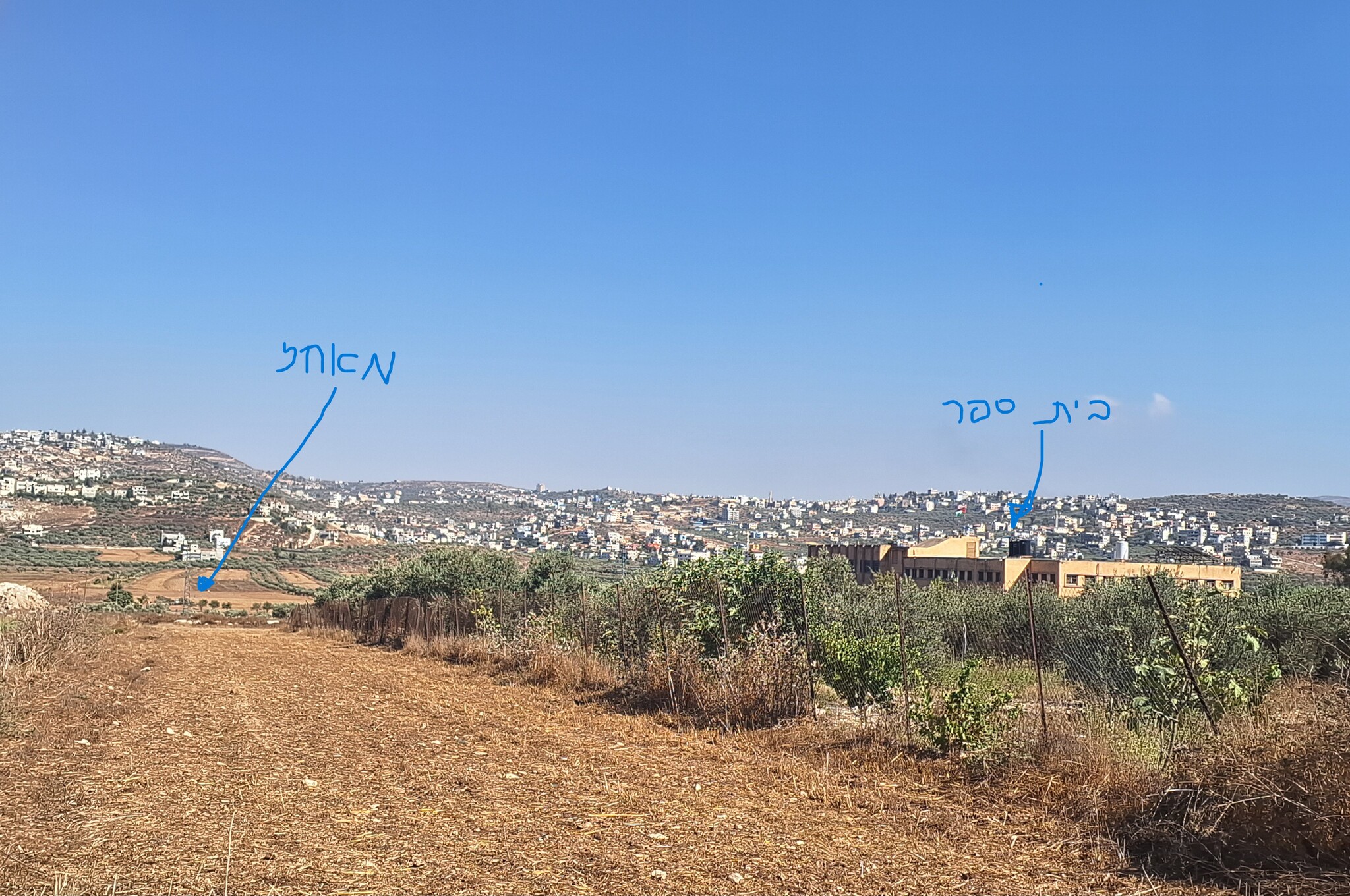 Ronit Dahan-RamatiAug-24-2026Huwara: The school on the outskirts of town and an outpost hidden among the trees
-
Za'tara (Tapuah)
See all reports for this place-
Za'tara (Tapuah) Za'tara is an internal checkpoint in the heart of the West Bank, at the intersection of Road 60 and Road 505 (Trans-Samaria), east of the Tapuah settlement. This checkpoint is the "border" marked by the IDF between the north and south of the West Bank, in accordance with the policy of separation between the two parts of the West Bank that has been in place since December 2005. At the Za'tara checkpoint, there are separate routes for Israelis and Palestinians. In the route for Israelis, there are no inspections and the route for Palestinians inspects. The queue lengthens and shortens suits. The checkpoint is open 24 hours a day. The checkpoint is partially staffed and the people who pass through it are checked at random.
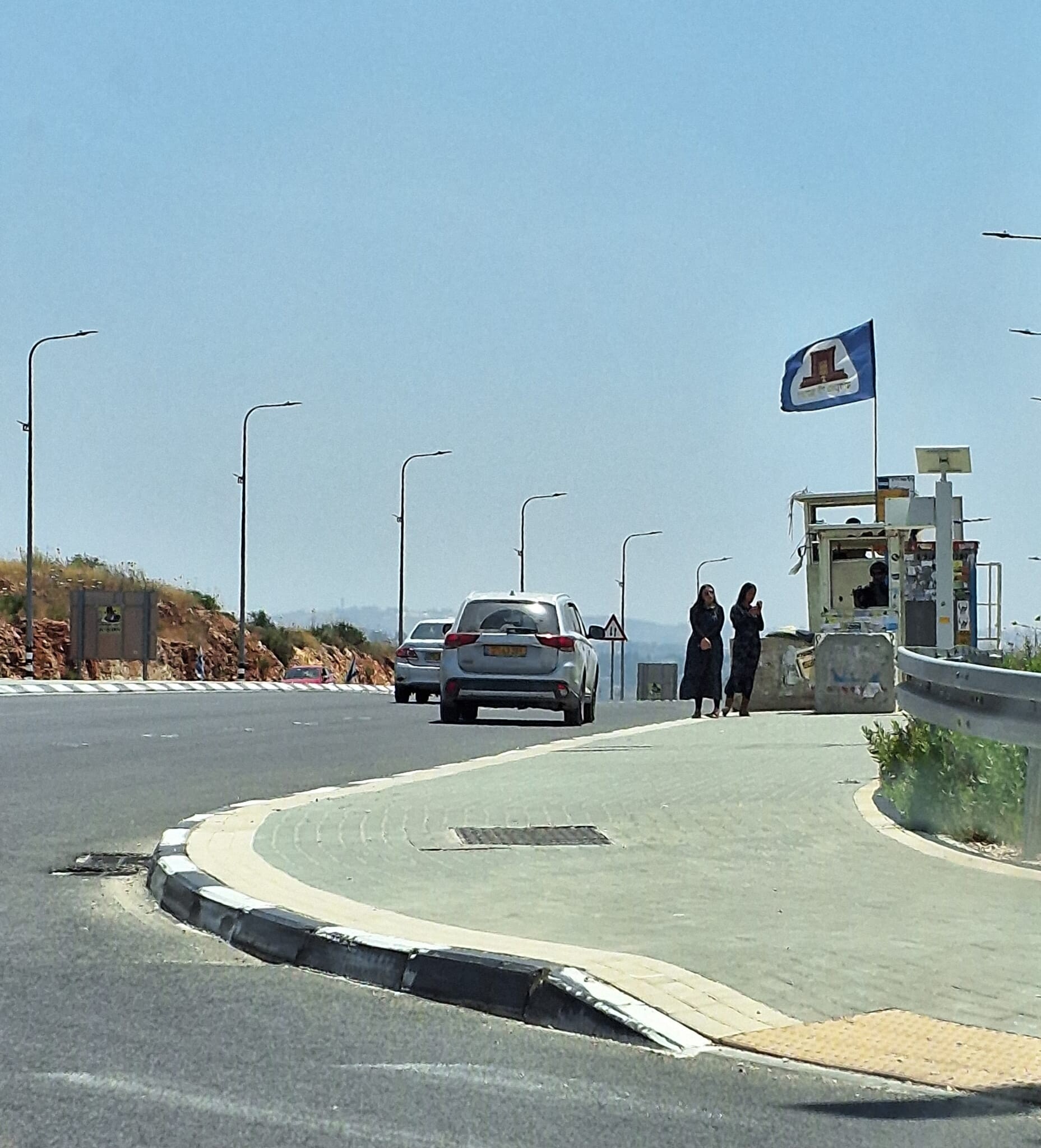 Ronit Dahan-RamatiJun-9-2026Za'atara (Tapuach Junction). The Temple Flag Above a Station
-
