
Beit Furik, Huwwara, Za’tara (Tapuah), Sun 18.4.10, Afternoon
Tapuach Zatara Junction Checkpoint 15:00
No waiting line or detainees seen.
Inside Huwwara village we were told that the army and police had been very busy all morning towing away cars. Later, at the checkpoint and from talks with other people we learned that the ‘operation’ targeted mainly Israeli license-plated vehicles that were brought to the Territories for repairs or maintenance by their owners, in violation of some law that has been passed recently (or about a year or more ago?). Where there’s law, there’s order…
Beit Furiq Checkpoint 15:20
No soldiers or traffic delays seen. In the village itself we were happy to see that a house we had visited a few years ago in wake of an army incursion that had left its outside and inside scarred and marred with bullet holes has now been finally repaired and undergone at least a ‘face lift’.
Huwwara Checkpoint 15:45
The car park is filled with towed vehicles and tow trucks, harvest of the Huwwara garage raid. A white police jeep opens its back door as we disembark, and a uniformed (not of soldiering age) man hangs out of it and lets loose a barrage of yelled commands for us to split, get away, not dare approach the checkpoint. As he was still at it, we were already on the phone with the army hotline, and before we knew it, the police van had vanished to the sound of its screeching tires.
A white civilian (Israeli)-looking van is parked about 20 meters outside the checking post on the lane for vehicles exiting Nablus. Next to it stands an armed, uniformed, bare headed man (unlike other soldiers who normally wear either helmets or caps). He and the Border Patrolmen – who regularly check and/or clear cars and passengers on the move – are conducting a procedure the interpretation of which we shall leave to our readers:
The soldiers are keeping three full Palestinian service cabs (vans) at the side of the exit lane, opposite the checking post. A young man/student/late adolescent? is ordered out of one of the cabs, hands his ID, undergoes the usual caress procedure (arms and legs splayed against the concrete post, tapping search of torso, legs inside and out); he is then accompanied by the soldier over to the armed uniformed man by the white van who takes his ID and gives the young man an additional security caress to his trouser pockets (should we call them crotch pockets?) and escorts him into the white van. There the young Palestinian male spends between 7 and 10 minutes while the armed uniformed man is seen waiting outside, after which he escorts his ‘client’ to the soldiers, the man gets his ID back and returns to his taxi, while another youngster (all the ‘interviewees’? objects of interrogation? Something else? look of late high school or college student age) goes through the exact same procedure. One of the taxi drivers held up by all of this had a lively exchange with the BPmen in the meantime, and after two such episodes, took off with his other passengers, so the boy who was inside the white van at that time finally had to reenter Nablus, probably to look for another cab.
We witnessed four such episodes of identical duration, and at 16:20 the white van left the checkpoint compound, with at least two persons inside (as we had assumed earlier), the fellow who had done all the delivering, and at least one more person who had been inside all along.
As soon as this institution had left, the exit traffic from Nablus flowed at its relatively normal pace.
At 16:45 we left too.
Because of Israeli-holidays-closure we decided not to visit the worker crossing at Yrtach and instead drove up to see the desecrated mosque in Huwwara – see for ourselves the very visible traces of the hate-spraying (Star of David and the name Mohammad next to it) that no one has yet managed to wash off. The desecrated wall is not an external one, and the mosque is located in very close proximity to houses on winding alleys. It is quite obvious that whoever did the deed sneaked up there with genuine commando skill.
Huwwara’s many garages are closed, and apartheid auto-mechanic trade is safe for the moment.
At 17:00 we were on our way back into Israel, heavy traffic and ceremonies.
Beit Furik checkpoint
See all reports for this place-
One of the three internal checkpoints that closed on the city of Nablus - Beit Furik to the east, Hawara to the south, Beit Iba to the west. The checkpoint is located at the junction of Roads 557 (an apartheid road that was forbidden for Palestinians), leading to the Itamar and Alon Morea settlements and Road 5487. The checkpoint was established in 2001 for pedestrians and vehicles; The opening hours were short and the transition was slow and very problematic.Allegedly, the checkpoint is intended to monitor the movement to and from Nablus of the residents of Beit Furik and Beit Dajan, being the only opening outside their villages. Since May 2009 the checkpoint is open 24 hours a day, the military presence is limited, vehicles can pass through it without inspections, except for random inspections. (Updated April 2010)
-
Huwwara
See all reports for this place-
The Huwwara checkpoint is an internal checkpoint south of the city of Nablus, at the intersection of Roads 60 and 5077 (between the settlements of Bracha and Itamar). This checkpoint was one of the four permanent checkpoints that closed on Nablus (Beit Furik and Awarta checkpoints to the east and the Beit Iba checkpoint to the west). It was a pedestrian-only barrier. As MachsomWatch volunteers, we watched therre since 2001 two shifts a day - morning and noon, the thousands of Palestinians leaving Nablus and waiting for hours in queues to reach anywhere else in the West Bank, from the other side of the checkpoint the destination could only be reached by public transport. In early June 2009, as part of the easing of Palestinian traffic in the West Bank, the checkpoint was opened to vehicular traffic. The passage was free, with occasional military presence in the guard tower. Also, there were vehicle inspections from time to time. Since the massacre on 7.10.2023, the checkpoint has been closed to Palestinians.
On February 26, 2023, about 400 settlers attacked the town's residents for 5 hours and set fire to property, such as houses and cars. Disturbances occurred in response to a shooting of two Jewish residents of Har Bracha by a Palestinian Terrorist. The soldiers stationed in the town did not prevent the arson and rescued Palestinian families from their homes only after they were set on fire. No one was punished and Finance Minister Smotrich stated that "the State of Israel should wipe out Hawara." Left and center organizations organized solidarity demonstrations and support actions for the residents of Hawara.Hawara continued to be in the headlines in all the months that followed: more pogroms by the settlers, attacks by Palestinians and a massive presence of the army in the town. It amounted to a de facto curfew of commerce and life in the center of the city. On October 5, 2023, MK Zvi established a Sukkah in the center of Hawara and hundreds of settlers backed the army blocked the main road and held prayers in the heart of the town all night and the next day. On Saturday, October 7, 23 The "Swords of Iron" war began with an attack by Hamas on settlements surrounding Gaza in the face of a poor presence of the IDF. Much criticism has been made of the withdrawal of military forces from the area surrounding Gaza and their placement in the West Bank, and in the Hawara and Samaria region in particular, as a shield for the settlers who were taking over and rioting.
On November 12, 2023, the first section of the Hawara bypass road intended for Israeli traffic only was opened. In this way, the settlers can bypass the road that goes through the center of Hawara, which is the main artery for traffic from the Nablus area to Ramallah and the south of the West Bank. For the construction of the road, the Civil Administration expropriated 406 dunams of private land belonging to Palestinians from the nearby villages. The settlers are not satisfied with this at the moment, and demand to also travel through Hawara itself in order to demonstrate presence and control.(updated November 2023)
.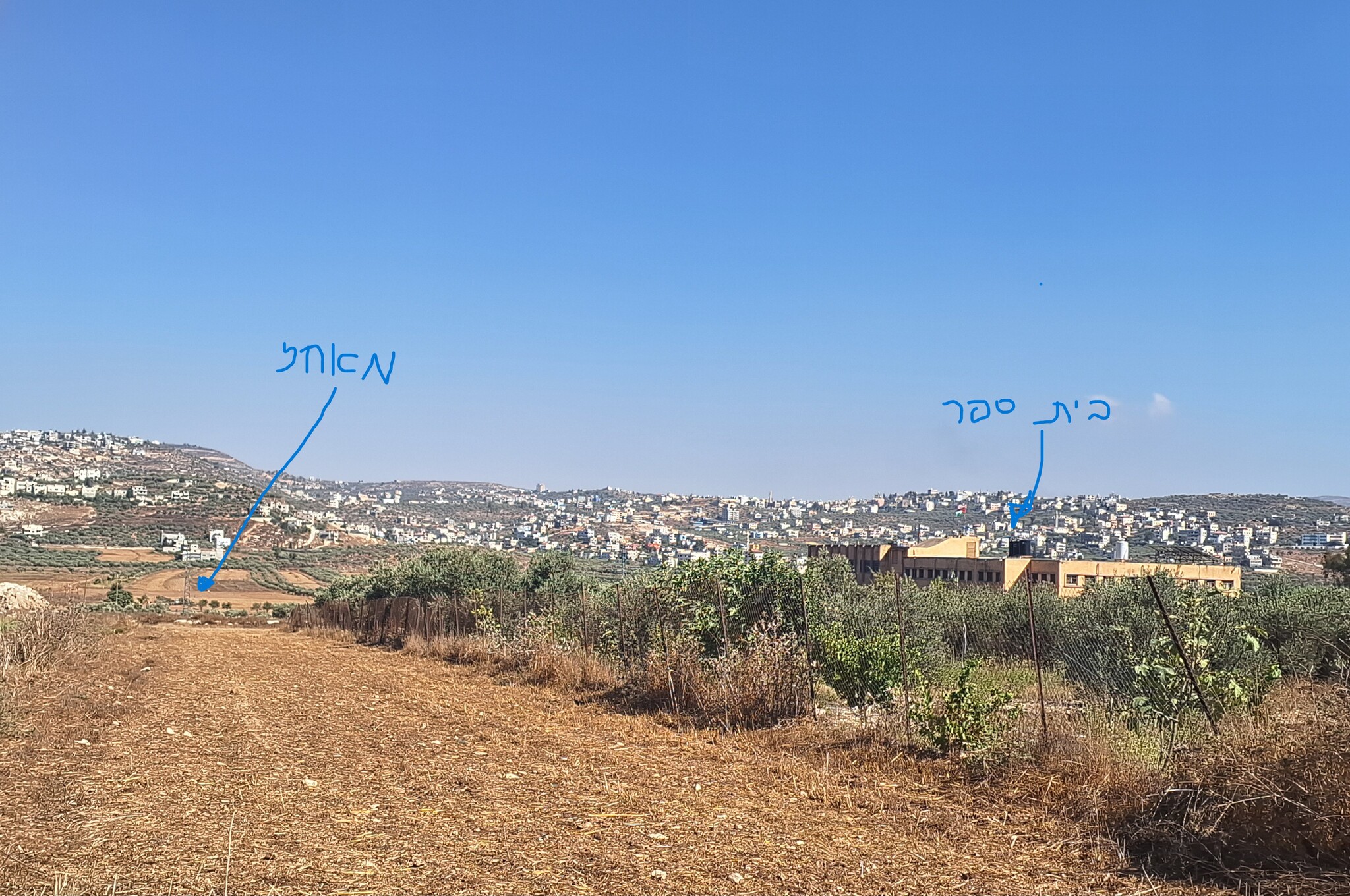 Ronit Dahan-RamatiAug-24-2026Huwara: The school on the outskirts of town and an outpost hidden among the trees
-
Za'tara (Tapuah)
See all reports for this place-
Za'tara (Tapuah) Za'tara is an internal checkpoint in the heart of the West Bank, at the intersection of Road 60 and Road 505 (Trans-Samaria), east of the Tapuah settlement. This checkpoint is the "border" marked by the IDF between the north and south of the West Bank, in accordance with the policy of separation between the two parts of the West Bank that has been in place since December 2005. At the Za'tara checkpoint, there are separate routes for Israelis and Palestinians. In the route for Israelis, there are no inspections and the route for Palestinians inspects. The queue lengthens and shortens suits. The checkpoint is open 24 hours a day. The checkpoint is partially staffed and the people who pass through it are checked at random.
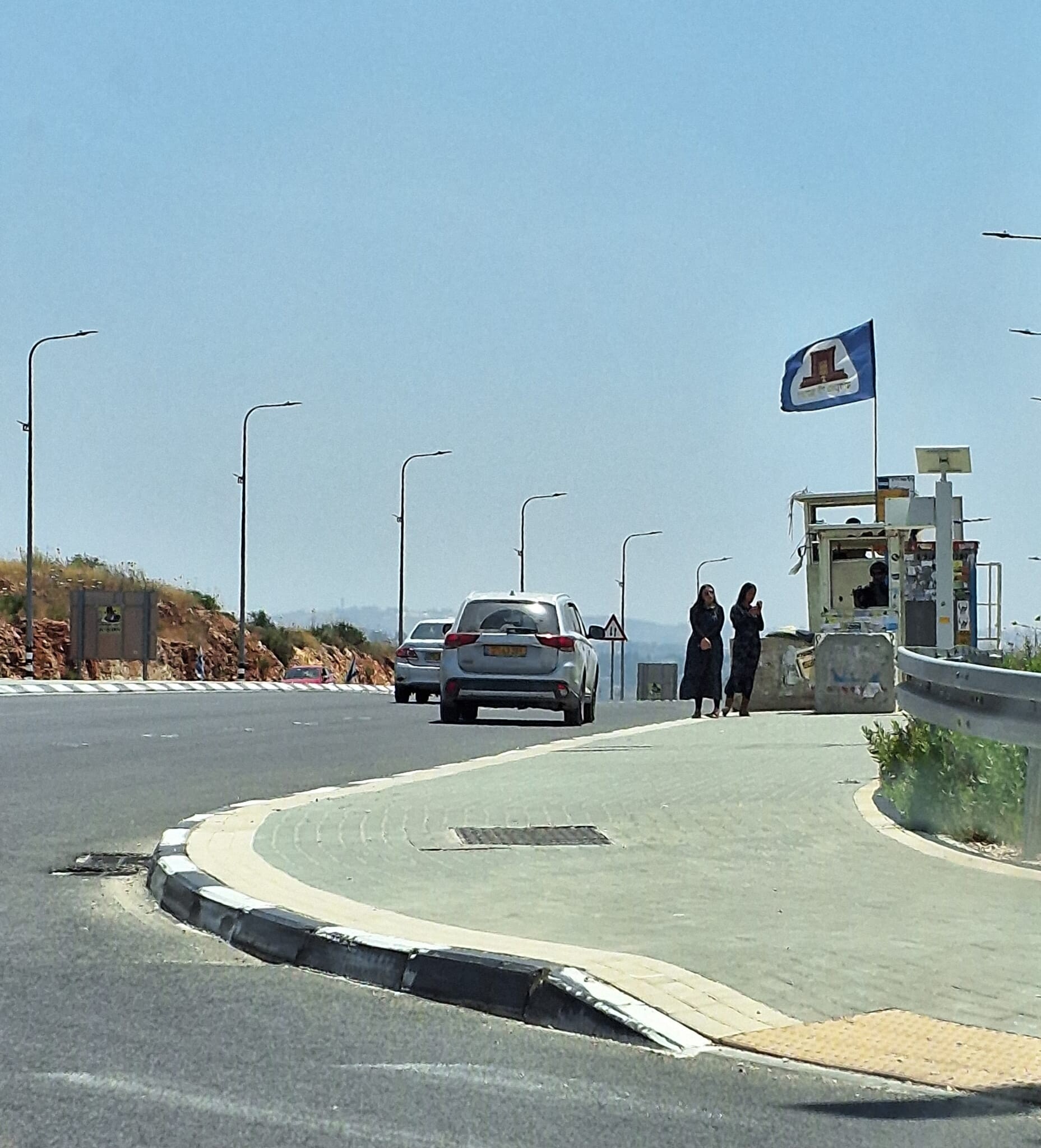 Ronit Dahan-RamatiJun-9-2026Za'atara (Tapuach Junction). The Temple Flag Above a Station
-
