
Beit Furik, Huwwara, Za’tara (Tapuah), Sun 19.10.08, Afternoon
Translation: Tal H.
14:55 At the inner side of the former entrance (blocked with boulders, concrete slabs, soil piles and iron gate – to Zeita village, several soldiers are 'interviewing' a driver standing next to his van.
15:00 Za'tara Tapuach Junction is empty and quiet.
Facing the entrance to Beita village, two police jeeps lie in wait.
Huwwara Checkpoint 15:15
3 active checking posts, active x-ray truck
Starting 15:30, one hour and a half earlier than normal, two sniffer-dog trainers and their dog 'Shaft' are present and active.
DCO representative- Aassem, Checkpoint commander – ??
Dina the MPwoman (who is a tad quieter since we last sang her praises) orders a Palestinian to pour out the contents of his bag, object by object, onto the dusty-filthy checkpoint concrete floor to prove his innocence.
The special side line for women children and elderly is long and slow. Men in the waiting lines report half an hour to an hour waiting. Upon our arrival, the concrete cubicle for detainees is empty.
The soldier checking vehicles entering Nablus points his short weapon towards the chest and head of the drivers, and when necessary, to their bottoms as they open their trunks. He stands at zero-distance from them, and this is no metaphor.
The line of Nablus-bound vehicles is heavier than usual, everything and everyone is checked including international organization vehicles and ambulances not on emergency missions. Many vehicles are turned back, refused entry, about one out of every five. The reason appears to be the soldiers' limited knowledge of the permits policy, because when the DCO rep. arrives on the scene, there are no more delays.
The number of vehicles waiting is relatively large too, which complicates things both for entry and exit.
17:45 – the checkpoint is nearly empty now, only one active checking post.
The sounds that emerge are mainly the voices of the MPwomen and a bespectacled soldier standing next to them. Barks, bellows, groans – that is what meets the ear.
Men standing in the shed after having been inspected and sent on are impatiently chased away, soldiers play around with a man's lighter – the 'inspection' business as usual, only a bit more quietly.
The Givati Brigade's purple flag waves proudly over the mid-lane post – the checkpoint is theirs!!
Beit Furik from 16:40
Observers: Hanna A., Tal H. (reporting)
On kids, lies and IDF spokesperson
Upon our arrival, we are greeted by a very anxious, very articulate father (fluent Hebrew, holds permits of entry and work in Israel, owns a factory, has much knowledge, experience and connections). This man lays out for us the following bit of surreal reality: Four seven-eight year old kids are being detained in the detainee pen at the checkpoint, he is not allowed to approach them, they have been caught by soldiers in a jeep and brought to the checkpoint for detention, as they were helping their neighbors pick olives in their olive grove near Beit Furiq village across the road. They have been in the pen for an hour now, the head of the village council is in the picture, the whole world is informed but nothing is moving.
We call the army "humanitarian" hotline, they promise to look into it. After ten minutes, we try again, the person we spoke to before (Tomer) is gone. We explain the scene to the new person (Gil'ad) who promises to look into it. We also report to our friend Noa, at home, who promises to call Zaharan of the DCO. Who in the meantime, we fine out, is being approached by phone by other people from the village.
Time passes. In the meantime – in or out of context with the above – over one-hundred pedestrians are already crowded on the other side of the checkpoint, and a long long line of vehicles, all waiting to be inspected in order to be allowed to proceed from town home to their nearby village. The air is thick with tension.
Nothing new on the junior front. We call Raya who contacts journalist Nir Yahav who calls us and hears all the above from us directly. We call the hotline again. This time, instead of a person, we get recorded music. Of the Jolly kind.
From the crowd beyond the checkpoint cries of impatience beginning to emerge, louder and louder.
In response, a very shrill siren is activated from the watch-shoot tower on the hill. For a long while. An alarming sound that may definitely be added to the long creative list of protection measures that our fragile State invents for its own defense.
On the phone front: Gilad from the hotline responds to our next call as follows: "The detention is for security reasons. Their identities are being checked now. I am aware of their age. Had I thought their detention was ungrounded, I would act to set them free."
The little detainee community grows as a young and very agitated man is sent to the pen to learn the proper behavior in a crowded waiting line with his impatient neighbors.
Developments on the junior front: The checkpoint commander allows the worried father who spoke to us to enter the pen and sit with the kids. Two hours after they were first brought in.
Noa tells us on the phone that Zaharan of the DCO is on his way to the checkpoint. As she speaks, our eyes see the blessed sight of the father walking away from the pen, followed by the four kids, like four ducklings, shivering with cold (the soldiers did not allow anyone to bring them warmer clothes) but mighty proud of themselves. Free to go.
18:00 We get back to Huwwara to join our shift mates, and leave soon afterwards as nothing was brewing and the CP emptied.
Epilogue: Nir Yahav, the journalist who spoke to us in "real time", called the IDF spokesperson and received the following response:
"These were three youngsters who threw stones towards Israeli vehicles traveling on the road next to Beit Furiq. They were held at the checkpoint until the Israeli civilian police arrived, at which time they were turned over to police procedures."
I repeat what my own eyes saw at the Beit Furiq Checkpoint: four children, ages 7-8, were brought by soldiers to the checkpoint and were detained there for two hours, unaccompanied inside the pen. Not youngsters. Not police. No procedures.
Seven-eight years old. (from their looks, I'd even say they were six years old)
.
Beit Furik checkpoint
See all reports for this place-
One of the three internal checkpoints that closed on the city of Nablus - Beit Furik to the east, Hawara to the south, Beit Iba to the west. The checkpoint is located at the junction of Roads 557 (an apartheid road that was forbidden for Palestinians), leading to the Itamar and Alon Morea settlements and Road 5487. The checkpoint was established in 2001 for pedestrians and vehicles; The opening hours were short and the transition was slow and very problematic.Allegedly, the checkpoint is intended to monitor the movement to and from Nablus of the residents of Beit Furik and Beit Dajan, being the only opening outside their villages. Since May 2009 the checkpoint is open 24 hours a day, the military presence is limited, vehicles can pass through it without inspections, except for random inspections. (Updated April 2010)
-
Huwwara
See all reports for this place-
The Huwwara checkpoint is an internal checkpoint south of the city of Nablus, at the intersection of Roads 60 and 5077 (between the settlements of Bracha and Itamar). This checkpoint was one of the four permanent checkpoints that closed on Nablus (Beit Furik and Awarta checkpoints to the east and the Beit Iba checkpoint to the west). It was a pedestrian-only barrier. As MachsomWatch volunteers, we watched therre since 2001 two shifts a day - morning and noon, the thousands of Palestinians leaving Nablus and waiting for hours in queues to reach anywhere else in the West Bank, from the other side of the checkpoint the destination could only be reached by public transport. In early June 2009, as part of the easing of Palestinian traffic in the West Bank, the checkpoint was opened to vehicular traffic. The passage was free, with occasional military presence in the guard tower. Also, there were vehicle inspections from time to time. Since the massacre on 7.10.2023, the checkpoint has been closed to Palestinians.
On February 26, 2023, about 400 settlers attacked the town's residents for 5 hours and set fire to property, such as houses and cars. Disturbances occurred in response to a shooting of two Jewish residents of Har Bracha by a Palestinian Terrorist. The soldiers stationed in the town did not prevent the arson and rescued Palestinian families from their homes only after they were set on fire. No one was punished and Finance Minister Smotrich stated that "the State of Israel should wipe out Hawara." Left and center organizations organized solidarity demonstrations and support actions for the residents of Hawara.Hawara continued to be in the headlines in all the months that followed: more pogroms by the settlers, attacks by Palestinians and a massive presence of the army in the town. It amounted to a de facto curfew of commerce and life in the center of the city. On October 5, 2023, MK Zvi established a Sukkah in the center of Hawara and hundreds of settlers backed the army blocked the main road and held prayers in the heart of the town all night and the next day. On Saturday, October 7, 23 The "Swords of Iron" war began with an attack by Hamas on settlements surrounding Gaza in the face of a poor presence of the IDF. Much criticism has been made of the withdrawal of military forces from the area surrounding Gaza and their placement in the West Bank, and in the Hawara and Samaria region in particular, as a shield for the settlers who were taking over and rioting.
On November 12, 2023, the first section of the Hawara bypass road intended for Israeli traffic only was opened. In this way, the settlers can bypass the road that goes through the center of Hawara, which is the main artery for traffic from the Nablus area to Ramallah and the south of the West Bank. For the construction of the road, the Civil Administration expropriated 406 dunams of private land belonging to Palestinians from the nearby villages. The settlers are not satisfied with this at the moment, and demand to also travel through Hawara itself in order to demonstrate presence and control.(updated November 2023)
.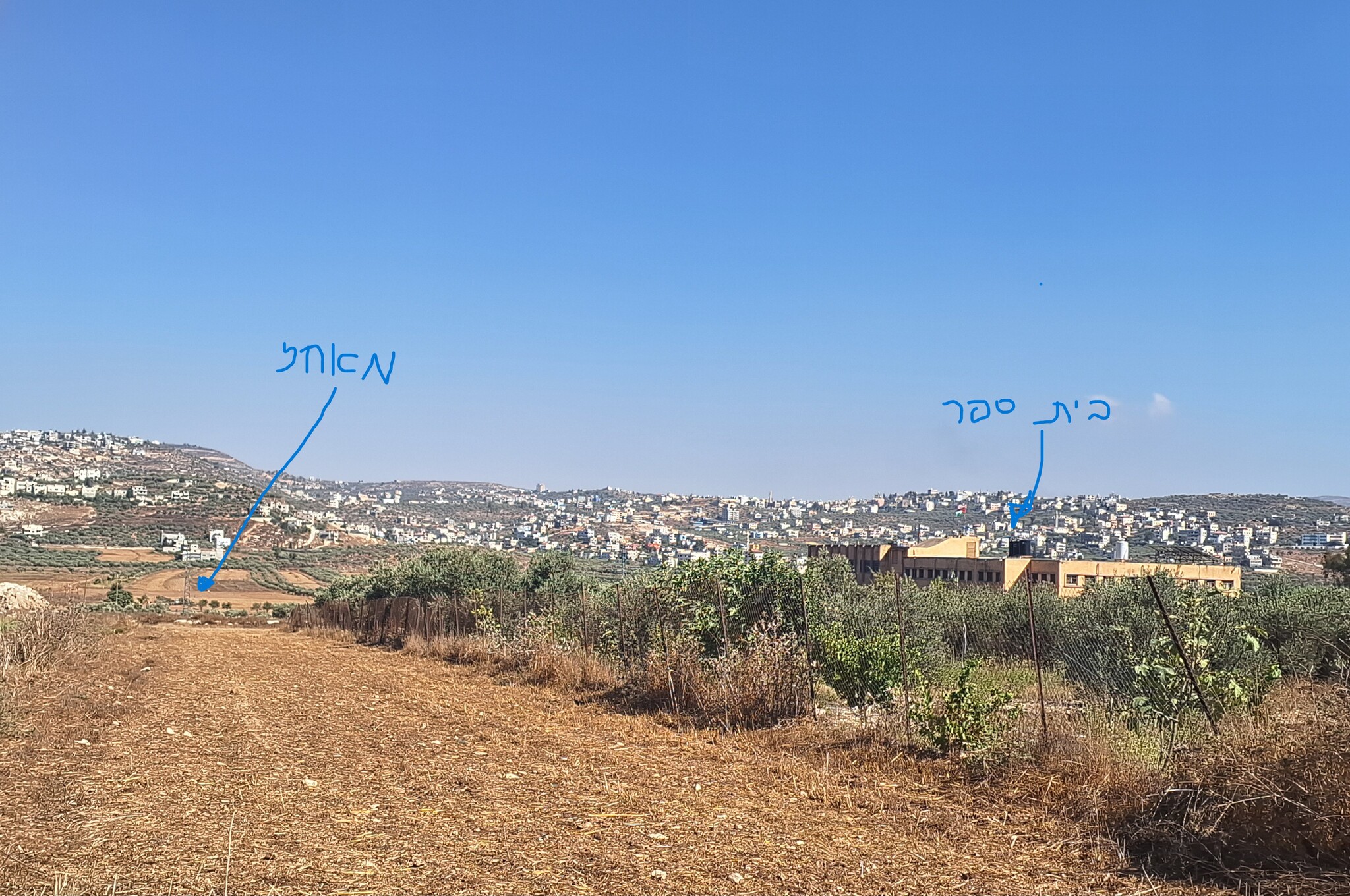 Ronit Dahan-RamatiAug-24-2026Huwara: The school on the outskirts of town and an outpost hidden among the trees
-
Za'tara (Tapuah)
See all reports for this place-
Za'tara (Tapuah) Za'tara is an internal checkpoint in the heart of the West Bank, at the intersection of Road 60 and Road 505 (Trans-Samaria), east of the Tapuah settlement. This checkpoint is the "border" marked by the IDF between the north and south of the West Bank, in accordance with the policy of separation between the two parts of the West Bank that has been in place since December 2005. At the Za'tara checkpoint, there are separate routes for Israelis and Palestinians. In the route for Israelis, there are no inspections and the route for Palestinians inspects. The queue lengthens and shortens suits. The checkpoint is open 24 hours a day. The checkpoint is partially staffed and the people who pass through it are checked at random.
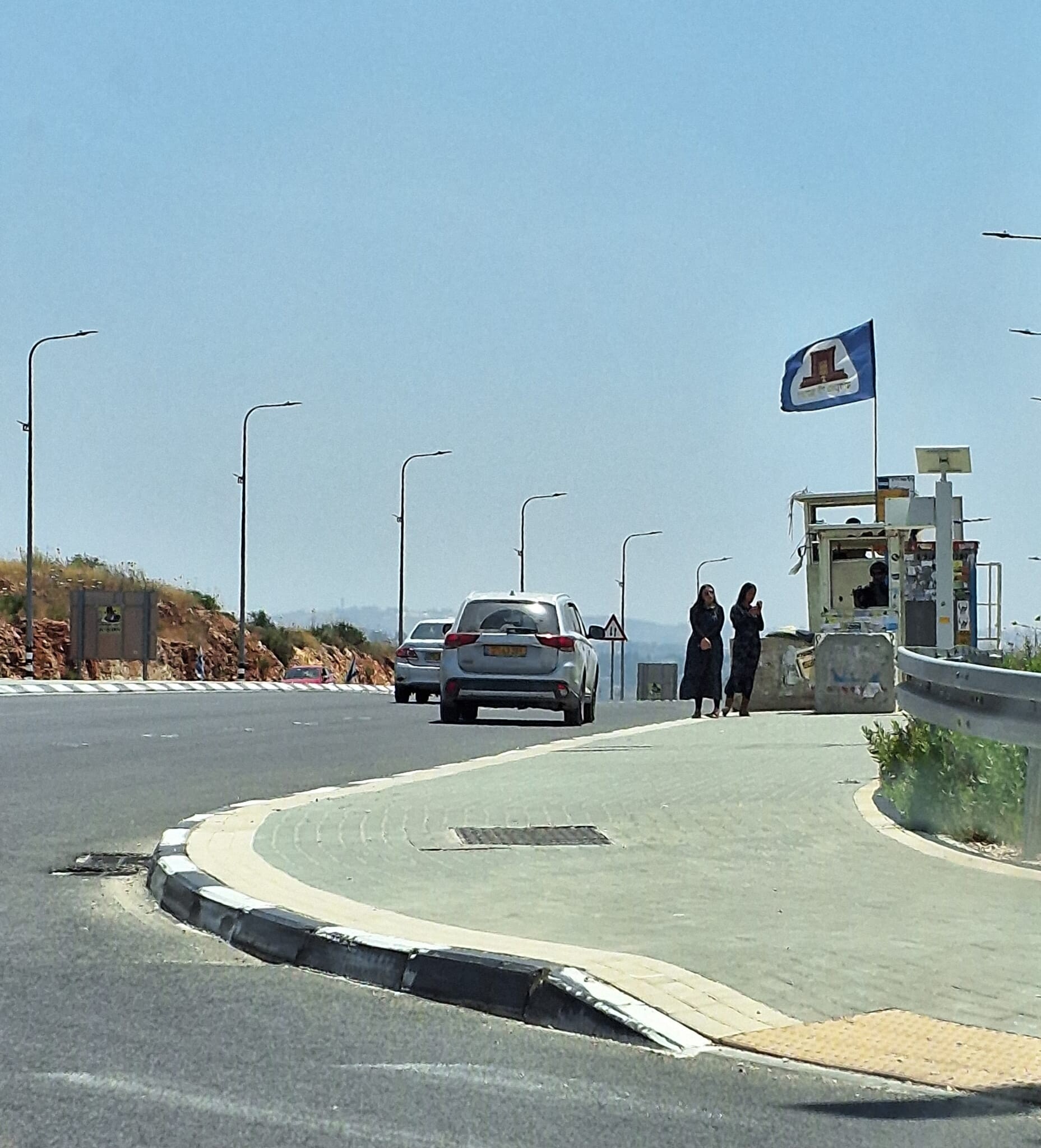 Ronit Dahan-RamatiJun-9-2026Za'atara (Tapuach Junction). The Temple Flag Above a Station
-
