
Beit Furik, Huwwara, Za’tara (Tapuah), Sun 31.8.08, Afternoon

Translation: Tal H.
Tapuach-Zaatara Junction Checkpoint 15:00
About 15 vehicles waiting to be checked, coming from Nablus and Huwwara, southbound.
The shooting post in the middle of the junction roundabout – unmanned.
Huwwara Checkpoint 15:10
From a high post in the entry roundabout to the checkpoint area – a yellow flag flutters in the breeze, at its center a crimson royal crown and the word M E S S I A H.
Checkpoint commander – B., DCO representative – A.
3 active pedestrian checking posts, x-ray truck, sniffer dog+trainer – activated only after 5 pm, when the worse heat is over.
General: large crowd passing through all along our shift.
The special side line for women, children and the elderly is crowded all the time, occasionally large groups are let through more speedily, but the line builds up again very fast.
The young men's waiting lines are very long and crowded, and they go through all the "usual" checking procedures. Average waiting time: about an hour.
An elderly man to us – half saying, half asking: "Why do they do this to us? Tomorrow Ramadan starts, what are we going to do?"
As we arrive, a man turns to us, asking to write down his testimony: He is director of licensing at the Palestinian traffic bureau in Salfit (regional town). This morning he was standing at Za'tara Junction waiting for a taxi about 50 meters from the colonists' hitchhiking station. Three of them approached him and hit him in the abdomen and chin, in full view of the soldiers. He yelled for help and the soldiers approached, so the colonists retreated and began to throw stones at him. He does not wish to lodge an official complaint for fear of the army's reprisal.
In the concrete cubicle: 4 detainees – 3 taxi drivers and another man, who kept getting too close to the checkpoint although ordered to "split". The checkpoint commander says they were detained at 13:30 and their ID numbers reported to GSS for further checking. They will be held until "fully punished", at least three hours.
Near the "humanitarian point" – aka soldiers' latrine behind the vehicle checking area, 2 youngsters are being detained, both from around East Jerusalem. One of them the soldiers suspected of driving a stolen vehicle, finally refuted when the police arrived at 16:20 and questioned him, then let him go. The other is held until after 17:30.
A woman-soldier forbids them to sit on the boulder in the shade. After a while she returns, saying: "Now you may sit." -"So why didn't you let us sit before?"
Her reply: "For reasons I cannot tell you." Later, when one of them wants to light a cigarette, he is ordered to go smoke in the searing sun.
A bus is checked, about 15 minutes. At times two vehicles are checked at once because of the crowded waiting line.
Tomorrow is the beginning of Ramadan, month of fasting and strict religious observances among the Palestinians who are forced to go through this checkpoint. At this time, the army's use of the sniffer-dogs to inspect taxis and private vehicles and personal effects and luggage is all the more apallign. The dogs drool and lick steering wheel and dashboard, seat covers and door and window handles and all interior parts of the cabin with which people come in constant contact, people who are obliged within their cultural and religious practice to stay away from any personal contact with dogs. Drivers are obliged to purify and cleanse their cars with any means possible after every such contact which creates reactions of revulsion and disgust on the part of all passengers without exception.
Once in a while an over-eager soldier bursts out at the pedestrian waiting line, cocking his rifle over their heads, growling "quiet" and "shut up" and the checking procedures halt until he recovers (or perhaps become hoarse)…
17:05 The DCO representative leaves. In the meantime, two of the detainees were released and new ones are placed in the concrete hold. Out of boredom perhaps, one of them breaks out in song… loudly singing some popular, devout Jewish-Israeli hits!
At 17:45 the two remaining detainees are released, and a new one (from Ussrin) is sent in, his name and number coming up on the Bingo list.
A heavily limping man approaches with his escort, asking to proceed on foot in the vehicle lane as he can hardly stand in the special side line all this time. A soldier orders him back in spite of the obvious disability. The DCO representative solves the problem while the soldier continues to gesticulate his refusal. As soon as they are let through, the escort takes him "piggy back" towards the taxi park.
The vendors tell us that they have been informed that starting tomorrow they will have to locate their stalls next to the far fence of the taxi park, as far as possible from their rushing clientele.
We left at 18:10, people were still waiting to be ID checked, and have their personal effects rummaged through.
Beit Furik Checkpoint 16:40
Observers: Tal H. and guest
Swift pedestrian traffic, and still every time anew we are amazed at the long moments in which some elderly woman or mother of toddlers is caught inside the turnstile waiting to be checked entering Nablus from her village, as the woman-soldier at the counter ignores her/does not see her/is busy chatting with her mates on duty, letting the woman wait and wait inside this metal cage.
Vehicle traffic is minimal.
Except for especially loud private conversations the soldiers hold with each other while "doing their work" with their "clients", all is quiet.
We left at 17:10.
Beit Furik checkpoint
See all reports for this place-
One of the three internal checkpoints that closed on the city of Nablus - Beit Furik to the east, Hawara to the south, Beit Iba to the west. The checkpoint is located at the junction of Roads 557 (an apartheid road that was forbidden for Palestinians), leading to the Itamar and Alon Morea settlements and Road 5487. The checkpoint was established in 2001 for pedestrians and vehicles; The opening hours were short and the transition was slow and very problematic.Allegedly, the checkpoint is intended to monitor the movement to and from Nablus of the residents of Beit Furik and Beit Dajan, being the only opening outside their villages. Since May 2009 the checkpoint is open 24 hours a day, the military presence is limited, vehicles can pass through it without inspections, except for random inspections. (Updated April 2010)
-
Huwwara
See all reports for this place-
The Huwwara checkpoint is an internal checkpoint south of the city of Nablus, at the intersection of Roads 60 and 5077 (between the settlements of Bracha and Itamar). This checkpoint was one of the four permanent checkpoints that closed on Nablus (Beit Furik and Awarta checkpoints to the east and the Beit Iba checkpoint to the west). It was a pedestrian-only barrier. As MachsomWatch volunteers, we watched therre since 2001 two shifts a day - morning and noon, the thousands of Palestinians leaving Nablus and waiting for hours in queues to reach anywhere else in the West Bank, from the other side of the checkpoint the destination could only be reached by public transport. In early June 2009, as part of the easing of Palestinian traffic in the West Bank, the checkpoint was opened to vehicular traffic. The passage was free, with occasional military presence in the guard tower. Also, there were vehicle inspections from time to time. Since the massacre on 7.10.2023, the checkpoint has been closed to Palestinians.
On February 26, 2023, about 400 settlers attacked the town's residents for 5 hours and set fire to property, such as houses and cars. Disturbances occurred in response to a shooting of two Jewish residents of Har Bracha by a Palestinian Terrorist. The soldiers stationed in the town did not prevent the arson and rescued Palestinian families from their homes only after they were set on fire. No one was punished and Finance Minister Smotrich stated that "the State of Israel should wipe out Hawara." Left and center organizations organized solidarity demonstrations and support actions for the residents of Hawara.Hawara continued to be in the headlines in all the months that followed: more pogroms by the settlers, attacks by Palestinians and a massive presence of the army in the town. It amounted to a de facto curfew of commerce and life in the center of the city. On October 5, 2023, MK Zvi established a Sukkah in the center of Hawara and hundreds of settlers backed the army blocked the main road and held prayers in the heart of the town all night and the next day. On Saturday, October 7, 23 The "Swords of Iron" war began with an attack by Hamas on settlements surrounding Gaza in the face of a poor presence of the IDF. Much criticism has been made of the withdrawal of military forces from the area surrounding Gaza and their placement in the West Bank, and in the Hawara and Samaria region in particular, as a shield for the settlers who were taking over and rioting.
On November 12, 2023, the first section of the Hawara bypass road intended for Israeli traffic only was opened. In this way, the settlers can bypass the road that goes through the center of Hawara, which is the main artery for traffic from the Nablus area to Ramallah and the south of the West Bank. For the construction of the road, the Civil Administration expropriated 406 dunams of private land belonging to Palestinians from the nearby villages. The settlers are not satisfied with this at the moment, and demand to also travel through Hawara itself in order to demonstrate presence and control.(updated November 2023)
.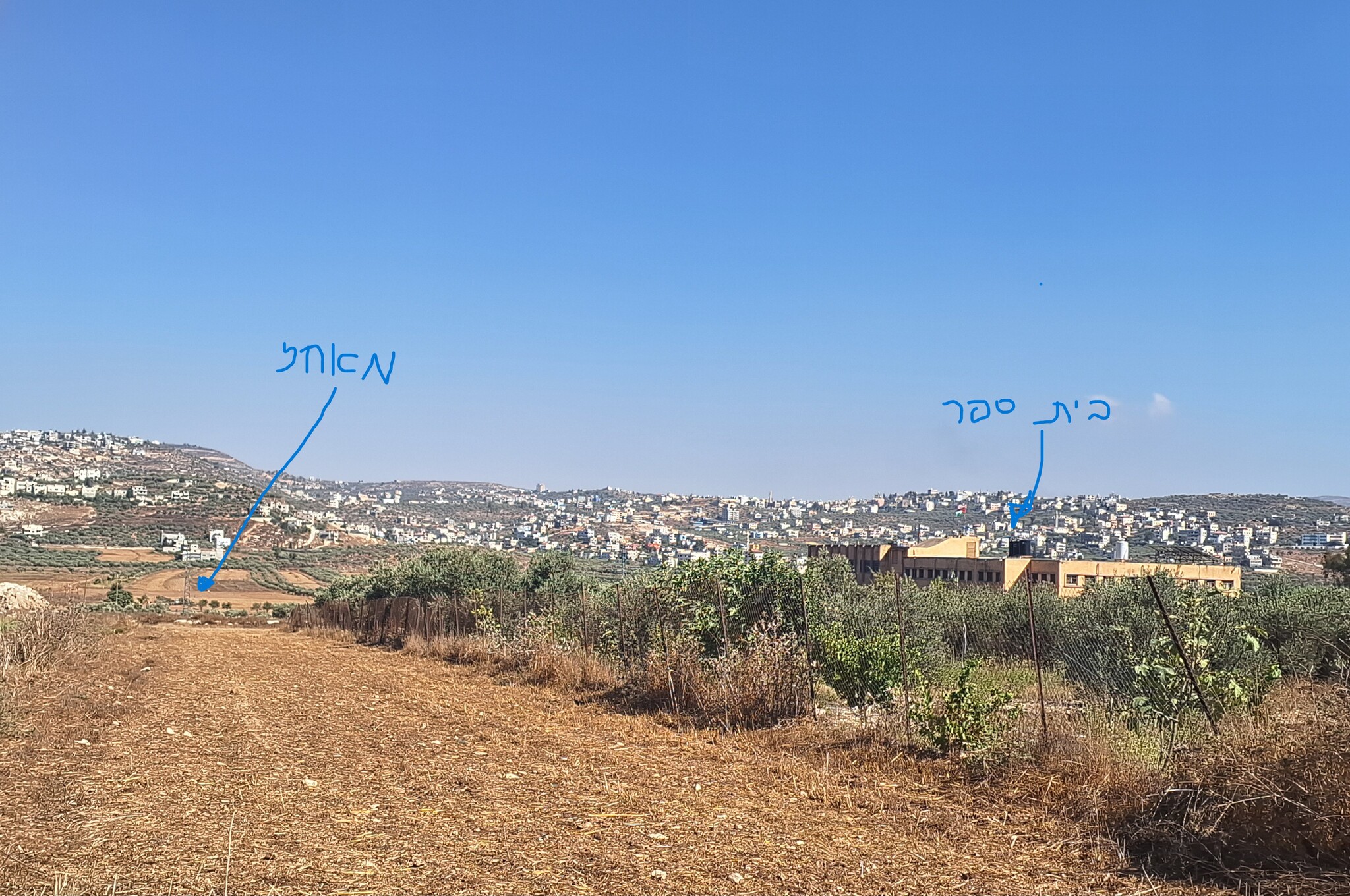 Ronit Dahan-RamatiAug-24-2026Huwara: The school on the outskirts of town and an outpost hidden among the trees
-
Za'tara (Tapuah)
See all reports for this place-
Za'tara (Tapuah) Za'tara is an internal checkpoint in the heart of the West Bank, at the intersection of Road 60 and Road 505 (Trans-Samaria), east of the Tapuah settlement. This checkpoint is the "border" marked by the IDF between the north and south of the West Bank, in accordance with the policy of separation between the two parts of the West Bank that has been in place since December 2005. At the Za'tara checkpoint, there are separate routes for Israelis and Palestinians. In the route for Israelis, there are no inspections and the route for Palestinians inspects. The queue lengthens and shortens suits. The checkpoint is open 24 hours a day. The checkpoint is partially staffed and the people who pass through it are checked at random.
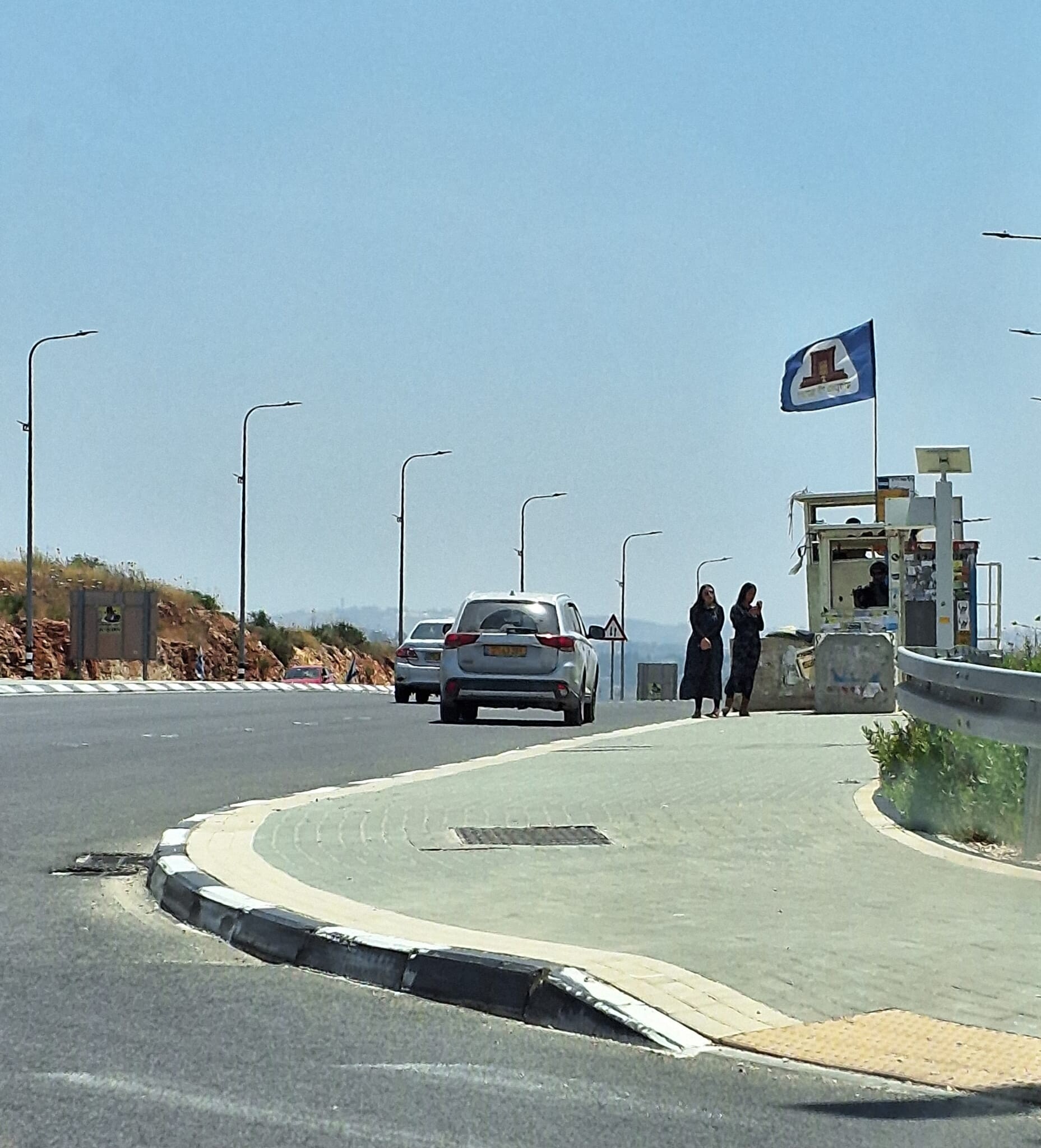 Ronit Dahan-RamatiJun-9-2026Za'atara (Tapuach Junction). The Temple Flag Above a Station
-
