Beit Furik, Huwwara, Za’tara (Tapuah), Sun 4.5.08, Afternoon
Translation: Tal H.
At Sha'ar Shomron Checkpoint (entry to West Bank some distance east of the "green line") there are no detained "illegals". The hunter-soldiers sit as usual in their black tent on the road a bit further, and we wonder where they hide them now.
At Tapuach-Zaatara Junction Checkpoint – no waiting lines and hardly any cars.
The army's concrete walls and fences – from where we are repeatedly ordered away by soldiers who say this is "closed military area" – are covered with posters announcing colonists/settlers' activity for Independence Day. Not only the passers-by are subjected to the extreme right's political propaganda, but the soldiers as well. Some tidbits:
"… Together we shall grow strong in our faith in our inalienable right over this land… Celebrating Jewish independence at Homesh… Since Hanukkah of last year the Honesh and Sanur group together with "Honesh First" leaders they have opened the campaign of return to the dismantle settlements. Missions persist in these returns, and in the nine past months yeshiva students as well have taken part in this campaign. Some of the activist families have joined the members present at the site last month…" Tel. 0528-903769.
Another poster calls for resisting government policy (photo to be attached).
Huwwara Checkpoint
commander – second lieutenant P., DCO representative – sergeant T.,
MP officer – second lieutenant L.
15:30 – the market inside the taxi-park is flourishing. Potted plants and flowers, fruit (great loquats), vegetables, soft drinks and sweets, befitting a place that sees thousands of passers-by daily. But the people – says our old friend the coffee vendor – don't come. And if they do, they don't even have the money for a cup of coffee. The economic situation is desperate and people who don't absolutely have to go out, simply stay home.
3 checking posts, waiting lines ruler-straight all the way to the end of the shed. MPwomen shouting ID numbers towards the left-hand post, the only one with a complete list of wanted ID numbers. The lists may not be duplicated, explains the checkpoint commander, it's a security issue. But screaming the numbers out – no security hazard in that… And they do scream, along with the noisy turnstiles and the loud invitation "Come along," "One by one…"
A youngster is ordered into the concrete cubicle and is released after a short conversation with the commander. Another wearing a coat is ordered to bare his whole upper body. A young man carrying binoculars is sent to a special security check at the third post and released only after explaining what that suspected object might be. A man exiting the line with heavy plastic bags says "They give us a hard time", showing us the fresh garlic bunch, boxes with house wares and clothes, resenting the time he wasted standing in the full side-line and the trip he had to make to the x-ray truck and back. Women too are sent to the x-ray truck, while criteria are not obvious, for some are sent there and others are not. A young woman, her face bandaged, walking with difficulty and leaning on her mother, seems about to collapse any moment. A man carefully arranges his things on the checking counter: a pen, a watch, a belt, the contents of his pants pockets, a handkerchief, a telephone, reading glasses, sun glasses… At the side line, a soldier empties a large bundle carried by an elderly woman wearing traditional village garb.
15:50 – the lines are halted. A soldier beyond the turnstiles points his rifle at the people waiting, while the woman soldier takes a drink of water and chats with her mates. After about 10 minutes, the checks are resumed as well as the shrieks "One by one… Come along now… Slow down, take out your earphones!!"
Men at the turnstiles say they have been waiting for half an hour. Since the lines are not terribly crowded, movement is relatively swift. The MPwoman sings (sounds more like a parody of singing) and her mates join her, in between shouting ID numbers… A young man wishes to go over to the other side of the checkpoint in order to pick up 4 cell phones from someone without waiting for an hour in line afterwards. We direct him to the DCO representative and the operation takes exactly half a minute.
16:00 One checking post is closed. Two waiting lines now crowd together, will evidently take more time. The male soldiers join the merriment of the MPwomen, singing loudly and laughing hysterically, while the Palestinians don't really get the point. A youngster wearing a khaki belt catches the soldier's attention, and although the metal detector does not bleep, he is required to remove his belt and show it to the commander. The latter examines it carefully and returns it to its owner.
pedestrians exiting the checkpoint are down to a trickle and we left to stop in Huwwara village and buy the sweetest local Baklawa to take away some of that awful checkpoint aftertaste.
16:40 – Awarta – 4 trucks waiting in line. No detainees, the Palestinian in charge of the line says: "Today everything's fine".
Beit Furik Checkpoint – 16:50 –
Before we even get to our observation point, the CP commander O. warns us not to pass the concrete ledge line and if we have any questions, to summon him and only him.
Pedestrians exiting Nablus are checked on the road. They arrive in taxis in groups of 4-8 persons. Some of the men are required to raise their shirts. Whoever comes from Beit Furik
, bound into Nablus, must make noises so that the soldiers notice them, standing with their backs in their direction. Waiting time is brief.
17:10 – a line of about 20 men, women and children has accumulated. Almost no cars inbound, short waiting time for cars outbound.
17:30 – we left.
Beit Furik checkpoint
See all reports for this place-
One of the three internal checkpoints that closed on the city of Nablus - Beit Furik to the east, Hawara to the south, Beit Iba to the west. The checkpoint is located at the junction of Roads 557 (an apartheid road that was forbidden for Palestinians), leading to the Itamar and Alon Morea settlements and Road 5487. The checkpoint was established in 2001 for pedestrians and vehicles; The opening hours were short and the transition was slow and very problematic.Allegedly, the checkpoint is intended to monitor the movement to and from Nablus of the residents of Beit Furik and Beit Dajan, being the only opening outside their villages. Since May 2009 the checkpoint is open 24 hours a day, the military presence is limited, vehicles can pass through it without inspections, except for random inspections. (Updated April 2010)
-
Huwwara
See all reports for this place-
The Huwwara checkpoint is an internal checkpoint south of the city of Nablus, at the intersection of Roads 60 and 5077 (between the settlements of Bracha and Itamar). This checkpoint was one of the four permanent checkpoints that closed on Nablus (Beit Furik and Awarta checkpoints to the east and the Beit Iba checkpoint to the west). It was a pedestrian-only barrier. As MachsomWatch volunteers, we watched therre since 2001 two shifts a day - morning and noon, the thousands of Palestinians leaving Nablus and waiting for hours in queues to reach anywhere else in the West Bank, from the other side of the checkpoint the destination could only be reached by public transport. In early June 2009, as part of the easing of Palestinian traffic in the West Bank, the checkpoint was opened to vehicular traffic. The passage was free, with occasional military presence in the guard tower. Also, there were vehicle inspections from time to time. Since the massacre on 7.10.2023, the checkpoint has been closed to Palestinians.
On February 26, 2023, about 400 settlers attacked the town's residents for 5 hours and set fire to property, such as houses and cars. Disturbances occurred in response to a shooting of two Jewish residents of Har Bracha by a Palestinian Terrorist. The soldiers stationed in the town did not prevent the arson and rescued Palestinian families from their homes only after they were set on fire. No one was punished and Finance Minister Smotrich stated that "the State of Israel should wipe out Hawara." Left and center organizations organized solidarity demonstrations and support actions for the residents of Hawara.Hawara continued to be in the headlines in all the months that followed: more pogroms by the settlers, attacks by Palestinians and a massive presence of the army in the town. It amounted to a de facto curfew of commerce and life in the center of the city. On October 5, 2023, MK Zvi established a Sukkah in the center of Hawara and hundreds of settlers backed the army blocked the main road and held prayers in the heart of the town all night and the next day. On Saturday, October 7, 23 The "Swords of Iron" war began with an attack by Hamas on settlements surrounding Gaza in the face of a poor presence of the IDF. Much criticism has been made of the withdrawal of military forces from the area surrounding Gaza and their placement in the West Bank, and in the Hawara and Samaria region in particular, as a shield for the settlers who were taking over and rioting.
On November 12, 2023, the first section of the Hawara bypass road intended for Israeli traffic only was opened. In this way, the settlers can bypass the road that goes through the center of Hawara, which is the main artery for traffic from the Nablus area to Ramallah and the south of the West Bank. For the construction of the road, the Civil Administration expropriated 406 dunams of private land belonging to Palestinians from the nearby villages. The settlers are not satisfied with this at the moment, and demand to also travel through Hawara itself in order to demonstrate presence and control.(updated November 2023)
. Shoshi AnbarMay-18-2025Huwara: The old houses in Area C
-
Za'tara (Tapuah)
See all reports for this place-
Za'tara (Tapuah) Za'tara is an internal checkpoint in the heart of the West Bank, at the intersection of Road 60 and Road 505 (Trans-Samaria), east of the Tapuah settlement. This checkpoint is the "border" marked by the IDF between the north and south of the West Bank, in accordance with the policy of separation between the two parts of the West Bank that has been in place since December 2005. At the Za'tara checkpoint, there are separate routes for Israelis and Palestinians. In the route for Israelis, there are no inspections and the route for Palestinians inspects. The queue lengthens and shortens suits. The checkpoint is open 24 hours a day. The checkpoint is partially staffed and the people who pass through it are checked at random.
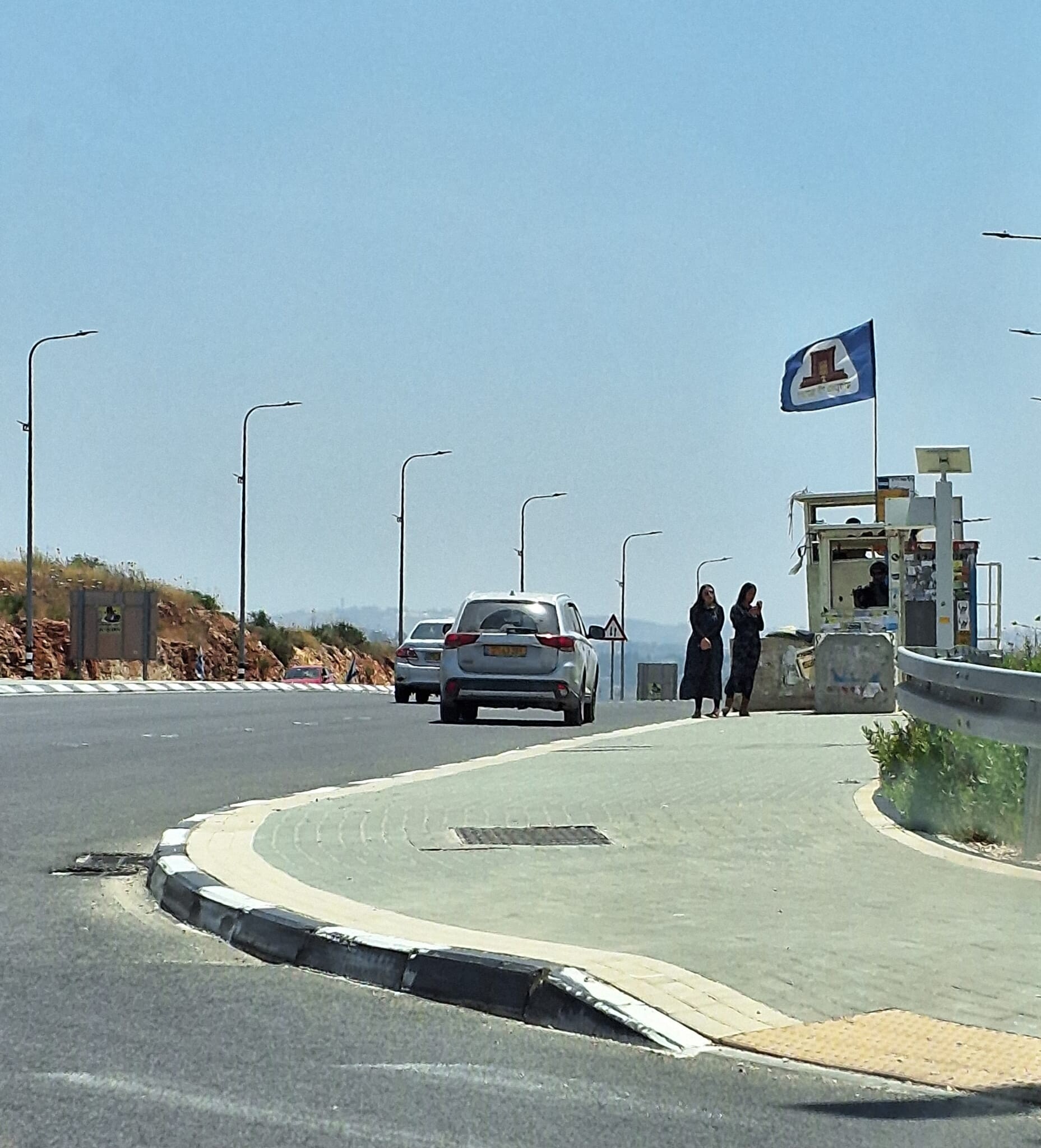 Ronit Dahan-RamatiJun-9-2026Za'atara (Tapuach Junction). The Temple Flag Above a Station
-