
Beit Furik, Huwwara, Za’tara (Tapuah), Sun 6.1.08, Afternoon
Translation: Tal H.
Tapuach-Za'tara junction Checkpoint – no waiting lines
Yitzhar-Huwwara Road Junction checkpoint – unmanned
15:10 – Huwwara Checkpoint
Weather clear and very cold. DCO representative – R. – is sheltered inside the vehicle checking post shack; we did not meet the Checkpoint Commander;
sniffer-dog present in its cage near the vehicle checking post.
Pedestrian waiting lines proceed slowly – men lining up in impeccably straight single files all the way to the back of the shed.
4 soldiers check the vehicles exiting Nablus, one at a time. Two MPs, tall and determined, a triangular black band on their sleeve, deliver a speech to the driver or one of the passengers, usually the youngest looking one – a monologue the content of which we were unable to hear, but the hand gestures and body language as well as the Palestinians' response was unmistakable. No doubt the exchange is irrelevant to the check.
A Palestinian requesting to speak to the DCO representative is countered by one of these MPs with "Don't watch us. Go away!" He also growled at one of us who stopped to talk with those exiting the turnstiles (after the checks): "Honey, move along, don't mix with them!" (Literally. NOT 'don't interfere').
Our guest, on her first encounter with checkpoint sights, remarks that the place looks like a livestock corral, and the people like sheep led to the shearing.
Back at this Checkpoint just before 6 p.m., it was already empty of pedestrians.
One detainee – 18 years old – inside the concrete cubicle. He is from Beit Furik and has been inside for half an hour, he says. We reported to the army hotline.
16:20 Beit Furik Checkpoint
DCO representative – T.;
Yellow flags announce to us that The Night Predators Company of the present Golani infantry brigade (Gideon Battalion) mans the checkpoint. Two such predators pounce on us upon our arrival as we cross the road towards the concrete blocks (our usual observation post) and forcefully demand that we stay standing by our car. "Only there, or we shut down the checkpoint". We refused. The commander, a sergeant, called them back to the checking post and asked us "not to interfere".
The DCO representative tells us of two boys from Beit Furik – 16 and 17 years old – who have been detained in the cubicle for over an hour. And we do notice the tops of their heads above the locked iron gate. The cubicle is tiny, it can hardly contain two persons standing, let alone sitting. What is their crime? The patrol caught them in the fields near Yitamar colony throwing stones. Their fathers stand with us, refusing to accept the army's version. The two were indeed in the fields, but certainly did not throw stones. At whom?? Perhaps they cleared a plot of stones. Anyway, they cannot possibly be guilty of the charge. Naturally this was of no help whatsoever. The DCO rep. lets a relative speak with the detainees. He also volunteers to untie their blindfold. Why are they blindfolded? That's what the Company Commander decide. They also arrived with their wrists nearly blue from the pressure of their cuffs – this we were told in parentheses – and the DCO rep. released a little bit. But now they are cuffed again. We complained to the army hotline – why cuff them if they are locked up in a concrete cubicle with an iron gate?? The answer – no less absurd than the whole situation – was: "They endanger the soldiers". When we insisted, we were told that "This is what the company commander decided." No one thinks down here, nor up there, that this company commander, a twenty-something year old soldier exaggerates or makes a mistake and how this affects a group of soldiers at the checkpoint. This really is of no interest to anyone, not even those who have been recently asking themselves, 'where did we go wrong'…
The DCO rep. leaves at 17:20. One of the two fathers has the DCO phone number and he calls in an attempt to conclude the episode or receive some information about his son's prospects in the matter. The DCO HQ don't find anyone to speak Arabic to the man, but promise to get back to him within 10 minutes. This promise was not met.
At the army hotline he does find an ear and offers all the details required of him. But still he gets no answers.
All this time – a lively stream of pedestrians returning home from Nablus and faced with the soldiers' aggressive and snide tones: "Go on, go on, I can't bear you any longer!" screeches the woman soldier inside the ID checking booth. People report that yells and humiliations are routine in the past few days.
In the vehicle checking line – a special checking method: the driver leaves his vehicle about twenty meters away from the soldiers, approaches them, hands them his ID, is instructed to stand spread-eagled against the concrete block. The soldier taps his body up down and sideways all over. We are told that even an old man was checked this way, and only after the DCO rep. intervened, this was stopped.
17:45 – we left to get back to Huwwara. The detainees are freezing inside the cubicle, probably waiting for the civilian police that, as usual, is taking its time. The sun has long since set, it is bitter cold and dark, and the hour of the night predators is here.
(For general reference: The Golani battalion 13 (Gideon) has an auxiliary company named Wild Beasts and two combat companies named Night Predators and Silent Apes. In the past, instead of the combat companies, there was a rifle company in this battalion named Satan's Messengers. We cannot help wondering, shocked, at the choice of such violent appellations and ask ourselves what is it that is so outrageous in the soldiers' brutal conduct.)
Beit Furik checkpoint
See all reports for this place-
One of the three internal checkpoints that closed on the city of Nablus - Beit Furik to the east, Hawara to the south, Beit Iba to the west. The checkpoint is located at the junction of Roads 557 (an apartheid road that was forbidden for Palestinians), leading to the Itamar and Alon Morea settlements and Road 5487. The checkpoint was established in 2001 for pedestrians and vehicles; The opening hours were short and the transition was slow and very problematic.Allegedly, the checkpoint is intended to monitor the movement to and from Nablus of the residents of Beit Furik and Beit Dajan, being the only opening outside their villages. Since May 2009 the checkpoint is open 24 hours a day, the military presence is limited, vehicles can pass through it without inspections, except for random inspections. (Updated April 2010)
-
Huwwara
See all reports for this place-
The Huwwara checkpoint is an internal checkpoint south of the city of Nablus, at the intersection of Roads 60 and 5077 (between the settlements of Bracha and Itamar). This checkpoint was one of the four permanent checkpoints that closed on Nablus (Beit Furik and Awarta checkpoints to the east and the Beit Iba checkpoint to the west). It was a pedestrian-only barrier. As MachsomWatch volunteers, we watched therre since 2001 two shifts a day - morning and noon, the thousands of Palestinians leaving Nablus and waiting for hours in queues to reach anywhere else in the West Bank, from the other side of the checkpoint the destination could only be reached by public transport. In early June 2009, as part of the easing of Palestinian traffic in the West Bank, the checkpoint was opened to vehicular traffic. The passage was free, with occasional military presence in the guard tower. Also, there were vehicle inspections from time to time. Since the massacre on 7.10.2023, the checkpoint has been closed to Palestinians.
On February 26, 2023, about 400 settlers attacked the town's residents for 5 hours and set fire to property, such as houses and cars. Disturbances occurred in response to a shooting of two Jewish residents of Har Bracha by a Palestinian Terrorist. The soldiers stationed in the town did not prevent the arson and rescued Palestinian families from their homes only after they were set on fire. No one was punished and Finance Minister Smotrich stated that "the State of Israel should wipe out Hawara." Left and center organizations organized solidarity demonstrations and support actions for the residents of Hawara.Hawara continued to be in the headlines in all the months that followed: more pogroms by the settlers, attacks by Palestinians and a massive presence of the army in the town. It amounted to a de facto curfew of commerce and life in the center of the city. On October 5, 2023, MK Zvi established a Sukkah in the center of Hawara and hundreds of settlers backed the army blocked the main road and held prayers in the heart of the town all night and the next day. On Saturday, October 7, 23 The "Swords of Iron" war began with an attack by Hamas on settlements surrounding Gaza in the face of a poor presence of the IDF. Much criticism has been made of the withdrawal of military forces from the area surrounding Gaza and their placement in the West Bank, and in the Hawara and Samaria region in particular, as a shield for the settlers who were taking over and rioting.
On November 12, 2023, the first section of the Hawara bypass road intended for Israeli traffic only was opened. In this way, the settlers can bypass the road that goes through the center of Hawara, which is the main artery for traffic from the Nablus area to Ramallah and the south of the West Bank. For the construction of the road, the Civil Administration expropriated 406 dunams of private land belonging to Palestinians from the nearby villages. The settlers are not satisfied with this at the moment, and demand to also travel through Hawara itself in order to demonstrate presence and control.(updated November 2023)
.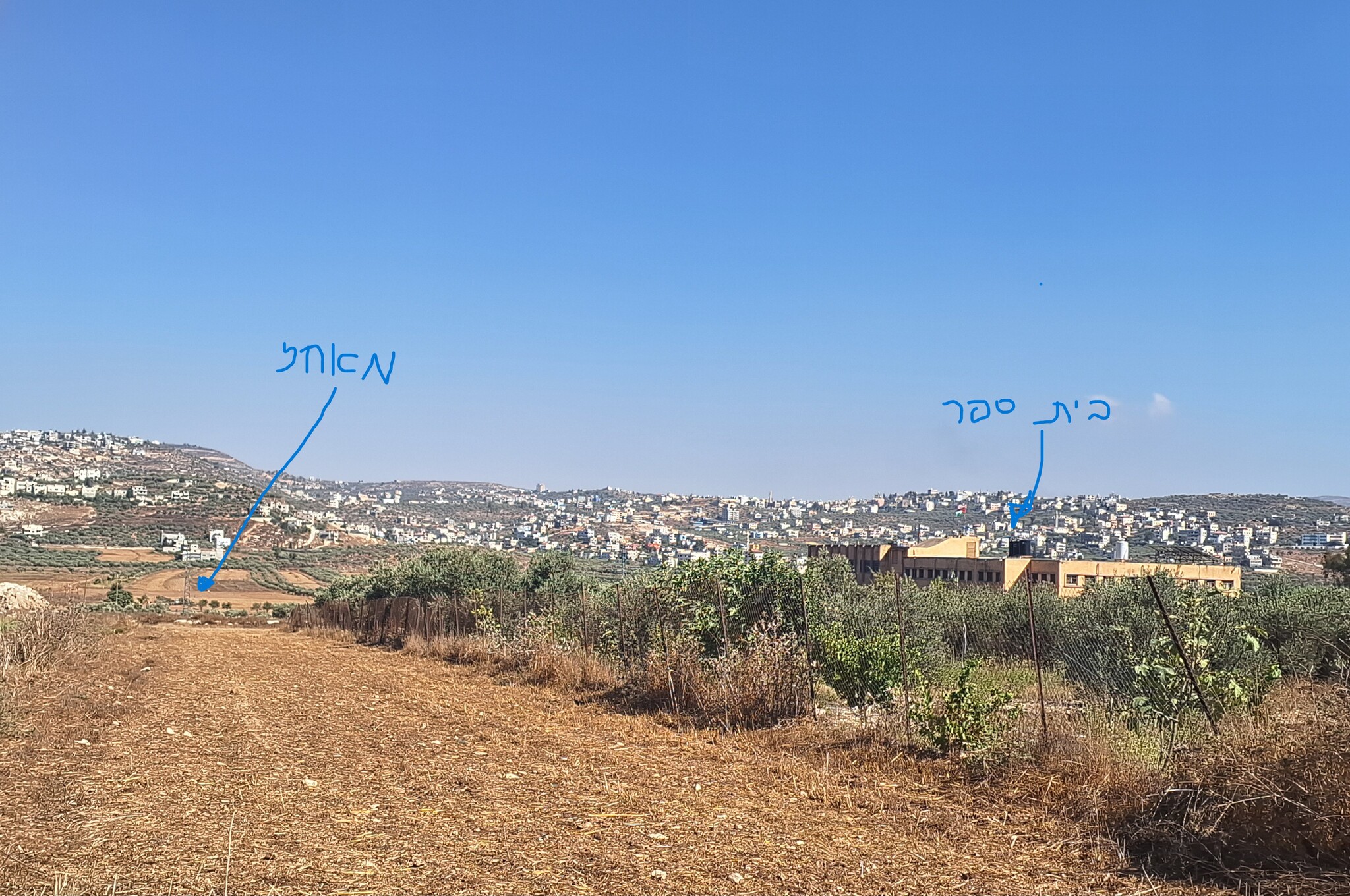 Ronit Dahan-RamatiAug-24-2026Huwara: The school on the outskirts of town and an outpost hidden among the trees
-
Za'tara (Tapuah)
See all reports for this place-
Za'tara (Tapuah) Za'tara is an internal checkpoint in the heart of the West Bank, at the intersection of Road 60 and Road 505 (Trans-Samaria), east of the Tapuah settlement. This checkpoint is the "border" marked by the IDF between the north and south of the West Bank, in accordance with the policy of separation between the two parts of the West Bank that has been in place since December 2005. At the Za'tara checkpoint, there are separate routes for Israelis and Palestinians. In the route for Israelis, there are no inspections and the route for Palestinians inspects. The queue lengthens and shortens suits. The checkpoint is open 24 hours a day. The checkpoint is partially staffed and the people who pass through it are checked at random.
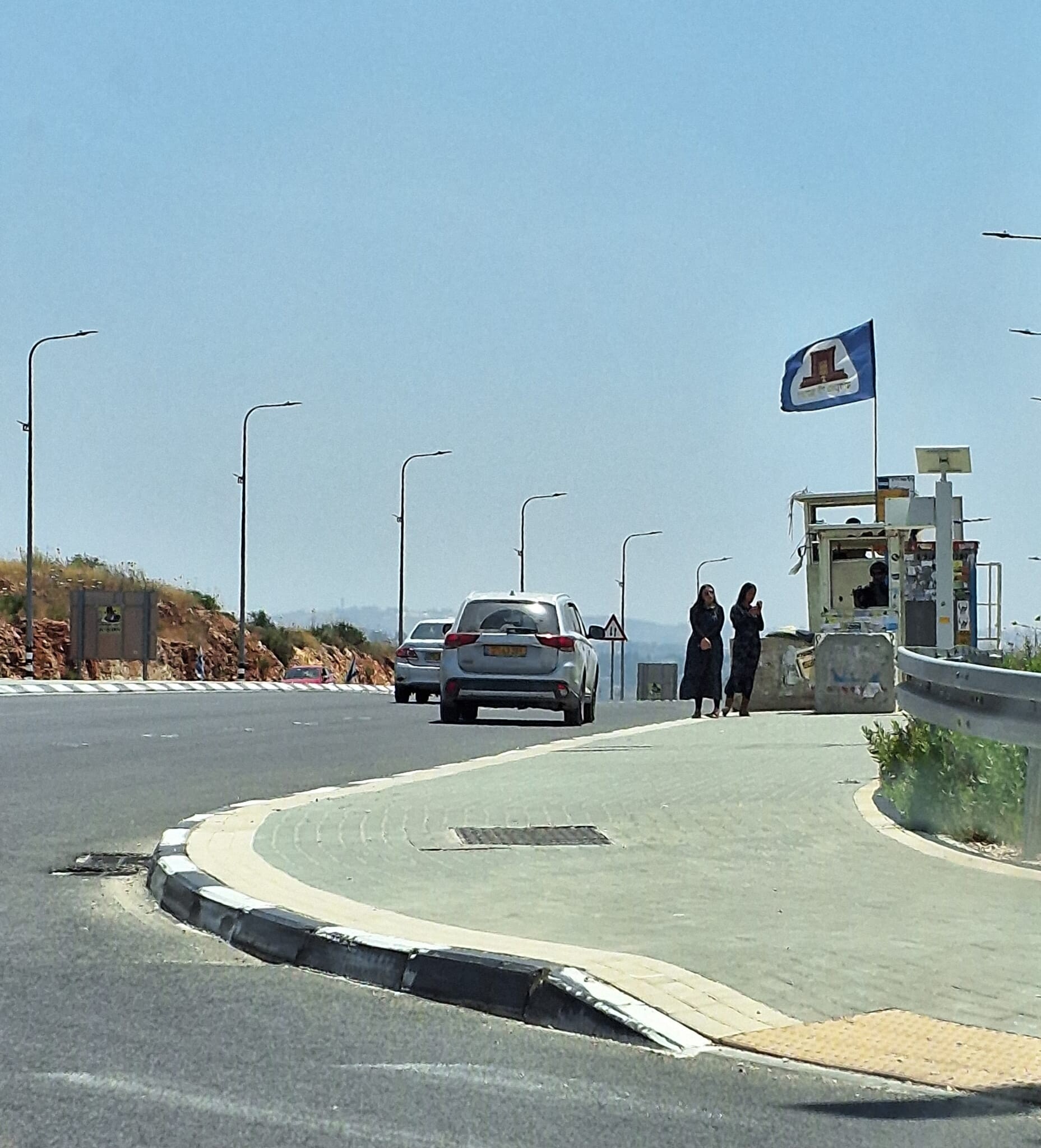 Ronit Dahan-RamatiJun-9-2026Za'atara (Tapuach Junction). The Temple Flag Above a Station
-
