
Beit Furik, Huwwara, Za’tara (Tapuah), Sun 9.12.07, Afternoon
Translation: Tal H.
15:00 Za'tara/Tapuach Junction – empty in all directions
Yitzhar-Huwwara Junction –
Army roadblock checking Israeli vehicles, probably following the colonist projects foreseen for today.
15:15 – Huwwara Checkpoint
Checkpoint commander – Second Lieutenant A.; DCO representative -T.;
3 active checking posts. X-Ray truck active – situated conveniently in the middle of a deep mud puddle. Which complicates the recovery of luggage into the porter carts.
Upon our arrival -one detainee in the concrete cell – a taxi driver caught driving on the Jews-only road from the Checkpoint towards Alon More colony. According to the CP commander he is suspected with carrying weapons. Galit was not allowed to talk to him – "He might be hostile".
The special side line for women children and the elderly is open and functioning all the time. The pedestrians waiting behind the turnstiles are impeccable single files. The air is filled mostly with a shrill trio of shrieking MPwomen – at the Palestinians, at one another, and just to let off steam.
15:30 – A soldier catches a young man trying to 'leak' out through the entry turnstiles instead of the usual checking procedures. Full chase, weapons drawn, catch. Our men beam. Got him.
A resident of Beit Dajan approaches and tells us that yesterday at the Beit Furik Checkpoint, when he wanted to enter Nablus with a vehicle he bought for its parts, the police confiscated the car and took its papers, to the Ariel police station. He was not handed any paper witnessing the procedure. Noa calls the army hotline that promises to look into it.
The body checks are strict as usual: a girl soldier pats down the t-shirted back of a man turning around to show his middle. A young man wearing sweat pants is required to tolerate a thorough touch-check of his crotch with a manual magnetometer.
16:20 – our men have caught another 'sneaker'. When Galit called the hotline to ask about the detainees, she was told that before the three punitive hours were up, nothing was to be done.
16:30 – Beit Furik Checkpoint
A bit further down the road bound for Alon More, another army barrier checking Isralei cars (which only slow down a bit and continue on their way).
At the checkpoint, vehicles are checked by a dog.
Pedestrians trickle through. Soldiers not hostile, and eventually get curious and want to hear our opinions of the checkpoints etc. And they did.
17:20 – Back to Huwwara Checkpoint
The detainees are still inside. This time the commander is aggressive towards us as well. "You know you shouldn't stand here!" he threatens to stop everything if we "disturb" him again (after asking him what about the detainees).
Just before we left for Beit Furik, an Israeli couple from Dir Al Asad is detained for having entered Nablus. The man stands with a crutch. As we return to Huwwara, they are still standing there. The man paces restlessly, wrapped in a blanket (it is very cold!). "Stop, you've harassed us enough!" he tells the CP commander. The officer obviously enjoys playing with their IDs in his pocket. The man approaches the checking shack and appeals to the DCO rep., loses his patience and becomes hysterical – cries, loses his breath, leans on the officer's shoulder who calls to the commander for help (the latter prefers to keep talking on his phone). The man collapses on the ground (A. still on the phone, a meter away).
Later we found out he fell as a result of a sudden severe rise in blood pressure and heart beat. A Palestinian medic waiting in one of the lines rushed to help him.
Soon an army ambulance arrived complete with doctor and three medics, armed with rifles and stretchers who stormed the shack. Then an army intensive care mobile unit arrived as well and the man was held in it for quite a while. Finally he got out and the medical corps left. His talk with Galit revealed that he underwent back surgery half a year ago.
Suffering frequent bouts of severe pain, he took an acquaintance's advice to consult some treatment in Nablus, and that was why they entered the city. He said he was son of a (army) bereaved family, and described the entire detention as pure harassment. He yelled at A. "I am a stinking Israeli!" A family relative picked them up at the checkpoint.
The Checkpoint emptied, and we left at 18:20.
Beit Furik checkpoint
See all reports for this place-
One of the three internal checkpoints that closed on the city of Nablus - Beit Furik to the east, Hawara to the south, Beit Iba to the west. The checkpoint is located at the junction of Roads 557 (an apartheid road that was forbidden for Palestinians), leading to the Itamar and Alon Morea settlements and Road 5487. The checkpoint was established in 2001 for pedestrians and vehicles; The opening hours were short and the transition was slow and very problematic.Allegedly, the checkpoint is intended to monitor the movement to and from Nablus of the residents of Beit Furik and Beit Dajan, being the only opening outside their villages. Since May 2009 the checkpoint is open 24 hours a day, the military presence is limited, vehicles can pass through it without inspections, except for random inspections. (Updated April 2010)
-
Huwwara
See all reports for this place-
The Huwwara checkpoint is an internal checkpoint south of the city of Nablus, at the intersection of Roads 60 and 5077 (between the settlements of Bracha and Itamar). This checkpoint was one of the four permanent checkpoints that closed on Nablus (Beit Furik and Awarta checkpoints to the east and the Beit Iba checkpoint to the west). It was a pedestrian-only barrier. As MachsomWatch volunteers, we watched therre since 2001 two shifts a day - morning and noon, the thousands of Palestinians leaving Nablus and waiting for hours in queues to reach anywhere else in the West Bank, from the other side of the checkpoint the destination could only be reached by public transport. In early June 2009, as part of the easing of Palestinian traffic in the West Bank, the checkpoint was opened to vehicular traffic. The passage was free, with occasional military presence in the guard tower. Also, there were vehicle inspections from time to time. Since the massacre on 7.10.2023, the checkpoint has been closed to Palestinians.
On February 26, 2023, about 400 settlers attacked the town's residents for 5 hours and set fire to property, such as houses and cars. Disturbances occurred in response to a shooting of two Jewish residents of Har Bracha by a Palestinian Terrorist. The soldiers stationed in the town did not prevent the arson and rescued Palestinian families from their homes only after they were set on fire. No one was punished and Finance Minister Smotrich stated that "the State of Israel should wipe out Hawara." Left and center organizations organized solidarity demonstrations and support actions for the residents of Hawara.Hawara continued to be in the headlines in all the months that followed: more pogroms by the settlers, attacks by Palestinians and a massive presence of the army in the town. It amounted to a de facto curfew of commerce and life in the center of the city. On October 5, 2023, MK Zvi established a Sukkah in the center of Hawara and hundreds of settlers backed the army blocked the main road and held prayers in the heart of the town all night and the next day. On Saturday, October 7, 23 The "Swords of Iron" war began with an attack by Hamas on settlements surrounding Gaza in the face of a poor presence of the IDF. Much criticism has been made of the withdrawal of military forces from the area surrounding Gaza and their placement in the West Bank, and in the Hawara and Samaria region in particular, as a shield for the settlers who were taking over and rioting.
On November 12, 2023, the first section of the Hawara bypass road intended for Israeli traffic only was opened. In this way, the settlers can bypass the road that goes through the center of Hawara, which is the main artery for traffic from the Nablus area to Ramallah and the south of the West Bank. For the construction of the road, the Civil Administration expropriated 406 dunams of private land belonging to Palestinians from the nearby villages. The settlers are not satisfied with this at the moment, and demand to also travel through Hawara itself in order to demonstrate presence and control.(updated November 2023)
.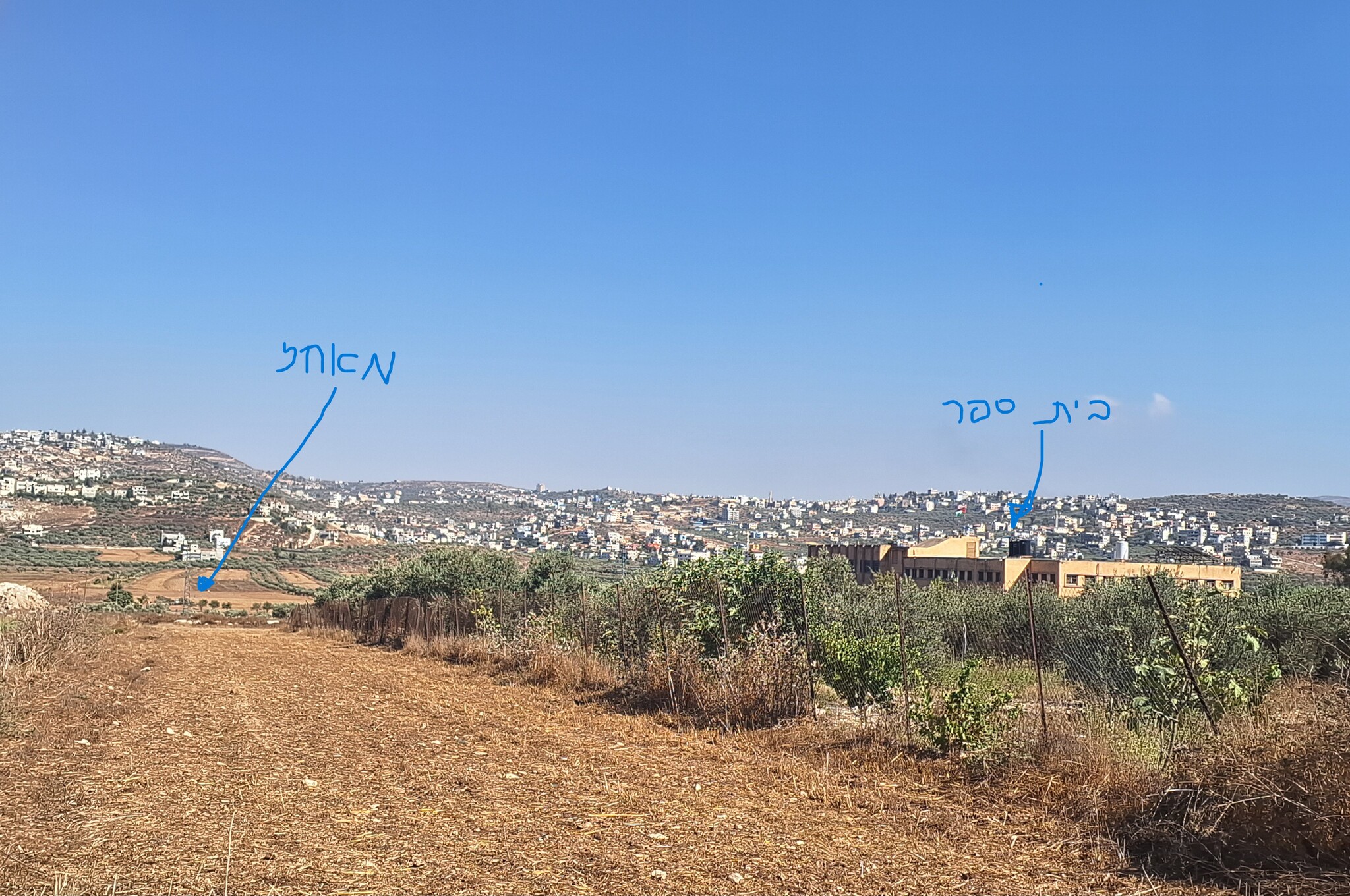 Ronit Dahan-RamatiAug-24-2026Huwara: The school on the outskirts of town and an outpost hidden among the trees
-
Za'tara (Tapuah)
See all reports for this place-
Za'tara (Tapuah) Za'tara is an internal checkpoint in the heart of the West Bank, at the intersection of Road 60 and Road 505 (Trans-Samaria), east of the Tapuah settlement. This checkpoint is the "border" marked by the IDF between the north and south of the West Bank, in accordance with the policy of separation between the two parts of the West Bank that has been in place since December 2005. At the Za'tara checkpoint, there are separate routes for Israelis and Palestinians. In the route for Israelis, there are no inspections and the route for Palestinians inspects. The queue lengthens and shortens suits. The checkpoint is open 24 hours a day. The checkpoint is partially staffed and the people who pass through it are checked at random.
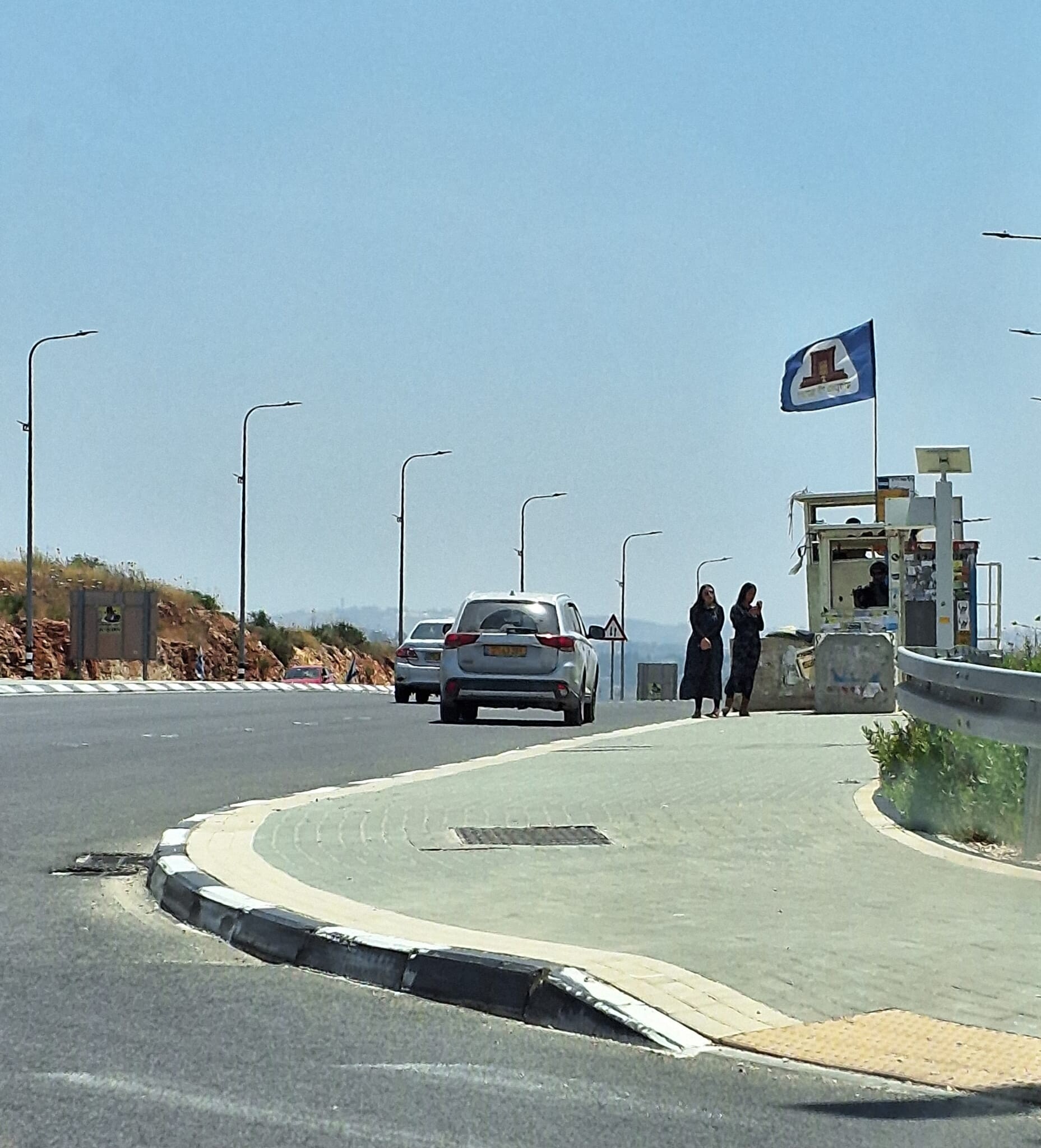 Ronit Dahan-RamatiJun-9-2026Za'atara (Tapuach Junction). The Temple Flag Above a Station
-
