
Beit Furik, Huwwara, Za’tara (Tapuah), Tue 27.11.07, Morning
Translation: Hanna K.
It needs to be stressed in advance – the tour in which Edna participated is not a standard one. We did indeed visits CPs but the main part of the shift took place between them, with conversations with locals in the parking lots, in the café, in the village etc.
At Huwwara we met two women and their children, they told us that their husbands are Jordanians and without rights, and moreover there is a real problem at the moment – one of the children is hard of hearing and is not treated properly (although she paid 400 IS which most be an enormous sum for her).Edna took all the possible details and promised to try and assist with the help of Doctors for Human Rights.
Somewhere else we talked (mainly Edna, of course, with her fluent Arabic) with a group of men. A kind of small talk – they told us that the quiet at the CPs today is a result of the Anapolis conference in the background. They personally are of the opinion that it is necessary to compromise – they won't get more than the 67 frontiers, so one has to "go ahead with this".
At the beginning of the day at Za'tara (Tapuach) there was a long and slow queue from the south. A taxi driver and his passengers are detained and their papers taken.
Each bus that arrives is stopped and its passengers are made to alight for control. It turned out that the taxi was stopped as a "punishment" because the driver didn't obey the instructions of the CP commander and tried to outsmart him. After a short clarification talk the CP commander agreed to return the papers to the passengers "but not to the driver, they are not guilty, let them go". In the meantime a commander with the rank of lieutenant colonel arrived, after a few smooth words Edna succeeded to convince him that a punishment was not in place and an order was issued to release the driver (in the meantime he also ordered to speed the passage up, and indeed the long queue that was when we arrived miraculously became short). We then continued to talk with him a quite futile conversation – one shouldn't punish but it is also impossible to let them creat havoc. If a driver bypasses the queue this harms the Palestinians. To all our words, to the effect that it's not Zahal's business to deal with the education of the Palestinians but to see to the safety and security of the state of Israel
the reply always was "yes, but one cannot allow…"
At Huwwara village we chanced upon a border police jeep. They stopped some van and demanded that he remove his license plate.
We left after the lad expressed his full belief that the event would end without violence.
At Burin there is not CP in any direction.
At Huwwara – all is quiet, very quiet. A coffee stand and a beigel stand are active without disturbance.
At the CP the soldiers are calm and only few people coming and going. A young lad sits without handcuffs in the detention cell. (when we returned after some time he wasn't there any more).
Beit Furik – the soldiers are really bored, we held a long conversation with them near the booth (no white line was mention today!) they are very militant, are sure that here they defend the country but that one has to treat people fairly (except one military policewoman who was prepared to hit each one of us and every living Palestinian).
All in all an interesting shift. The CPs are quiet and without special events, a fact which enabled us "by means of" Edna to get to know today a little the people whom we always only see passing at the CPs.
Beit Furik checkpoint
See all reports for this place-
One of the three internal checkpoints that closed on the city of Nablus - Beit Furik to the east, Hawara to the south, Beit Iba to the west. The checkpoint is located at the junction of Roads 557 (an apartheid road that was forbidden for Palestinians), leading to the Itamar and Alon Morea settlements and Road 5487. The checkpoint was established in 2001 for pedestrians and vehicles; The opening hours were short and the transition was slow and very problematic.Allegedly, the checkpoint is intended to monitor the movement to and from Nablus of the residents of Beit Furik and Beit Dajan, being the only opening outside their villages. Since May 2009 the checkpoint is open 24 hours a day, the military presence is limited, vehicles can pass through it without inspections, except for random inspections. (Updated April 2010)
-
Huwwara
See all reports for this place-
The Huwwara checkpoint is an internal checkpoint south of the city of Nablus, at the intersection of Roads 60 and 5077 (between the settlements of Bracha and Itamar). This checkpoint was one of the four permanent checkpoints that closed on Nablus (Beit Furik and Awarta checkpoints to the east and the Beit Iba checkpoint to the west). It was a pedestrian-only barrier. As MachsomWatch volunteers, we watched therre since 2001 two shifts a day - morning and noon, the thousands of Palestinians leaving Nablus and waiting for hours in queues to reach anywhere else in the West Bank, from the other side of the checkpoint the destination could only be reached by public transport. In early June 2009, as part of the easing of Palestinian traffic in the West Bank, the checkpoint was opened to vehicular traffic. The passage was free, with occasional military presence in the guard tower. Also, there were vehicle inspections from time to time. Since the massacre on 7.10.2023, the checkpoint has been closed to Palestinians.
On February 26, 2023, about 400 settlers attacked the town's residents for 5 hours and set fire to property, such as houses and cars. Disturbances occurred in response to a shooting of two Jewish residents of Har Bracha by a Palestinian Terrorist. The soldiers stationed in the town did not prevent the arson and rescued Palestinian families from their homes only after they were set on fire. No one was punished and Finance Minister Smotrich stated that "the State of Israel should wipe out Hawara." Left and center organizations organized solidarity demonstrations and support actions for the residents of Hawara.Hawara continued to be in the headlines in all the months that followed: more pogroms by the settlers, attacks by Palestinians and a massive presence of the army in the town. It amounted to a de facto curfew of commerce and life in the center of the city. On October 5, 2023, MK Zvi established a Sukkah in the center of Hawara and hundreds of settlers backed the army blocked the main road and held prayers in the heart of the town all night and the next day. On Saturday, October 7, 23 The "Swords of Iron" war began with an attack by Hamas on settlements surrounding Gaza in the face of a poor presence of the IDF. Much criticism has been made of the withdrawal of military forces from the area surrounding Gaza and their placement in the West Bank, and in the Hawara and Samaria region in particular, as a shield for the settlers who were taking over and rioting.
On November 12, 2023, the first section of the Hawara bypass road intended for Israeli traffic only was opened. In this way, the settlers can bypass the road that goes through the center of Hawara, which is the main artery for traffic from the Nablus area to Ramallah and the south of the West Bank. For the construction of the road, the Civil Administration expropriated 406 dunams of private land belonging to Palestinians from the nearby villages. The settlers are not satisfied with this at the moment, and demand to also travel through Hawara itself in order to demonstrate presence and control.(updated November 2023)
.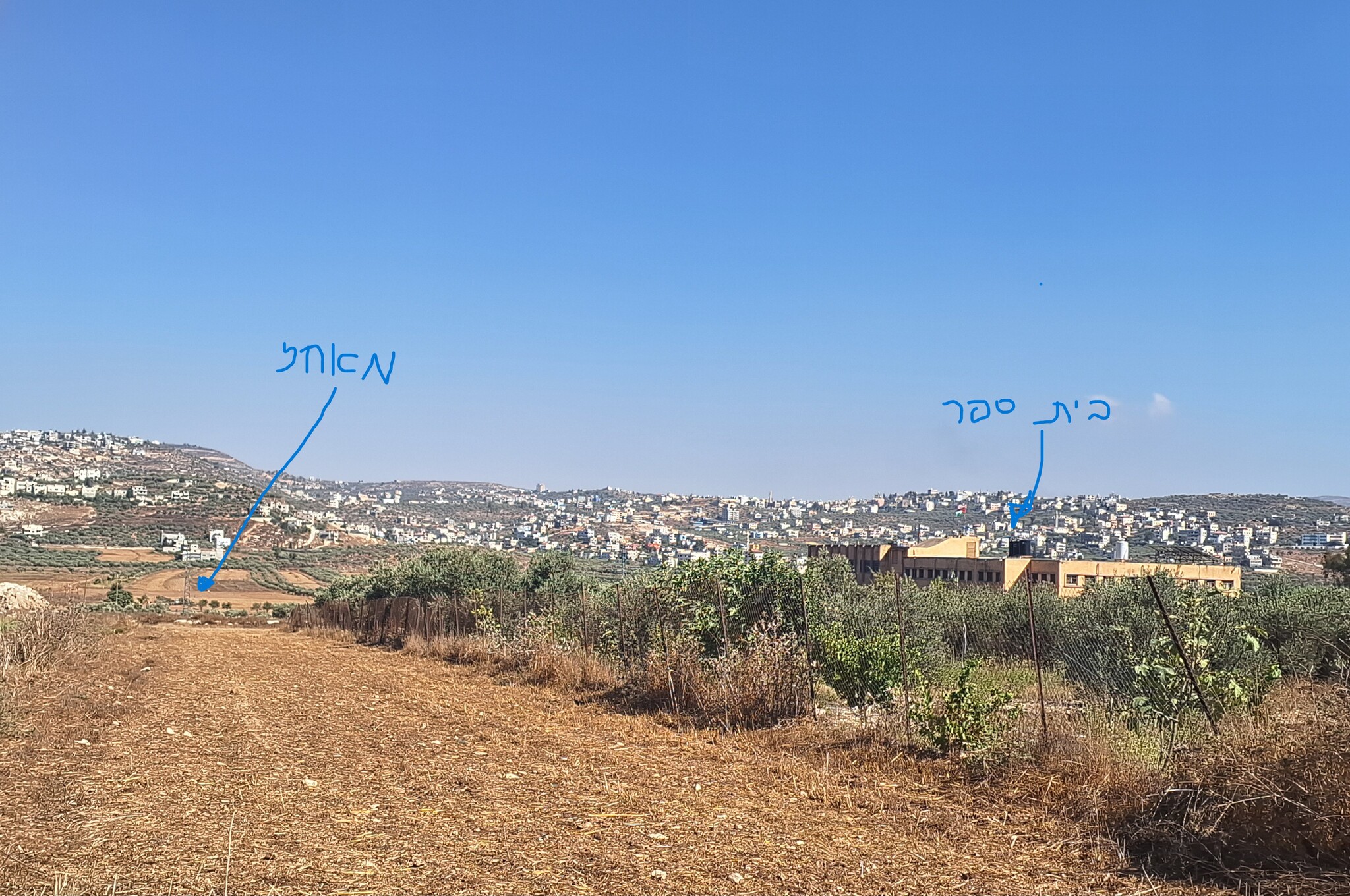 Ronit Dahan-RamatiAug-24-2026Huwara: The school on the outskirts of town and an outpost hidden among the trees
-
Za'tara (Tapuah)
See all reports for this place-
Za'tara (Tapuah) Za'tara is an internal checkpoint in the heart of the West Bank, at the intersection of Road 60 and Road 505 (Trans-Samaria), east of the Tapuah settlement. This checkpoint is the "border" marked by the IDF between the north and south of the West Bank, in accordance with the policy of separation between the two parts of the West Bank that has been in place since December 2005. At the Za'tara checkpoint, there are separate routes for Israelis and Palestinians. In the route for Israelis, there are no inspections and the route for Palestinians inspects. The queue lengthens and shortens suits. The checkpoint is open 24 hours a day. The checkpoint is partially staffed and the people who pass through it are checked at random.
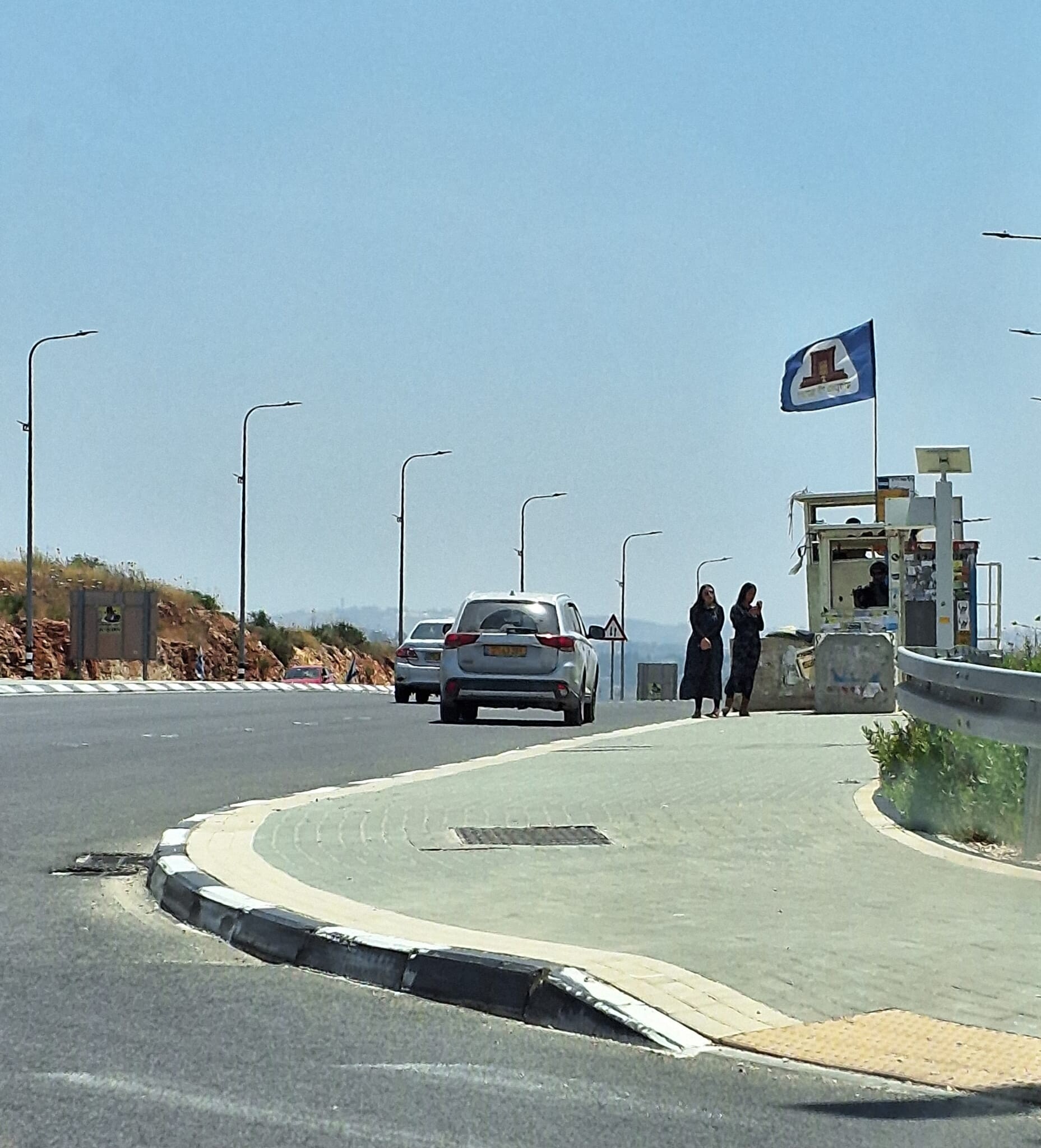 Ronit Dahan-RamatiJun-9-2026Za'atara (Tapuach Junction). The Temple Flag Above a Station
-
