
Beit Iba
Beit Iba, Thurs. PM, 21.7.05Observers: Roni K., Birya L., Dana S. (reporting)Summary: We arrived at Beit Iba after a stay at Tapuah and after we dropped off our colleagues in Huwwara. In retrospect, the checkpoint on the road at the entrance to the settlement of Yizhar, which stopped for a number of hours the movement of dozens of vehicles, was the most difficult part of the shift.15:45 – At the J’at Junction it was empty, there was no checkpoint. We called the women at Huwwara, but also they did not manage to contact the DCO. We tried to catch Shick, the Second Brigade Commander for Nablus, where the secretary, L., answered and promised to take care of it. 15:55 we arrived at Beit Iba, but there was no representative of the DCO and no detainees. A., the commander, introduced himself and tried to clear up what was going on; he made contact with the unit (meanwhile, Ayelet sent a representative of the DCO to Yizhar). The checkpoint was relatively empty with smooth traffic.16:20 – The traffic of those entering became heavier, the soldier standing there was quiet and tried to be polite, but he also checked every bag and parcel, so long lines were formed compared with the light traffic of those going out.16:25 – Another soldier was added which helped with the inspection of those entering. Two soldiers, not at all rude.16:35 – The checkpoint was pretty empty, one detainee. At the junction, vehicles on the road from the direction of Cochin, almost no movement. The detainee was from Balata and wanted to visit his sister in Tulkarm. He said that every time that he passes, he is detained. The soldier gave him a cup of water.16:50 – The line of vehicles entering is very long, the organization is very slow and there seems to be a delay for some reason. A woman approaches from a car going out and tells us that they have been standing for an hour in the terrible heat – there are children in the minibus and it is very difficult. We ask the soldiers to check. There are 5 soldiers assigned to inspection of vehicles, but the whole thing seems quite stuck. There is no representative from the DCO around or on the telephone. A. is informed about the woman’s story.17:10 – We start to move in order to collect our colleagues at Huwwara.17:20 – AT the exit from Beit Iba there is a flying checkpoint. About 4 cars.17:35 – On our return from the Yizhar junction, we again count about 10 cars entering (west-east) and, from the other side, another dozen cars. More than previously! They tell us that they have already been waiting for an hour and a half and nothing is happening. Again we call the assistant Brigade Commander, try to make contact with the IDF spokesman and Hannah Barag. The reason for the checkpoint, they tell us, is a specific alert.
Beit Iba
See all reports for this place-
A perimeter checkpoint west of the city of Nablus. Operated from 2001 to 2009 as one of the four permanent checkpoints closing on Nablus: Beit Furik and Awarta to the east and Hawara to the south. A pedestrian-only checkpoint, where MachsomWatch volunteers were present daily for several hours in the morning and afternoon to document the thousands of Palestinians waiting for hours in long queues with no shelter in the heat or rain, to leave the district city for anywhere else in the West Bank. From March 2009, as part of the easing of the Palestinian movement in the West Bank, it was abolished, without a trace, and without any adverse change in the security situation.
 Jun-4-2014Beit-Iba checkpoint 22.04.04
-
Huwwara
See all reports for this place-
The Huwwara checkpoint is an internal checkpoint south of the city of Nablus, at the intersection of Roads 60 and 5077 (between the settlements of Bracha and Itamar). This checkpoint was one of the four permanent checkpoints that closed on Nablus (Beit Furik and Awarta checkpoints to the east and the Beit Iba checkpoint to the west). It was a pedestrian-only barrier. As MachsomWatch volunteers, we watched therre since 2001 two shifts a day - morning and noon, the thousands of Palestinians leaving Nablus and waiting for hours in queues to reach anywhere else in the West Bank, from the other side of the checkpoint the destination could only be reached by public transport. In early June 2009, as part of the easing of Palestinian traffic in the West Bank, the checkpoint was opened to vehicular traffic. The passage was free, with occasional military presence in the guard tower. Also, there were vehicle inspections from time to time. Since the massacre on 7.10.2023, the checkpoint has been closed to Palestinians.
On February 26, 2023, about 400 settlers attacked the town's residents for 5 hours and set fire to property, such as houses and cars. Disturbances occurred in response to a shooting of two Jewish residents of Har Bracha by a Palestinian Terrorist. The soldiers stationed in the town did not prevent the arson and rescued Palestinian families from their homes only after they were set on fire. No one was punished and Finance Minister Smotrich stated that "the State of Israel should wipe out Hawara." Left and center organizations organized solidarity demonstrations and support actions for the residents of Hawara.Hawara continued to be in the headlines in all the months that followed: more pogroms by the settlers, attacks by Palestinians and a massive presence of the army in the town. It amounted to a de facto curfew of commerce and life in the center of the city. On October 5, 2023, MK Zvi established a Sukkah in the center of Hawara and hundreds of settlers backed the army blocked the main road and held prayers in the heart of the town all night and the next day. On Saturday, October 7, 23 The "Swords of Iron" war began with an attack by Hamas on settlements surrounding Gaza in the face of a poor presence of the IDF. Much criticism has been made of the withdrawal of military forces from the area surrounding Gaza and their placement in the West Bank, and in the Hawara and Samaria region in particular, as a shield for the settlers who were taking over and rioting.
On November 12, 2023, the first section of the Hawara bypass road intended for Israeli traffic only was opened. In this way, the settlers can bypass the road that goes through the center of Hawara, which is the main artery for traffic from the Nablus area to Ramallah and the south of the West Bank. For the construction of the road, the Civil Administration expropriated 406 dunams of private land belonging to Palestinians from the nearby villages. The settlers are not satisfied with this at the moment, and demand to also travel through Hawara itself in order to demonstrate presence and control.(updated November 2023)
.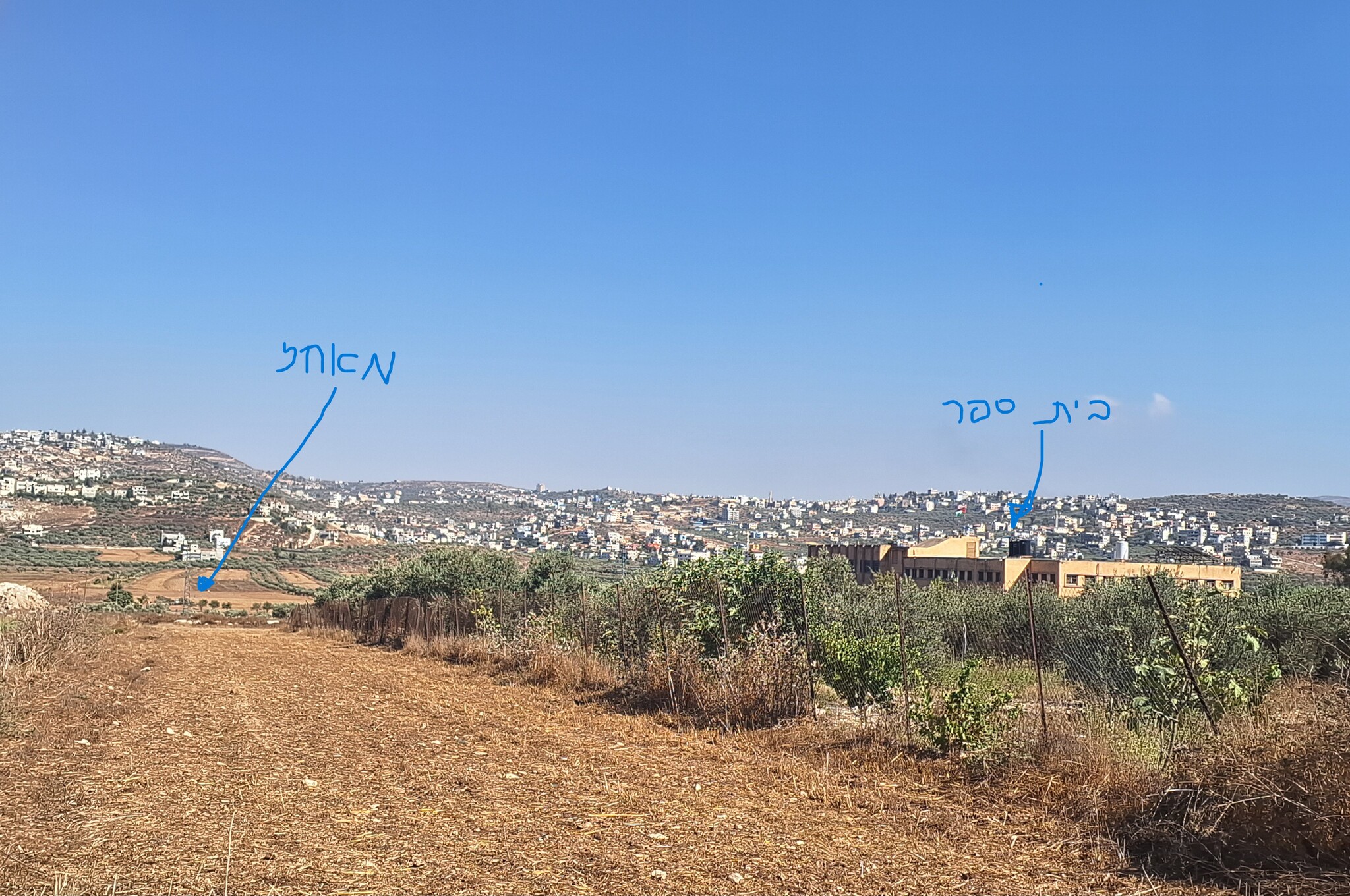 Ronit Dahan-RamatiAug-24-2026Huwara: The school on the outskirts of town and an outpost hidden among the trees
-
