
Beit Iba, Anabta
Nablus vicinity 27.9 AMObservers: Herzliya A, Ronny S, Zvia, Edna Beit Iba. 7.45:Heavy traffic of pedestrians and vehicles. Traffic is flowing freely. There is a DCO representative on the spot. About half of the 20 or so detainees are released.Anabta 8.00. The iron gate is closed and locked and on both sides are long lines of buses and taxis. This is the passage from Jenin and Tulkarm to Nablus or Jerusalem and Ramallah. There are no soldiers. Pedestrians pass the gate on foot and mount vehicles which will bring them to the next checkpoint on their way to their destinations.A Palestinian from Sarra approaches us with a request that we come to his village at 6.30 AM and see how long (an hour and a half) it takes the villagers and children on their way to school to exit the village.Beit Iba. 8.30: Traffic is flowing freely and when nobody is left waiting in line we decide to leave for the Jit junction at 9.15. Jit junction. 9.20:A long convoy of vehicles on Road 60. We halt and see the passengers of a bus taken down, made to stand in line while their papers and checked. A father and son (with an anti-pollution face-mask) go through on foot. The boy has to lift his shirt – no, there’s no explosives belt, “just” a scar across his belly (some more superfluous humiliation). A family goes through with two small children and the soldiers let them pass after checking their documents. At the head of the line on Road 60, a pickup truck is detained with containers of oxygen for the hospital in Qalqiliya. At the head of the line coming from Huwwara is an ambulance of the Red Crescent with medical equipment. The soldier says the driver is a terrorist. We telephone the DCO to check and receive a laconic reply: “Security reasons.” We approach Dalia Basa who in her efficient and effective manner arranges for release of the ambulance within 5 minutes and promises that the pickup truck will also be dealt with.While we are standing there, a 4×4 stops on its way to Road 60 and a furious woman settler descends.”Good morning,” I say and she replies: “What’s good about it. Don’t go near the soldiers.” “Am I allowed to worry about sick people?” I ask, and she returned briskly to her car and reports into her mobile phone: “The bitches are here again.”I think to myself: a pity Yom Kippur is over. She could ask for forgiveness….The convoy is released at a faster pace on both sides of the checkpoint.10.15: We leave through Funduk on our way home.
Beit Iba
See all reports for this place-
A perimeter checkpoint west of the city of Nablus. Operated from 2001 to 2009 as one of the four permanent checkpoints closing on Nablus: Beit Furik and Awarta to the east and Hawara to the south. A pedestrian-only checkpoint, where MachsomWatch volunteers were present daily for several hours in the morning and afternoon to document the thousands of Palestinians waiting for hours in long queues with no shelter in the heat or rain, to leave the district city for anywhere else in the West Bank. From March 2009, as part of the easing of the Palestinian movement in the West Bank, it was abolished, without a trace, and without any adverse change in the security situation.
 Jun-4-2014Beit-Iba checkpoint 22.04.04
-
Jerusalem
See all reports for this place-
The places in East Jerusalem which are visited routinely by MachsomWatch women are Silwan and Sheikh Jarrah. During the month of Ramadan, also the Old City and its environs are monitored.
-
Jit Junction
See all reports for this place-
The checkpoint is located on Route 60 near at the junction with Route 55, near the village of Jit. There was a checkpoint for vehicles passing between the north and south of the West Bank, which was abolished towards 2010. Since then, surprise checkpoints have been set up there from time to time with a police or Border Police vehicle, and vehicles and their passengers are inspected.
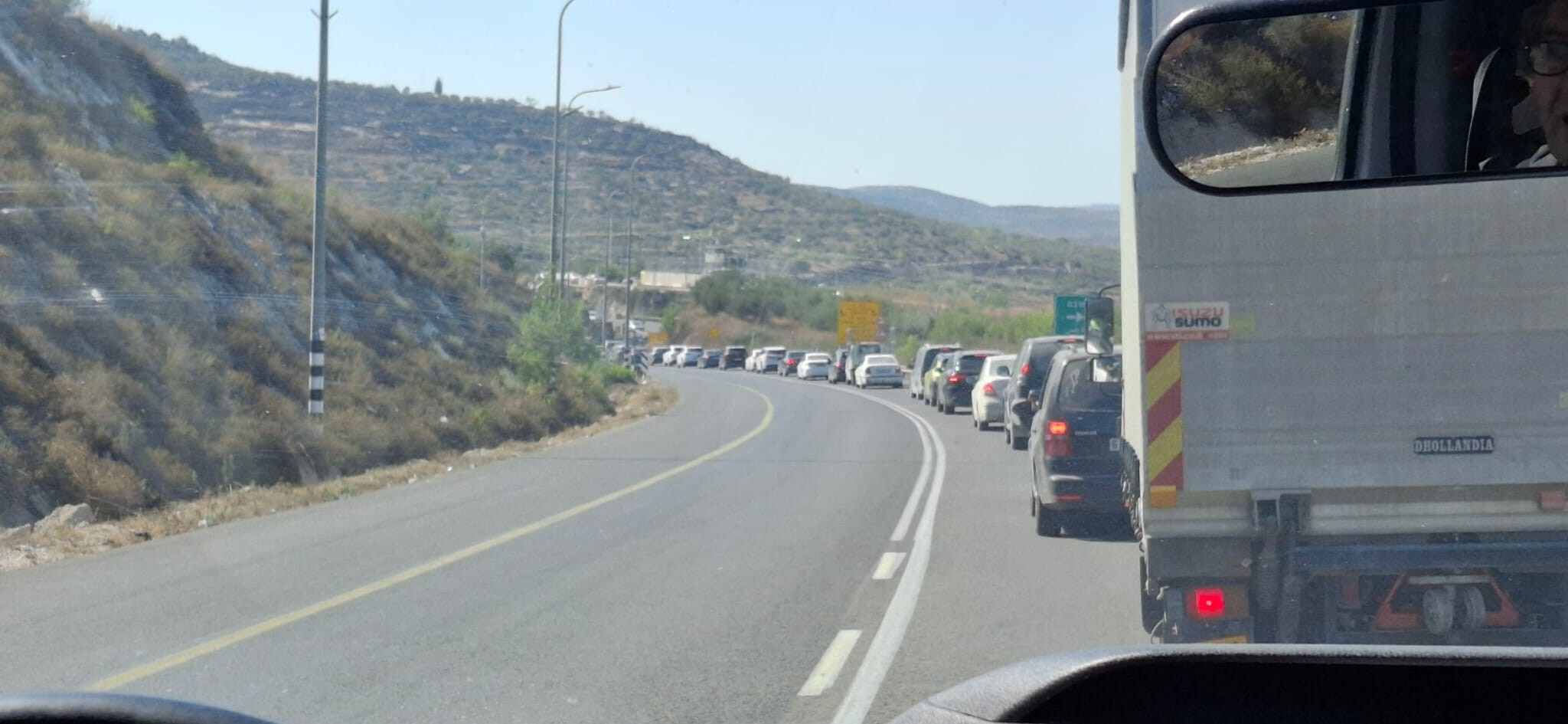 Anat PolakJul-17-2025Yitzhar Road, Jit Junction: traffic jam
-
Sarra
See all reports for this place-
Sarra
The checkpoint is installed between the Palestinian village of Sera and the district city of Nablus,
Since 2011, internal barriers Located among the West Bank Israeli settlements have somehow allowed, Palestinian residents to travel and move and reach various Palestinian cities.
After the terrible massacre by the Hammas on October 7 upon Israelis in the communities around Gaza, internal checkpoints manned by the army were installed to prevent free passage for Palestinians.
Many restrictions were imposed on the Palestinians in the West Bank. The prevention of movement shuttered the possibility of making a living in Israel. The number of Palestinian attacks by Israeli extremist settlelers increased along with the radicalization of the army against the Palestinians.
The conduct at the Sera checkpoint is one of the manifestations of the restrictions on all aspects of the Palestinians' lives.
-