
Burin: The army under the settlers` command expel the Palestinian farmers from their olive grove
Olive picking in Burin – on Simhat Torah
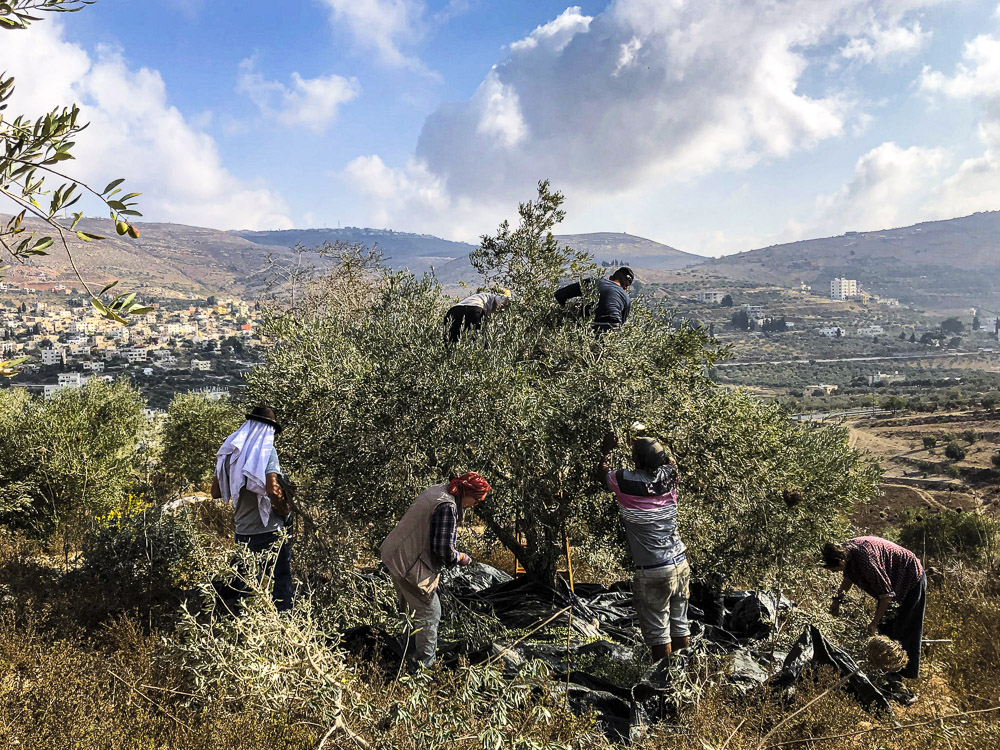
It started out lovely, with eight of us joined by four internationals together with four Palestinian owners of the trees. We worked well, managed to fill four or five bags with olives.
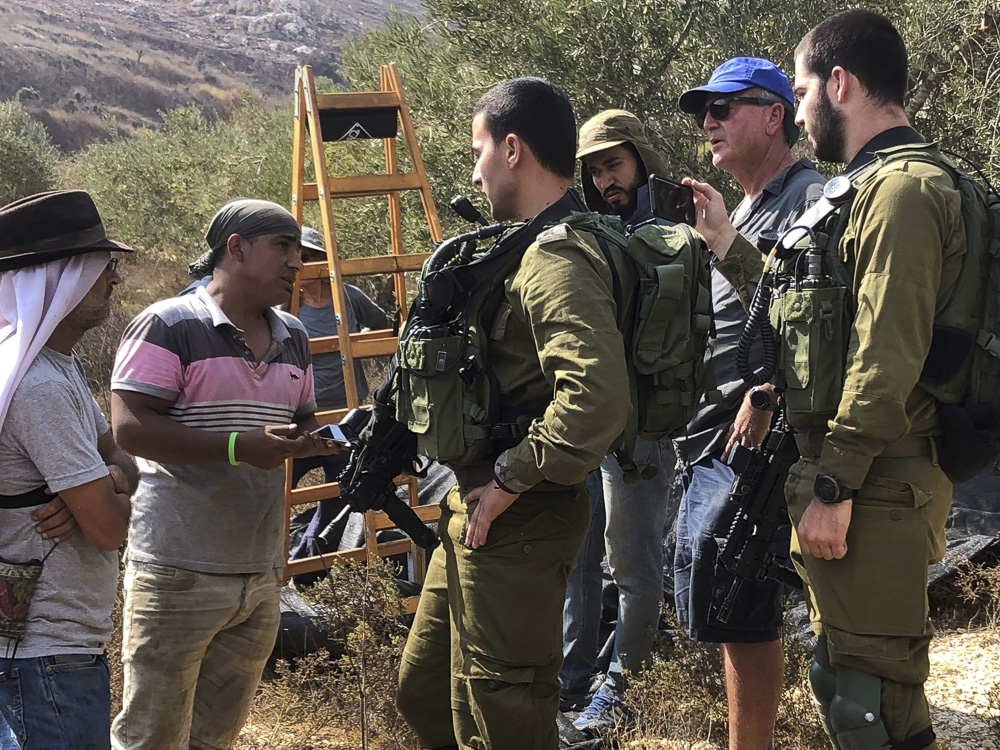
Suddenly, there was talk that the settlers from the outpost near Yitzhar were on their way – yes, those that beat up the Rabbis for Human Rights last week and then went on to attack IDF soldiers – that put Burin and the Yitzhar outpost in the news, if the attack on the rabbis did not. But then the army showed up – and told us it was a closed military area and we must all leave, together with the Palestinian owners of the trees.
Why? To avoid friction….
So to avoid friction with the settlers, it is not the settlers that are kept off the Palestinian land, but the owners of the trees who are prevented from picking their olives at the height of the harvest season. The officer said the Palestinians are allowed to pick only three days a week in the slopes below Yitzhar- (and we were not even that close to Yitzhar, not even visible from there) and today is not one of those permitted days. How will the owners be able to finish the harvest in only three days a week?
That is one reason why volunteers/activists are needed – to do as much picking possible in the limited time – however the owner of the grove was warned by an army officer not to bring more volunteers. But the volunteers/activists come precisely to protect the Palestinian olive harvesters against the settlers – especially when the army does not do so. Make sense of that…
That same Palestinian owner was still shaking from an incident the previous day, when the army put him in a jeep, took him to Yitzhar, and beat him up there, right in front of the settlers, who applauded and cheered on.
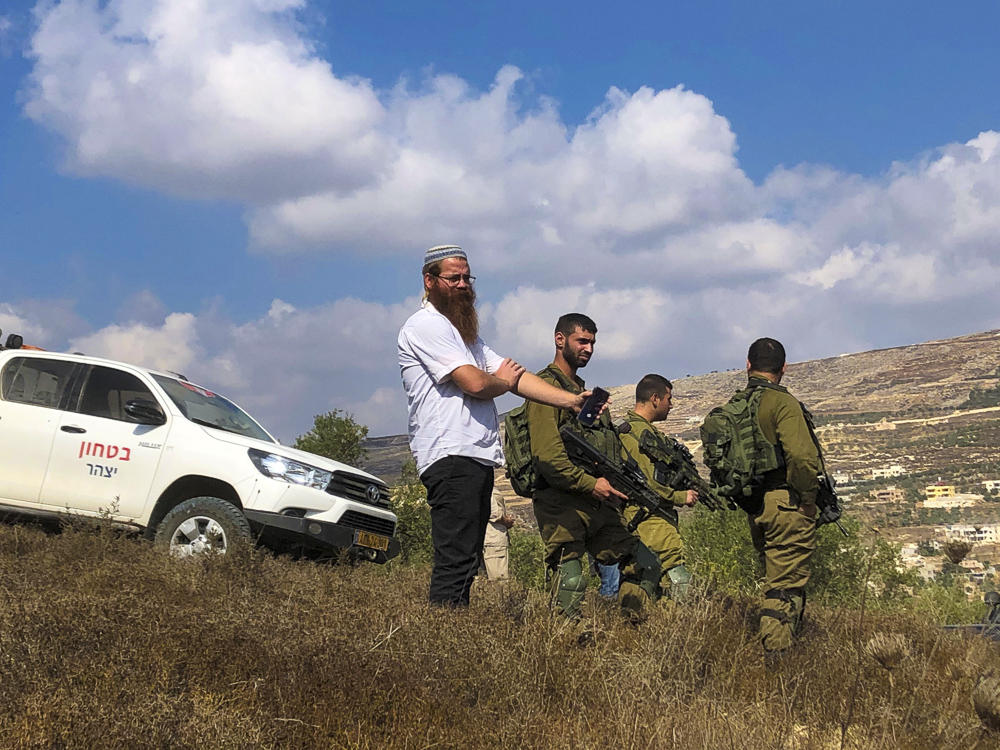
Now the settler security officer (ravshats) from Yitzhar also appears on the scene, going up to each of us to take our photos, as if we are criminals. Trying to intimidate us? If this is a Jewish religious holiday, is he, a man wearing a kipa, allowed to drive around in his patrol car and take photos with his cellphone? In any case, he seems in his element, teaming up with the army to expel us.
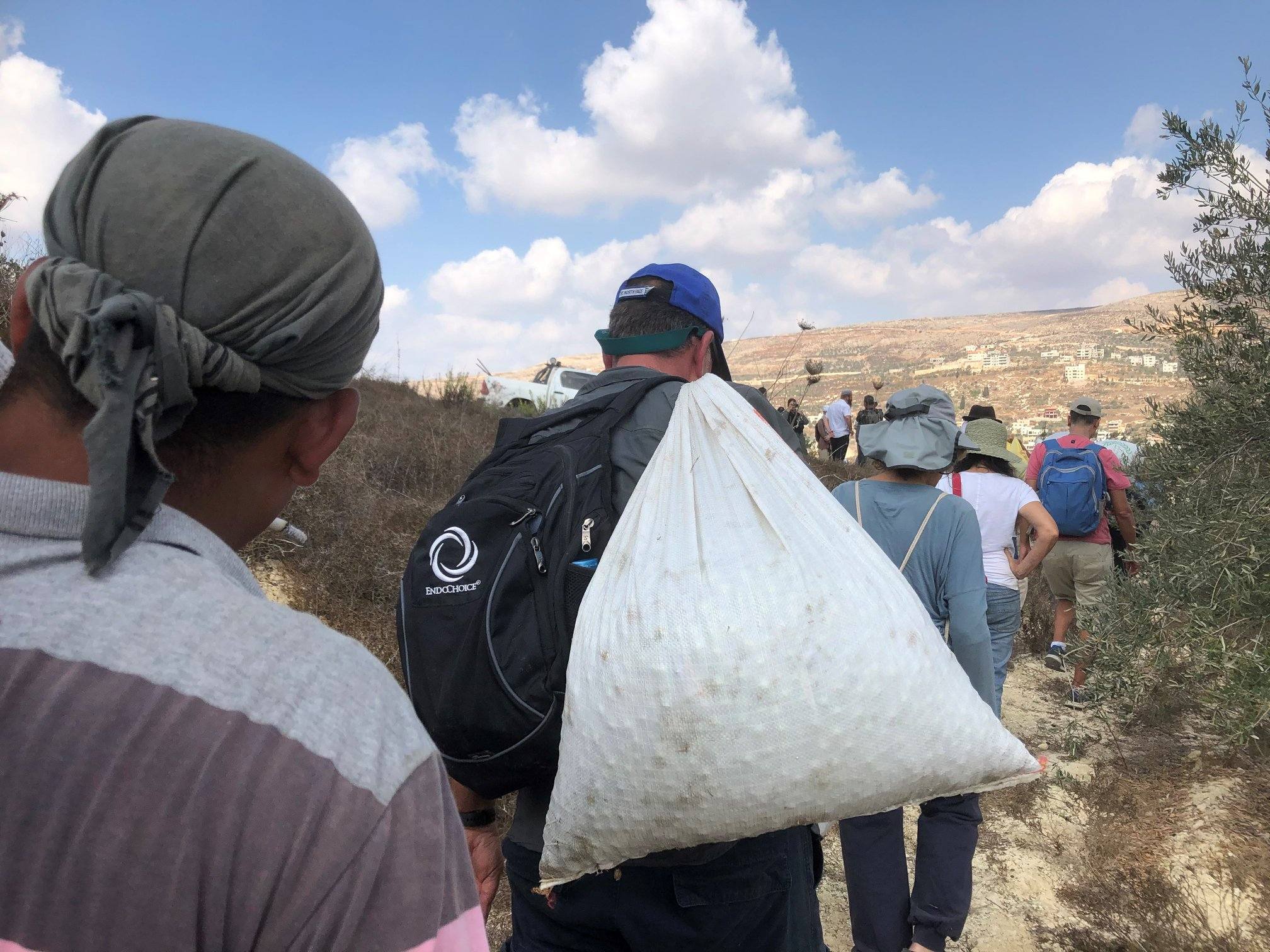
When the closure order came – we had managed to pick some more olives during the time it took – we were at least given time to fill the remaining bags and take all the equipment with us.
Burin (Yitzhar)
See all reports for this place-
Burin (Yitzhar)
This is a Palestinian village in the Nablus governorate, a little south of Nablus, on the main road passing through the West Bank. The settlements: Yitzhar and Har Bracha, settled in locations that surrounded the village, placed fences so it is cut off the main road.
There are around 4000 inhabitants. Most of them are engaged in agriculture and pasture, although many graduates of the two secondary schools continue to study at the university. Academic positions are hardly available, they find work as builderd, or leave for the Gulf countries.
The village lands were appropriated several times for the establishment of Israeli settlements and military bases, and as a result, Burin's land and water resources dwindled. lSince 1982, more than 2,000 dunams of village land have been declared "state land" and then transferred to Har Bracha settlement.
Over the past few years and more so since 2017, the villagers have been terrorized by the residents of Yitzhar and Har Bracha, the Givat Ronen outpost and others. Despite the close proximity of soldiers to an IDF base close to one of the village's schools, residents are suffering from numerous stone-throwing events, vehicle and fire arson, also reported in the press.
In 2023, the prevention of the olive harvest in the village plot was more violent than ever. Soldiers and settlers walked with drawn weapons between the houses of the village and demanded that people stop harvesting in the village itself and in the private plots outside the village. The settlers from Yitzhar and Giv'at Roned raided the olive groves and stole crops. 300 olive trees belonging to the residents of Burin, near Yitzhar, were uprooted. The loss of livelihood from the olives causes long-term economic damage to the farmers' families, bringing them to the point of starvation.
(updated for November 2023)
-
