
Central West Bank: New outpost, Israeli flags on the roadside and settlers' cattle graze among the Palestinians houses
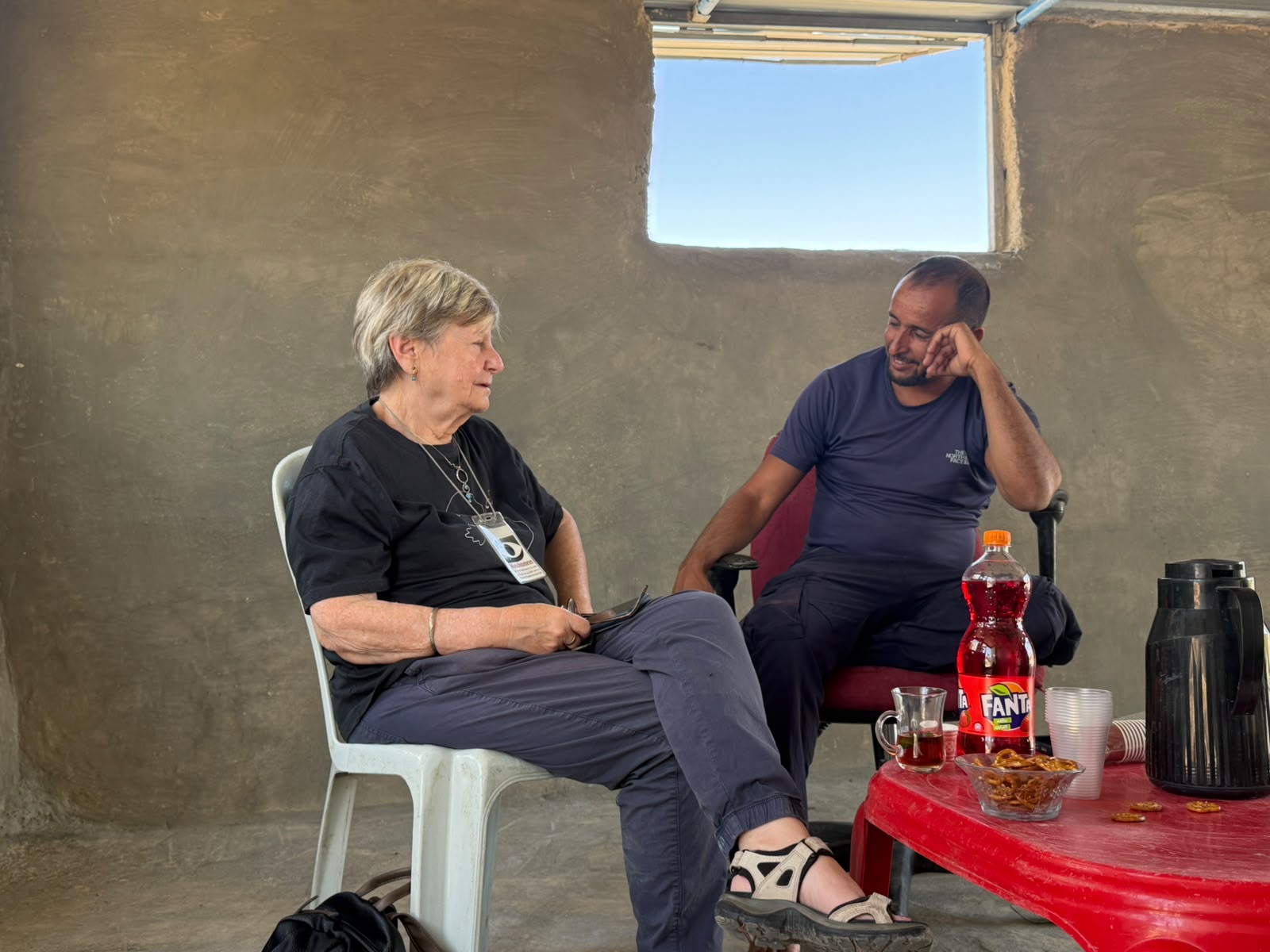
We began our journey with Duma, where we left packages that Fathiya brought for the Bedouins east of the village. We picked up a guy who took us to Khirbet al-Marajim, a small locality south of Duma. We visited the home of N. who is not originally from Duma. His family lives in Talfit (central West Bank) but in 2014 he decided to move and live in Khirbet al-Marajim. There are several families living there, all of N.’s extended family. He lives in the house built by his great-grandfather in 1860. Some of the families have lived there continuously ever since.
N. renovated the old house a bit and moved to live there. They are not allowed real renovations and construction, so the house is partly covered with a metal fence and cloth pieces, not sealed against the rain and the wind.
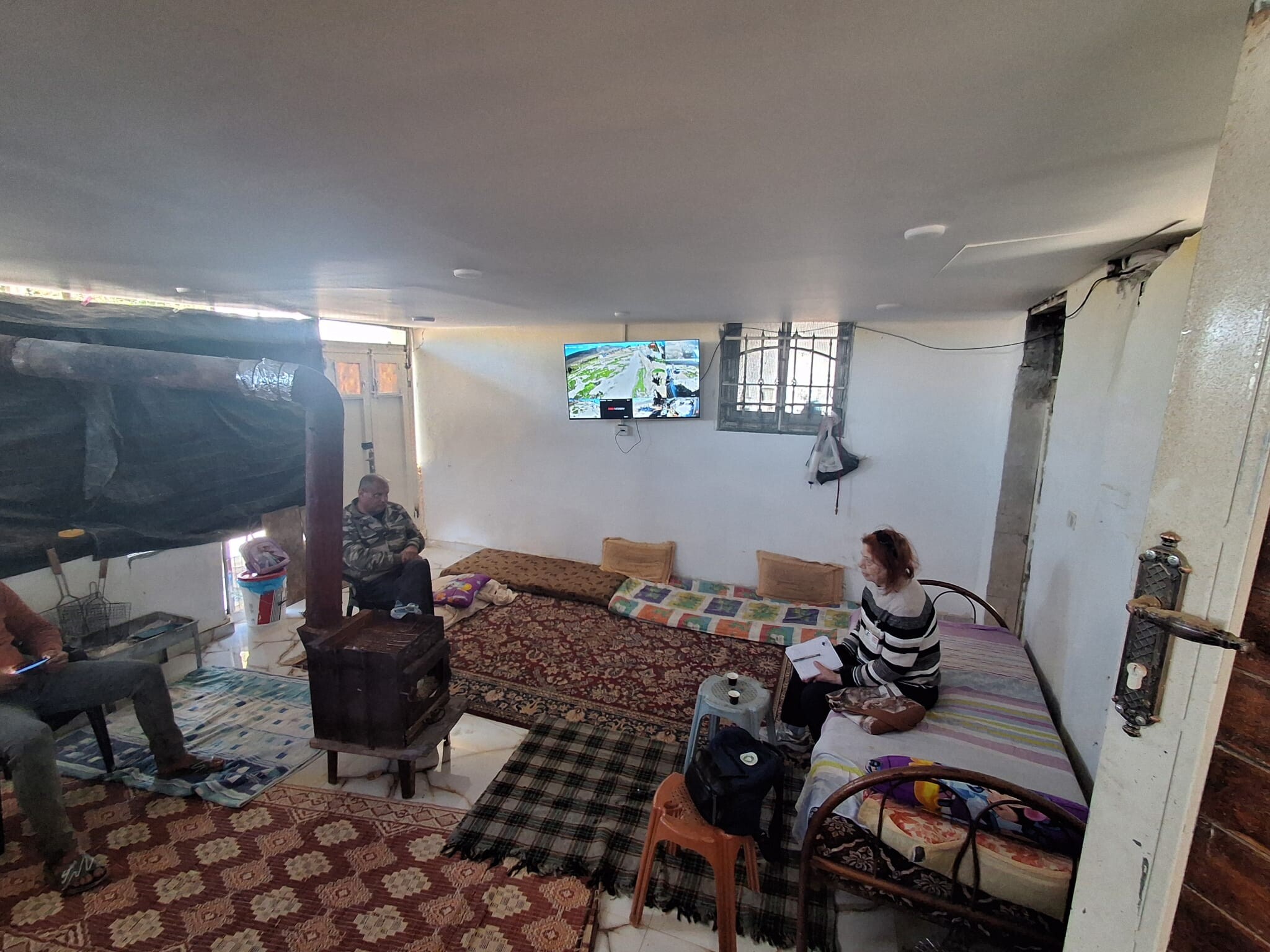
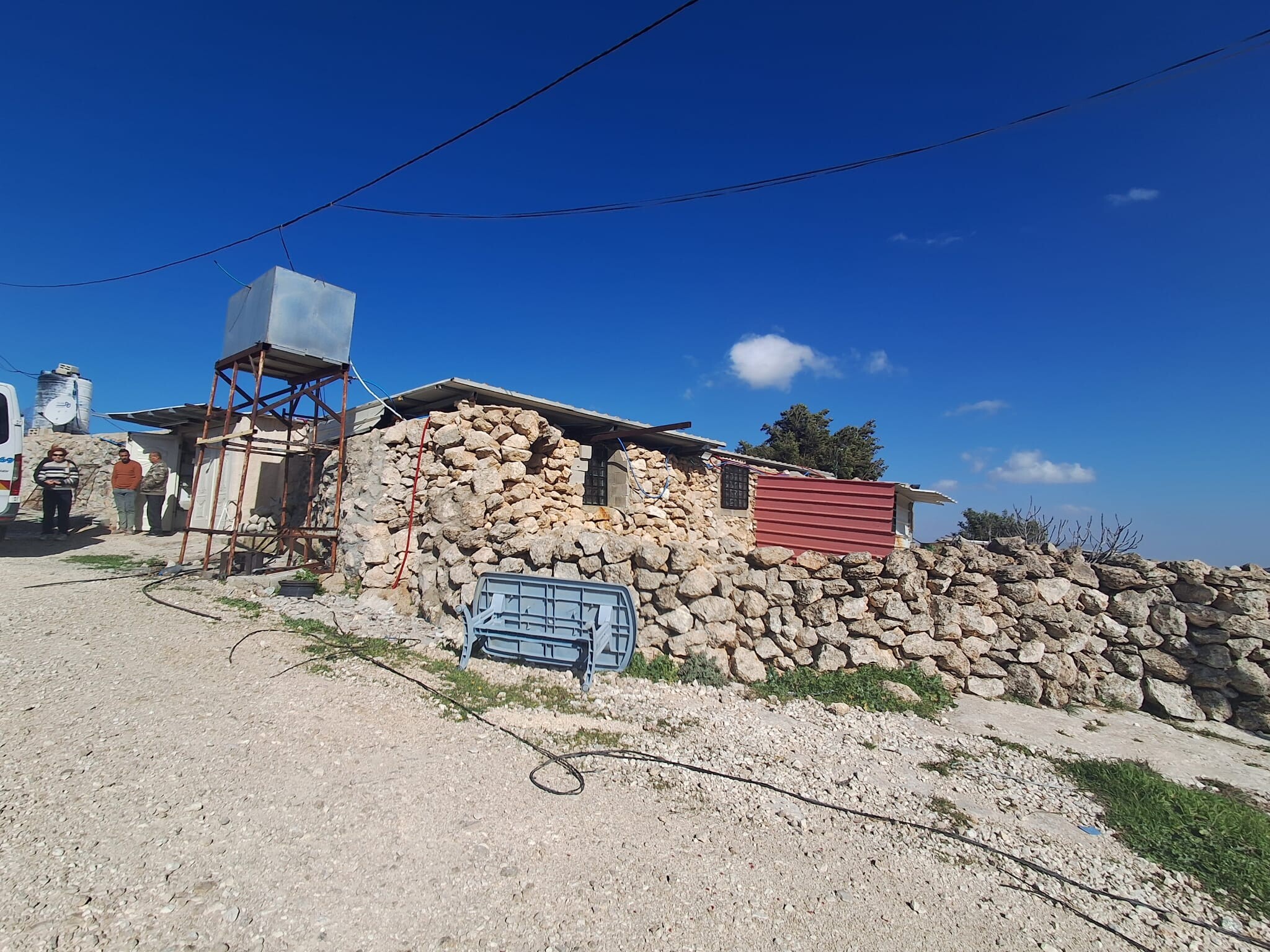
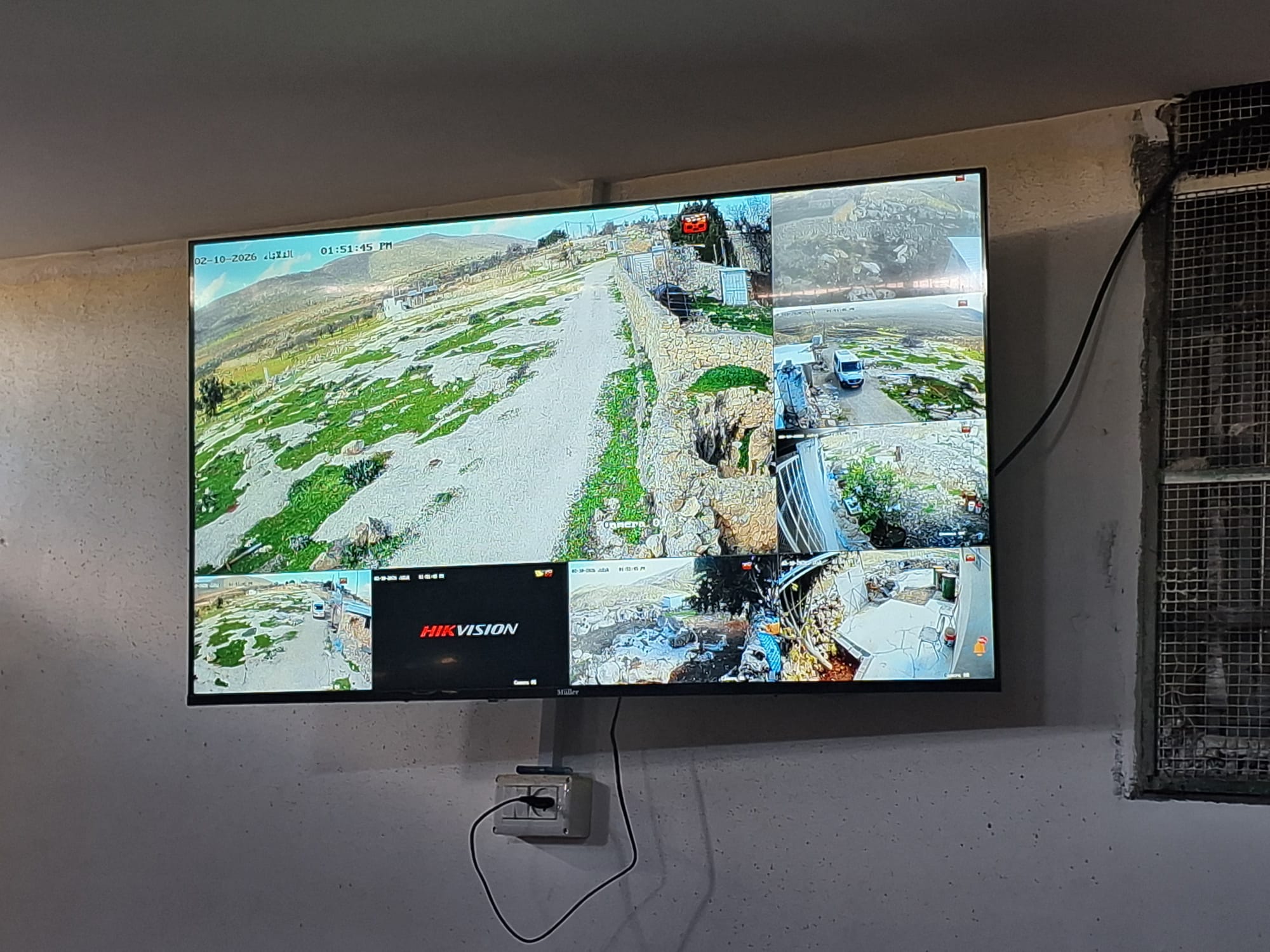
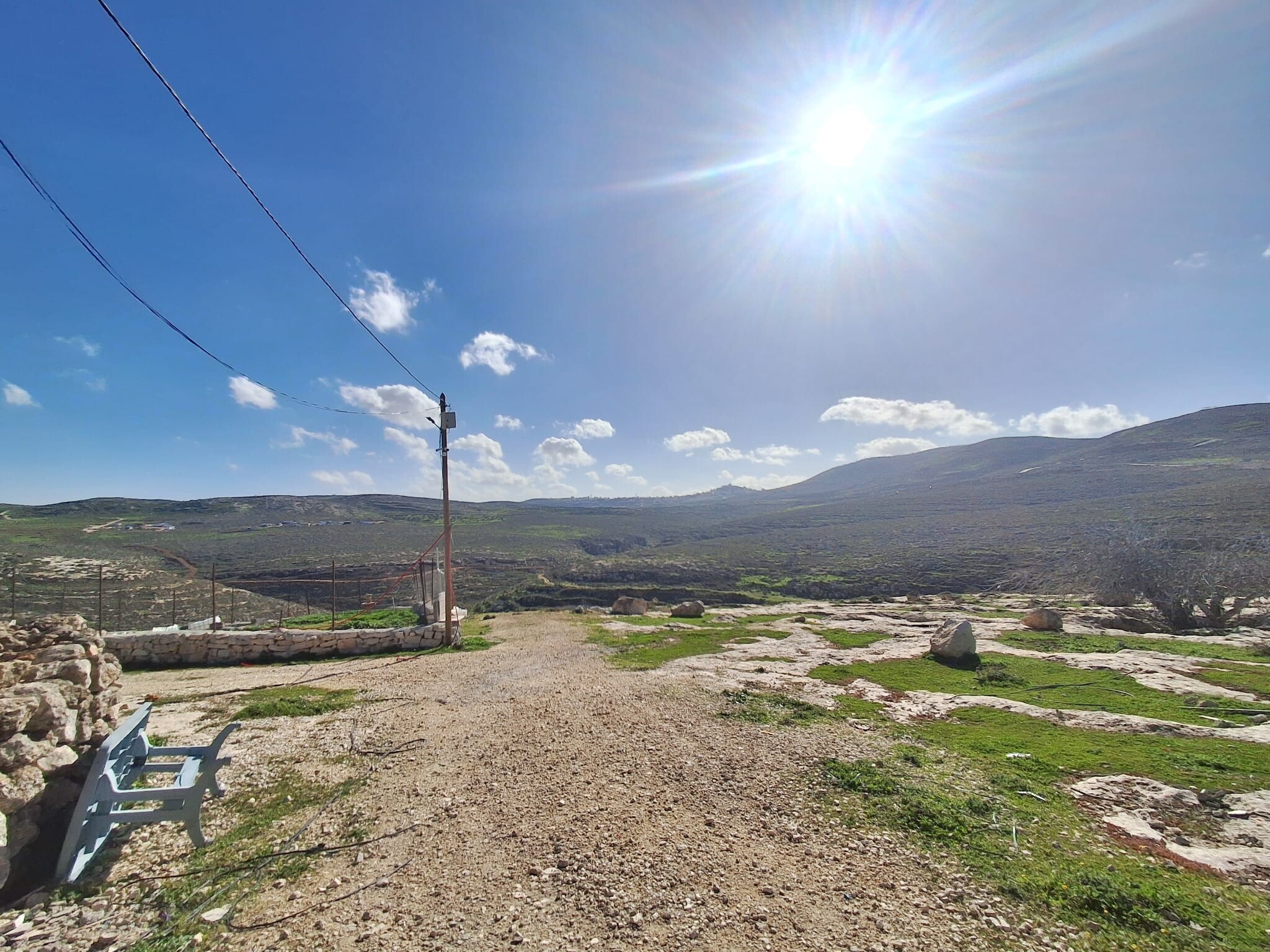
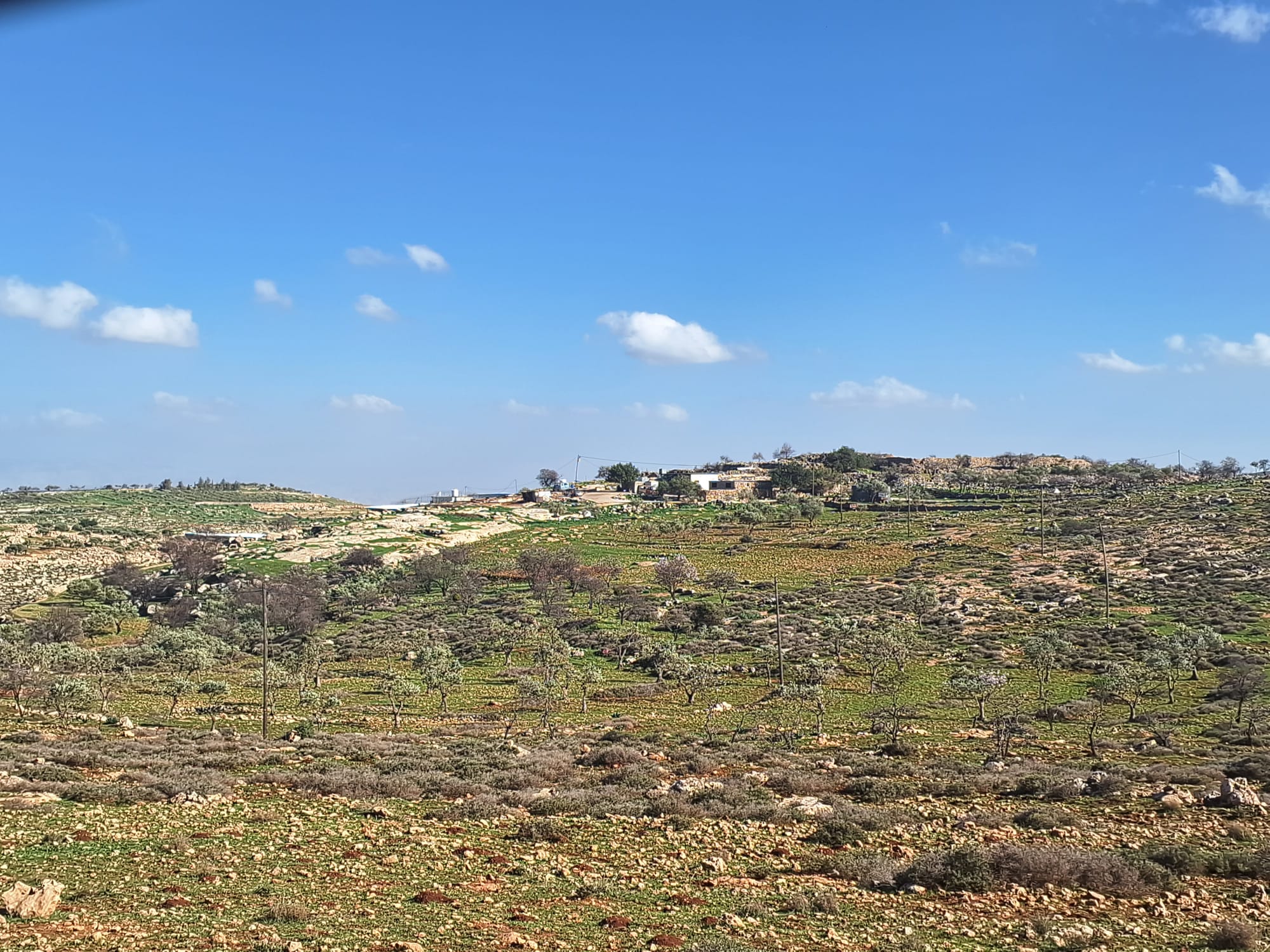
N. placed security cameras around the house due to the frequent harassment of the settlers from the nearby outpost “Mal’achei HaShalom” as well as a new added outpost erected not long ago north of them, near the track leading to their locality from Duma. He says the settlers often arrive with their cattle flocks, graze among the houses and prevent the family members from grazing their own sheep. The settlers arrive riding horses and ATVs and settle down in the area.
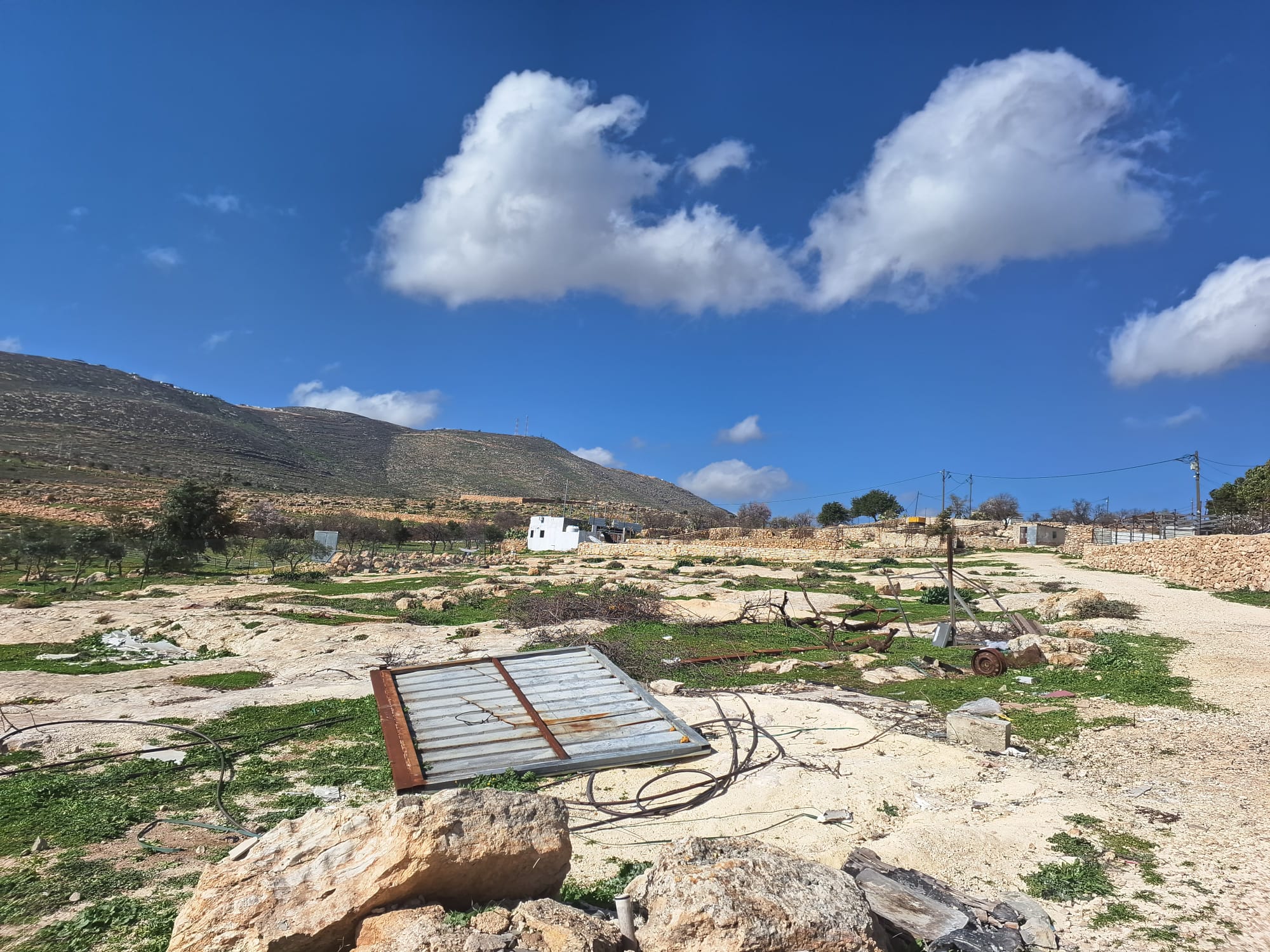
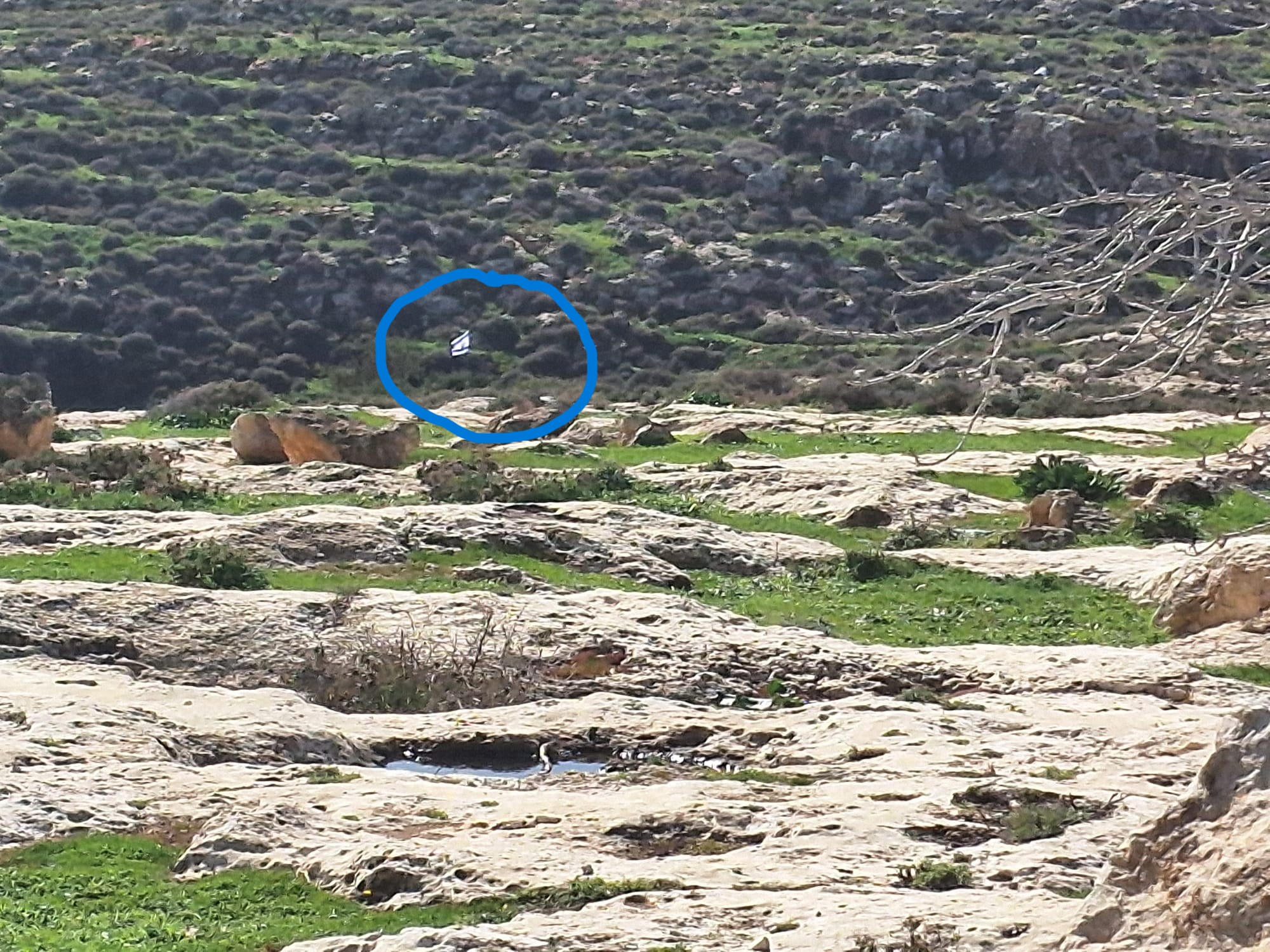
Across the wadi to the west, settlers placed an Israel flag and they now prevent Palestinians from accessing their own land there. The relatively old outpost Mal’achei HaShalom (Peace Angels in Hebrew, better yet Harassment Angels…) is situated on the range to their south, and west of it is Mughayyir, a locality that has experienced many settlers attacks and harassment.
Driving to Khirbet al Marajim we saw the new outpost and the cattle clock right next to it. On our way back, the settlers cattle were grazing beyond Road 458, in an area most likely belonging to Palestinians…
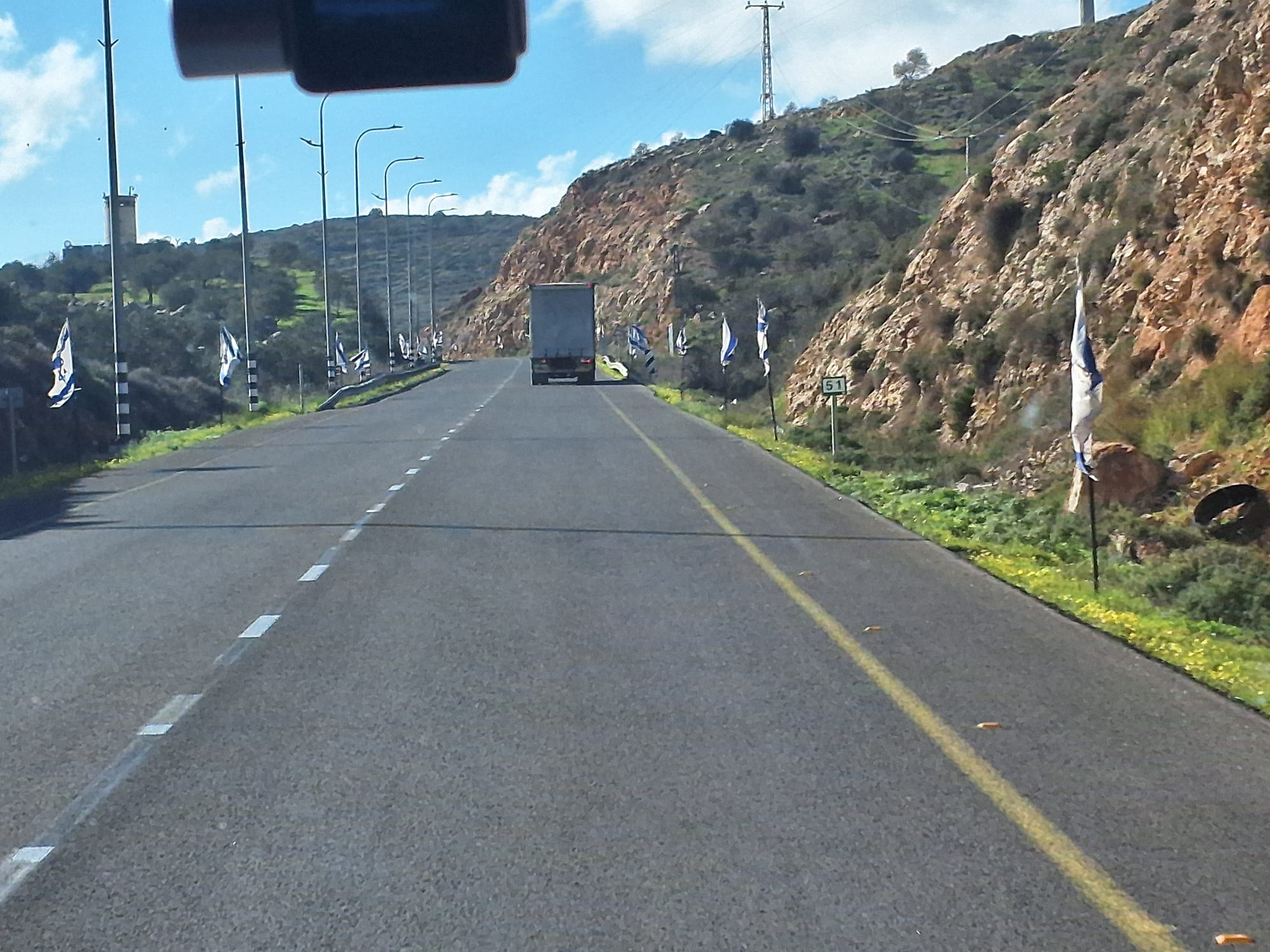
On all central roadsides the Israeli flags hang again, on both sides of the road. We drove through Huwara on Road 555. Near the old Huwara Checkpoint and the Regional Command HQ there were no soldiers at all. The checkpoint placed on the way from Awarta to Nablus was also unmanned, as well as the Beit Furik Checkpoint on the way from Beit Furik to Nablus. Thus, too, on our way back at the Sara Checkpoint and army posts inside Al Funduk as well as the Hajja Junction.
On our way we stopped to visit our friend Doha in Burin. She told us that on Sunday, February 8th in the evening, while alone in the kitchen she heard sounds from the living room and entering it, was shocked to discover 3 soldiers standing there, their weapons pointed.
She shouted at them, asking how they enter a home without knocking on the door. The soldiers said they did knock. One of them, a Druze called Tayassir, began to interrogate her: Where is your husband? Your children? Whose is that tractor standing in the yard? Doha answered that the tractor belongs to them. The soldiers asked why they keep the tractor at home. She asked why they are so interested, they answered they were looking for a red tractor. The family’s tractor parked in its yard is blue, so why break into a house like this? No answer.
After about half an hour, the soldiers left. 4 more soldiers were waiting for them outside as well as 2 jeeps. After they left, Doha noticed holes in the outer door glass, witnessing that they had knocked on the door with their rifle butts.
Doha also said that about a week earlier soldiers entered the homes of her brothers-in-law in the evening. Her husband’s brother and his son were taken to a deserted house in a village close to Madama and were beaten up, tied and left in the cold. Then they were simply left there.
She says soldiers walk around in Burin streets practically every night, harassing the residents. In daytime they protect the settlers who come down on their ATVs and ride around the village streets.
Location Description
Burin (Yitzhar)
See all reports for this place-
Burin (Yitzhar)
This is a Palestinian village in the Nablus governorate, a little south of Nablus, on the main road passing through the West Bank. The settlements: Yitzhar and Har Bracha, settled in locations that surrounded the village, placed fences so it is cut off the main road.
There are around 4000 inhabitants. Most of them are engaged in agriculture and pasture, although many graduates of the two secondary schools continue to study at the university. Academic positions are hardly available, they find work as builderd, or leave for the Gulf countries.
The village lands were appropriated several times for the establishment of Israeli settlements and military bases, and as a result, Burin's land and water resources dwindled. lSince 1982, more than 2,000 dunams of village land have been declared "state land" and then transferred to Har Bracha settlement.
Over the past few years and more so since 2017, the villagers have been terrorized by the residents of Yitzhar and Har Bracha, the Givat Ronen outpost and others. Despite the close proximity of soldiers to an IDF base close to one of the village's schools, residents are suffering from numerous stone-throwing events, vehicle and fire arson, also reported in the press.
In 2023, the prevention of the olive harvest in the village plot was more violent than ever. Soldiers and settlers walked with drawn weapons between the houses of the village and demanded that people stop harvesting in the village itself and in the private plots outside the village. The settlers from Yitzhar and Giv'at Roned raided the olive groves and stole crops. 300 olive trees belonging to the residents of Burin, near Yitzhar, were uprooted. The loss of livelihood from the olives causes long-term economic damage to the farmers' families, bringing them to the point of starvation.
(updated for November 2023)
-
Duma
See all reports for this place-
Duma
A village in the Nablus governorate, with 3,000 residents. They owned some 18,000 dunams, 500 dunams of which the village itself was built. However, after the settlement of Migdaleim annexed a large part of their land, their area was reduced to only 2,000 dunams.On July 31, 2015, two houses in the town were torched with petrol bombs. Sa'ad and Riham Dawabsha, and their infant, Ali Sa'ad Dawabsha, were burned to death. Another son was seriously injured. "Revenge" and "King Messiah" were spray painted on the walls of the house. The trial of the arsonist, the settler Amiram Ben Uliel, is still underway (2019), and a plea bargain was signed in May 2018 with the minor who participated in the planning of the arson.
The closure imposed by the army, the poor roads that they are forced use due to the lack of paving permits from the Civil Administration, along with the lack of public transportation, all these difficulties cut off the village from nearby Nablus and Ramallah.
-
Khursa / Al Marajem
See all reports for this place-
Khursa / Al Marajam
Khursa is a small village of about 2,500 inhabitants in Area A, on a hill on the way to Negohot settlement. At the end of September 2017, a pillbox watchtower was set up in the heart of the village, adjacent to the village's diwan, which is a sort of community center for celebrations such as weddings, or used as mourning tent. The army declared the place a closed military zone. In 2018, we saw another aggravation: a barrier of about 50 m, which divides the road into two, and a prohibition on passing vehicles, and then also a prohibition on pedestrians, who have to walk around on a dirt road - during winter on a mud road. Since the checkpoint was established, the army has required special permits to hold an event in Diwan and the permits must be requested at least two days in advance. Of course, the dying are not always cooperative ...together with the villagers we wondered what the meaning of this strange barrier in Area A, which is supposed to be under full control of the Palestinian Authority. Conclusion: It seems that in order to secure the way to the Negohot, the residents are forced to live with a closed military zone and a watchtower in the village center, and suffer many restrictions. (From Watch Checkpoint reports).
Recently, the Israeli authorities began, in the middle of the night, to pave a new bypass road from the nearby village Fuqeiqis to Negohot, Trying to establish facts and aiming to enlarge the settlement.
Updated in April 2021 by Anat T.
 Muhammad D.Oct-10-2026Smadar with Najeh in Umm Qusa
-
