
Dahariya and its neighborhood
Dahariya and surroundings
On our way to Hebron we heard on the radio news that the Israeli army caught a woman at a checkpoint, holding a bag. The time was 8:30 a.m. We looked at each other and decided not to proceed to Hebron. We are already used to what happens to us when we go there on a day like this, and we couldn’t face it, so we went to Dahariya. There too Israeli occupation has its way, but with (almost) no Jewish settler-colonists it is somewhat more palatable… (?)
Photos:
The sign leads to Oron quarries that regularly steal the Palestinians’ nature resources. Whoever wishes to learn more about this is invited to “Navot’s vineyard”, Dror Etkes’s website.
A new neighborhood is being built in the Tene-Omarim settler-colony. The ones actually constructing it are Palestinian workers. Livelihood above all, they told us when we talked. We did this next to the rising building and took care to photograph them from afar.
And this is the entrance to Tene-Omarim settler-colony. It used to be completely secular. Now it houses both the evacuees of the former Gaza Strip Jewish settler-colonies, and belongs to the South Hebron Hills settler-colonist regional council. Their secular children attend school in my neighborhood of Omer. It is hardly possible to rid them of the negative effects of the settler-colonists.
Rumor has it that the checkpoint on the old road 60 leading to Dahariya will be opened.


South Hebron Hills
See all reports for this place-
South Hebron Hills
South Hebron Hills is a large area in the West Bank's southern part.
Yatta is a major city in this area: right in the border zone between the fertile region of Hebron and its surroundings and the desert of the Hebron Hills. Yatta has about 64,000 inhabitants.
The surrounding villages are called Masafer Yatta (Yatta's daughter villages). Their inhabitants subsist on livestock and agriculture. Agriculture is possible only in small plots, especially near streams. Most of the area consists of rocky terraces.Since the beginning of the 1980s, many settlements have been established on the agricultural land cultivated by the Palestinians in the South Hebron Hills region: Carmel, Maon, Susia, Masadot Yehuda, Othniel, and more. Since the settlements were established and Palestinians cultivation areas have been reduced; the residents of the South Hebron Hills have been suffering from harassment by the settlers. Attempts to evict and demolish houses have continued, along with withholding water and electricity. The military and police usually refrain from intervening in violent incidents between settlers and Palestinians do not enforce the law when it comes to the investigation of extensive violent Jewish settlers. The harassment in the South Hebron Hills includes attacking and attempting to burn residential tents, harassing dogs, harming herds, and preventing access to pastures.
There are several checkpoints in the South Hebron Hills, on Routes 317 and 60. In most of them, no military presence is apparent, but rather an array of pillboxes monitor the villages. Roadblocks are frequently set up according to the settlers and the army's needs. These are located at the Zif Junction, the Dura-al Fawwar crossing, and the Sheep Junction at the southern entrance to Hebron.
Updated April 2022
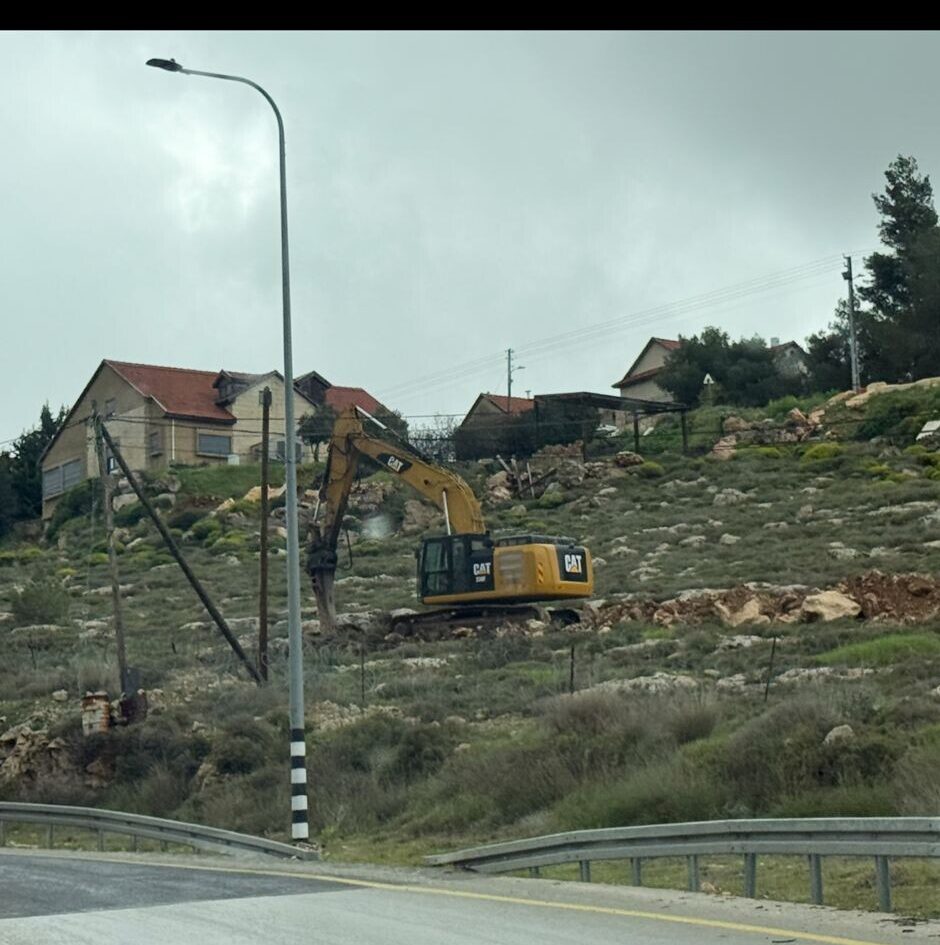 MuhammadFeb-24-2026South Hebron Hill, Beit Hagai: Paving an internal security road
-