
Deir a-Shams - Dozens of settlers arrived at night, entered the barn and took all the sheep - 170 head
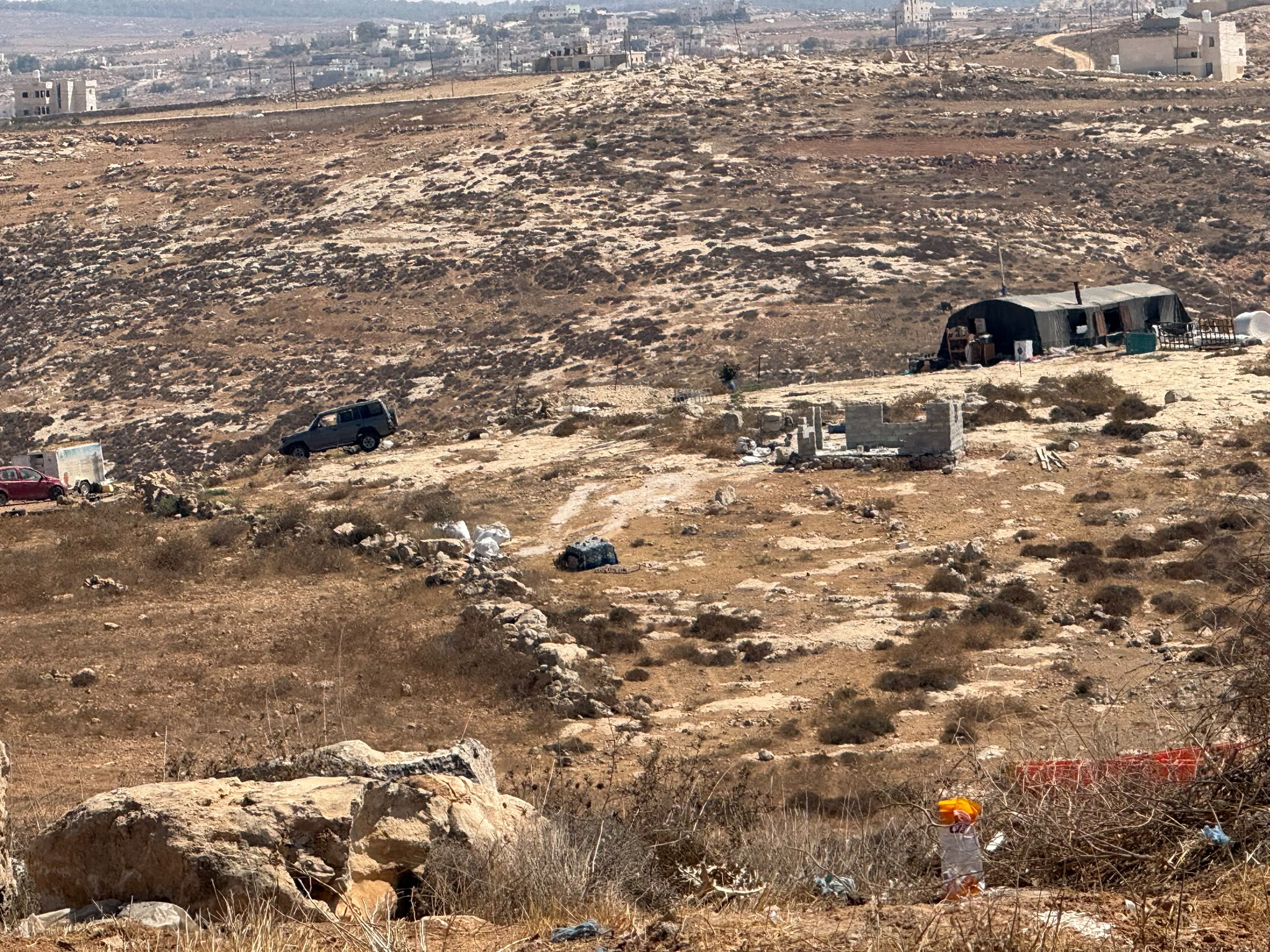
This visit was devoted to the residents of Deir a-Shams and Khirbet Deir a-Shams. Their family’s homes are scattered across an area between Dahariya and Samu’. The family has lived there for 15 years, on land they bought from people in Dahariya. The land is in Area B, and they have legal documents for it. Previously, they lived in nearby Khirbet Deir a-Shams. Some of the speaker’s brothers still live there. That area itself is in Area C. We brought them mainly food supplies, and next time we will try to bring clothes and shoes as well.
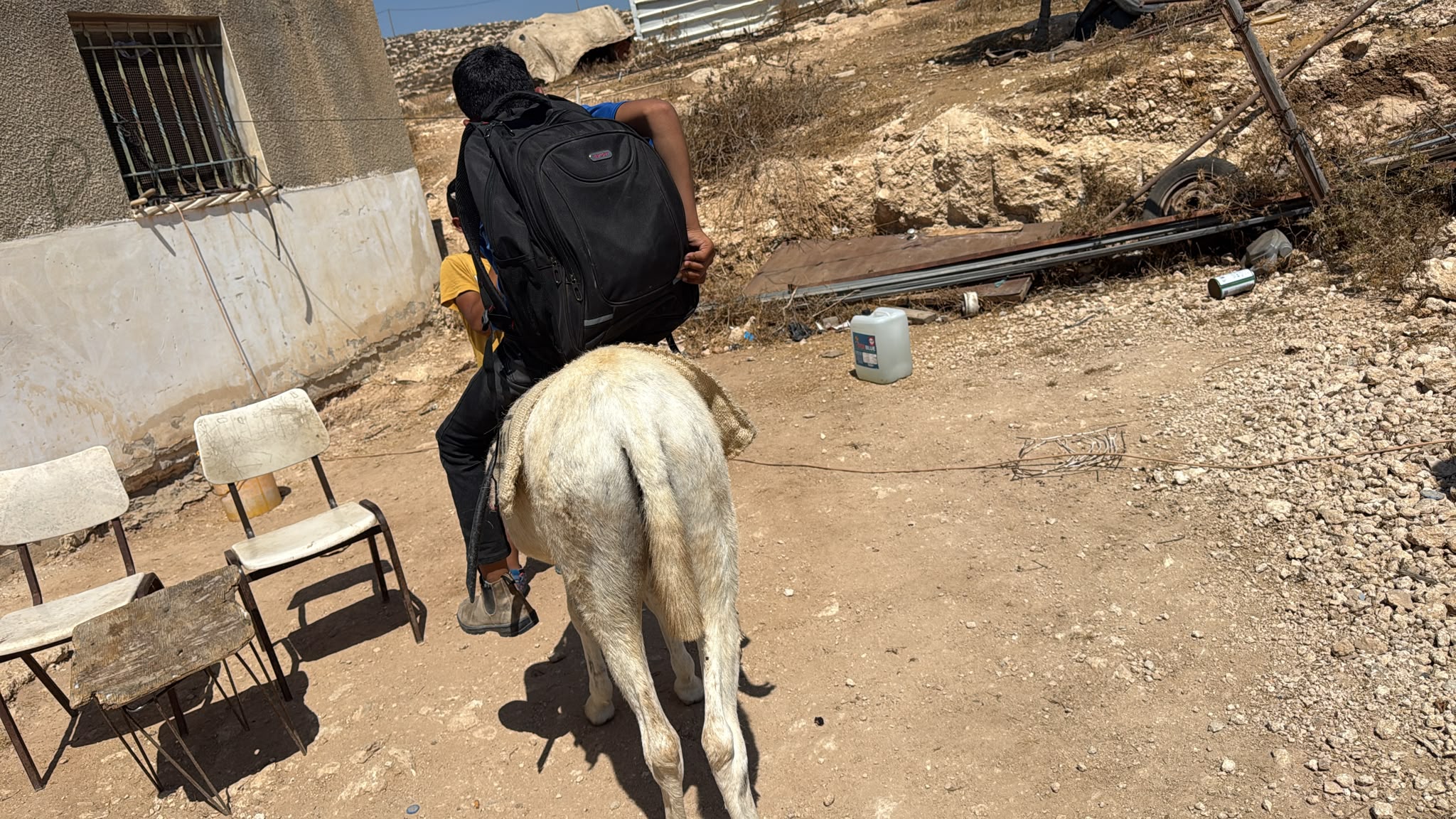
M. A.T., 58, was born in Khirbet Deir a-Shams. About 18 people live here, including five children aged 7, 9, 12 and 14. Every morning, the children walk or ride a donkey to school in Shweika or Simiya, a distance of 2–3 kilometres each way.
Shortly after the incident, M. asked us to visit, but we could not get there. When we arrived almost a month later, they were not at home.
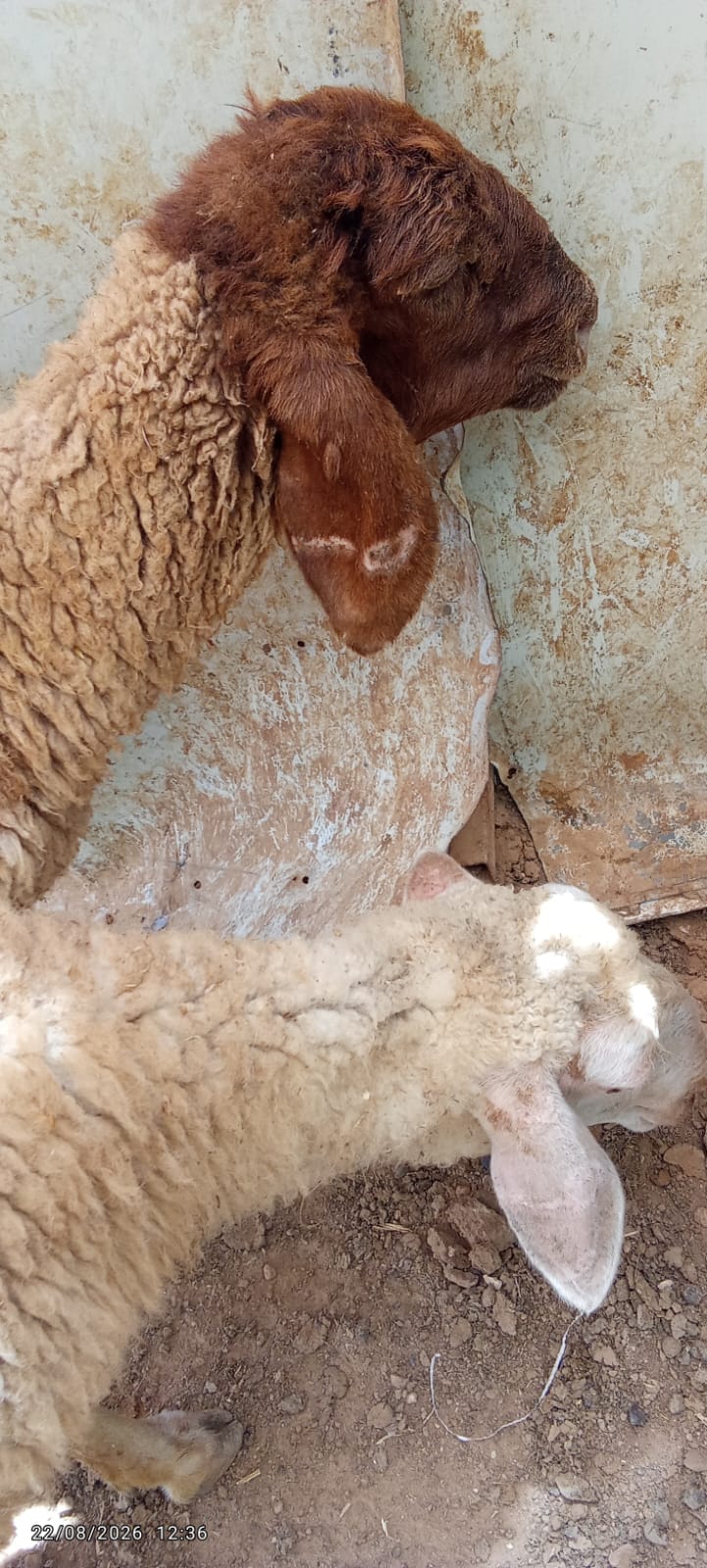
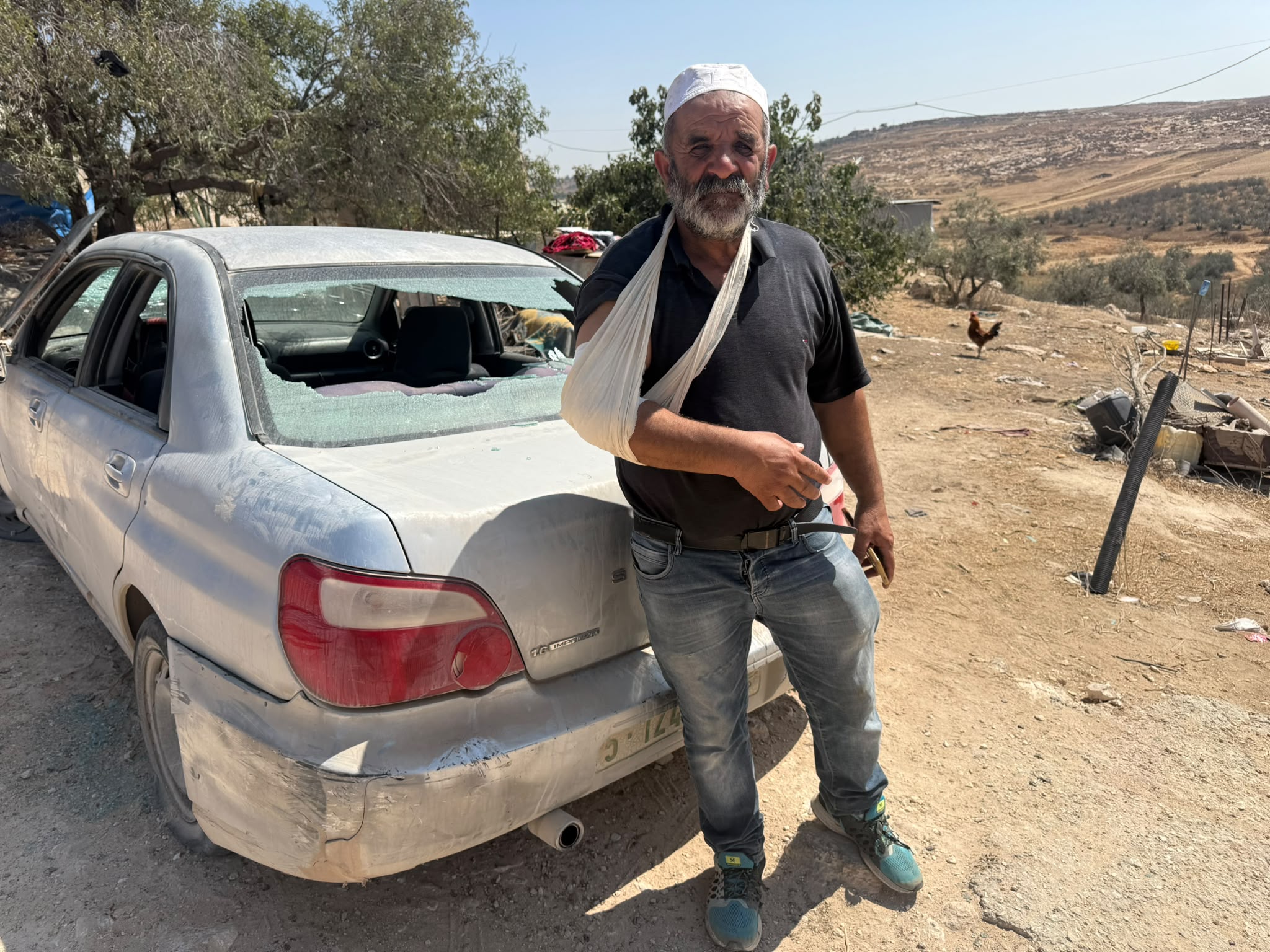
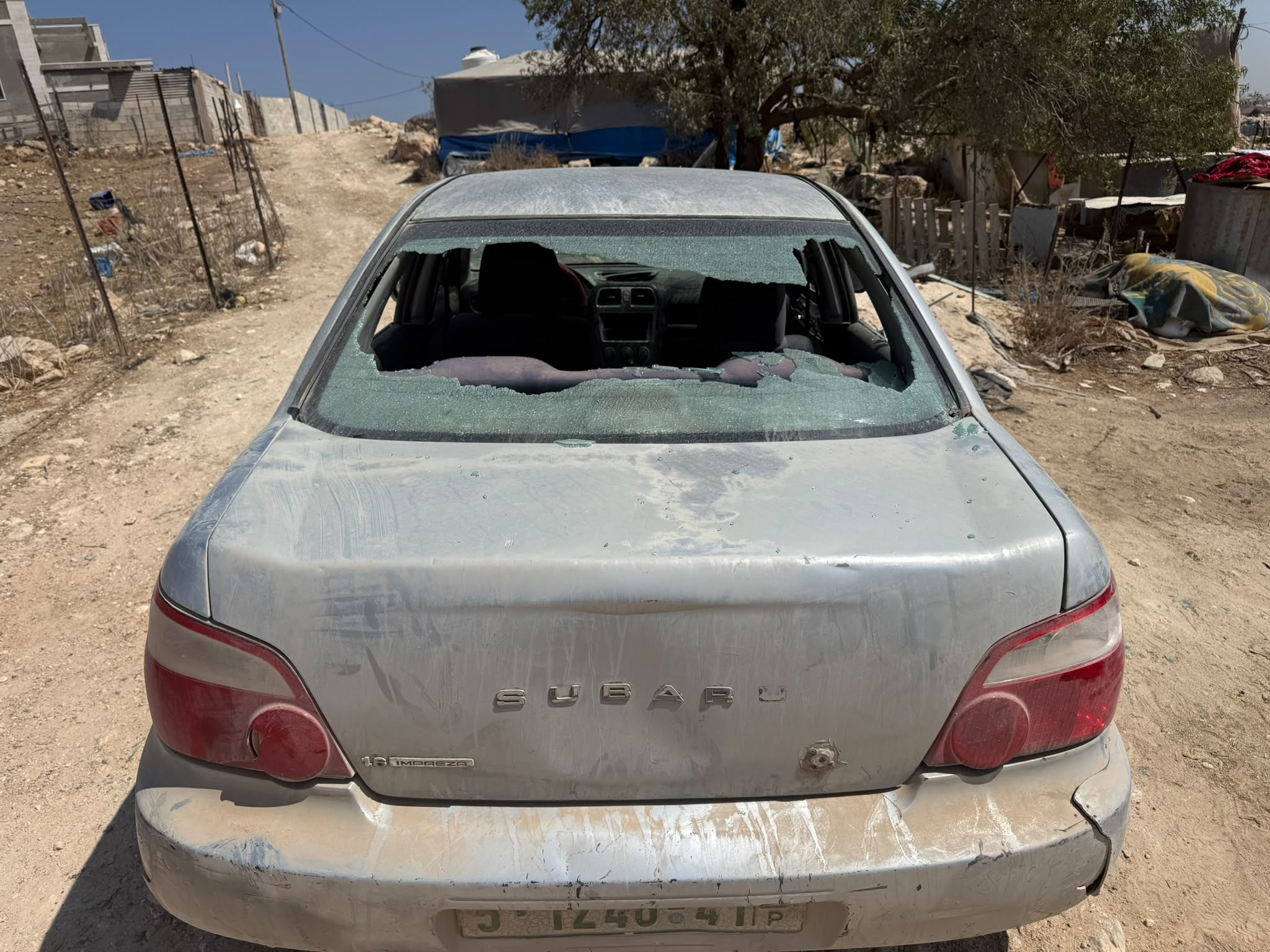
He says that dozens of settlers came at night, entered the sheepfold and took all the sheep—170 head. They came with flashlights and threw stones at them. S., his second wife, says she chased the sheep over the hills, trying unsuccessfully to bring them back. The settlers broke things in the living quarters, tried to set the shack on fire, and threw large stones at the sleeping children. They then went on to the homes of M.’s three brothers, 800 metres from his home. There they beat people with sticks, smashed windows, including car windows, caused extensive damage to the homes, and took about 30 sheep from them—their entire flock.
The police arrived after the family had photographed all the destruction. They told them to file a complaint at the Kiryat Arba police station and bring all the photographs. When M. went to the station, they refused to record the details and called him a liar. I saw the complaint document he received. It contains no details.
M. says a Red Crescent ambulance arrived, but he refused to be evacuated, although he had suffered a severe head injury and was in shock. He did not want to leave the women and children alone, so they treated him there. He still has scars on his head; he shows them to me.
Three days later, the flock was seen in Wadi Rahim, near Susiya. The sheep are marked on their ears. The stolen vehicles were also seen in Susiya. M. recognized his vehicle even though its number plate had been changed. When he went to file a complaint about the stolen vehicles, they sent him back and forth from morning until evening.
“They took everything from me,” he says. “All the sheep, all the vehicles. I have nothing left, so now surely they won’t come again, and I have nowhere to go either… I have no money for a lawyer,” he added.
I called Hanna Barag, asked for Yesh Din to try to help, and put them in touch with Rima, a Yesh Din field researcher. We hope they can help, although a month has passed and the flock has probably been taken far away. It has not returned on its own either, as sometimes happens.
The children are now afraid to go to school alone. Muhammad accompanies his youngest son, who refuses to go alone, there and back—a journey of 2–3 kilometres each way, as noted.
According to Muhammad, a military vehicle arrived the day after the incident. Its occupants watched them and the area where his brothers live for about fifteen minutes. They did nothing and drove away.
This is how they live.
Location Description
South Hebron Hills
See all reports for this place-
South Hebron Hills
South Hebron Hills is a large area in the West Bank's southern part.
Yatta is a major city in this area: right in the border zone between the fertile region of Hebron and its surroundings and the desert of the Hebron Hills. Yatta has about 64,000 inhabitants.
The surrounding villages are called Masafer Yatta (Yatta's daughter villages). Their inhabitants subsist on livestock and agriculture. Agriculture is possible only in small plots, especially near streams. Most of the area consists of rocky terraces.Since the beginning of the 1980s, many settlements have been established on the agricultural land cultivated by the Palestinians in the South Hebron Hills region: Carmel, Maon, Susia, Masadot Yehuda, Othniel, and more. Since the settlements were established and Palestinians cultivation areas have been reduced; the residents of the South Hebron Hills have been suffering from harassment by the settlers. Attempts to evict and demolish houses have continued, along with withholding water and electricity. The military and police usually refrain from intervening in violent incidents between settlers and Palestinians do not enforce the law when it comes to the investigation of extensive violent Jewish settlers. The harassment in the South Hebron Hills includes attacking and attempting to burn residential tents, harassing dogs, harming herds, and preventing access to pastures.
There are several checkpoints in the South Hebron Hills, on Routes 317 and 60. In most of them, no military presence is apparent, but rather an array of pillboxes monitor the villages. Roadblocks are frequently set up according to the settlers and the army's needs. These are located at the Zif Junction, the Dura-al Fawwar crossing, and the Sheep Junction at the southern entrance to Hebron.
Updated April 2022
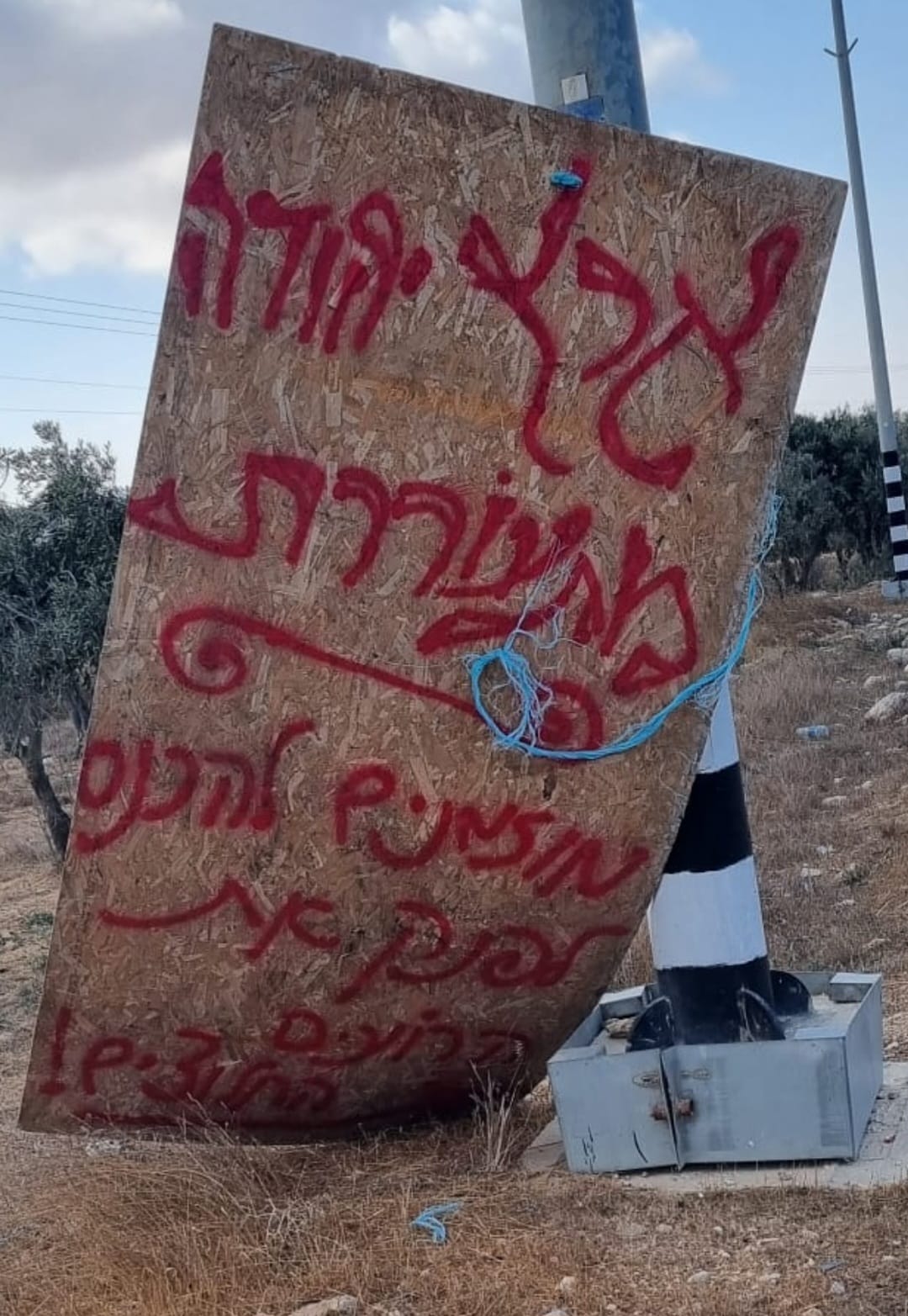 Smadar BeckerOct-17-2026A sign placed by those who call themselves the Pioneer Shepherds, at the outpost adjacent to Qawawis
-
