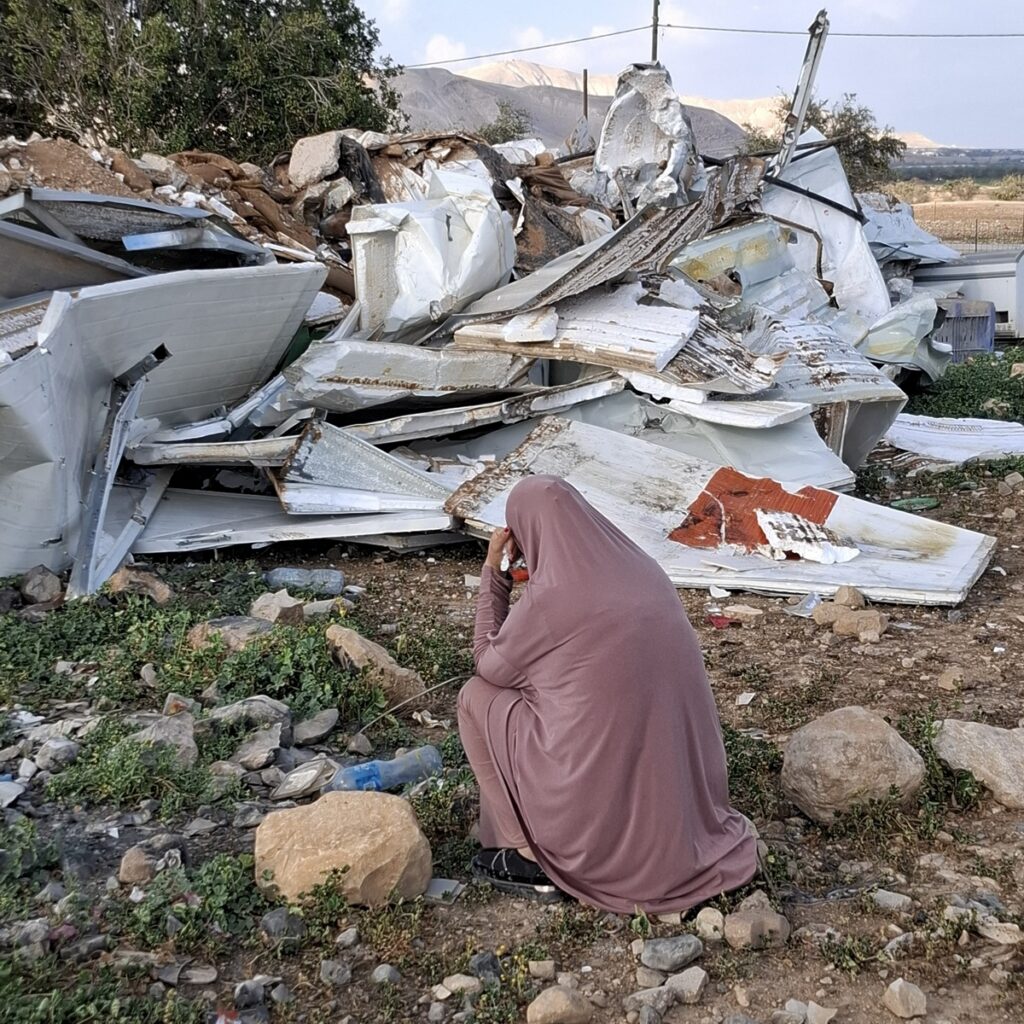
Deir Sharaf, Beit Iba
Deir Sharaf, Beit Iba, Sunday, 22.10.06 PM Observers: Aliya S., Susan L. (reporting) Summary In this country we still wait for some kind of leadership which dares to think and act on the words of the late Harold Washington when he became the first black Mayor of Chicago: “Business as usual will not be accepted.” Until then, the lack of compelling alternatives in this part of the world means it remains “business as usual:” nothing abnormal, atypical, irregular, uncommon, or unusual for a MachsomWatch shift in the Occupied West Bank. 13: 30 En route from Qalqiliya: A cow on a truck in front of us, sheep and goats being herded on the side of the road where guavas are on display and Nabil Elias’ shops full of goodies, including plenty of meat, for the upcoming “eid.” Around the Shomron settlements, the work for a separation barrier proceeds apace, and, on the side of the road, further on, land is being cleared, close to the road — for what is not clear: gas station, housing, but we’re certain it’s for the benefit of the settlers to the south of the main apartheid road. The rolling checkpoint between Fonduk and Qedumim is not usual, but well in sight of the settlement, so surely pleasing to the eye of beholders there. Seven cars lined up on their way west, three soldiers, one Hummer. Jit Junction: plenty of soldiers, one jeep, one Hummer with four Palestinian vehicles waiting to be checked. The food delivery truck has arrived, so what checking needs to be done is halted for the sake of the hungry soldiers! The roads are quiet, hardly any traffic, and it all becomes clear when we get to Beit Iba: the university has been closed already for a couple of days, offices in Nablus are closed too, although the “eid” only begins officially tomorrow morning. Everybody is in fine fettle, in holiday mood, carrying masses of fully stuffed plastic bags, all the more for the soldiers to poke around and check.. Deir Sharaf A new kiosk is being set up near the checkpoint, opposite the two old ones. It will be open tomorrow, the first day of the eid. A taxi driver complains of the “road” to Jenin. Last week, it rained but once. But how are they supposed to cross the fields in the winter? The mud will make the way impassable, he states. Any hope for asphalt, as at A-Ras? We’re asked to “go to court.” (Not for the web: the road’s condition is probably something the “machsomim” team should take up). 14:00 -14:45 Beit Iba Not one vehicle into Nablus, only a couple from the city. Two soldiers check a minibus, but there’s very little traffic after that. A Safari truck stands in the roadway leading away from the checkpoint to Qusin: it’s disgorging soldiers, and cars have to wait as a new shift of eight soldiers arrives. A the pedestrian checkpost, one man is released from the detention compound with the change of shift, otherwise few pedestrians. Lots of families. Lots of children, lots of packages. The commander is Second Lieutenant E. (who was spoken of in a recent report). He asks about MachsomWatch, serious questions, such as the difference between us and Women in Blue and White, etc., we hand him “Letter to a Soldier” (which has recently been sent us from the South). He thanks, folds it, and it finds its way into his pocket which is filled with scores of similarly folded pieces of paper, mainly GSS lists of names! He’s trying to find today’s list to hand to another second lieutenant, also an E., a second lieutenant in training, but with a slightly different name. Today’s commander has one piece of useful feedback for us: while he accepts that his namesake, the commander we met last week at the same time, runs a shift which is far from led and which engenders only ill feeling, there are also MachsomWatch shifts which do not behave well. He excuses himself, he has to work, and goes to the vehicle checking area. 14:30 The two remaining soldiers at the checkpost shout (sic) at the few passing, “Stand back, stand back” Why, is anybody’s guess. Justto exercise their authority is what it looks like to us. A soldier leaves the inner checkpost without his helmet, the second lieutenant in training points to his head: the soldier returns, helmet on head. A young woman, coming from Nablus with packages and infant on her arm, is made to empty the plastic bags on the table by the inspecting soldiers. The baby’s head falls back: she has no arm to support it, we mention this to the second lieutenant in training, but the response is a textbook lecture about what can happen with women and babies and terrorists. The baby’s head continues to loll. When will they ever learn?
Beit Iba
See all reports for this place-
A perimeter checkpoint west of the city of Nablus. Operated from 2001 to 2009 as one of the four permanent checkpoints closing on Nablus: Beit Furik and Awarta to the east and Hawara to the south. A pedestrian-only checkpoint, where MachsomWatch volunteers were present daily for several hours in the morning and afternoon to document the thousands of Palestinians waiting for hours in long queues with no shelter in the heat or rain, to leave the district city for anywhere else in the West Bank. From March 2009, as part of the easing of the Palestinian movement in the West Bank, it was abolished, without a trace, and without any adverse change in the security situation.
 Jun-4-2014Beit-Iba checkpoint 22.04.04
-
Jit Junction
See all reports for this place-
The checkpoint is located on Route 60 near at the junction with Route 55, near the village of Jit. There was a checkpoint for vehicles passing between the north and south of the West Bank, which was abolished towards 2010. Since then, surprise checkpoints have been set up there from time to time with a police or Border Police vehicle, and vehicles and their passengers are inspected.
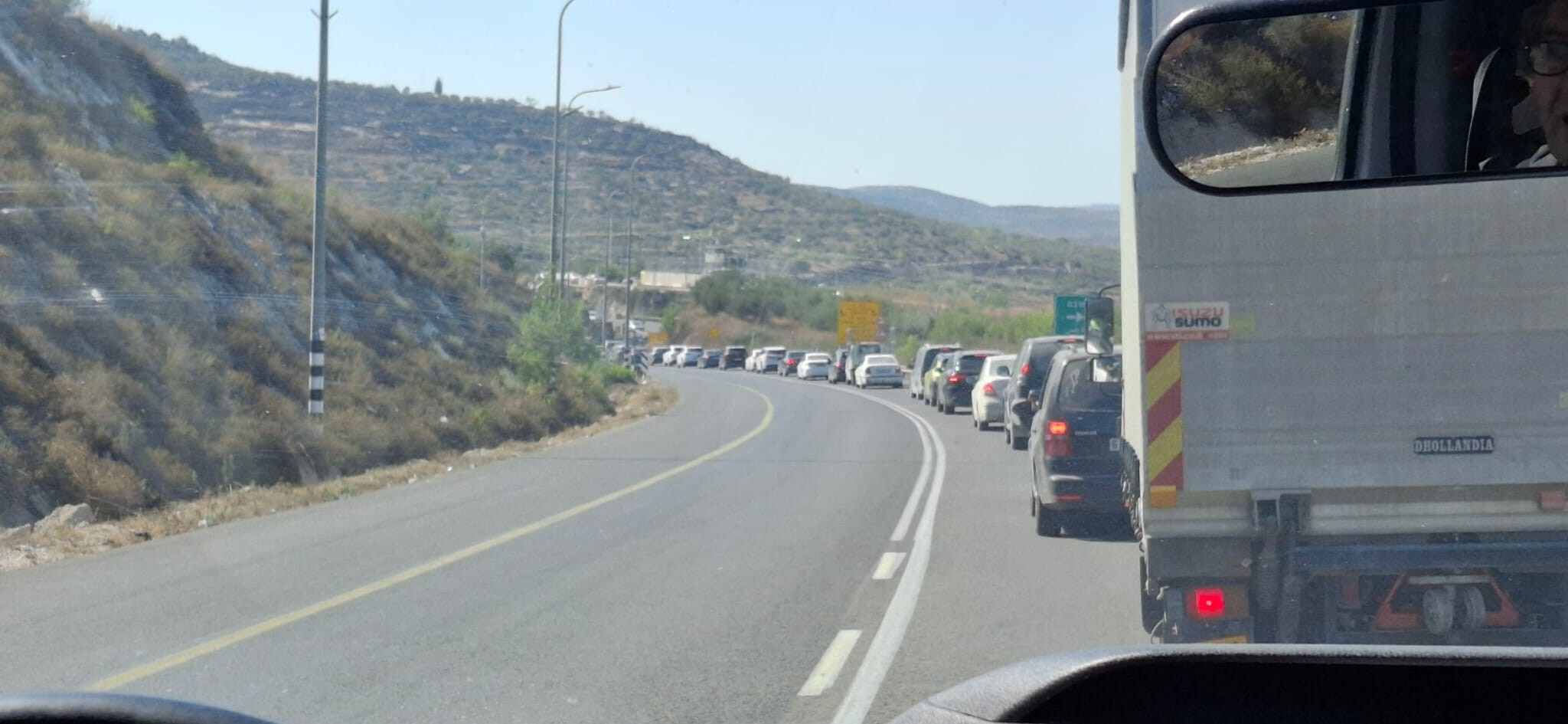 Anat PolakJul-17-2025Yitzhar Road, Jit Junction: traffic jam
-