
Dura-Al Fawwar Junction, Hebron, Sansana (Meitar Crossing)
The Meitar checkpoint looks terrible. Piles of refuse everywhere. On the Palestinian side sanitation workers from Dahariyya are employed. But the responsibility is Israel’s.
Plastic garbage bags “decorate” images of the fence. The landscape created by the wall and the fence, in addition to the new caged area, is depressing as usual.
There are few people crossing at this hour, primarily merchants and some who hope to find work. A merchant from Gaza, with all the necessary permits, seeks assistance for his wife who had suddenly been denied entry. He doesn’t understand why, since they work together selling clothing and utensils. I gave him the contact information for our friends in “Gisha.” I hope they’re able to help him.
Highway 60 is quiet. Nothing out of the ordinary. Only at the Dura al Fawwar junction were the soldiers out of the pillbox, guarding the road.
Hebron
The occupation routine.
We went to see what’s new in the Kiryat Arba park built in honor of Baruch Goldstein. It’s still not finished. I wonder what it will finally look like.
A group of tourists is hearing explanations in English and French about the settlements in Hebron.
Many Border Policewomen near the Cave of the Patriarchs.
A tourist group from southeast Asia enters through the door for Moslems. Many wear face masks.
We visited Idris, who lives beside the spring sacred to Jews, and was injured more than once by settlers. His personal history includes tales of helping and saving Jewish children and adults. They can be found on the website. He says things have been quiet recently. He’s finished plowing his grove of ancient olive trees.
A few days ago tourists showed up; their guide told them how he’d saved a yeshiva student from being lynched, and how he’d returned Anat Cohen’s young son who’d disappeared in the casbah, and other stories as well.
Idris speaks for peace loving residents of Hebron who oppose all violence, from all sides, and demonstrates this every day.
Dura Al-Fawwar Junction
See all reports for this place-
Junction on Route 60: west - the town of El Dura, east - the Al Fawwar refugee camp. There is a manned pillbox at the junction. From time to time the army sets up flying checkpoints at the entrance to El Fawwar and Al Dura. Al-Fawwar is a large refugee camp (7,000 inhabitants in 2007) established in 1949 to accommodate Palestinian refugees from Be'er Sheva and Beit Jubrin and environs. There are many incidents of stone-throwing. In the vicinity of the pillbox there are excellent agricultural areas, Farmers set up stalls adjacent to the plots close to the road. In recent months the civil administration has set up dirt embankments thereby blocking access to the stalls, and making it impossible for the farmers to sell their vegetables. Updated April 2021, Michal T.
-
Hebron
See all reports for this place-
According to Wye Plantation Accords (1997), Hebron is divided in two: H1 is under Palestinian Authority control, H2 is under Israeli control. In Hebron there are 170,000 Palestinian citizens, 60,000 of them in H2. Between the two areas are permanent checkpoints, manned at all hours, preventing Palestinian movement between them and controlling passage of permit holders such as teachers and schoolchildren. Some 800 Jews live in Avraham Avinu Quarter and Tel Rumeida, on Givat HaAvot and in the wholesale market.
Checkpoints observed in H2:
- Bet Hameriva CP- manned with a pillbox
- Kapisha quarter CP (the northern side of Zion axis) - manned with a pillbox
- The 160 turn CP (the southern side of Zion axis) - manned with a pillbox
- Avraham Avinu quarter - watch station
- The pharmacy CP - checking inside a caravan with a magnometer
- Tarpat (1929) CP - checking inside a caravan with a magnometer
- Tel Rumeida CP - guarding station
- Beit Hadassah CP - guarding station
Three checkpoints around the Tomb of the Patriarchs
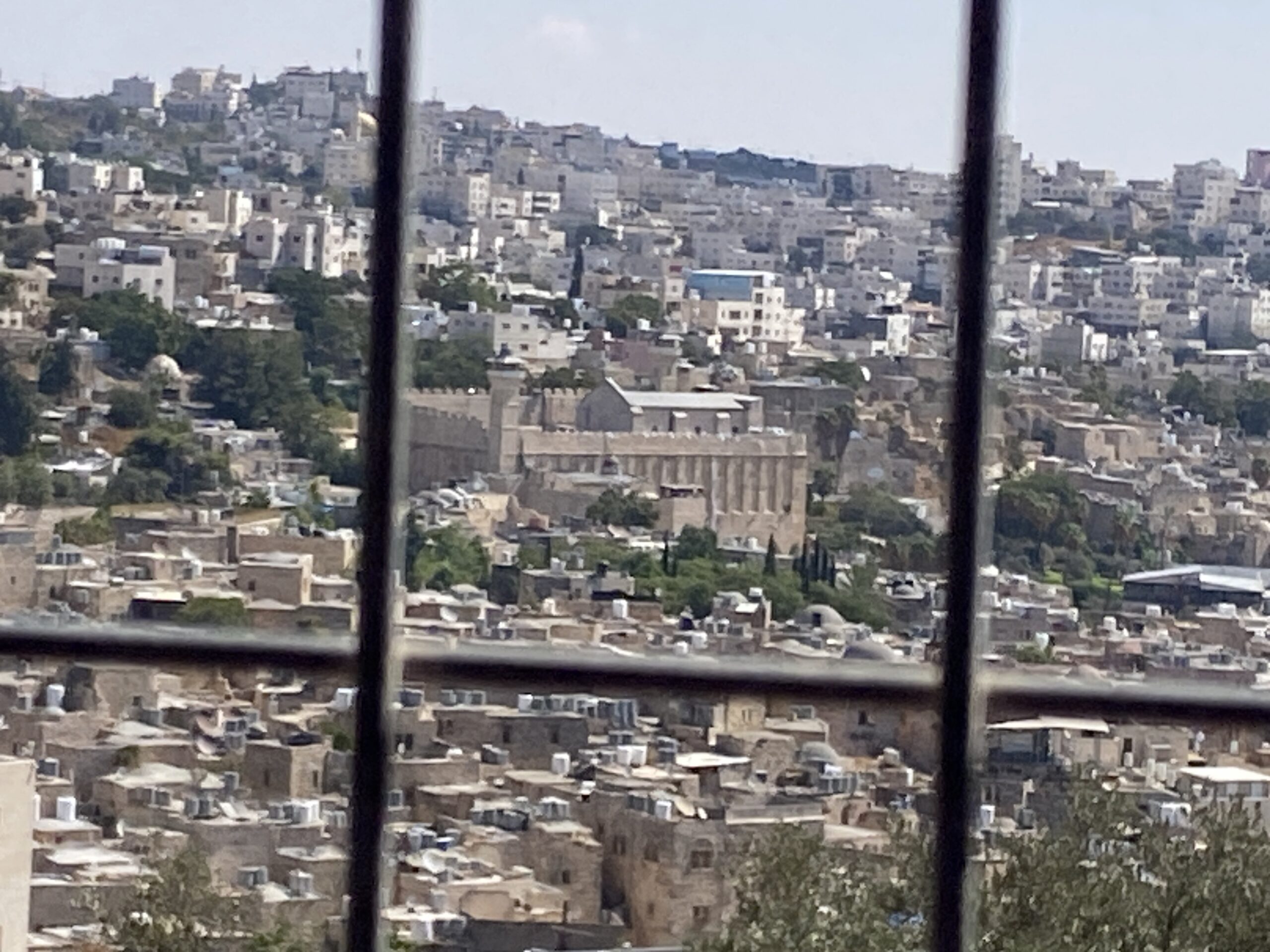 Yael ZoranSep-24-2026Hebron and the Cave of the Patriarchs from Beit Hashalom
-
Meitar checkpoint / Sansana
See all reports for this place-
Meitar Checkpoint / Sansana The checkpoint is located on the Green Line and serves as a border crossing between Israel and the West Bank. It is managed by the Border Crossing Authority of the Defense Ministry. It is comprised of sections for the transfer of goods as well as a vehicle checkpoint (intended for holders of blue identity cards, foreign nationals or diplomats and international organizations). Passing of Palestinians is prohibited, except for those with entry permits to Israel. Palestinians are permitted to cross on foot only. The crossing has a DCO / DCL / DCL / DCL (District Coordination Office), a customs unit, supervision, and a police unit. In the last year, a breach has been opened in the fence, not far from the crossing. This breach is known to all, including the army. There does not appear to be any interest in blocking it, probably as it permits needed Palestinian workers without the bureaucratic permits to get to work in Israel. Food stalls and a parking area economy have been created, but incidents of violent abuse by border police have also been recorded. Updated April 2022
-
