
Dura-Al Fawwar Junction, Hebron, South Hebron Hills
Having received notice earlier from the Shaharabi brothers as well as from Paula Rubinek, of a special incident – we drove to Hebron especially to meet Radi Hamed Abu Ayisha and hear what he had undergone last night at the new upper checkpoint above the Jewish cemetery in Tel Rumeida.
We met a 75-year old man, very impressive and smart, who told us about many problems with the Israeli army at this place, which caused people to stand there and protest for days. The incident: he was dressed in the robe seen in the photos, and had to cross that checkpoint on his way home, which is right at the turn to Tel Rumeida. The metal buttons on his robe caused the metal detector to beep, and the soldier consequently detained him. The soldier approached him and fumbled with his garment. Abu Ayisha realized he was required to strip and stood there in his underclothes, angry and insisting not to get back into his clothes as an act of protest against this shaming. The event was extremely agitating for him, and the people living nearby came to support him and join his protest.
The man told us of years of suffering and humiliation because of his proximity to the Jewish settler-colonists. He showed us houses he owns that are now sealed and he is not allowed to have people living inside them because they are situated precisely at the spot where the Elor Azariya incident took place (where an Israeli soldier shot to death an already wounded man lying bleeding on the ground). He spoke very painfully about the good, warm neighborly relations his family had with Jewish families there until 1948. He specifically named the Ezra family who now live in Jerusalem and are in touch with him to this very day. He said that when he was a baby, the Jewish neighbors had a baby girl, Sarah, whose mother died, and his own mother had nursed her. They come to visit once in a while, and are attacked by the Jewish settler-colonists.
He also told us that in 2005 they suggested that the Jewish family friends come and live in their houses. “I want the Jews to live with us, but not the settler-colonists who do not understand our right to live and make our lives miserable.” And we? What could we say except to sense our deep shame?
On our way out, we met a young skull-cap wearing Israeli army captain who was hanging around there, approached Abu Ayisha and offered him a chair, addressing him with exceptional politeness. Apparently he had heard of our presence and came to put last night’s impression to right. The young soldiers positioned at that very outpost and very near Abu Ayisha’s house door asked who we were and what we were doing. During our conversation they presented the army’s version of the incident (the soldier who spoke to us was religious and wore a wedding band). According to the commanding sergeant, the soldier involved in last night’s incident was called in for inquiry and claims it was all a misunderstanding. He had not at all required the man to strip, only wished to check what had made the metal detector beep and was examining the metal buttons. The man got angry and took his robe off, and as a sign of protest even refused to put it back on. The soldier added that they are constantly reminded mot to rummage in women’s bags and to respect the elderly, and he is aware of the fact that what had taken place was out of line.
I explained to him, that even this is what had taken place, they must understand that after 50 years of occupation and suffering the Palestinians have no trust left and respond to anything with anger and suspicion. It’s important that soldiers who speak Arabic beyond the standard “hands up and hand over your ID” would be there, explain, apologize and respect the Palestinians.
It should be noted that these soldiers, the commander and private, were very attentive and polite. We could only hope that in this whole disgusting situation there are still some who behave as these promise they will.
Then Zaidan took us to the house that the Zahida family rented from the Abu Haikal family on Shuhada Street. As soon as the former moved in, the Jewish settler-colonists summoned the army, which came and welded the house door overlooking the street (photo). Through the bars, a young woman with her two toddlers looks out like a prisoner. They can only exit through the neighbors’ home and only to the Casbah. And the neighbors, naturally, are not really delighted with this arrangement, to say the least. Would we ever think up of such a solution in our parts? This house was deserted and is one of the most handsome on this street. Its façade is carved in stone with a special design, which is the specialty off the Abu Haikal family, the house owner. And the Jewish settler-colonists – they pray for the day that these houses will belong to them, so they do not enable the Palestinians to re-inhabit them.
On Road 60, on our way out and back, we saw many soldiers at every junction. Most curious is the fact that an army post was erected right next to the spring, not far from the Dura-Al Fawwar Junction.
Dura Al-Fawwar Junction
See all reports for this place-
Junction on Route 60: west - the town of El Dura, east - the Al Fawwar refugee camp. There is a manned pillbox at the junction. From time to time the army sets up flying checkpoints at the entrance to El Fawwar and Al Dura. Al-Fawwar is a large refugee camp (7,000 inhabitants in 2007) established in 1949 to accommodate Palestinian refugees from Be'er Sheva and Beit Jubrin and environs. There are many incidents of stone-throwing. In the vicinity of the pillbox there are excellent agricultural areas, Farmers set up stalls adjacent to the plots close to the road. In recent months the civil administration has set up dirt embankments thereby blocking access to the stalls, and making it impossible for the farmers to sell their vegetables. Updated April 2021, Michal T.
-
Hebron
See all reports for this place-
According to Wye Plantation Accords (1997), Hebron is divided in two: H1 is under Palestinian Authority control, H2 is under Israeli control. In Hebron there are 170,000 Palestinian citizens, 60,000 of them in H2. Between the two areas are permanent checkpoints, manned at all hours, preventing Palestinian movement between them and controlling passage of permit holders such as teachers and schoolchildren. Some 800 Jews live in Avraham Avinu Quarter and Tel Rumeida, on Givat HaAvot and in the wholesale market.
Checkpoints observed in H2:
- Bet Hameriva CP- manned with a pillbox
- Kapisha quarter CP (the northern side of Zion axis) - manned with a pillbox
- The 160 turn CP (the southern side of Zion axis) - manned with a pillbox
- Avraham Avinu quarter - watch station
- The pharmacy CP - checking inside a caravan with a magnometer
- Tarpat (1929) CP - checking inside a caravan with a magnometer
- Tel Rumeida CP - guarding station
- Beit Hadassah CP - guarding station
Three checkpoints around the Tomb of the Patriarchs
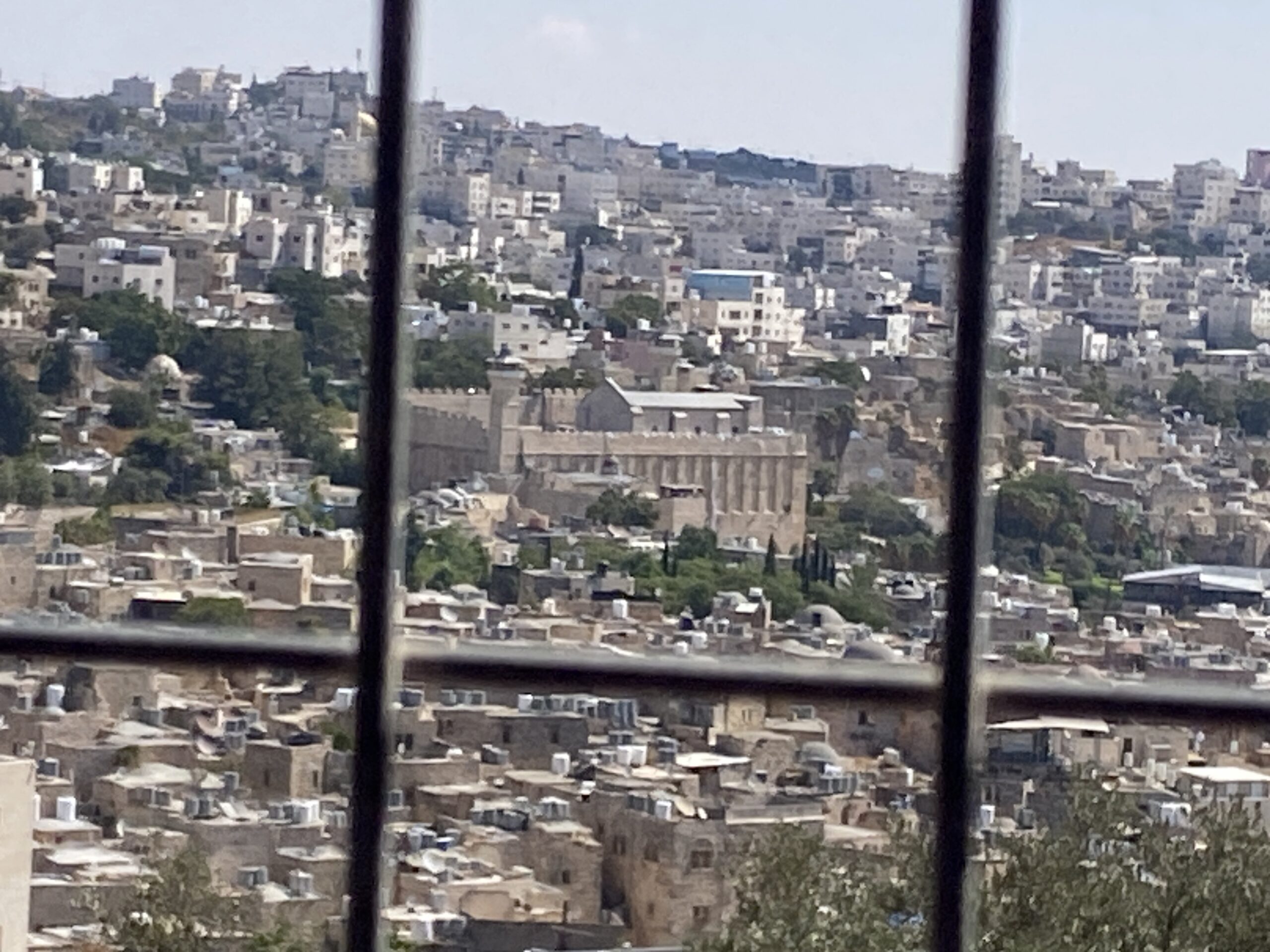 Yael ZoranSep-24-2026Hebron and the Cave of the Patriarchs from Beit Hashalom
-
South Hebron Hills
See all reports for this place-
South Hebron Hills
South Hebron Hills is a large area in the West Bank's southern part.
Yatta is a major city in this area: right in the border zone between the fertile region of Hebron and its surroundings and the desert of the Hebron Hills. Yatta has about 64,000 inhabitants.
The surrounding villages are called Masafer Yatta (Yatta's daughter villages). Their inhabitants subsist on livestock and agriculture. Agriculture is possible only in small plots, especially near streams. Most of the area consists of rocky terraces.Since the beginning of the 1980s, many settlements have been established on the agricultural land cultivated by the Palestinians in the South Hebron Hills region: Carmel, Maon, Susia, Masadot Yehuda, Othniel, and more. Since the settlements were established and Palestinians cultivation areas have been reduced; the residents of the South Hebron Hills have been suffering from harassment by the settlers. Attempts to evict and demolish houses have continued, along with withholding water and electricity. The military and police usually refrain from intervening in violent incidents between settlers and Palestinians do not enforce the law when it comes to the investigation of extensive violent Jewish settlers. The harassment in the South Hebron Hills includes attacking and attempting to burn residential tents, harassing dogs, harming herds, and preventing access to pastures.
There are several checkpoints in the South Hebron Hills, on Routes 317 and 60. In most of them, no military presence is apparent, but rather an array of pillboxes monitor the villages. Roadblocks are frequently set up according to the settlers and the army's needs. These are located at the Zif Junction, the Dura-al Fawwar crossing, and the Sheep Junction at the southern entrance to Hebron.
Updated April 2022
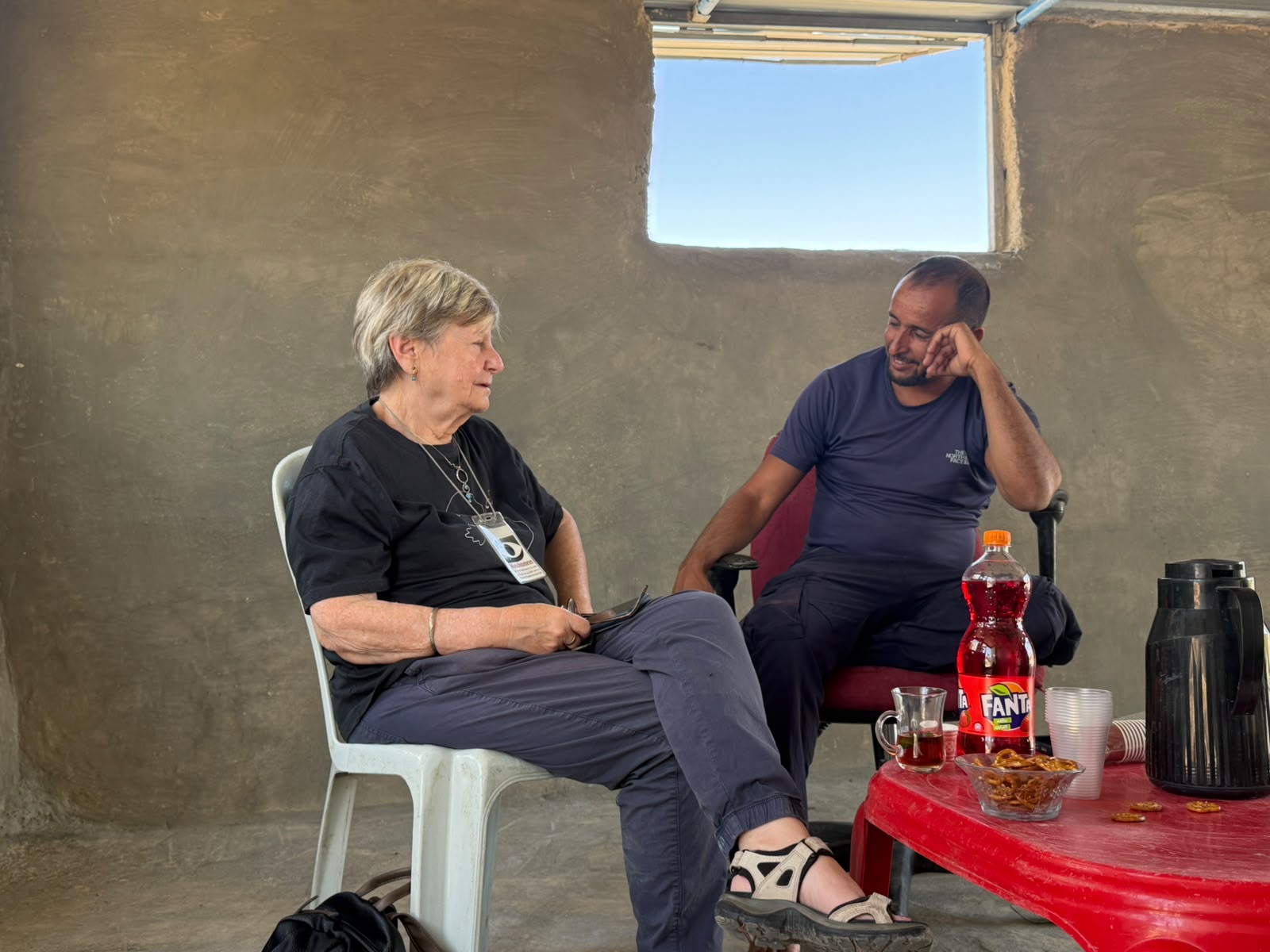 Muhammad D.Oct-10-2026Smadar with Najeh in Umm Qusa
-
