Eyal Crossing, Eliyahu Crossing, Irtah (Sha’ar Efrayim), Thu 24.9.09, Afternoon
Translation: Bracha B.A.
14:30 Irtah
About 20 people are waiting at the entrance gate for it to be opened so they can continue on their way. In our experience, the security guards at the facility know exactly who is there on the other side of the fence. There are cameras that report every person who arrives constantly and only care and attention, or our request will get them out of a long wait in the heat for no reason.
This is precisely what happened: 10 minutes after we asked to open the gate, we saw people going through and continuing on their way. We did not count how many people came out. Perhaps some remained and had to wait behind the fences until the guards felt like opening the gate again.
Workers have begun to arrive at the end of their work day in Israel. Only one inspection booth was open. The check was done quickly. A few people told us that we should have been here yesterday. Things were very bad!
We understood that the most crowded times are 15:30-17:30, when women return from visits to prisons and workers arrive. During that time the guards change shifts and there is a lot of pressure.
We tried to find out if it was possible to meet with the crossing commander or the security officer, or to get the phone number of the person responsible. We were told that Ronen, the security guard, was at a meeting and would not be free for another hour and a half.
16:00 Eyal Crossing
There are very few people.
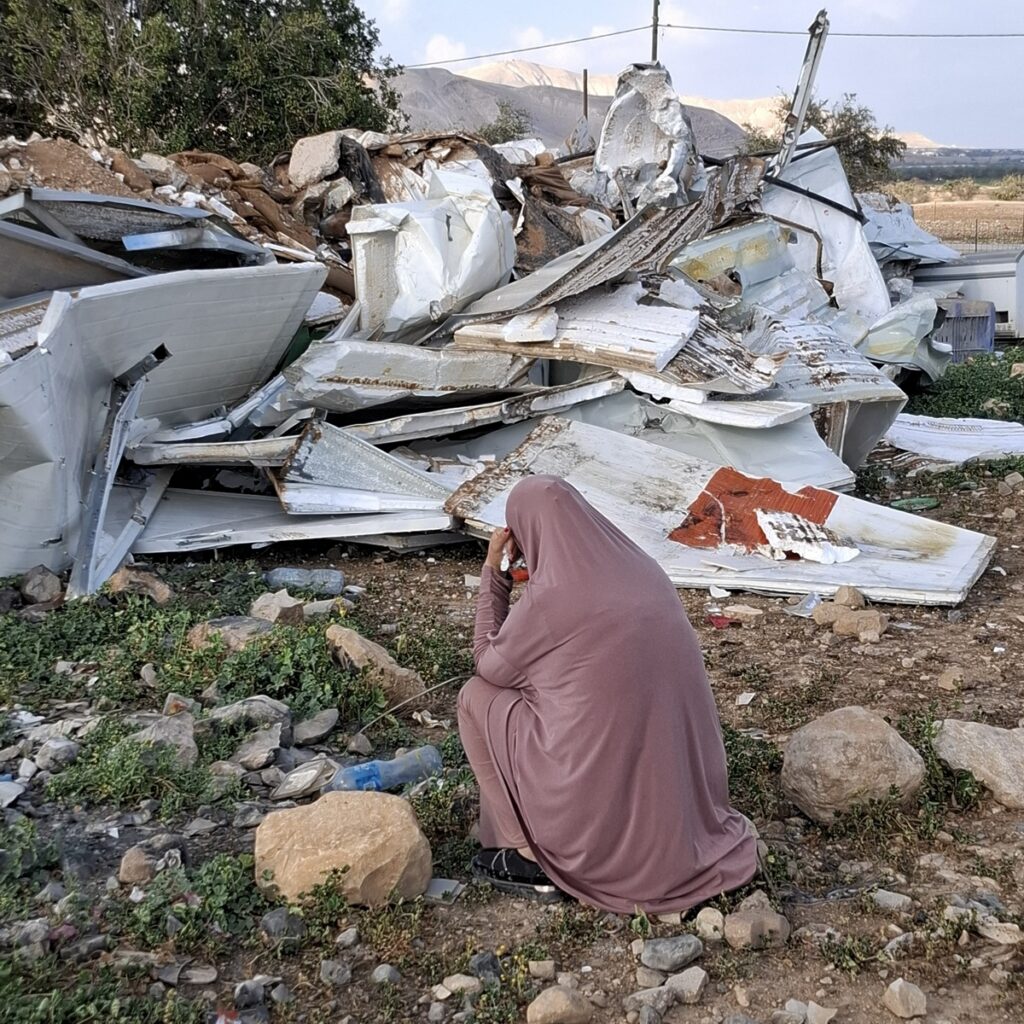
We continued on to Tzufin. We found a luxurious settlement built on the ruins of an elaborate Arab settlement. (See photo).
16:45 Eliyahu CrossingThere are no people in the pedestrian crossing.
Eliyahu CP (109) / Crossing
See all reports for this place-
Eliyahu CP (109) / Crossing This checkpoint, also known as the Fruit Crossing, is one of the main checkpoints between Israel and the West Bank. It is located on Route 55 between Alfei Menashe and the turn to Qalqilya and Zufin, more than 4 km east of the Green Line, in the separation fence, which separates Qalqilya from its lands to the south, thus leaving Alfei Menashe West of the fence - the Seam Zone. This checkpoint, a few kilometers across the Green Line, is intended for "Israeli settlement in the West Bank and the population of the Seam Zone." It is managed by a civil company. Palestinians with a special permit for their lands in the seam area are also allowed to pass through it, on foot, and sometimes by car.
-
Eyal Checkpoint / Crossing
See all reports for this place-
Eyal Checkpoint is intended for pedestrians and Palestinians only. This is the main barrier for workers to cross from the center of the West Bank. Workers with a work permit to enter Israel can pass through it for trade, medicine, and visiting prisoners. The checkpoint was built on the Green Line north of Qalqilya in the separation barrier that surrounds the city. The checkpoint began operating in 2004 by the military. Opening hours on weekdays from 04:00 to 19:00. We started holding shifts there in 2007. We arrived at the checkpoint before it opened at 4 in the morning. We reported on the difficult conditions and the long and cramped queues of workers who must continue their journey by commuting to work throughout Israel. At the end of June 2009, the checkpoint was operated by a civil security company, The transit time has been gradually shortened, today it is faster, but the Palestinians still have to arrive very early to make it to the transportation. Usually, about 15,000 people pass through.
-
Irtah (Sha'ar Efrayim)
See all reports for this place-
The checkpoint is for Palestinians only. It is the main barrier to the passage of workers from the northern West Bank to Israel. Workers with a permit to work in Israel and also for trade (with appropriate permissions), medicine, and visiting prisoners. One can cross the checkpoint only on foot. The checkpoint is located north of Road 557 and south of Tulkarm. Operated by a civil security company, opening hours: between 4:00 and 19:00 on weekdays. As members of Machsom Watch, we began our shifts to this location in 2007. We arrived before it opened at 4 in the morning and report since, on the harsh conditions and the long and crowded queues of workers. The workers who pass by continue their journey by transportation to work throughout Israel. In the first period of its activity, about 3,000 and then 5,000 people passed through this checkpoint every day. Due to the small number of checking points and arbitrary delays for long periods of time in the "rooms", workers feared losing their transportation. Hence workers leave their homes at 2:30 at night to be among the first. Today, 15,000 pass and the transition is faster. Workers are still leaving their homes very early to get past the checkpoint at 7 p.m. In an adjacent compound, there is a terminal for the transfer of goods on a commercial scale, using the back-to-back method.
-