
Eyal passage
Eyal passage Wednesday 28.02.2007 amObservers: Netty A, Marcella K, Rina Z (reporting) Netanya translating 6.45 Eyal Passage.In the parking area and around were 10s of workers who had been checked and many cars waiting to pick them up even though it was already late. They told us that they arrive between 4.30 -4.45 and only now have they exited, and that on the other side were workers who had not yet even entered the installation. One of the workers said his Israeli employer had not waited for him and had gone back to Netanya. They said that today 3 turnstiles had been open for part of the time which is laudable but still the length of time of checking was not reasonable. Hard working people leave home at 3.00, some of them from Nablus and even the Jordan valley, and at 7 .00 have still not started their working day.From speaking to the people we understood that there are two main problems. 1.Many people arrive in the early hours of the morning so as to get a place in the line. There is pressure and sometimes fighting and whoever has the most strength is first in line. We met one of those who did not know how to push and who got through only after 7.00 although he had arrived at 4.00am. At Irtach there are low fences to keep the lines in front of the outside gate, like those that are in front of the booths at the movies. 2.The main problem is that the checking is very slow and is done by soldiers and not as at the Ephraim crossing (Irtach) where there are civilians doing the checking. The soldiers are often changed so that they do not have the experience and the efficiency and this is also not their primary duty.The workers mentioned the name of Halabi saying that when he was present, he speeded up the checking.
Jordan Valley
See all reports for this place-
Jordan Valley The Jordan Valley is the eastern strip of the West Bank. Its area consists of almost a third of the West Bank area. About 10,000 settlers live there, about 65,000 Palestinian residents in the villages and towns. In addition, about 15,000 are scattered in small shepherd communities. These communities are living in severe distress because of two types of harassment: the military declaring some of their living areas, as fire zones, evicting them for long hours from their residence to the scorching heat of the summer and the bitter cold of the winter. The other type is abuse by rioters who cling to the grazing areas of the shepherd communities, and the declared fire areas (without being deported). The many groundwaters in the Jordan Valley belong to Mekorot and are not available to Palestinians living in the Jordan Valley. The Palestinians bring water to their needs in high-cost followers.
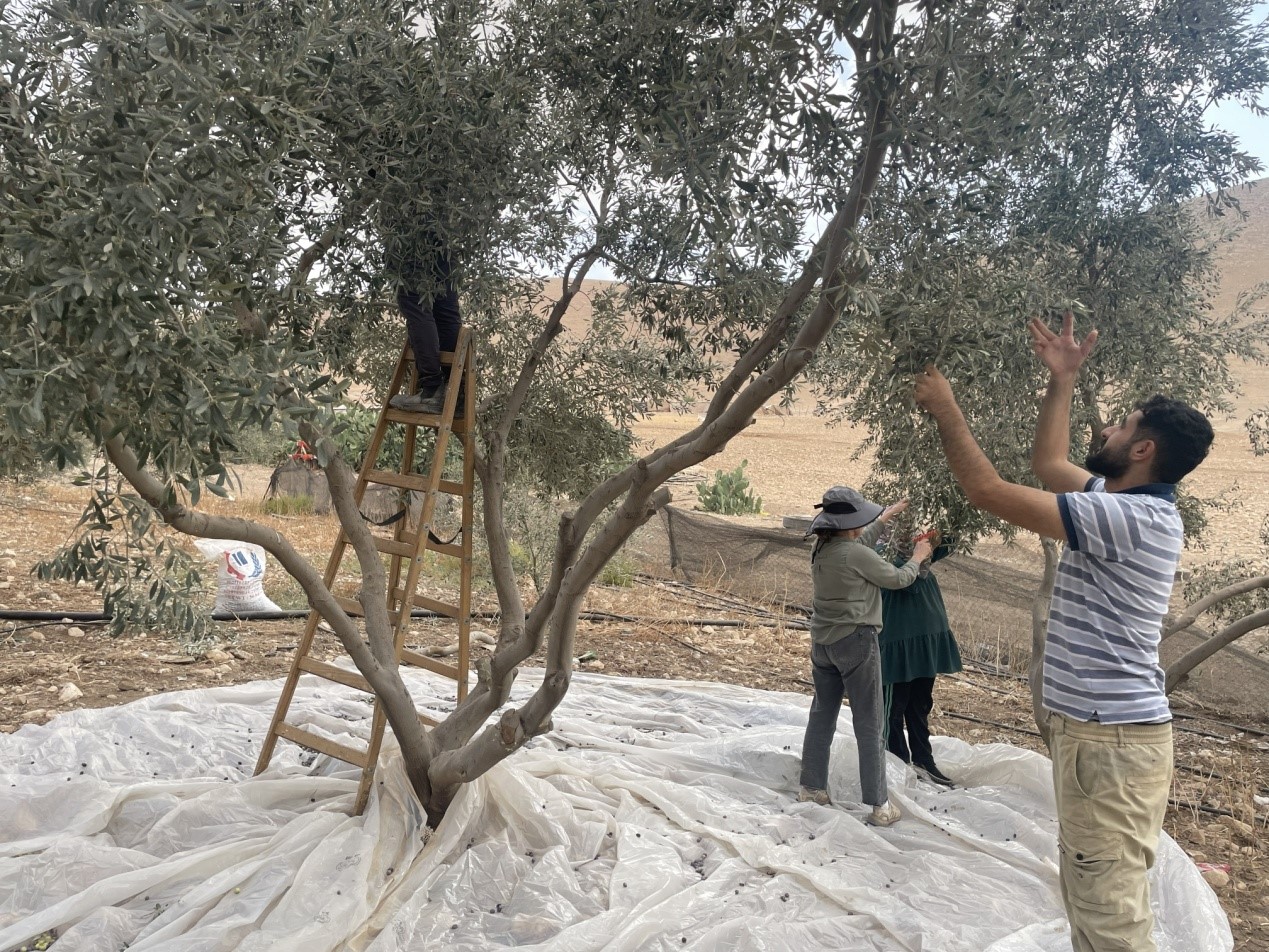 Rachel AfekOct-15-2026Olive Harvest in the Jordan Valley
-
