
Falamiya North Checkpoint (914), Falamiya South Checkpoint (935), Kufr Jammal
12:15 We arrived early at the village of Jamal and tarried at Z.’s, he was very pleased, by everything. He is building a big house for all his children, his eldest son is getting married in a month, works at Emmanuel, plaster. The second works for the neighbor, building. It is quiet in the village, everybody is working, some in Israel some at the settlements and at the village itself too. He has difficulties finding a worker to finish the building project, nobody has anything to do with the army or the soldiers, there is no stone throwing, they have no time for this. It is therefore annoying that the army passes through the village as it did about ten days ago in the middle of the night, when everybody was asleep and shoots along the main road a few stun grenades.
Another person arrives who is not pleased at all. Z. is not at a hurry to translate his complaints, although we asked him to. In the end we understood that he and his brothers have 50 dunams, near Sal’it. The greater part of the plot, including the well which was very important to him, was robbed in favour of the sepration obstacle. For the remaining part he doesn’t get an authorization to pass by the Sal’it CP (839) but only by Falamiya North, 3 kilometres further.
13:55 The CP is already open, the tractors returning from the fields have passed, near the pump building a tractor unloads the Za’tar into a small truck and returns to the plot beyond the fence, to return at nightfall.
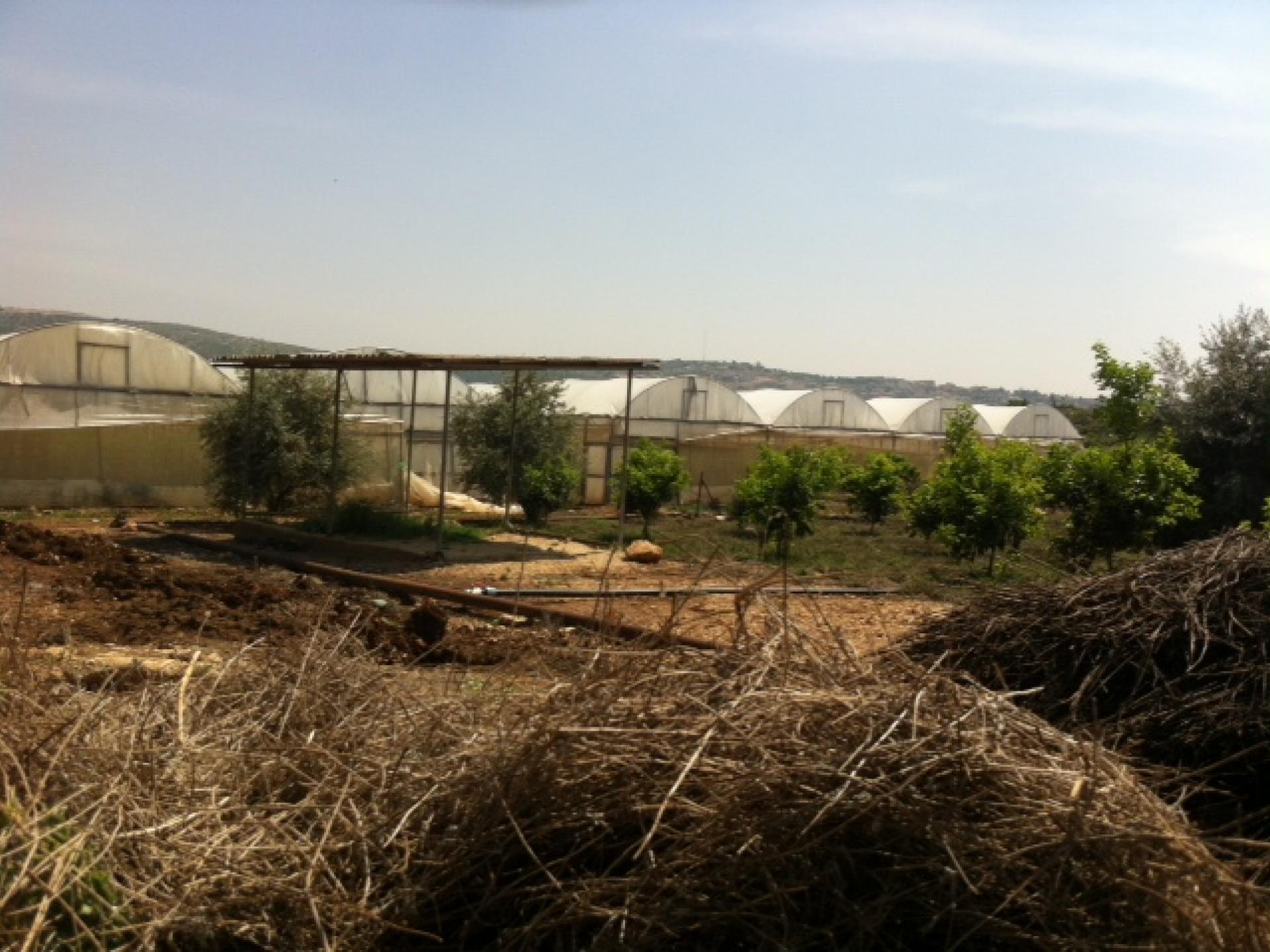
We continued to the Palamie South (935) CP and wondered at the development momentum at the lands which were returned to the inhabitants of Palamie and Jiyus when the fence was moved to the west according to the decision of the high court of justice. When the plots are behind a fence and approach is permitted just twice of three times a day, there is no possibility to have a real agriculture.
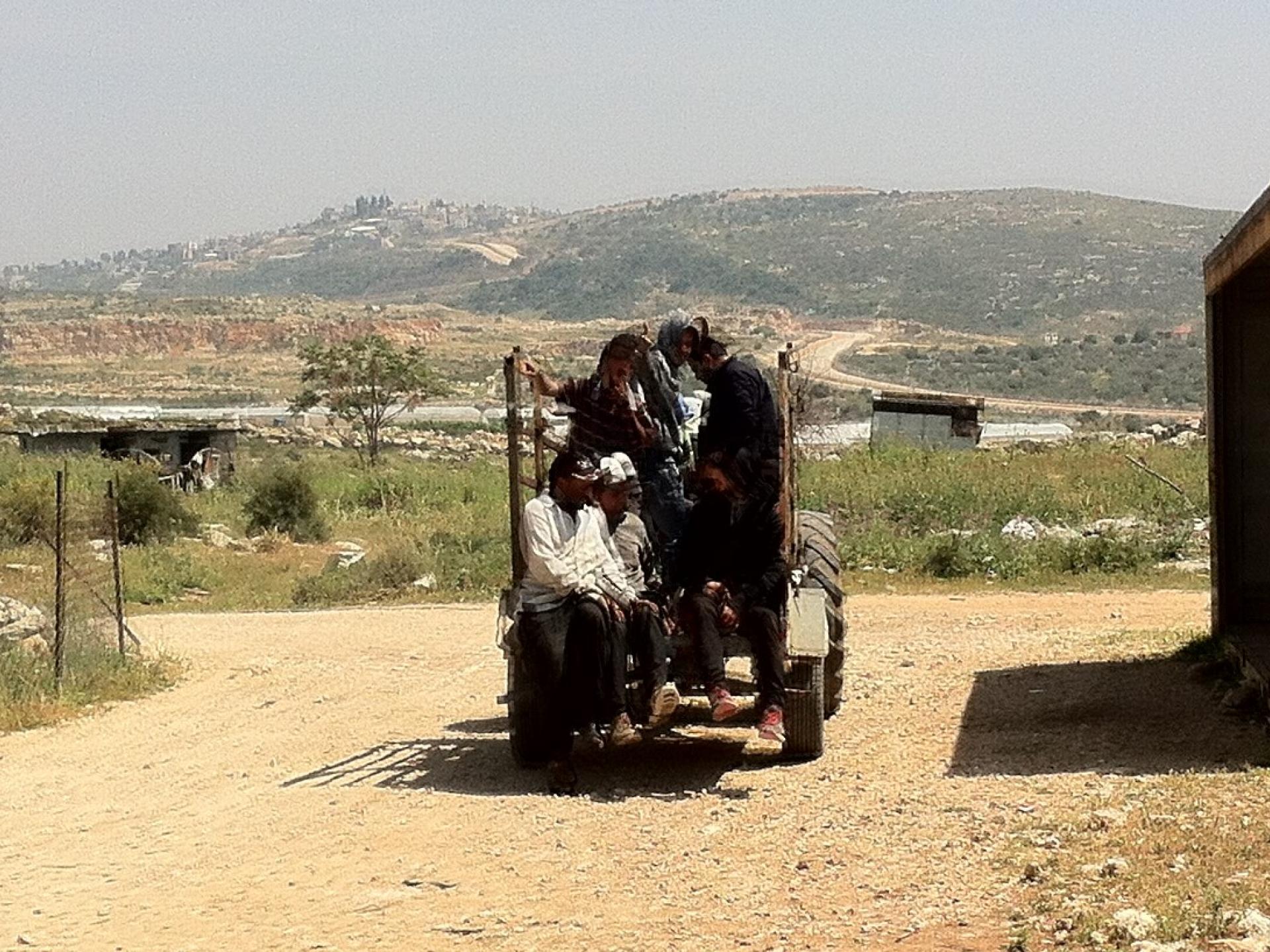
13:25 Falamiya South (935) CP , which serves mainly the inhabitants of Jayous. It was opened on time. We talked with a few farmers, they have no problem at the moment with permit, just one person complained that the validity of his permit was going to expire in a week and that there was no possibility to apply for a new one before the date of the expiration, contrary to the written instructions.
Falamiya North (914)
See all reports for this place-
Falamiya North (914) Opens 3 times a day for about 40 minutes each time. This checkpoint has extremely important for all farmers in the area since the previous, Falamya checkpoint opening routine of continuously open for 12 hours has been discontinued. This took place after the separation fence was moved westward following the High Court of Justice.
-
Falamiya South (935)
See all reports for this placeKufr Jammal
See all reports for this place-
Kufr Jammal This village, rising about 200 meters over sea level, is located about 14 kilometers south of Tul Karm town and about 17 kilometers from the Mediterranean Sea. The families living there since the mid-18th century number about 3,000 persons at present. The village has lost thousands of dunams of its northern and western lands due to the construction of the Separation Barrier, leaving the lands themselves behind the barrier. After the Israeli Supreme Court ruling in 2011, the barrier was moved to the west and many farmlands were returned to their owners. It is a quiet village, its relations with the nearby settler-colony of Sal’it are favorable, and many of the villagers work in the colony’s industrial plants. Farmers cross the agricultural checkpoint close to this settler-colony in order to tend their fields unhampered. However, there are numerous acts of harassment and disorder taking place when the village farmers cross the other agricultural checkpoints: gates do not open at hours suitable to the farmers’ needs, and for a short period of time only; the Civil Administration usually prevents all kinds of crops except olives; tractors and other farm equipment are forbidden entry; only a single permit is issued per family, and occasionally such permits are confiscated and their re-issue is delayed – the common excuse is usually “security reasons”. How do the villagers make their living? Holders of work permits inside Israel travel at 3 a.m. to Eyal Checkpoint near Qalqiliya town in order to make it on time to their workplace at Sal’it (close to their village) and elsewhere. Owners of vegetable patches who hold permits are allowed to reach their fields beyond the Separation Barrier through the distant Falamiya Checkpoint. Importantly, fields returned to the village show amazing improvement intending, irrigation and farming variety – and instead of the neglected olive tree groves that were accessible only to holders of transit permits through agricultural checkpoints usually closed, farming has now flourished. (updated Jan 2021)
-
