
Fasail: The settlers wade in the water, the fields shrivel
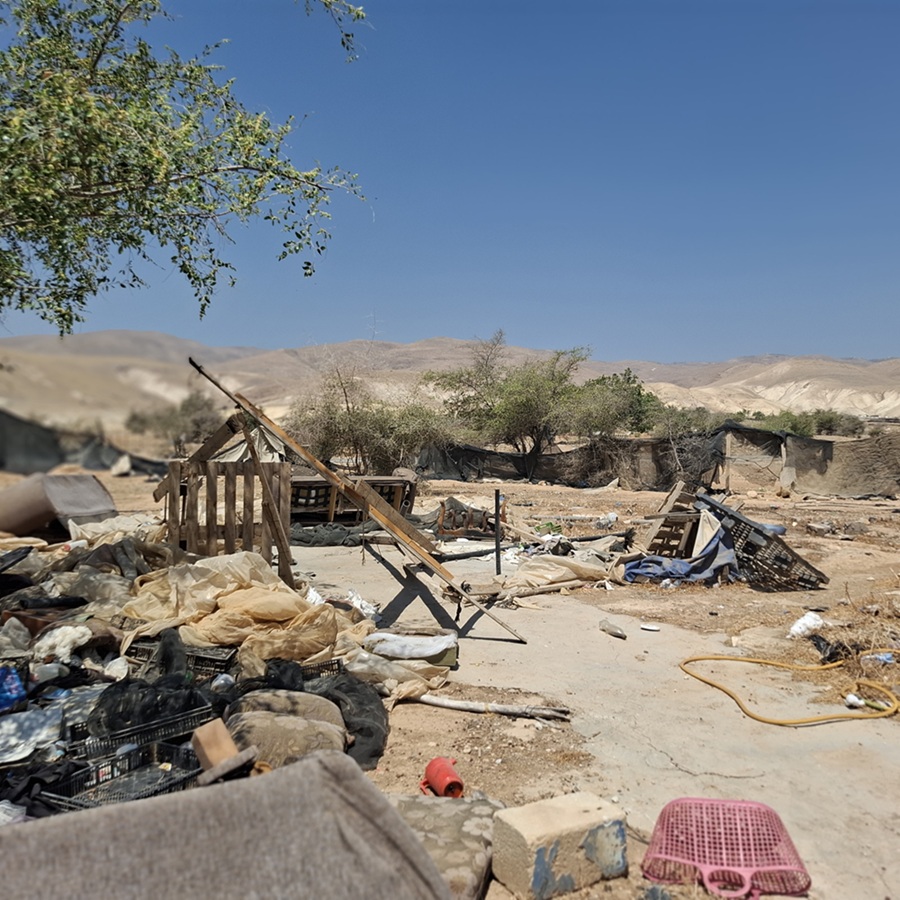
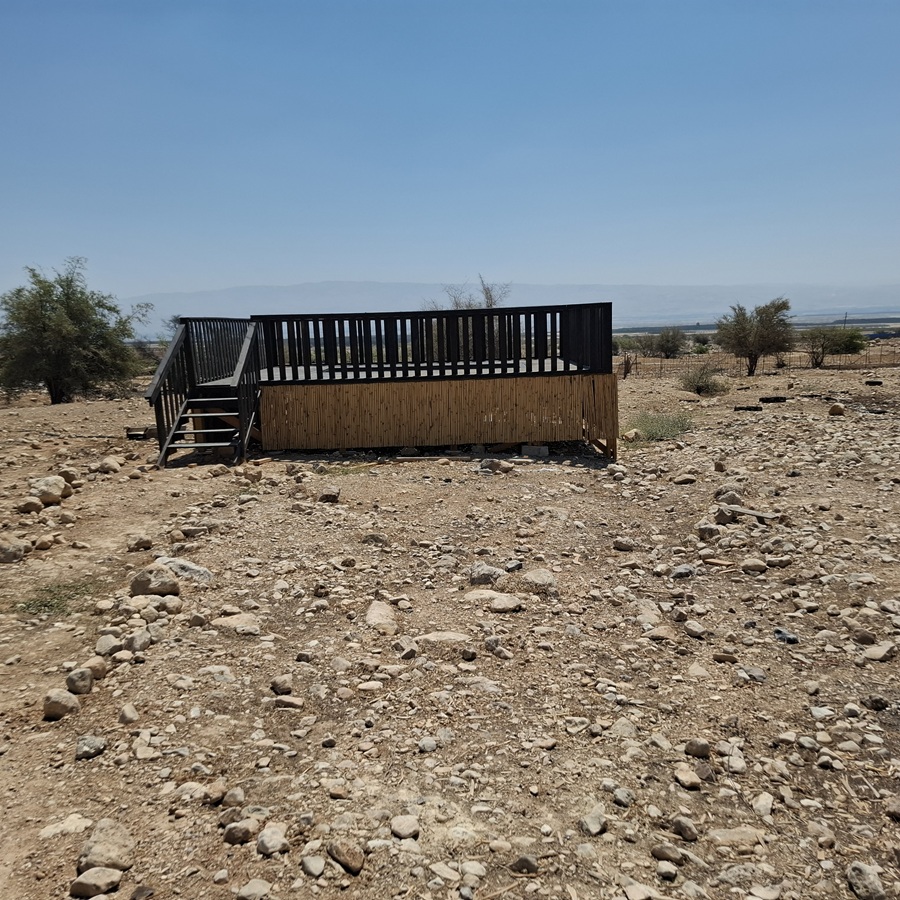
The fields, vineyards and date trees of Fasail shrivel. Without water, at 40 degrees centigrade they will soon die and the livelihood of thousands of Fasail villagers will be gone. But what does the Jewish people care about Fasail water – the main thing is that we jump into the pool and have a good time!
For years, we – activists of MachsomWatch – have been watching this historical monument, the huge Herodian pool preserved for thousands of years and serving as a window to this ancient period. Now, just as they did in Silwan (“David’s City”), colonist takeover of this land’s areas is achieved by dominating archeological sites and destroying them, inventing a narrative and turning it into a tale of Jewish legacy.
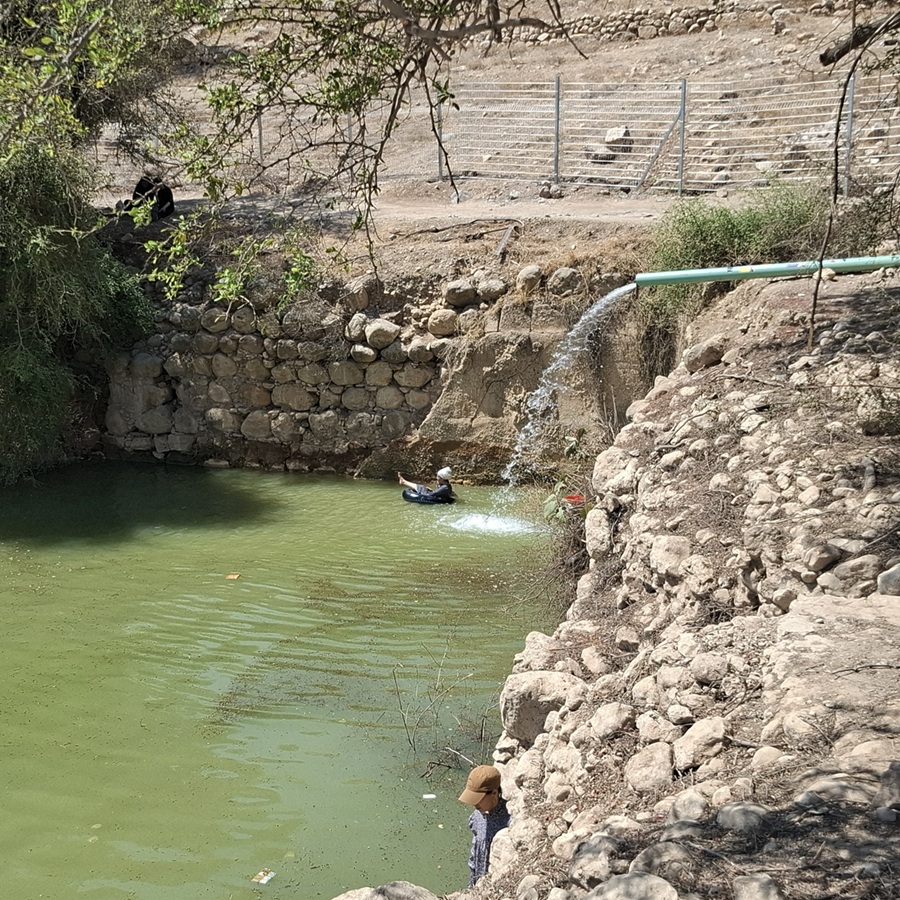
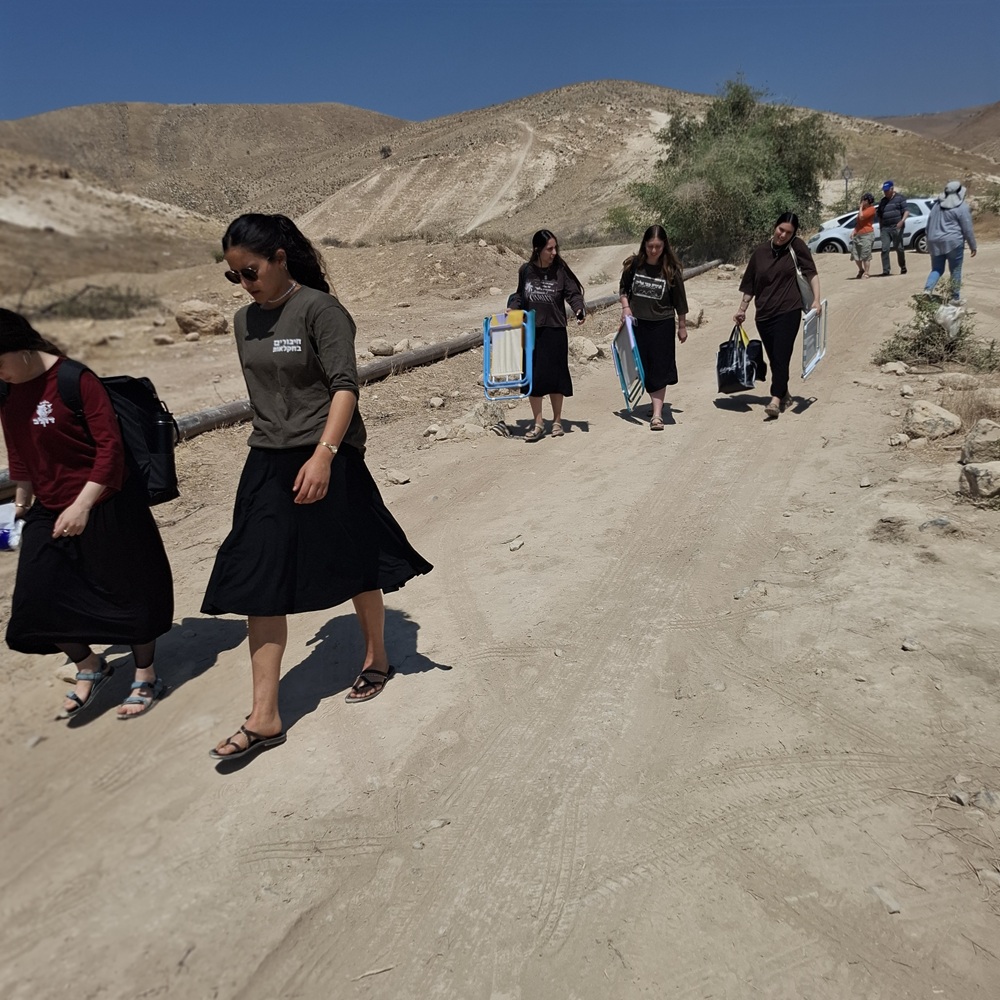
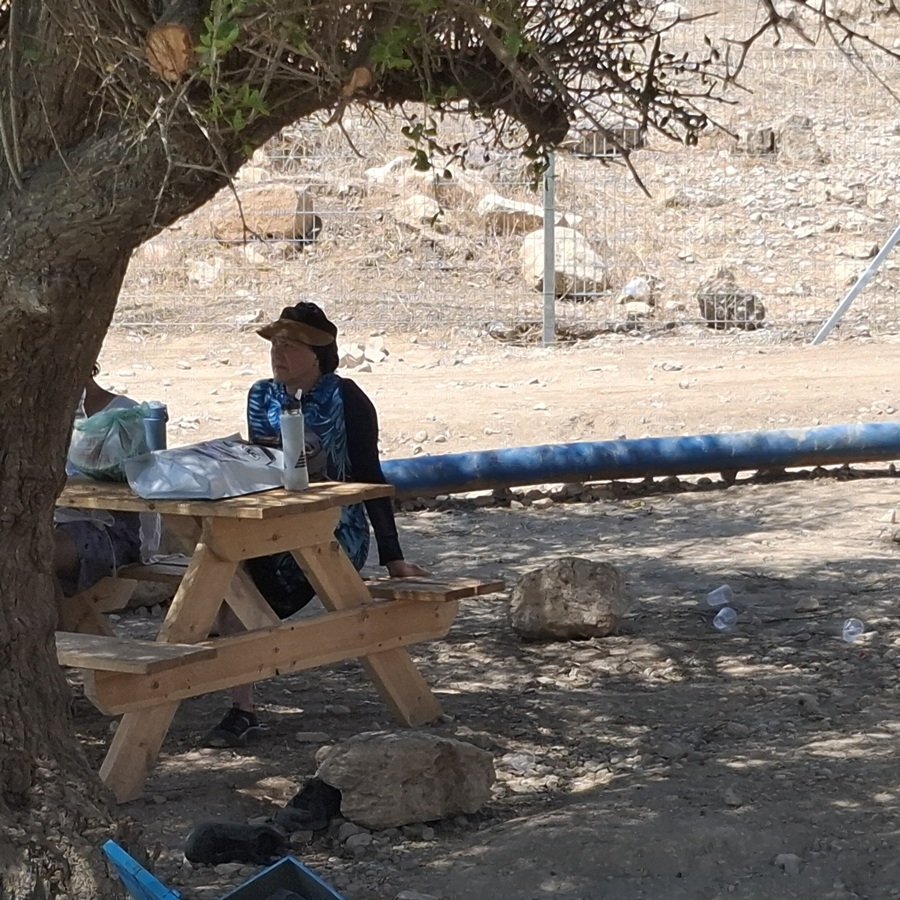
While the huge nine pumping stations that quench the thirst and fill the swimming pools and groom the farming of West Bank settlers, the fields of Fasail residents are watered by a green water pipe 15 centimeter in diameter! Now the representatives of the Messiah on earth have arrived and cut even this measly pipe, stealing the water in favor of a swimming pool in the heart of the Palestinian Jordan Valley. An elderly settler standing on the edge of the pool in shorts, wearing a white beard, declared that “the Arab has taken the water” (the generic Arab, as Israeli media calls them).
Cars never stopped arriving, carrying many school girls on vacation (see their shirts), loaded with folding chairs and air-filled tires (“It’s so dusty here”. Soon it will be paved and there will be a lawn and a playground and a coffee cart…).
Therefore, in Fasail the dates are now watered with salt water from the well, and that’s alright, and the vines and watermelons are watered with mixed sweet and salty water, which is bad. This is what J. tells us, from the bottom of his good heart. He used to take care of the water business (vegetation growing into the pipes, the pipes and water ditches vandalized etc), until the settlers ran him over with their ATV on the way to the springs, and he stopped. Now he is disabled.
In the Jiftliq we met E., the girl ill with Spina Bifida (a condition in her spine that causes paralysis of the lower limbs) and her family. They are now beginning their long winding road into the occupation bureaucracy in order to have the girl treat her disability, late in the day. Hopefully this will help.
At Hamra, the resourceful M., who in another world would have been a blooming entrepreneur, speaks of water in half of Atouf village being disconnected. Tractors and buggers and soil trucks are busy with a grandiose project to complete separating the shepherd communities from their villages and mother towns on the hill rage. This is done by raising a fence from the northern to the southern part of the Valley, including massive destruction and massive construction (they go hand in hand since Zionism began), which will help complete the ongoing ethnic cleansing of the Palestinian Jordan Valley and enable to build more of its western part. Atouf, from where water was brought by Palestinians through a locked gate-checkpoint which the soldiers would open (at best) for an hour or half an hour a day, is now much further away, as the checkpoint-gate is locked all the time.
At Humsa F. said that yesterday afternoon, 6 settlers came from the nearby outposts, sat down in the residential compound that is not theirs, put up their feet and ordered coffee. Then they got up to leave and signaled to her 6-year-old son M. a line across their throats, as if they were planning slaughter.
Location Description
Al-Jiftlik
See all reports for this place-
A large Palestinian area in the Jordan Valley (in Israeli-controlled Area C), which includes a town located on two main roads: Highway 57 leading from Nablus to Adam Bridge and Highway 90, Israel's eastern longitudinal highway. Some of its residents are Bedouin who were expelled from the Negev in the 1950s. MachsomWatch women have been in regular contact with the Bedouin communities in the area for many years.
A special connection was formed with the Kaabna family, who, following the demolition of their home in 2017, fled to the village of Hadidiya, and experienced a terrible tragedy along the way. In 2019, they were expelled again from Hadidiya under threat of demolition and returned to Jiftalik.
Jiftalik is the only village in the Jordan Valley for which Israel prepared and approved master outline plans in 2005. All of them were prepared without the participation of the residents and restricted construction and development in the village to a limited part of its area, thus many demolitions are being carried out there.
Because of an inadequate water system, residents are forced to purchase water in tankers, and all requests for the construction of a reservoir have been denied.
-
Fasa'il
See all reports for this place-
An old community of shepherds in the Jordan Valley that is located between settlements and is exposed to the demolition of its residential buildings at times by the army and the abuses of the settlers. King Herod founded the city of Fatza'elis in 8 BC, and named it after his older brother, Petzal. The permanent settlement in the place began with Bedouins who migrated to the area as early as the 1950s after being expelled from the Tel Arad area. Over the years, additional Bedouin residents who were expelled from other places in the Jordan Valley joined. Areas that were declared as fire areas or state lands . As part of the Alon plan, a significant part of the lands in the area were expropriated and four Israeli settlements were established on them: Tomer, Gilgal, Fatza'el Netiv HaGdud. Illegal posts were erected over the years. Some of them were authorized during the 7th October War.
-
Hamra (Beqaot)
See all reports for this place-
One of the Jordan Rift Valley checkpoints that prevent direct transit between the West Bank and the Jordan Valley, in addition to Tayasir Checkpoint. Located next to Hamra settlement, on Route 57 and the Allon Road.
Read about the peple of the Jordan Valley and the quiet transfer happening there.
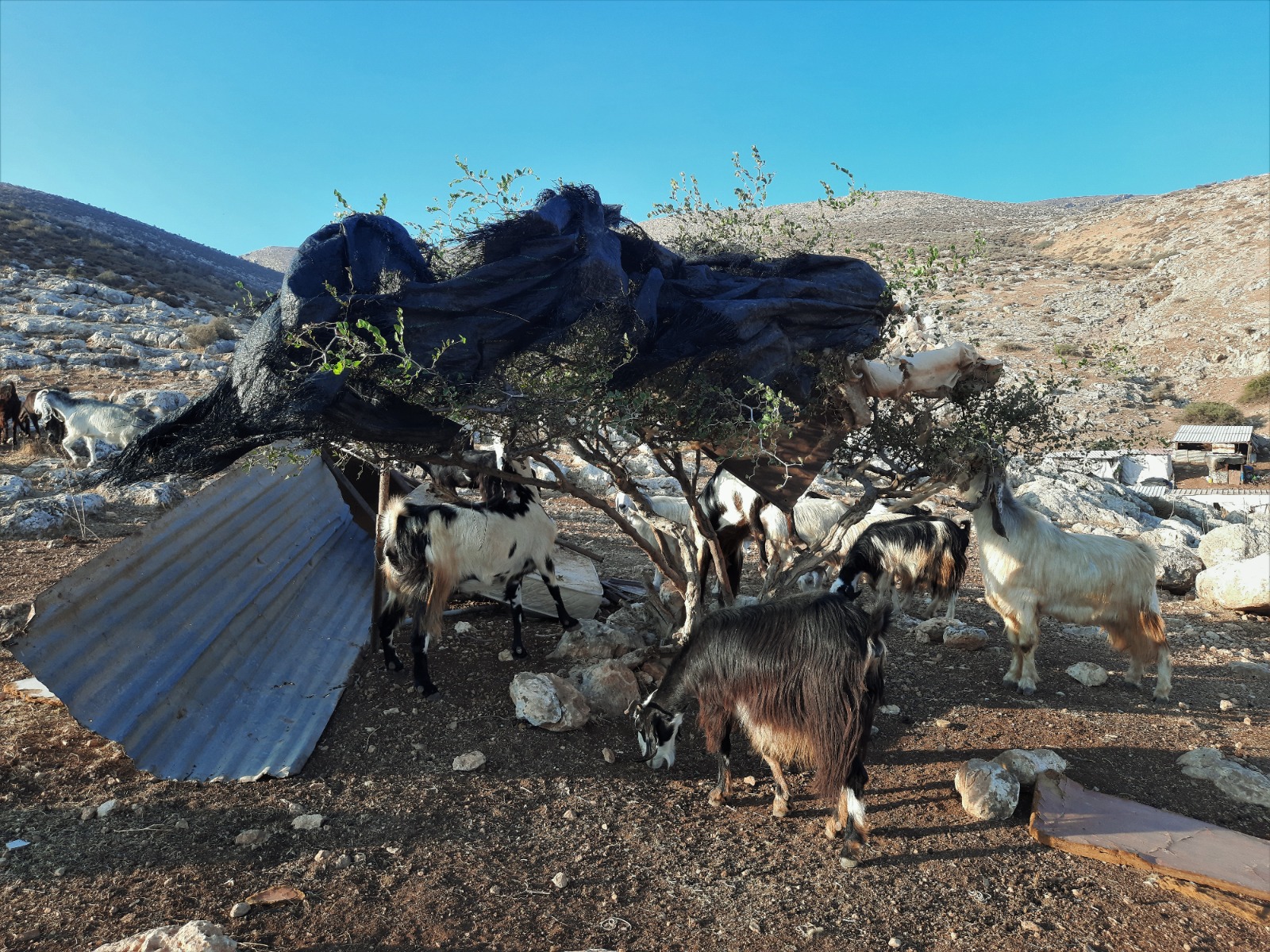 Shahar ShilohNov-3-2021Ein Shibli: grazing begins close to home
-
Humsah
See all reports for this place-
Humsah
A shepherd community in the Jordan Valley. It is located in a remote place in Area C. There are no convenient ways to reach it. Its inhabitants make a living from their flocks. Like other shepherd communities, they live without basic infrastructure. This shepherd community is exposed to settler harassment and demolition of property by the military through civil administration orders.
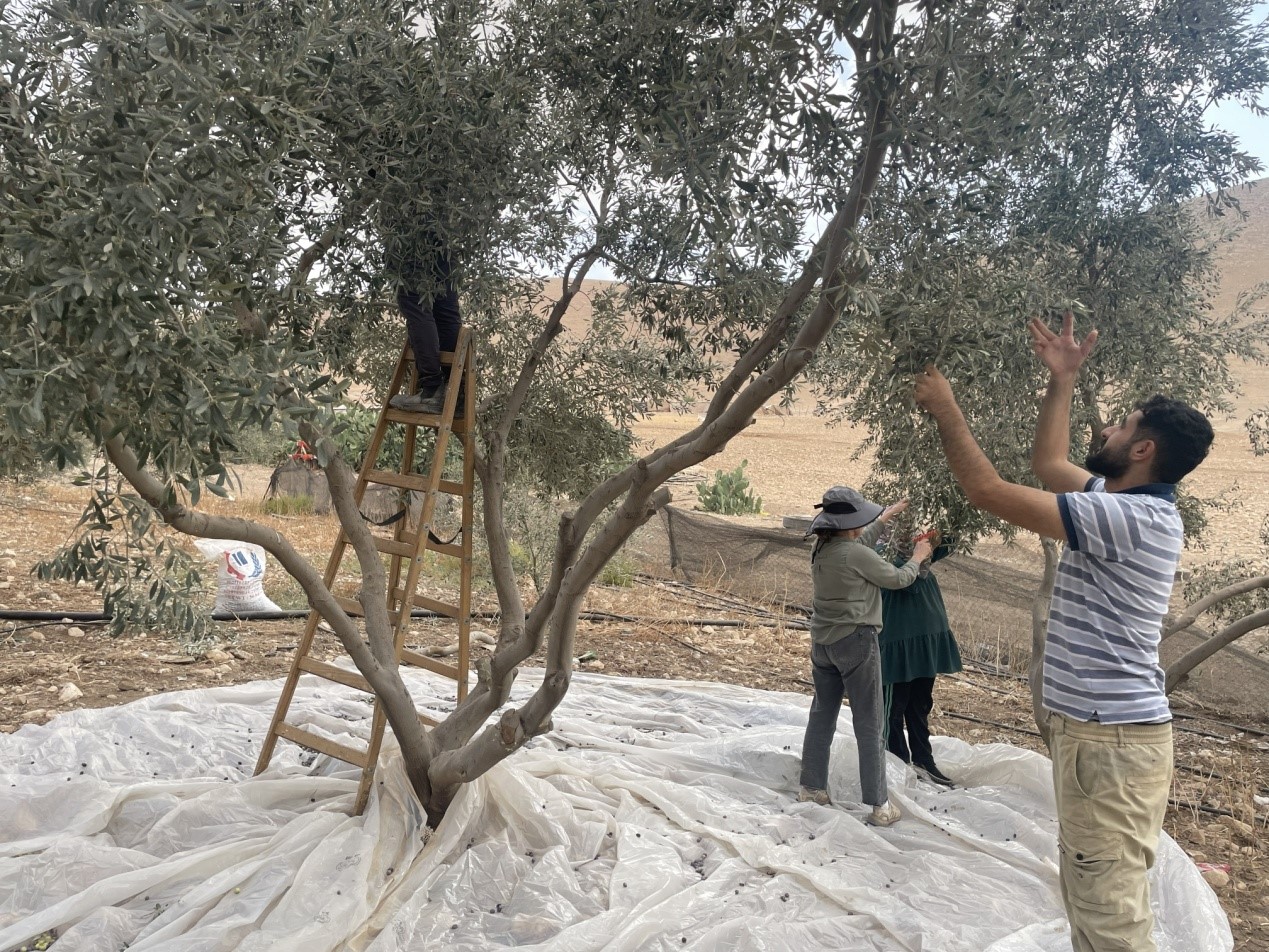 Rachel AfekOct-15-2026Olive Harvest in the Jordan Valley
-
Jordan Valley
See all reports for this place-
Jordan Valley The Jordan Valley is the eastern strip of the West Bank. Its area consists of almost a third of the West Bank area. About 10,000 settlers live there, about 65,000 Palestinian residents in the villages and towns. In addition, about 15,000 are scattered in small shepherd communities. These communities are living in severe distress because of two types of harassment: the military declaring some of their living areas, as fire zones, evicting them for long hours from their residence to the scorching heat of the summer and the bitter cold of the winter. The other type is abuse by rioters who cling to the grazing areas of the shepherd communities, and the declared fire areas (without being deported). The many groundwaters in the Jordan Valley belong to Mekorot and are not available to Palestinians living in the Jordan Valley. The Palestinians bring water to their needs in high-cost followers.Rachel AfekOct-15-2026Olive Harvest in the Jordan Valley
-
