
Habla, Route 55, Deir Sharaf, Anabta, Jubara, Irtah (Shaar Efraim)
Summary
A recent MachsomWatch dispatch from our sisters in the South reported an exchange between the "manager" at a Seam Line terminal where they were told that it "separated Israel from Judea and Samaria, no, not Area C – areas C and B no longer exist." The myths, we know only too well, get multiplied and reinforced and become facts on the ground; and whether it's Oslo-speak, Areas B or C, or settler-speak, Judea and Samaria, the fact is that MachsomWatchers monitor the occupation of another people's land and all the hardships that permanent occupation, or colonization imply. And then there are the frequently heard phrases, often from our own friends and acquaintances, that "it's all so complicated," words that sound so much "nicer" than the denial of human rights to Palestinians. In all, there are alibis galore for complacency, for inaction, for the shrug of "ma laasot," the Hebrew for "what can one do?" But today we could not help but notice the depression of the Palestinians around Nablus. After the tragic murder of members of a Jewish family, in a settlement, a couple of days ago, collective punishment was being meted out by the army on all – checkpoints, road closures and no means of reaching family olive groves. "It's just like the old days" was the lament, hope for the future all but gone.
Seam Zone: Habla – Gate 1392
12:40 One of the men waiting to return home to Qalqilya asks, once again, that we try to have the gate open for longer times during the day. He next tells of a horrendous rolling checkpoint where everything was examined at great length including mobile phones and everything else, yesterday, near the settlement of Qedumim. Later, we heard more about how terrible things were for the Palestinians yesterday.
Meanwhile, sheep may still safely graze, or meander about, with but a couple of lambs, the promise of others on the way, in the paddock near the nursery; or, they may also wait at Gate 1392 for it to open, and indulge in whatever greenery they can to gorge themselves on. All over we see a portent of springtime — large flocks of sheep and flowering borders and ditches, but few cheerful red flowers
13:03 — only two soldiers in a jeep, one inside the concrete building, and the two decide that the most efficient way today is to open only one of the pair of gates at each side of the Separation Barrier, or, even to close one side completely while checking people, tractors, trucks, horse carts, etc., on the other. They indulge in checking cabbages heaped atop an open trailer, and so it goes, slowly, as the bus arrives. Some of the locals provide service to the Occupier by opening the gates wide, and next we're amazed to see that the revolution sweeping much of the Arab world has arrived here: in the one passing school bus, bearing the Bedouin kids, there are both girls and boys!
Route 55
There is much less traffic than usual. From just beyond Fonduk, the army is much in evidence. Every settlement has a jeep stationed just off the roadway, at Qedumim, where there seems to be some settler action on the hill with the cave, above the infamous checkpoint at Jit, etc.
14:00 Deir Sharaf
It's quiet here, unpleasantly quiet, not with the usual bustle to which we've become accustomed. Yesterday, we are told, "everything was closed." People cowered in their homes, afraid, and it was, we gather, terrible. Checkpoints everywhere, and for three or four hours people were unable to go on any road, everything was closed, completely closed. Just like the bad old days, including the inability to tend to one's olive trees.
Anabta
The coffee man is still serving coffee from his finjan, and tells that there are soldiers in the military tower, but nowhere else, and that it's quiet, little traffic.
14:50 Jubara
Quiet here too, no lines of cars, no kids trying to peddle things one doesn't want or need. The women soldiers are bored, refuse to talk to us, while demanding IDs and seem unsure of what they are supposed to do.
15:00 Irtah (Shaar Efrayim)
A number of Transporters offloading women and men on their way home, the men usually carrying huge bags filled with oranges. As we walk with a large group of maybe ten to twelve people, the guards, the usual ones, now with yellow baseball caps, close the gate leading to the old parking lot where, incongruously, a motorized vehicle is sweeping up dust. The small crowd moves to the larger gate, near where the private security guards stand. That too is closed. We now go up to the guards and ask, "Why?" The answer, given three times is, "It's closed."
As we are about to make phone calls, a civilian car drives up, bearing A., the lieutenant colonel who is from the DCO, driving a policeman, whom he seems to take nearer the crossing point at the far side of the terminal building. A. seems not to know what is going on, but returns in his car, just as the gates are again opened, and the swarm of people now moves swiftly towards the terminal building for checking and the return home. A. indicates that he made a phone call, telling, "there was a bomb scare inside the terminal building" but he's grinning and seems not concerned as he drives on, without ever getting out of his car. The Palestinians make their way swiftly through their checking, and there's not a soul waiting. Strange are the ways of Occupation — and cruel too.
'Anabta CP
See all reports for this place-
'Anabta CP
The checkpoint is located south of the village of 'Anabta, at the intersection of Road 60 (leading to Nablus at the entrance to Area A), with Road (57, 557, 5576) facing west towards the Einav settlement and the checkpoint at the exit from the West Bank - Figs checkpoint. Until 2010 we used to watch the intersection and report the long columns created due to a slow inspection of the vehicles in both directions.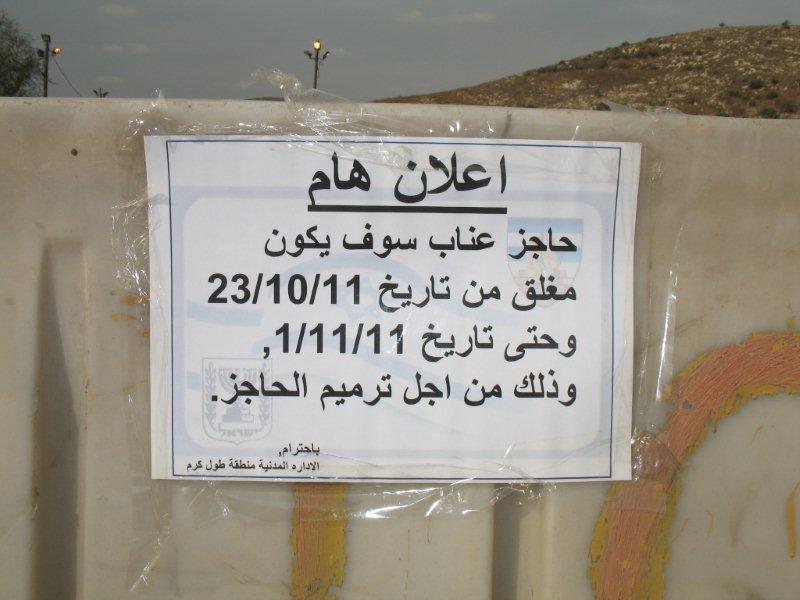 Oct-28-2011Anabta checkpoint 24.10.11
-
Deir Sharaf checkpoint
See all reports for this place-
Deir Sharaf checkpoint is located west of Nablus and south of the settlement of Shavei Shomron, at the entrance to the village of Deir Sharaf on the road leading to Nablus. The checkpoint was activated in early March 2009 after the Beit Iba checkpoint was closed. Palestinians are allowed through the checkpoint , but not for Israelis. Unlike the checkpoints leading to Qalqilya and Tulkarm, crossing of Israeli Palestinians is only allowed on Saturdays.
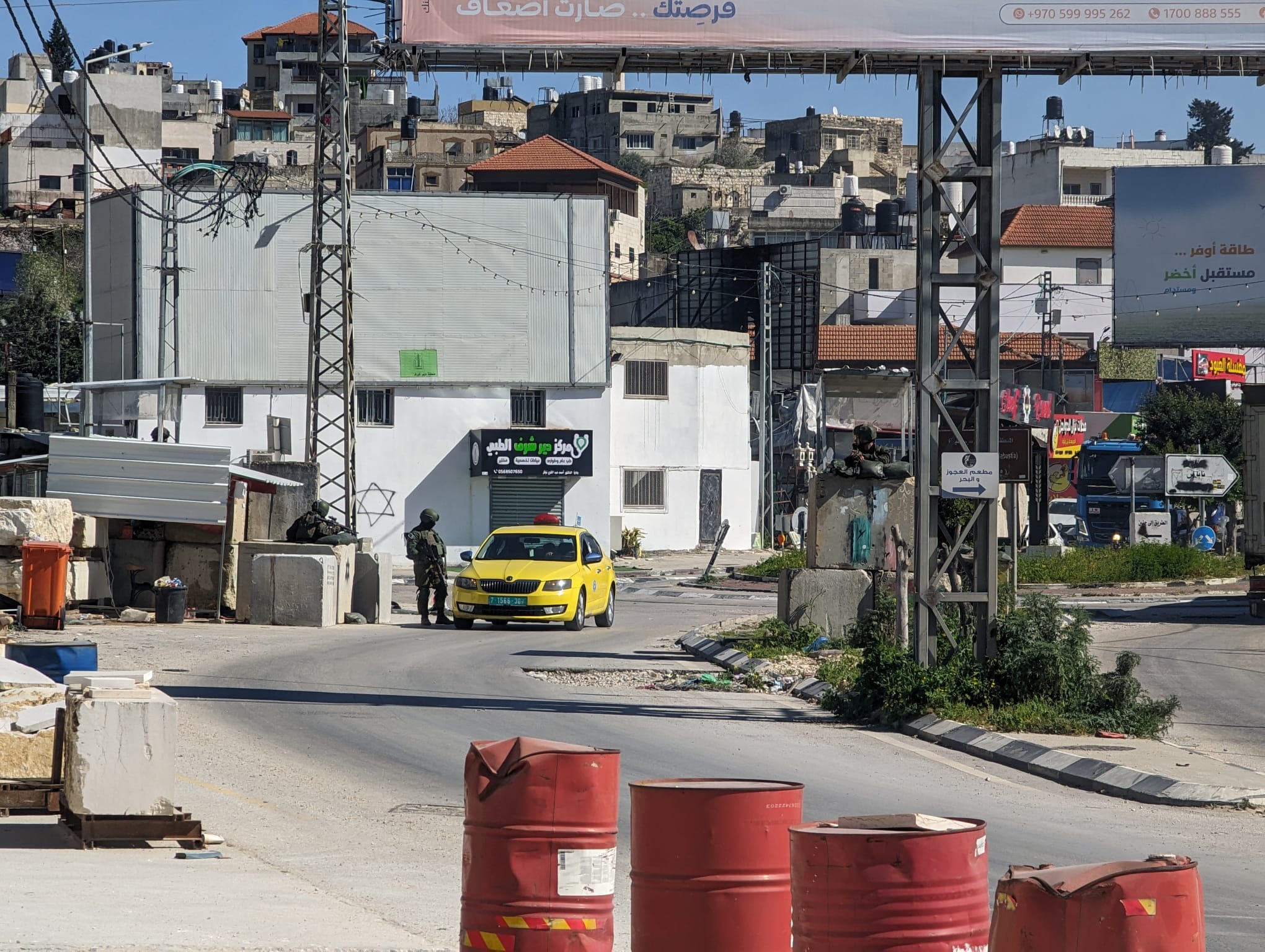 Nina SebaFeb-28-2024Deir Sharaf - the entrance to the village
-
Habla
See all reports for this place-
Habla CP (1393)
The Habla checkpoint (1393) was established on the lands of the residents of Qalqilya, on the short road that
connected it for centuries to the nearby town of Habla. The separation barrier intersects this road twice and cut off the residents of Qalqilya from their lands in the seam zone.(between the fence and the green line).
There is a passage under Road 55 that connects Qalqilya to the sabotage This agricultural barrier is used by the farmers and nursery owners established along Road 55 from the Green Line and on both sides of the kurkar road leading to the checkpoint.
This agricultural checkpoint serves the residents of Arab a-Ramadin al-Janoubi (detached from the West Bank), who pass through it to the West Bank and back to their homes. The opening hours (3 times a day) of this agricultural checkpoint are longer than usual, about an hour (recently shortened to 45 minutes), and are coordinated with the transportation hours of a-Ramadin children studying in the occupied in the West Bank.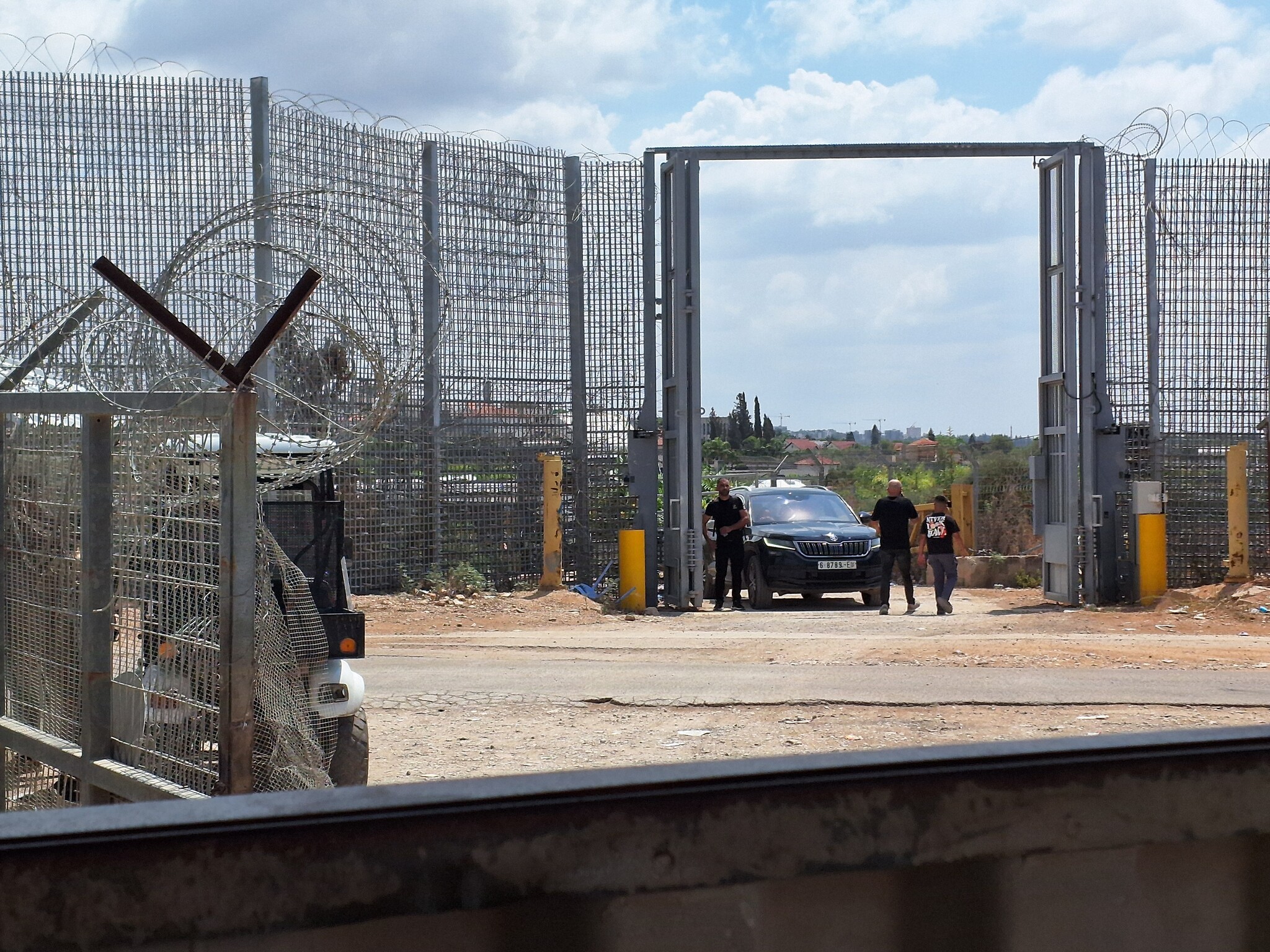 Ronit Dahan-RamatiAug-31-2026Habla. The gate is open
-
Irtah (Sha'ar Efrayim)
See all reports for this place-
The checkpoint is for Palestinians only. It is the main barrier to the passage of workers from the northern West Bank to Israel. Workers with a permit to work in Israel and also for trade (with appropriate permissions), medicine, and visiting prisoners. One can cross the checkpoint only on foot. The checkpoint is located north of Road 557 and south of Tulkarm. Operated by a civil security company, opening hours: between 4:00 and 19:00 on weekdays. As members of Machsom Watch, we began our shifts to this location in 2007. We arrived before it opened at 4 in the morning and report since, on the harsh conditions and the long and crowded queues of workers. The workers who pass by continue their journey by transportation to work throughout Israel. In the first period of its activity, about 3,000 and then 5,000 people passed through this checkpoint every day. Due to the small number of checking points and arbitrary delays for long periods of time in the "rooms", workers feared losing their transportation. Hence workers leave their homes at 2:30 at night to be among the first. Today, 15,000 pass and the transition is faster. Workers are still leaving their homes very early to get past the checkpoint at 7 p.m. In an adjacent compound, there is a terminal for the transfer of goods on a commercial scale, using the back-to-back method.
-
Jubara (Kafriat)
See all reports for this place-
The Jabra checkpoint was on Road 557, south of Tulkarm, on the side of the Figs Pass, which is located within the Palestinian Authority (a few kilometers east of the Green Line), and serves as an entry barrier from the territories to Israel. The checkpoint to the village of Jubara, which until 2013 was in the seam area, blocked and surrounded by a fence, was intended for the passage of the family members of the house next to the checkpoint, and also for the MachsomWatch volunteers (with special permission only), on their way to checkpoint 753. on the other side of the village. The soldiers supervising the "fig crossing" also supervised the crossing at this checkpoint, in our shifts we often waited a long time until the key was found and the gate opened. The checkpoint was abolished and became part of the separation fence that was moved west following the High Court.
-
